REVIEW · BANFF
Banff National Park- Double Kayak Experience
Book on Viator →Operated by The Banff Canoe Club · Bookable on Viator
A morning kayak in Banff beats another photo stop. You get a guided route that pairs the Bow River with the calm feel of Vermilion Lakes, plus guides who keep things friendly and safe. Two things I’d put at the top: the early timing and wildlife sightings, and how guides like Maddie, Darby, Ben, Amelia, and Abby bring local know-how into the paddle. One heads-up: this isn’t a sit-and-sip experience, and it’s not ideal if you’ve never kayaked before.
This is a short, 2-hour outing that’s sized for small groups (max 12). You’ll have a kayak, paddles, life jackets, and a trip leader guiding your turns, timing, and where to go next—nice if you’re traveling on a tight schedule or just want your legs rested after hiking and biking days.
At $127.38 per group (up to 2 people), the value is strongest if you share the cost. If you’re more sensitive to bugs or you don’t handle surprises well (like a beaver-dam crossing), plan ahead and bring what you need—especially bug spray.
In This Review
- Key highlights that make this Banff kayaking outing work
- Banff Canoe Club meetup: start easy, get on the water fast
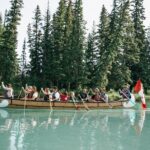
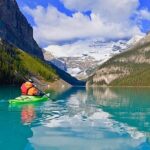
- Bow River paddle: turquoise water, wildlife sightings, and big-mountain views
- The beaver dam moment: a short challenge that changes the vibe
- Switching to Vermilion Lakes: calmer water, better reflections, more wildlife
- Price and value: $127.38 per group can be a smart split
- Who should book this double kayak experience
- What to bring: bug spray, secure valuables, and simple weather sense
- Safety and guidance: clear leadership makes the difference
- Should you book the Banff double kayak on the Bow and Vermilion Lakes?
- FAQ
- How long is the Banff National Park double kayak experience?
- What is the meeting point for the tour?
- How much does it cost?
- What’s included in the experience?
- Do I need previous kayaking experience?
- What fitness level is required?
- What happens if weather is bad?
Key highlights that make this Banff kayaking outing work
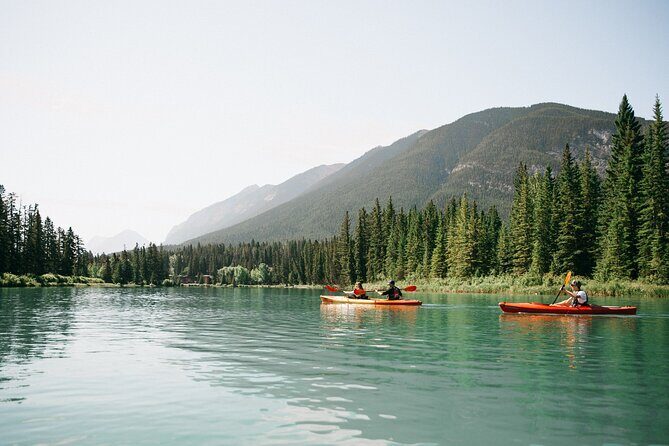
- Bow River first, then Vermilion Lakes: two water moods in one smooth morning stretch.
- Beaver dam crossing with your guide: a memorable moment that’s handled step-by-step.
- Free action photos: guides often take pics for the group and share them afterward.
- Small-group energy: max 12 travelers helps you feel seen, not rushed.
- Early start advantage: an 8am option in summer helps you get out before the heat and heavier crowds.
- Plan for insects and valuables: mosquitoes can be intense, and water accidents can be hard to fix.
Banff Canoe Club meetup: start easy, get on the water fast
The experience starts at the Banff Canoe Club at the corner of Bow Ave and Wolf St. It’s one of those practical Banff locations that makes it simple: you show up, check in, gear up, then you’re on the water without a long bus ride or complicated transfer.
The tour uses a mobile ticket, so you’ll want your phone charged and ready. Expect the trip leader to set the tone quickly. In particular, the guides in this operation come across as approachable, fun, and focused on making sure everyone knows what’s happening next—whether it’s how to hold your paddle or what to do if the shoreline gets tight.
You’ll also want to think about the physical side. “Moderate physical fitness” is the right frame here. You’re not doing a long endurance trek, but you are paddling continuously for a short period and moving your kayak through turns, narrower routes, and a dam crossing. If you’ve never kayaked, you’ll likely feel it right away—one reason the experience isn’t recommended for true first-timers.
A few more Banff tours and experiences worth a look
Bow River paddle: turquoise water, wildlife sightings, and big-mountain views
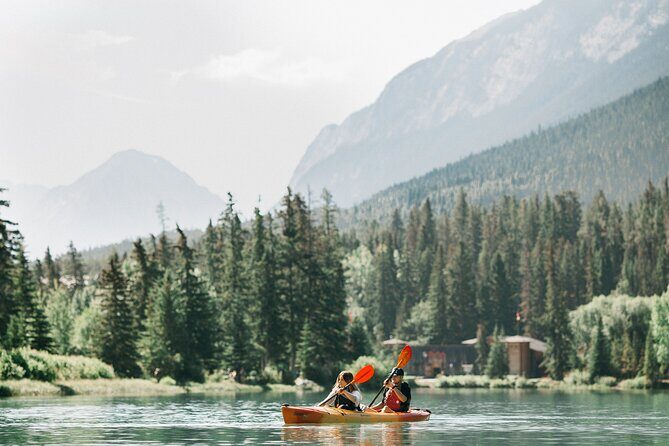
The Bow River segment is all about that Banff feeling: water color that looks unreal and mountains that stay sharp even when you’re moving slowly. The river winds through towering peaks and forested areas, and it’s wide enough for a satisfying paddle pace, but still interesting enough that you’re not just going in circles.
This is where you’ll likely notice the wildlife energy. Guides talk about what to look for and when to pause. In practice, the best moments come from short stops and gentle navigation—when you slow down to scan the edges of the waterway and notice birds and other activity along the banks.
One underrated benefit of going in the morning: you get a calmer experience on the water. People mention how much they liked being out early, before the day ramps up. Even if you’re not chasing solitude, being on the river before the bulk of foot traffic makes the whole paddle feel more relaxed.
If you care about photos, the Bow River stretch is also a decent time for action shots—guides have been known to take group pics for free. Just keep your phone situation sensible, because water and phones do not mix. There’s at least one cautionary story from a lost phone in the lake; once it’s gone, it’s basically gone.
The beaver dam moment: a short challenge that changes the vibe
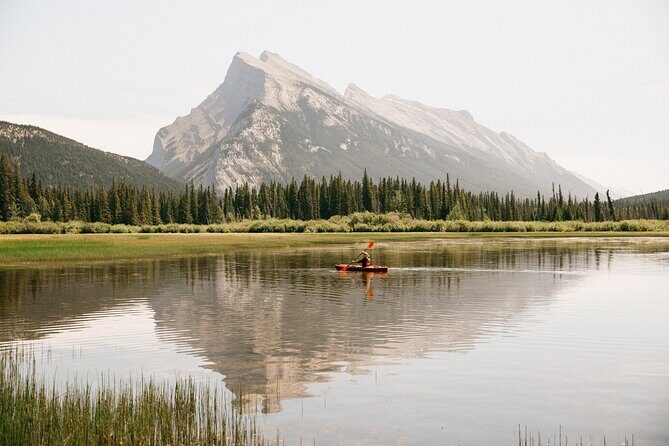
At some point, your route includes a beaver dam crossing. It’s brief, but it’s the kind of obstacle that turns a simple paddle into something you remember.
What matters here is how the guide handles it. The best guide-led crossings are not just about bravery; they’re about clear instructions, patient timing, and making sure you and your kayak stay stable. Guides like Ben and Abby have been specifically praised for being patient and for helping people feel safe through the crossing.
This is also a good time to use your brain, not just your arms. Keep a steady grip, follow the guide’s directions, and don’t rush your movement for photos. One traveler noted the guide helped the group cross a dam and navigated narrow routes without drama. That’s the payoff of having a real trip leader instead of a self-guided rental.
Switching to Vermilion Lakes: calmer water, better reflections, more wildlife
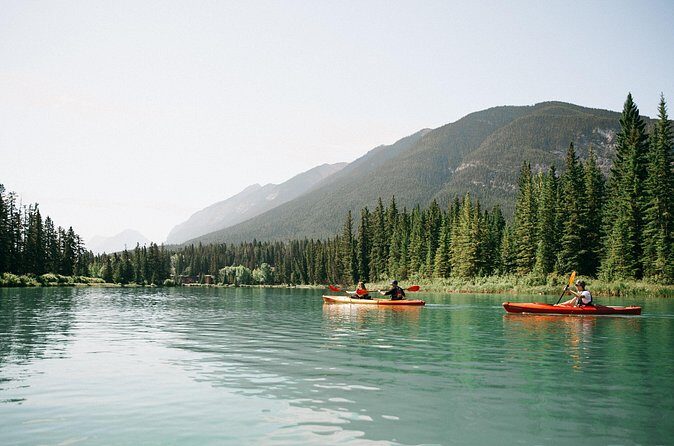
After the Bow River, you’ll head to Vermilion Lakes. If the Bow River feels like a drive with views, Vermilion Lakes feels like a pause. The water is quieter, and the scenery plays differently—more reflection, more stillness, more time to look.
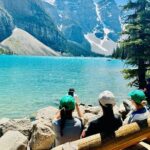
This stop is often described as a serene, relaxing stretch. You float across water that mirrors the peaks and the wide Alberta sky, and the wetlands around the lakes can be alive with wildlife. You’ll get that slow “look around” rhythm that’s hard to reproduce on a jam-packed Banff day.
Photo-wise, this is where you’ll appreciate the calm. Guides can snag action photos even on a slower water surface, but it’s also a time when you may want to take your own shots. That’s where planning matters: keep electronics in a secure waterproof pouch if you’re bringing one. And if you want the best photos, don’t overreach while maneuvering—hold the kayak steady first, then shoot.
Some people also mention the Vermilion Lakes portion as part of what made the day feel like a true change of pace after hiking and biking. If you’ve been grinding your legs on trails, the shift to calmer water can feel like a reward.
Price and value: $127.38 per group can be a smart split
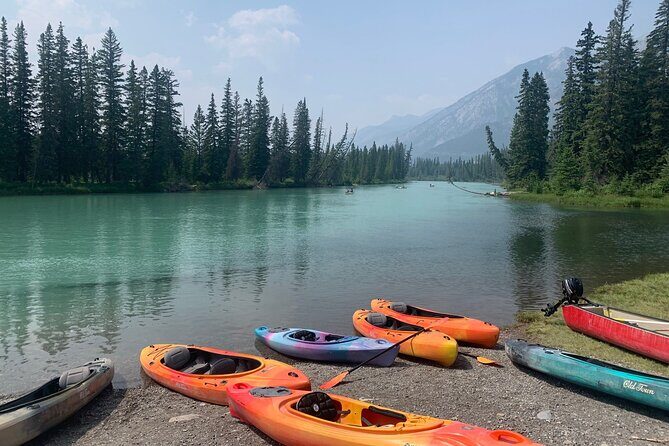
The price is $127.38 per group for up to 2 people, with a total time of about 2 hours. For Banff, this isn’t a budget activity, but it’s also not trying to be an all-day expedition.
Here’s the value logic I’d use:
- If you’re splitting with a partner or friend, you’re effectively paying about $63.69 per person.
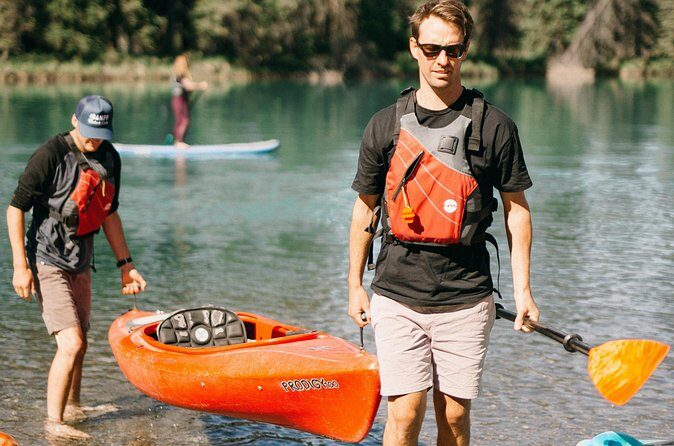
- You’re getting guided navigation through two water areas, a dam crossing, and all core gear: kayak, paddles, and life jackets.
- You’re also paying for someone to manage safety and timing, not just hand you equipment.
Small-group size (max 12) also helps the value. It’s not a massive fleet where you’re one of many. The guides have time to correct technique, explain what you’re seeing, and keep the group together without making it feel slow.
This tour also tends to fit well into a “Banff in a hurry” plan. Two hours is short enough to combine with other activities, yet long enough that you’re actually doing something—not just a quick splash and out.
Who should book this double kayak experience
I’d point most strongly toward people who want guided water time in a short window and who like nature without needing to be outdoorsy all day long.
It’s a good fit if:
- you’re after Banff’s rivers and lakes from the water, not just from a viewpoint
- you’re okay with a moderate physical effort for a 2-hour paddle
- you want wildlife viewing with a guide who can point things out
- you appreciate early starts, since morning timing is a big part of the experience
It might be a rough fit if:
- you have zero kayak experience (it’s not recommended for first-timers)
- you get stressed by obstacles like a beaver dam crossing
- you’re allergic to bugs or you forget basic outdoor prep (mosquitoes can be a real factor)
One practical point from guide quality: many people highlight guides as welcoming and informative, and praise them for being patient. That’s exactly the kind of difference that helps beginners learn what to do—though it still doesn’t change the fact that the tour isn’t meant for brand-new kayakers.
What to bring: bug spray, secure valuables, and simple weather sense
The gear list you’re provided is straightforward: kayak, paddles, life jackets. So your job is mostly about the stuff that makes the trip comfortable and safe.
A few things you should plan around:
- Bug spray: mosquitoes can be heavy, especially around calm water. People explicitly call this out.
- Waterproof protection for your phone: a lost phone story is a good reminder. Even if you’re careful, water happens fast.
- Appropriate outdoor clothing: you’re on the water, and you’ll want to feel comfortable if conditions shift.
- Good sense with sun and warmth: one traveler liked the 8am July timing because it’s cooler, but you can still get sun.
The tour requires good weather. If conditions are poor, you’ll be offered a different date or a full refund. That’s fair and also a reason to pack like you might get a slightly different day than you planned.
Safety and guidance: clear leadership makes the difference
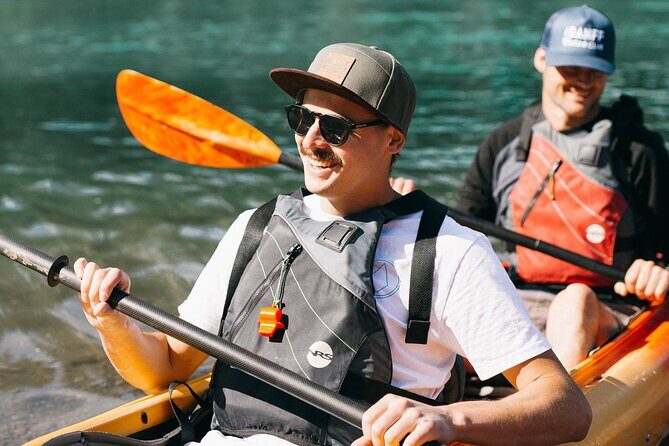
Safety here is less about scary rafting energy and more about smart movement. You’ll be in a small group with a trip leader, and that leader guides you through route choices, crossing a beaver dam, and moving through narrow sections where balance and coordination matter.
People repeatedly praise guides for being polite, educated, and patient. That matters because kayaking isn’t only physical. It’s also about learning where the kayak wants to go, how to correct direction, and how not to panic when the route tightens.
If you’re worried about competence, pay attention during the initial instructions. This tour is set up for success when you follow guidance closely and keep your pace steady.
Should you book the Banff double kayak on the Bow and Vermilion Lakes?
Yes, if you want a fast, high-reward Banff nature experience with real guiding, two different kinds of water, and a standout beaver dam moment. It’s also a strong choice when you want to rest your legs between hikes, because you’re not signing up for a long haul.
Skip it or think twice if you’re brand-new to kayaking or you hate being challenged even briefly. Also take mosquito prep seriously. Bring bug spray and protect your phone—water accidents can turn a fun morning into a frustrating story.
If your goal is to see Banff from the water in about two hours, with small-group attention and a guide who actually talks and helps, this double kayak experience is one of the more practical ways to do it.
FAQ
How long is the Banff National Park double kayak experience?
It runs for approximately 2 hours.
What is the meeting point for the tour?
Meet at Banff Canoe Club at the corner of Bow Ave and Wolf St, Banff, AB T1L 1A8, Canada.
How much does it cost?
The price is $127.38 per group (up to 2 people).
What’s included in the experience?
You’ll get a kayak, trip leader, life jackets, and paddles.
Do I need previous kayaking experience?
The tour is not recommended for travelers without previous kayak experience.
What fitness level is required?
Travelers should have a moderate physical fitness level.
What happens if weather is bad?
The experience requires good weather. If it’s canceled due to poor weather, you’ll be offered a different date or a full refund.