REVIEW · BANFF
4 Hour Sulphur Mountain Horseback Ride
Book on Viator →Operated by Banff Trail Riders · Bookable on Viator
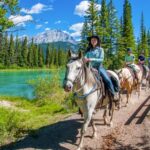
Banff looks better when you are in the saddle. This ride puts you 6 or 7 feet up on a friendly horse, led through Banff National Park with big-name scenery like the Rimrock Resort Hotel and Bow Falls. I love the views you get from that higher vantage point, and the fact that guides (like Amber) focus on safety and keep things upbeat and clear.
One consideration: you need previous riding experience, and the route can skew more steady and tree-lined than you might picture if you were hoping for nonstop dramatic, open ridgeline riding.
In This Review
- Key Things I’d Mark Before You Go
- First, the vibe: a small-group horseback ride in Banff
- Where you ride: Rimrock Hotel views, Mount Rundle, and the Spray River
- Spray River Trail Loop: the calm-and-exciting part of the day
- Bow Falls and the second crossing: the big scenery payoff
- Sulphur Mountain: views without the summit grind
- Price and value: what you’re paying for (and what you aren’t)
- What to wear and how to qualify to ride
- Ride intensity: pacing, comfort, and next-day soreness
- Who this ride is for in Banff (and who should skip it)
- Should you book the 4 Hour Sulphur Mountain ride?
- FAQ
- Is this horseback ride in Banff beginners-only?
- What time does the 4-hour ride start, and how early should I arrive?
- What gear and safety items are provided?
- What should I wear on the ride?
- Is there a weight limit?
- What if the tour can’t run due to weather?
Key Things I’d Mark Before You Go
- Rimrock Resort Hotel sightings: you’ll ride with views of the iconic hotel and the valley it overlooks.
- Two Spray/Bow Falls-style river crossings: the ride includes crossing moments that add real adventure to a guided loop.
- A short break plus a small snack: you’re not just in the saddle the whole time without a reset.
- Small group size (max 6 riders): it helps you feel like part of the ride, not stuck in a crowd.
- Helmet is mandatory and provided: you don’t need to hunt down gear before you arrive.
- English-based instructions: simple English helps you understand the guide’s directions fast.
First, the vibe: a small-group horseback ride in Banff
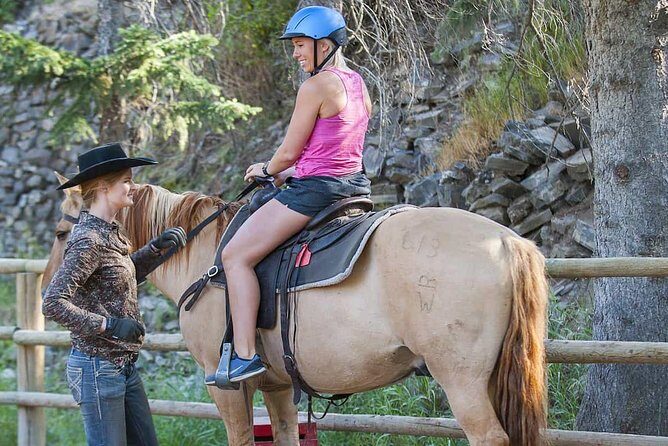
This is a 4-hour guided horseback experience starting at 12:30 pm. You meet at the corrals at Banff Trail Riders (Spray Ave, Banff) and then head out for a loop through Banff’s famous areas, ending back at the same meeting point. There’s no hotel pickup, so plan to get there on your own—good news if you’re already in Banff and can reach the area easily.
Group size is capped at 6 travelers, which usually means less waiting around and more attention from your lead and tail guides. Before you ride, you get outfitted and go through a safety briefing plus basic horseback riding instruction—the goal is to make sure you can control your horse without assistance during the ride.
This is also a practical tour for people who can handle the rules. Helmets are mandatory, you must wear the right shoes, and you must arrive 30 minutes early to check in and be ready for the start. If you’re coming from farther away, the fact that it uses a mobile ticket helps—less paper to worry about.
A few more Banff tours and experiences worth a look
Where you ride: Rimrock Hotel views, Mount Rundle, and the Spray River
The heart of the ride is getting you out of the usual walking viewpoint and into a “from the horse” angle on Banff National Park. Once mounted, you’re riding 6 or 7 feet up, which changes everything—hillsides look steeper, rivers feel closer, and the valley views come into focus sooner than they do from the trail.
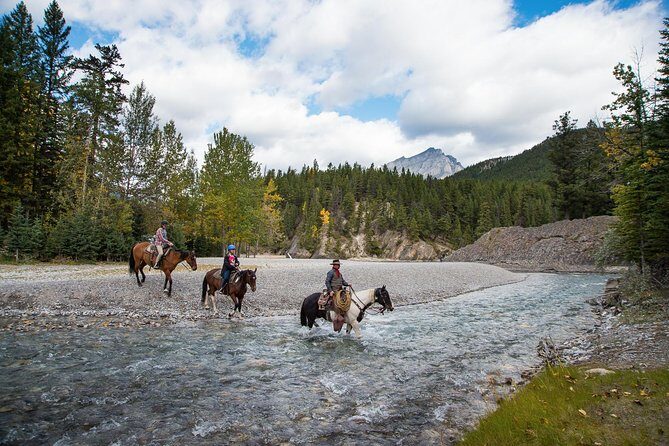
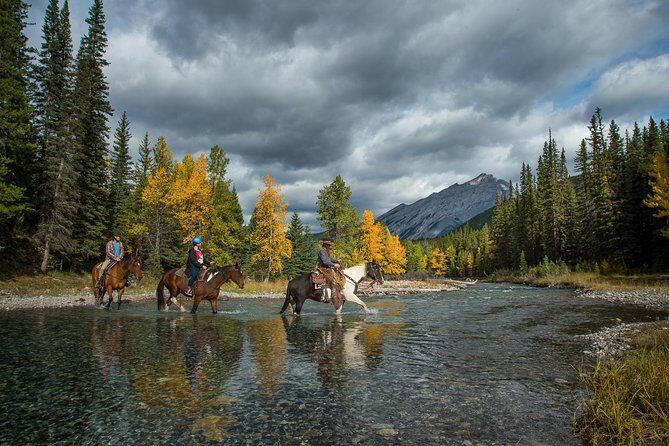
Early on, you’ll pass the Rimrock Resort Hotel area and then work your way down toward the valley. One of the most memorable moments in the day is moving through the scenery and then leading your horse across the Spray River. This is the kind of experience that feels calm and guided, but still gives you that small spike of excitement because you’re doing it up close, not watching from a distance.
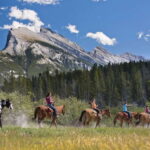
You’ll also ride along the base of Mount Rundle, then stop briefly for a rest and a small snack. That pause matters. Even if you’re fit, a horseback ride is physical—holding yourself steady and bracing your legs takes effort over time. After the break, you’ll continue with views across the valley back toward the Rimrock Hotel.
Another fun detail: the route brings you past the Fairmont Banff Springs Golf Course area, including the look of its immaculate fairways. And yes, there are moments where you can spot wildlife off to the side when you’re close to the edges of the property and trail corridors.
Spray River Trail Loop: the calm-and-exciting part of the day
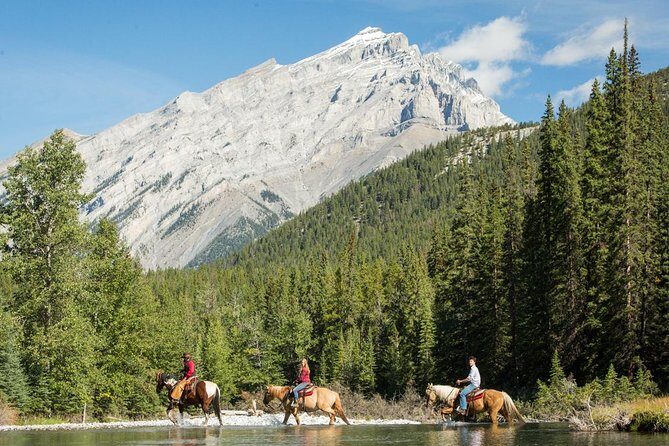
The ride has a natural rhythm: mount up, ride out, then land at key “wow” moments. When you hit the Spray River Trail Loop, it’s not just scenery—you get repeated changes in footing and terrain that make the ride feel like an actual outdoor outing, not a short parade.
Expect a guided pace. You’re riding with lead and tail guides, and you’re being positioned for safe trail movement. That means you should not expect a free-for-all gallop or total speed. If what you want is a fast, adrenaline-heavy ride, this may not match your mental picture. This is more about controlled adventure than a theme-park thrill ride.
Still, the river crossing gives the day its edge. When you cross a river on horseback, you get that full-body sense of motion and balance. You’re also learning to be part of the process—staying aware of the horse ahead, listening to direction, and keeping your seat steady while the trail narrows.
If the summer rains have been heavy, you might see tougher trail conditions. One person noted the trail can get rutted after high rainfall. Translation: you’ll feel the uneven ground. Good boots and a steady riding posture really pay off here.
Bow Falls and the second crossing: the big scenery payoff
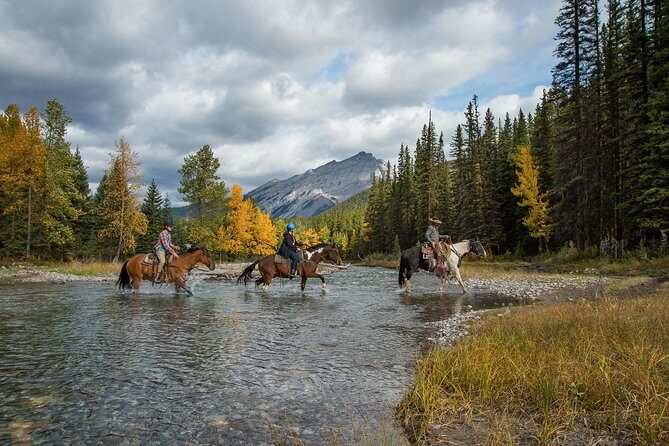
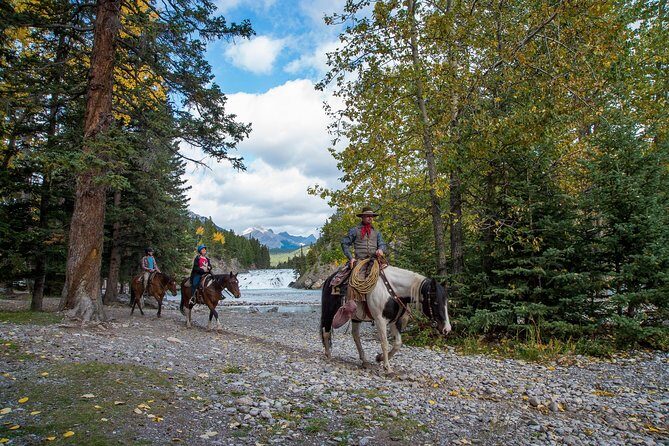
The tour’s next signature stop is Bow Falls. This is where the ride starts to feel like a full Banff “greatest hits” day, but from horseback. You’ll ride onward until you reach the roaring Bow Falls area, then you’ll cross the river a second time before heading back toward Banff.
That second crossing is important because it turns the day from a single scenic moment into a repeat performance. The first crossing teaches you the flow; the second one reinforces confidence. You’ll feel the difference when the horse navigates again and you realize you’ve already learned the basics of what the moment requires.
Bow Falls is also a strong choice for timing. If you like natural landmarks more than man-made overlooks, this fits the bill. And because you’re already on a horse, you’re not spending extra time hiking between viewpoints—you’re rolling from one major sight to the next at an even pace.
Sulphur Mountain: views without the summit grind
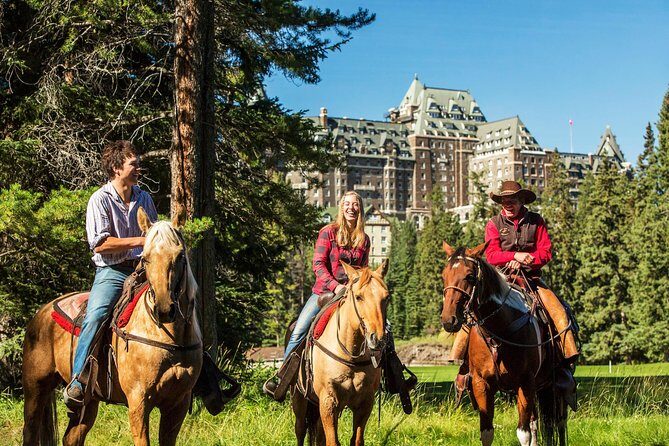
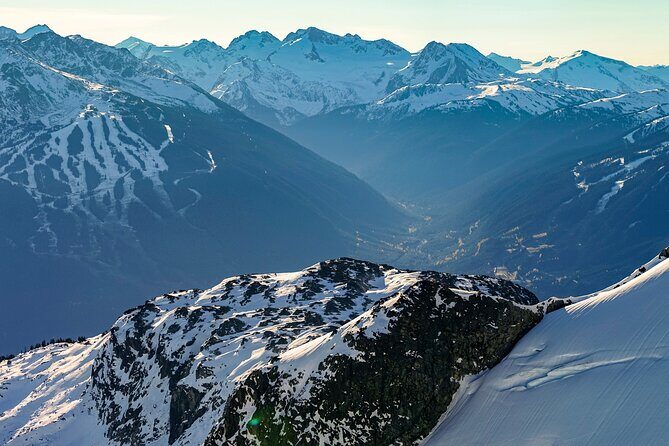
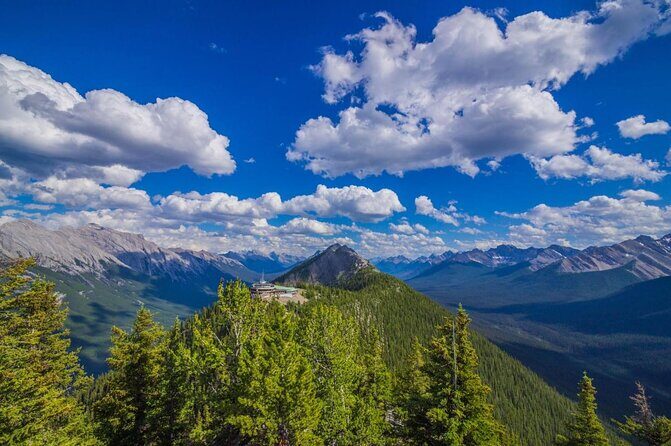
Even though the ride is called the Sulphur Mountain tour, it’s not set up as a summit push. Instead, you get the feeling of riding toward the mountain’s presence, with stunning views across the valley and a strong sense of being high enough to see the whole scene unfold.
Think of it as a way to get that “mountain ride” feeling without the steep hike logistics. You’re out there for hours, so it still feels like an accomplishment, but it’s a different kind of effort. The effort comes from staying balanced and comfortable in the saddle and keeping your legs engaged.
One useful expectation-set: some riders are surprised by how much of the ride can be tree-lined rather than constantly open-country. If your dream is always ridgelines and wide-open panoramas, you may wish for more exposure to open slopes. On the other hand, tree cover can make the day feel cooler, and it often makes wildlife sightings more plausible.
The best part is that even in wooded stretches, the key moments—river crossings, Bow Falls, and those valley viewpoints—still land.
Price and value: what you’re paying for (and what you aren’t)
At $253.36 per person for about 4 hours, the price isn’t a casual add-on. You’re paying for a full guided horseback outing: the horse, the safety framework, the guiding team, and the gear support (like helmets). You’re also paying for access to terrain and viewpoints that are hard to replicate by foot in the same time window.
Here’s what’s included:
- Lead and tail guides
- Use of a horse
- Basic horseback riding instruction
- Helmet (mandatory)
- A small snack
What’s not included:
- Beverages
- Hotel pickup/drop-off
So the value depends on how you like to travel. If you want a half-day activity that’s genuinely different from driving viewpoints and easy walks, horseback is a strong way to use time in Banff. If your main goal is a cheap, low-effort sight tour, this is probably pricier than you’ll feel comfortable with.
My practical advice: plan to handle your own water. Since beverages aren’t included, bring what you need for the heat and your own comfort.
What to wear and how to qualify to ride
This tour is strict about safety, and that’s a good thing. You must wear long pants and sturdy closed-toe shoes that are enclosed to the ankle—no open-toe shoes and no big heels. Helmets are mandatory, and you’ll get one for the ride, but your footwear still needs to do the job.
There are also real body-limit rules. You must be under 230 lbs, and the operator may require you to confirm your weight on a scale as part of check-in. If you miss that requirement, the booking is forfeited without a refund. It’s not there to be difficult; it’s tied to horse health and rider safety.
Riding experience matters here. This is for riders with previous riding experience only. That’s not a suggestion; it’s part of the design of the day. If you’re a beginner, you might find instruction helpful, but this specific ride is not meant for first-timers.
Age rules are also clear:
- Minimum age is 8
- If you’re under 18, you must be accompanied by a parent or guardian
- Children are required to ride their own horse (not paired with an adult)
Language helps too. For foreign visitors, you’ll need basic English to understand simple instructions from your guides.
Finally, there’s a note about abilities: the operator says they cannot accommodate disabilities or special needs riders because they don’t have the equipment or skills to safely do it. If that’s relevant to you, it’s worth asking before booking any horseback activity.
Ride intensity: pacing, comfort, and next-day soreness
Even when horseback riding sounds relaxing, it can get physical. One rider described it as a challenging, physically exhausting affair, with sore legs the next day. That matches how horseback riding often feels: you’re working your balance and bracing muscles continuously, even when the pace is controlled.
The route likely keeps you at a steady, guided pace, not a frantic sprint. Some people also noted there wasn’t much of a trot or gallop. Translation: if you want variety in speed, set expectations accordingly. This ride is built around scenery, trail movement, and handling moments like river crossings—not around maximum speed.
Comfort tips that matter more than you’d expect:
- Wear the right shoes so your ankle and foot stay stable.
- Expect to use your legs to grip and steady yourself.
- Take the snack break seriously. Even a small rest helps your posture.
If you’re someone who loves “real adventure” more than polished sightseeing, this tends to land well.
Who this ride is for in Banff (and who should skip it)
This is a good fit if:
- You have previous horseback experience
- You want to see Banff National Park from horseback, not just from pullouts
- You like guided pacing with occasional excitement, especially river crossings
- You want a half-day plan that feels like an outdoor activity, not a quick photo stop
It may be less ideal if:
- You want a ride for beginners or first-time riders
- You hoped for constant open mountain views or nonstop fast movement
- You’re close to the weight limit or have any needs that require special equipment (the operator notes they can’t accommodate special needs riders)
If you’re a confident rider who’s comfortable following trail instructions in English, you should feel right at home.
Should you book the 4 Hour Sulphur Mountain ride?
I’d book it if you want a memorable Banff experience that’s genuinely different from driving and walking. You get major scenic anchors like the Rimrock Resort Hotel area, Bow Falls, and multiple river-crossing moments, all in one guided half day. Add the small-group size and mandatory safety gear, and it’s an efficient way to spend your time.
I’d pause before booking if you’re not already an experienced rider, if you’re hoping for a mostly open, ridgeline-style ride, or if your expectations are built around speed. This is controlled, scenic, and physically real.
FAQ
Is this horseback ride in Banff beginners-only?
No. This specific ride is for riders with previous riding experience only. You’ll get basic instruction, but the activity is designed for experienced riders.
What time does the 4-hour ride start, and how early should I arrive?
The ride starts at 12:30 pm. You must meet at the corrals 30 minutes prior to your start time.
What gear and safety items are provided?
A helmet is mandatory and is included. You’ll also get safety briefing and basic horseback riding instruction.
What should I wear on the ride?
Wear long pants and sturdy closed-toe shoes enclosed to the ankle. Open-toe shoes and shoes with big heels are not allowed.
Is there a weight limit?
Yes. All riders must be under 230 lbs. You may be asked to confirm your weight on a scale during check-in.
What if the tour can’t run due to weather?
This activity requires good weather. If it’s canceled due to poor weather, you’ll be offered a different date or a full refund.
If you want, tell me your riding level and when you’re going (month is enough), and I’ll help you decide if this timing and trail style will match what you’re hoping to get out of Banff.