REVIEW · NIAGARA FALLS AND AROUND
Whirlpool Adventure Course – Classic Course
Book on Viator →Operated by WildPlay Niagara Falls · Bookable on Viator
The Whirlpool looks small from above. On WildPlay Niagara Falls’ Classic Course, you’ll climb and zip across platforms over the Niagara River gorge, tackling a lot of games that build as you go—starting around 20 feet up and pushing higher to about 40 feet. I love that it’s built around a continuous belay system, so you’re learning a real climbing setup without being left on your own. The other thing I like: it’s not just one zip line, it’s a whole circuit of obstacles like tightropes, cargo nets, rope swings, and swinging logs.
One drawback to plan around: if your group includes very young kids, pace can get tricky. The Classic Course is still a solid family option for many ages (it starts at age 5), but younger participants can slow the group in ways that feel more obvious in a shared, tight schedule.
In This Review
- Key Things You’ll Notice on the Classic Course
- Classic Course vs. Just Watching Niagara From the Ground
- Arriving at WildPlay Niagara Falls: Where You Start and How It Feels
- Training on the Ground: The Part That Makes the Rest Easier
- The Lower Level (Up to 20 Feet): Tightropes, Cargo Nets, and Zip-Line Slides
- Upper Level to Around 40 Feet: When the Course Gets Real
- Safety and Belay: What You Can Trust (and What You Can’t)
- Price and Value: Is $44.53 Worth It?
- Who This Classic Course Fits Best (And Who Might Hesitate)
- Group Size, Transportation, and the Real-Day Feel
- A Practical Tip If You’re Buying Through a Third Party
- Should You Book the Whirlpool Adventure Course: Classic Course?
Key Things You’ll Notice on the Classic Course
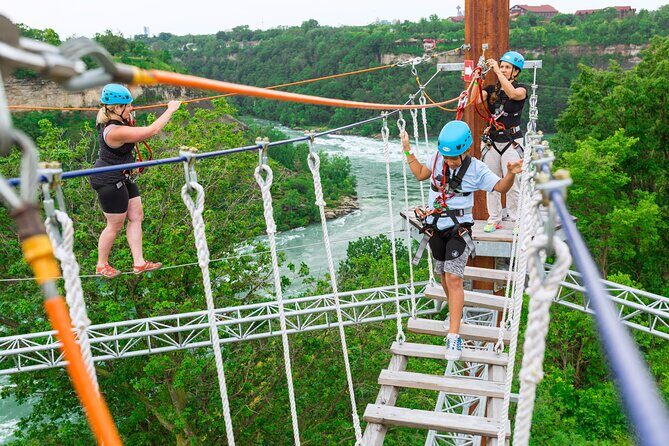
- Two-level challenge: lower route to about 20 feet, then a second set of obstacles and ziplines up to about 40 feet
- 41 games, obstacles, and ziplines on the Classic Course, with more as you move up
- Continuous belay system plus a ground training session before the ladder-climb
- High-energy obstacle mix: tightropes, cargo nets, wobbly bridges, zip-line slides, and rope swings
- Small group size: maximum of 10 travelers, which helps keep the experience moving
- Weather matters: the course requires good weather for operation
Classic Course vs. Just Watching Niagara From the Ground
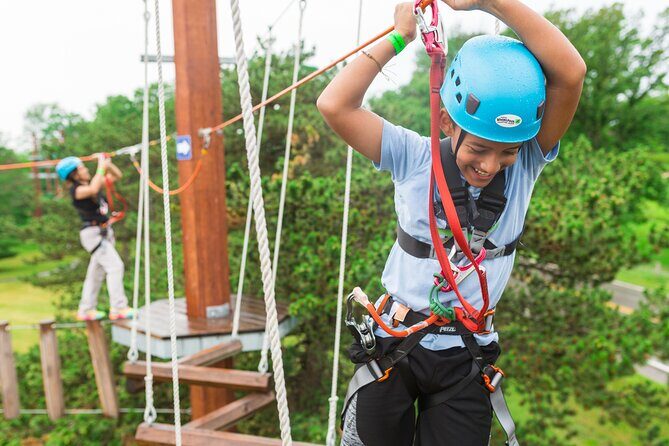
Niagara Falls is famous. The Whirlpool is dramatic. But this is the rare Niagara experience that makes you part of the action. On the Classic Course you climb from platform to platform, then launch into ziplines, then land and shift to the next task—so you get constant movement instead of a quick thrill and done.
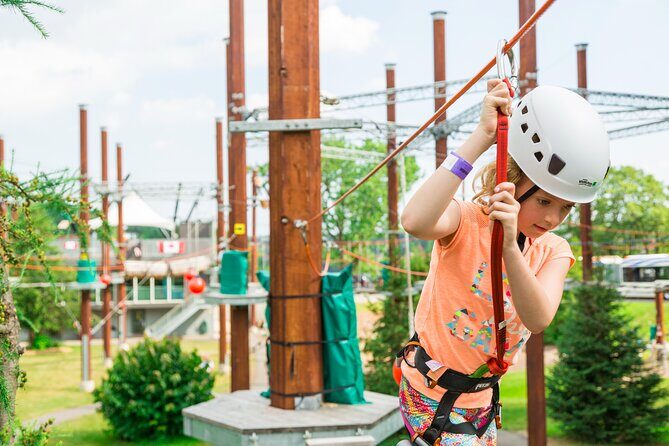
The Classic Course is built to ratchet up gradually. You start lower with challenges up to around 20 feet, then move on to an upper segment with an additional 20 games and ziplines that reach up to about 40 feet in the air. That structure is more than marketing. It means you can build confidence while you’re still close to the ground, then earn the higher sections as your hands and legs warm up.
And yes, the setting is the point. You’re suspended above the Niagara River gorge while doing obstacle elements. Even if you’re not a thrill-seeker by nature, the course is designed so you’re not just staring at the view—you’re concentrating on the next hold, the next balance point, and the next zip-line landing.
You can also read our reviews of more tours and experiences in Niagara Falls and Around.

Arriving at WildPlay Niagara Falls: Where You Start and How It Feels
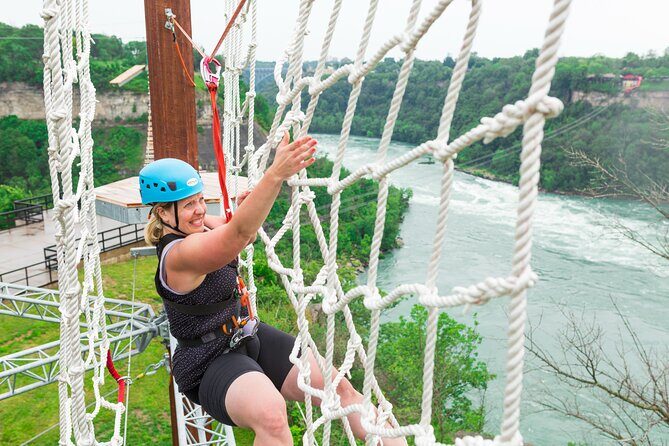
You’ll meet at 3500 Niagara River Pkwy, Niagara Falls, ON L2E 3E8, Canada. The experience ends back at this same location, so you’re not piecing together extra transportation once you’re done.
This is also one of those Niagara activities where the small group size changes the whole vibe. With a maximum of 10 travelers, you’re less likely to feel lost in a crowd. It tends to feel more like a guided adventure than a mass event—important when you’re trusting safety equipment and moving through a sequence.
Timing is also pretty friendly: plan for about 90 to 120 minutes total time on the course. That’s long enough to feel like you really did something, but short enough that you’re not spending your whole day waiting around.
One more practical note: the activity requires good weather. If conditions aren’t right, the operator will either move you to another date or offer a refund. So if Niagara is your tight schedule, it’s smart to keep this activity flexible if you can.
Training on the Ground: The Part That Makes the Rest Easier
Before you climb, you get a training session on the ground. This is where they get you comfortable with the ziplines and the continuous belay system—the safety setup that keeps you attached as you move between platforms and obstacle elements.
This matters because the course isn’t about one leap. It’s a chain reaction: you transfer your body from one element to the next while you stay connected. If you’ve never done anything like this, the training helps you avoid the classic panic move of spending your first minutes trying to figure out how the gear works while also being 20 feet up.
During training, expect to learn the basic rhythm: how you’ll handle the line, how you’ll move at your pace, and how the course expects you to progress. The goal is to get you ready enough that when you ladder up to the platforms, you’re focused on the obstacle—not on your confusion.
The Lower Level (Up to 20 Feet): Tightropes, Cargo Nets, and Zip-Line Slides
Once you’re trained, you climb up a ladder and start the lower circuit. This portion includes the first set of challenges (up to about 20 feet high) and is loaded with obstacle variety.
Here’s what you’ll likely experience on the lower level:
- Tightropes where balance is the game
- Cargo nets that test grip and foot placement
- Zip-line slides where you get speed without a long run-up
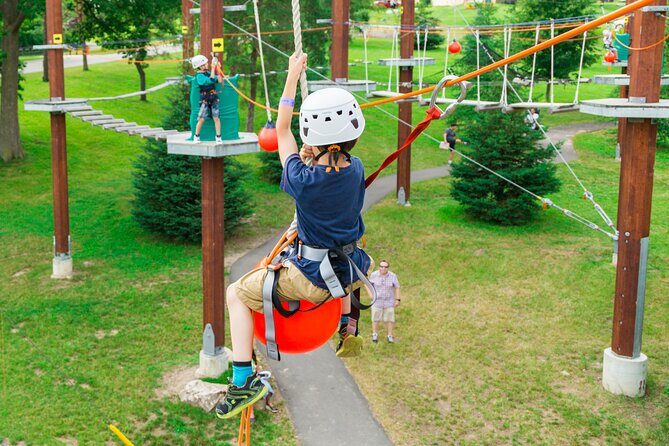
- Rope swings that combine momentum and timing
- Leaping onto swinging logs when you’re confident enough to commit
I like the lower level because it’s where most people find their own pace. You’re high enough to feel the adrenaline, but you’re still in that early stage where it’s possible to reset your breathing between elements.
If you tend to overthink things, treat the lower course like practice rounds. You’re not trying to win. You’re trying to get comfortable moving your body while staying connected to the system.
Upper Level to Around 40 Feet: When the Course Gets Real
After you’ve worked your way through the lower set, you climb into the upper level. This is the part that raises the stakes—both in height and in challenge.
The Classic Course adds an additional 20 games and ziplines, and the upper section reaches up to about 40 feet in the air. At this point, the obstacles feel more intense simply because your body has more distance to think about, and your brain has more to process visually.
This is also where the “I can’t do this” moment can pop up. That doesn’t mean you can’t. It usually means you’re confronting the fact that this is actual physical work with real exposure.
Some highlights from the obstacle style you’ll see on the full course include:
- Wobbly bridges that reward slow, controlled steps
- Swinging logs that demand timing rather than brute strength
- Additional ziplines that keep breaking up the climbing effort
If you’ve got a group, the upper level is where pacing differences show up most. Stronger participants may feel ready to move quickly, while others need more breaks. In many good groups, that becomes encouraging. In mixed-age groups with little kids, it can become a bottleneck.
So if you’re bringing children, pick a plan that matches their comfort level. Even though the minimum age is 5, the course still includes balance and grip tasks that some young kids will find more demanding than you expect.


Safety and Belay: What You Can Trust (and What You Can’t)
The big safety feature here is the continuous belay system. That’s what makes this type of aerial obstacle course feel manageable. You’re not just “out there.” You’re connected while you move through the sequence.
You’ll also have the ground training before you ladder up, which reduces the odds of first-time confusion at height.
What you should still keep in mind: this is not a spectator activity. It’s physical and you’ll be using your hands and legs. The course can be challenging even for people who are athletic, because balance and exposure are their own kind of workout.
So the practical mindset is: follow the instructions, take a breath before each move, and don’t rush a task you’re not ready for. The people who have the best time tend to treat it like a guided effort rather than a race.
Price and Value: Is $44.53 Worth It?
At $44.53 per person, the Classic Course can look like a deal compared with “big Niagara ticket” activities. But the real value isn’t just the price—it’s the amount of active time and the variety packed into a single circuit.
You’re getting:
- A 90–120 minute experience
- 41 games, obstacles, and ziplines
- Two height tiers, up to about 40 feet
Compared to a short attraction where you watch, walk, and leave, this is one of those experiences where your effort is the product. You’re paying for time on the course, the safety setup, and the full obstacle sequence.
Also, the small-group cap of 10 travelers helps the value because it supports an experience that feels intentional rather than rushed. You’re more likely to have enough attention when you need it.
The one “value risk” is weather. If it gets canceled, your plans may need adjusting. But if you can handle some flexibility, this price-to-duration ratio is hard to beat for an adrenaline-and-confidence experience in Niagara.
Who This Classic Course Fits Best (And Who Might Hesitate)
This activity lists:
- Age: 5+
- Minimum height: 4’8″
- Maximum weight: 300 lbs
- Fitness level: moderate physical fitness
That “moderate fitness” part is key. You don’t need to be a mountain climber, but you do need the ability to move your body through awkward positions: gripping, stepping, balancing, and climbing between platforms.
I’ve seen (and heard from groups) that ages can span wide when people are willing to support each other and take their time. One group that included ages 12 to 69 had a blast on a challenging course, with moments that felt impossible until they pushed through.
If you’re bringing kids, plan for a possible mismatch in pace. One common lesson from the experience style here: very young kids can sometimes need more time on obstacles, which slows everyone else. The fix is simple—choose the course level and day plan that matches the youngest participant’s comfort.
If you’re afraid of heights, you’re not alone. The course is designed to give you a progression (lower to upper), so you can build confidence. You’re also not free-climbing on your own; you’re attached through the continuous belay system.
Group Size, Transportation, and the Real-Day Feel
With up to 10 travelers, this usually feels like a shared adventure rather than a ride-through. You’ll likely notice that you can talk, encourage, and regroup without chaos.
It’s also noted as near public transportation, which is helpful if you’re not driving. And it’s listed with service animals allowed, which is good to know for travelers who need them.
Because it runs on shared platforms and sequences, comfort with waiting matters. If you’re the type who hates delays, bring a little patience. The upside is that the group limit tends to keep the waiting reasonable.
And don’t ignore the weather requirement. If you’re scheduling this during your Niagara trip, give yourself enough breathing room to shift dates if needed.
A Practical Tip If You’re Buying Through a Third Party
One frustrating issue can come from ticketing systems when your booking record doesn’t match up at check-in. I’d handle this by being proactive: when you book through any third party, keep your confirmation details handy and arrive with proof of purchase. If there’s a mismatch, you’ll waste less time if you can quickly show what you have and when you booked.
If possible, consider booking directly with the operator when you can. At minimum, arrive early enough that you’re not trying to solve paperwork problems at the start time.
Should You Book the Whirlpool Adventure Course: Classic Course?
Book it if you want a hands-on Niagara experience that feels more like personal achievement than sightseeing. The Classic Course is built for a confidence climb: start around 20 feet, then earn your way to up to about 40 feet while working through 41 games. The continuous belay system and ground training make it much more approachable than it looks.
Skip it or choose a different plan if:
- Your group includes very young kids who may struggle with slower pacing
- You’re not comfortable with moderate physical effort and balance tasks
- You can’t handle weather-based schedule changes
If you’re even slightly curious about aerial obstacles, this is the kind of activity that can turn a fear moment into a you-did-it story you’ll talk about long after Niagara day ends.