REVIEW · VANCOUVER
Vancouver: Zodiac Whale Watching Tour from Granville Island
Book on GetYourGuide →Operated by Wild whales eco tours · Bookable on GetYourGuide
Cruise for whales, yes. But you’ll feel like part of the sea. This open-air zodiac tour from Granville Island trades big-boat comfort for 360-degree views and a thrill that actually matches the Salish Sea. I like how the crew pairs speed with wildlife rules, so you get close without acting like a crowd. One thing to consider: the ride is fast and the boat is open, so if you’re sensitive to motion or cold spray, it can be a rough fit.
I also love that you’re not just scanning for spouts. You get onboard time with a marine naturalist who explains what you’re seeing and why it matters in the ecosystem. On some outings, the team has even helped log impressive orca sightings, including reports involving Honour and Rodrigo and groups across different resident types. The main drawback is simple: this is a small-vessel adventure, so conditions and your timing can still affect what shows up.
In This Review
- Key Highlights You’ll Care About
- Zodiac Speed on the Salish Sea: Why This Tour Feels Different
- Granville Island Check-In and the 45-Minute Safety Briefing
- Open-Air Zodiac Comfort: Seats, Suits, and Weather Reality
- Wildlife Viewing Rules: How You Get Close Without Acting Like One
- Marine Naturalist Time: What the Ecosystem Lessons Actually Add
- Your Itinerary in Real Life: From Safety Briefing to Four Hours of Open-Water Watching
- Price and Value at $179: When the Zodiac Makes Sense
- Who Should Book (and Who Should Skip This Style of Ride)
- Should You Book This Vancouver Zodiac Whale Watch?
- FAQ
- Where is the meeting point for the tour?
- How long does the tour last?
- Is the zodiac open-air?
- What safety gear and clothing are provided?
- What should I bring?
- What wildlife might we see?
- Is there a guarantee if we don’t see whales?
- Who is this tour not suitable for?
- Are pets or touching marine life allowed?
Key Highlights You’ll Care About
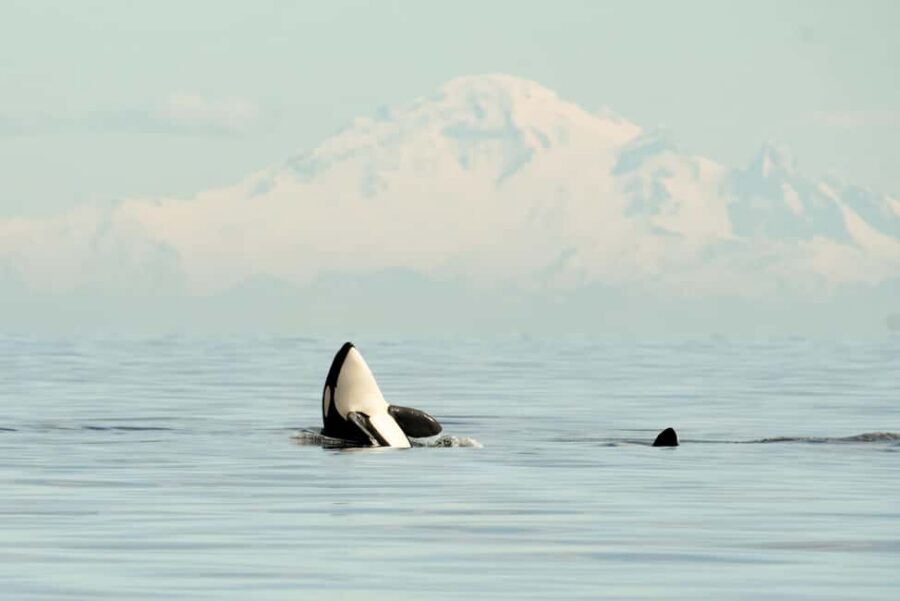
- High-speed, open-air zodiac for quick, close wildlife encounters and clear views in every direction
- Shock-absorbing seats that make the ride feel less punishing on bouncy water
- Marine naturalist onboard for real behavior-spotting, not just wildlife bingo
- Flotation suits and rain ponchos to stay warm enough for a cold, wet Pacific run
- Wildlife viewing guidelines plus a whale-visibility guarantee if sightings don’t happen
Zodiac Speed on the Salish Sea: Why This Tour Feels Different
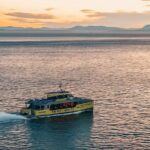
If you’ve done whale watching on a big covered boat, you already know the drill: you sit, you crane your neck, and you hope the animals decide to cooperate. This tour flips the vibe. The star is a custom-built zodiac, built for agility and speed through the Salish Sea. It’s open-air, so the wind and spray are part of the experience, but that also means you don’t lose time watching through glass or from a boxed-in deck.
The practical payoff is that you get real situational awareness. You can look left, right, forward, and back without changing your posture. That 360-degree view matters when marine life pops up unexpectedly near the bow or drifts alongside your route. And because the zodiac is smaller, the crew can move more precisely while still following wildlife protocols.
Also, the cruise isn’t just about thrill. There’s a reason the boat is set up with shock-absorbing seats. On a high-speed ride, the point isn’t to numb you with discomfort; it’s to keep you stable enough to watch behavior. That’s how you end up noticing details like surfacing patterns, coordinated movement, and where birds cluster—signals that tell the crew where attention should go.
You can also read our reviews of more whale watching tours in Vancouver
Granville Island Check-In and the 45-Minute Safety Briefing
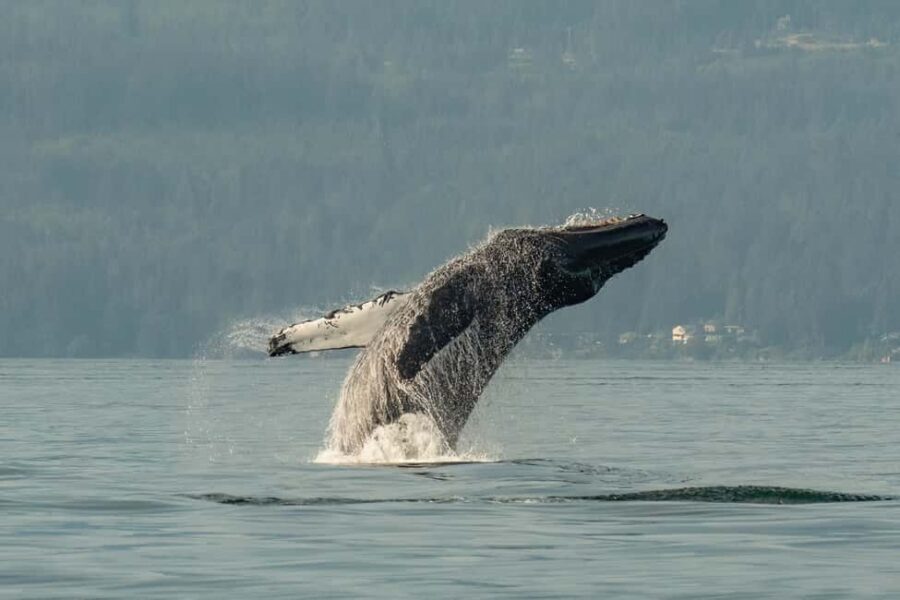
Your day starts on Granville Island at the Wild Whales Vancouver office, at 1806 Mast Tower Ln. Plan to arrive early because paid public parking fills up quickly in summer. If you’re using transit or the small local ferry service, it’s still worth building a buffer, since the tour runs on a tight departure window.
Check-in includes a 45-minute safety briefing, which is not wasted time if you know what you’re buying. On an open zodiac, safety and comfort are linked. You’ll learn how to wear the flotation suit correctly, where to store personal items, and what to expect if the sea gets choppy. This is also where they set expectations about movement—important because the tour is not suitable for people with pregnancy, back or neck injuries, or certain heart conditions.
Once you’re geared up, you’ll head out from Granville Island into the Salish Sea for guided viewing and a long stretch on the water. That early briefing is why the ride tends to feel organized even when you’re bouncing at speed.
Open-Air Zodiac Comfort: Seats, Suits, and Weather Reality
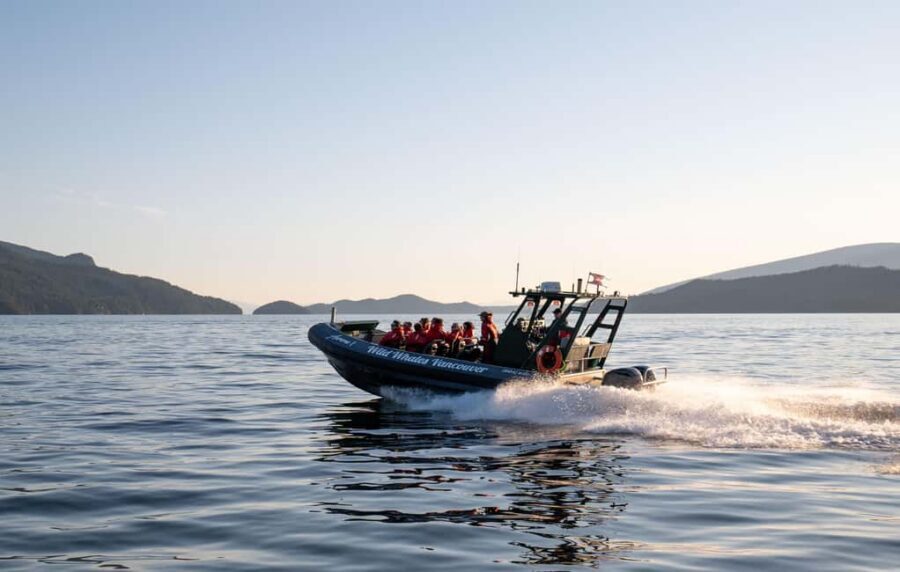
This is not a covered, sheltered boat experience. You’ll be outside. The company provides full-body flotation suits for safety and warmth, plus rain ponchos if needed. Just know the suits are not fully waterproof, so you’ll likely get damp. Bring your warm layers anyway—the water and wind can cool you fast, even on days that feel mild on land.
What makes this tour better than the usual open-boat idea is the comfort engineering. Each person gets an individual shock absorbing seat, so you aren’t stuck in the hard, jarring style of some smaller craft. That’s a big deal for a 3–5 hour outing where you need to stay sharp enough to watch.
What to pack is straightforward: warm clothing, sunglasses, a sun hat, sunscreen, a camera, and a jacket. You don’t need a suitcase of gear. The goal is to stay warm, protect your eyes, and keep your hands free for filming and pointing. Storage onboard helps with the small stuff that would otherwise float around.
One more weather note: because you’re fully exposed, wind and spray will change how you feel moment to moment. If you’re the type who gets cold quickly, you’ll be happier if you dress like it’s cooler than you think.
Wildlife Viewing Rules: How You Get Close Without Acting Like One
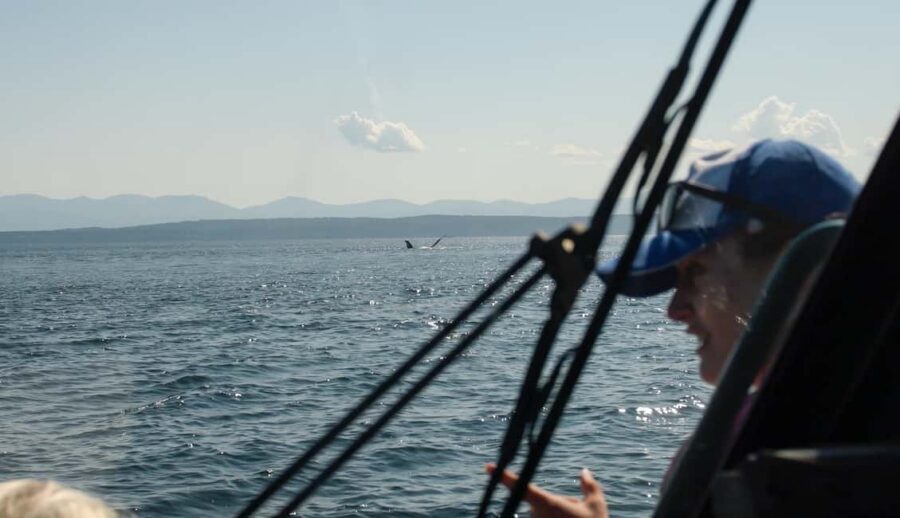
The Salish Sea can be spectacular—and sensitive. This tour follows wildlife guidelines set by the Pacific Whale Watch Association and the relevant government department (DFO). Translation: the crew works to position you responsibly, limit disruptive behavior, and respect distances.
Because the zodiac is small and maneuverable, the crew can follow animal movement without forcing a chaotic chase. That’s part of why you’re more likely to feel connected to what’s happening rather than parked and waiting. You’re not just along for the ride—you’re placed for the best chance of a meaningful encounter.
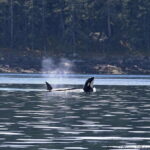
What you might see depends on conditions and recent sightings. On a good day, the list can include orcas, humpback whales, grey whales, Pacific white-sided dolphins, harbor seals, stellar sea lions, and even bald eagles, cormorants, and seabirds. Even when the main target isn’t right on schedule, birds and seals can be strong clues that something bigger is nearby.
A practical tip: when you’re scanning, don’t just look for one behavior. Watch patterns—fast surface breaks, repeated blows, sudden bird agitation. Those are the kinds of cues a marine naturalist will help you interpret as the trip unfolds.
Marine Naturalist Time: What the Ecosystem Lessons Actually Add
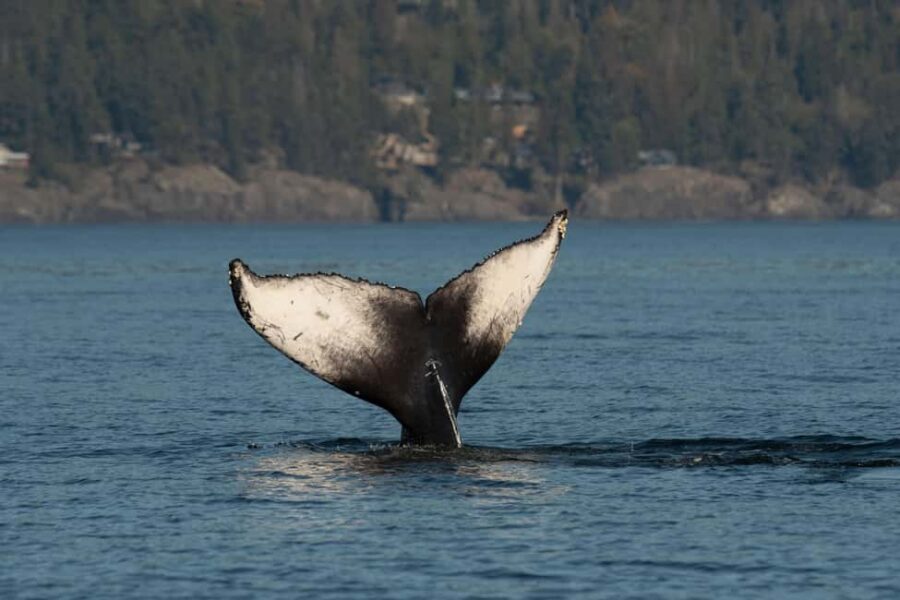
This is the part I’d call the education upgrade. You’ll have a marine naturalist onboard, and the tone is not academic for the sake of it. The point is to help you understand behavior and interpret what you’re seeing out there.
You learn how the ecosystem works in the Salish Sea, why marine life moves the way it does, and what conservation means in practical terms. It’s also part of the conservation angle behind the tour: a portion of the ticket price supports regional marine research and protection initiatives. That matters because it keeps the focus on long-term health, not just one day of excitement.
If you enjoy wildlife, this kind of narration changes how you watch. Instead of guessing, you start noticing. You might track a whale’s activity rhythm, spot how marine mammals relate to prey, or understand why the crew’s positioning shifts based on what animals are doing.
On days with standout sightings, the naturalist and captain team can help interpret what you’re seeing in real time. One example that shows the level of attention: the name Honour and the crew pairing including Rodrigo have been associated with days featuring major orca counts across different resident group types, which tells you they’re paying attention to more than just surface sightings.


Your Itinerary in Real Life: From Safety Briefing to Four Hours of Open-Water Watching
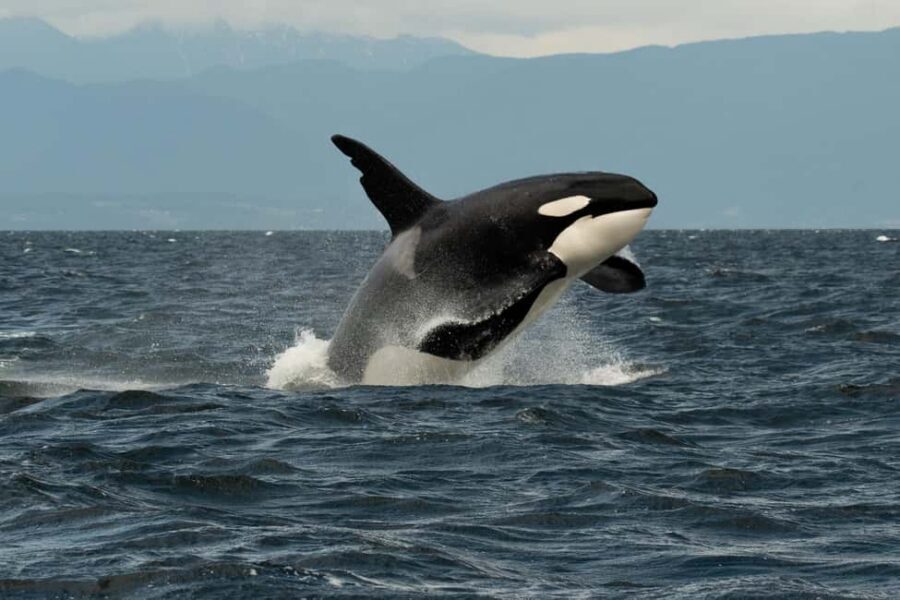
Here’s how the day typically unfolds, minus the fluff.
Granville Island start + safety briefing: You gather at the Wild Whales Vancouver office, check in, and get ready. This part is calmer than the sea, but it matters because you’re being outfitted and taught how to stay comfortable and safe in motion and wind.
On the water (about 4 hours of guided wildlife viewing): Once you’re out on the Salish Sea, the tour becomes active. You’ll be watching for whales and other marine life while the crew maneuvers for good angles and responsible viewing. Since every day is different, the route and sightings aren’t scripted, but the structure is: guided viewing plus interpretation from the naturalist.
Return to the office: You finish back at the same starting point. Since the total duration is listed around 5 hours, treat it like a half-day block with time to arrive early and get checked in.
The big downside of a wildlife-focused outing is also the truth: nature sets the schedule. You’re buying the chance to see animals up close, not a guarantee that the sea will deliver a specific species at a specific time.
Price and Value at $179: When the Zodiac Makes Sense
At $179 per person, this isn’t a budget activity. But you are paying for a specific style of experience: a high-speed, open-air zodiac with flotation suits, a marine naturalist, and a smaller-vessel setup that can reduce the “too many people, too little connection” problem.
Think of the cost in three parts:
- Vessel + crew skill: A zodiac needs experienced captains to operate safely while tracking wildlife. These captains are Transport Canada-certified with experience on local waters.
- Gear + comfort: Flotation suits, rain ponchos when needed, and storage aren’t something you get free on most tours. The shock-absorbing seats also signal that comfort isn’t an afterthought.
- Meaningful interpretation: The naturalist time adds value if you want more than a passing glimpse.
There’s also a built-in value lever: a wildlife sightings guarantee. If you don’t see a whale, you can join again for free. That can turn the price from “pay and hope” into “pay and try again,” which helps balance the inherent uncertainty of whale watching.
If your dream includes speed, close encounters, and learning what you’re looking at, this is a strong use of your time. If you want a slow, cozy, mostly dry ride, you might feel happier with a larger boat style instead.
Who Should Book (and Who Should Skip This Style of Ride)
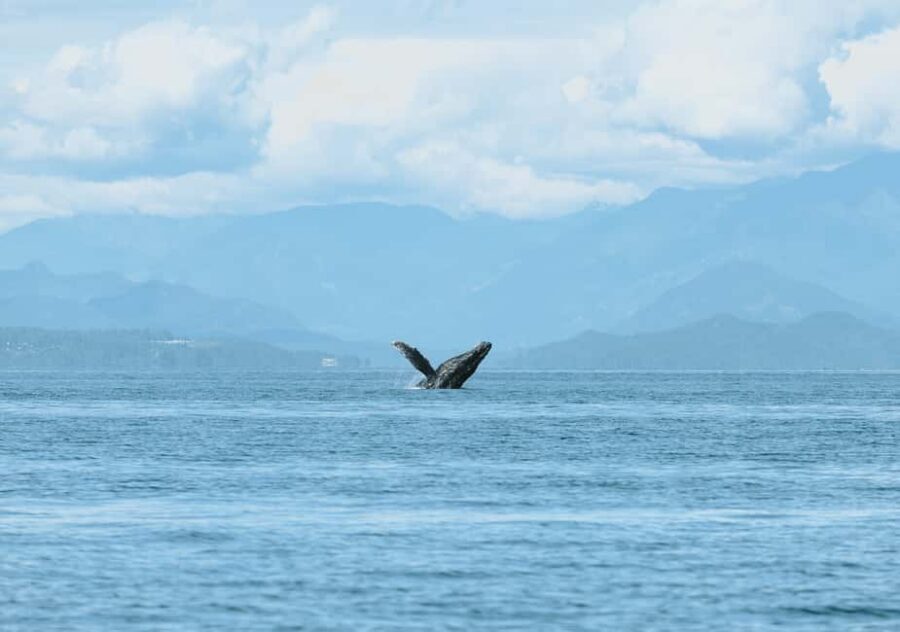
This tour is best for people who can handle motion and cold wind spray. It’s not suitable for pregnant guests and it’s not a fit if you have back or neck injuries, or heart problems. The reason is straightforward: the zodiac’s speed and motion aren’t built for delicate bodies.
It’s also not a good match for younger kids. The rules say children must meet a minimum height requirement of 152 cm (5 ft) and the experience is not suitable for children under 10 years. The info also lists additional height cutoffs under 130 cm, 160 cm, 155 cm, so confirm your child’s height at booking. If you fall near a boundary, double-check before you pay—zodiac rules are strict for a reason.
If you’re generally healthy, you’re likely to enjoy it—especially if you’re the type who likes feeling like you’re near the action rather than watching from far away.
Finally, it’s worth noting what’s not allowed: pets are not permitted, and you can’t feed animals or touch marine life. Fireworks are also not allowed.
Should You Book This Vancouver Zodiac Whale Watch?
Book it if:
- You want open-air, close-up viewing with fewer barriers between you and marine life
- You care about understanding behavior, not just spotting animals
- You’re comfortable dressing warm and getting a bit wet on the water
- You value the naturalist-led approach and the conservation angle
Skip or reconsider if:
- You’re worried about motion sensitivity or you’re in any category listed as not suitable (pregnancy, back/neck injuries, heart conditions)
- You strongly prefer a fully sheltered boat ride
- You need an activity that feels predictable day-to-day, since wildlife depends on conditions
This tour is a good bet for a first visit to the Salish Sea because it hits speed, education, and responsible viewing in one package. If you do book, treat the clothing rules seriously. Warm layers make the difference between grinning through spray and regretting your fashion choices by hour two.
FAQ
Where is the meeting point for the tour?
You meet at the Wild Whales Vancouver office on Granville Island at 1806 Mast Tower Ln, Vancouver, BC V6H 4B6.
How long does the tour last?
The tour is listed as lasting about 5 hours, with 3–5 hours of whale and wildlife watching time included.
Is the zodiac open-air?
Yes. The vessel is an open-air zodiac, so you should expect wind and spray and dress for full exposure to the elements.
What safety gear and clothing are provided?
You’ll receive full-body flotation suits for safety and warmth, plus rain ponchos if needed. There is also onboard storage for personal items.
What should I bring?
Bring warm clothing, sunglasses, a sun hat, a camera, sunscreen, and a jacket. Flotation suits help, but you still need warm layers.
What wildlife might we see?
Your sightings can include orcas, humpback whales, grey whales, Pacific white-sided dolphins, harbor seals, stellar sea lions, and birds such as bald eagles and seabirds. Species sightings vary by day and conditions.
Is there a guarantee if we don’t see whales?
Yes. If you do not see a whale, you can join again for free under the wildlife sightings guarantee.
Who is this tour not suitable for?
It’s not suitable for pregnant guests, people with back or neck injuries, and people with heart problems. Children under 10 are not suitable, and there are height restrictions listed for children and general minimums—confirm your situation at booking.
Are pets or touching marine life allowed?
No. Pets are not allowed, and you also cannot feed animals or touch marine life. Fireworks are also not allowed.