REVIEW · VANCOUVER
Vancouver to Victoria – Coach Bus Transfer
Book on Viator →Operated by BC Ferries Connector · Bookable on Viator
Skip the rental car headache. This Vancouver to Victoria coach-ferry transfer turns a tricky connection into a single ride, with your coach continuing right onto the ferry from Tsawwassen to Swartz Bay. You book a departure time in central Vancouver, check in with your voucher, then you’re dropped at Victoria’s Capital City Station.
I really like two parts of how it’s set up: the bus goes onto the ferry, so you don’t drag yourself and your bags through terminals, and your larger luggage stays handled for you while you ride upstairs and take in the water views. Even better, the end point is straightforward—Victoria Bus Depot at Capital City Station in the heart of downtown.
One thing to keep in mind: the experience depends on ferry operations, and bad weather can mean delays or cancellations, which can mess with a tight schedule. Plan extra buffer if your Victoria day is already scheduled to the minute.
In This Review
- Key highlights you’ll care about
- Vancouver to Victoria, explained in plain English
- How the 4 hours usually breaks down (and where time can slip)
- 1) Check in and board the coach in Vancouver
- 2) Coach to Tsawwassen Ferry Terminal
- 3) Boarding the ferry with your coach
- 4) The ferry crossing from Tsawwassen to Swartz Bay
- 5) Reboarding and continuing into downtown Victoria
- Luggage rules you should actually plan around
- Comfort on the coach and what the ride feels like
- Ferry views: how to enjoy the ride without losing time
- Boarding flow in Vancouver and Victoria: the spots to watch
- Driver personalities: helpful service, with one practical caution
- Value for money: is $68.41 a smart deal?
- Who this transfer suits best (and who might want another option)
- Should you book this Vancouver–Victoria coach-ferry transfer?
- FAQ
- How long is the Vancouver to Victoria transfer?
- Where does the transfer start and end?
- Do I need a print ticket?
- What’s the luggage allowance?
- Are oversized items allowed?
- Does the bus go on the ferry?
- Are service animals allowed?
- Can children travel?
- Is there free cancellation?
Key highlights you’ll care about
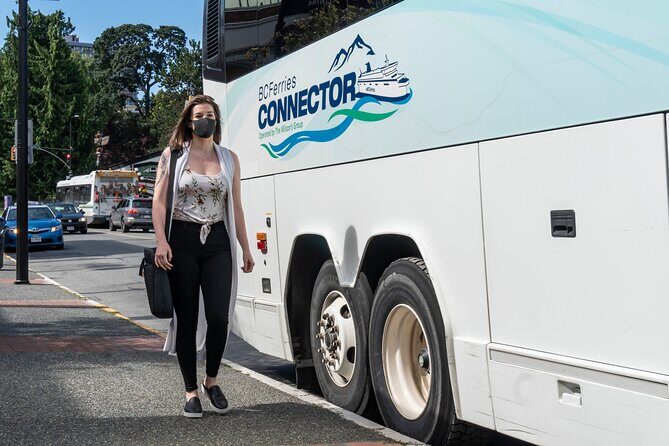
- Bus-on-ferry loading: Your coach drives aboard, which cuts down fuss and helps with smoother connections.
- Downtown drop-off in Victoria: Capital City Station makes it easy to start exploring right away.
- Comfortable, low-stress timing: You get a scheduled departure time plus an approx 4-hour overall trip window.
- Handled luggage (within limits): Your checked bag is stored for the ferry crossing while you move around.
- Great ferry scenery opportunities: You’ll have time to enjoy views from passenger areas once you’re onboard.
Vancouver to Victoria, explained in plain English
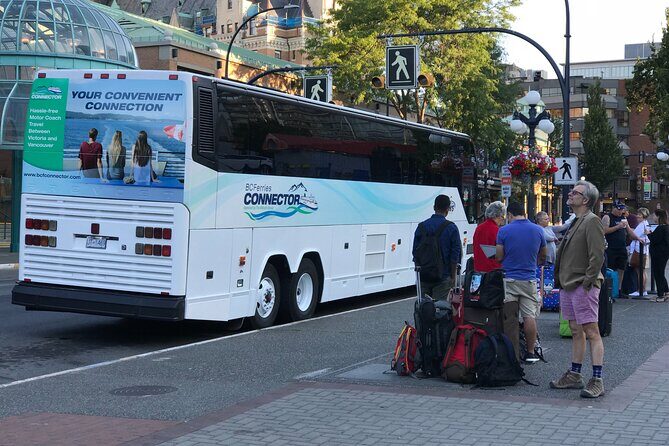
This is a one-way shared transfer from Vancouver to Victoria that combines coach travel with a BC Ferries crossing. Instead of planning a rental car, parking, and then buying ferry tickets, you pick your departure time, show your mobile voucher at the check-in desk, and then let the system do the work.
A typical day starts in central Vancouver at the bus station. From there, you ride to Tsawwassen Ferry Terminal, then board via the coach connection, and finally continue into Victoria. It’s built for people who want a clean route with minimal decision-making once they’re already on the move.
The overall ride time is about 4 hours (approx), but remember that it can stretch or tighten depending on traffic and the crossing schedule. That’s normal for any Vancouver–Island crossing, and it matters if you’re trying to catch a specific timed tour, dinner, or an event with a hard start.
A few more Vancouver tours and experiences worth a look



How the 4 hours usually breaks down (and where time can slip)

1) Check in and board the coach in Vancouver
At your booked departure time, you check in at the selected departure point in Vancouver and show your voucher at the desk. Then you load onto the motor coach and head toward the ferry terminal.
Here’s the practical tip: don’t treat “arrive early” as “guaranteed earlier boarding.” The schedule is still the schedule. One rider described a situation where they arrived early and still waited longer than expected when the day’s service timing changed due to weather-related disruption. So arrive with a small buffer, but avoid showing up so early that you’re stuck waiting in uncomfortable conditions for a long time.
2) Coach to Tsawwassen Ferry Terminal
The coach ride to Tsawwassen is part of your transfer experience. In at least one case, the road portion was described as taking a little over an hour, which lines up with how traffic can behave on this corridor.
If you’re traveling with medication, snacks, or something you’ll want during the wait, keep those on your person. You’ll have your luggage handled for the crossing, but it’s still smart to carry what you might need right away.
3) Boarding the ferry with your coach
This is the big selling point. The coach goes onto the ferry, so you don’t have to haul bags through the ferry process yourself. Once aboard, you exit the coach and go to passenger seating.
Some of the best moments here are the “first views” as the ferry gets underway: open water, coastline angles, and wide looks back toward the mainland. If you get a chance to sit on the side with the best views for your sailing direction, do it—this crossing is one of those rare rides where the scenery is genuinely part of the transport.






4) The ferry crossing from Tsawwassen to Swartz Bay
The crossing typically feels calm compared to what people expect from open water. You’ll have access to passenger services once you’re in the seating area, and there’s often food and drink available onboard (exact options vary, but expect you can buy something if you want).
One person noted they enjoyed a quiet setup and used the ferry’s onboard café/lounge options, including coffee and sodas, while watching the scenery. You don’t need to plan anything fancy here; just know you can make the crossing part of the day, not just a transit chore.
5) Reboarding and continuing into downtown Victoria
After the ferry arrives at Swartz Bay and passengers disembark, you return to the coach and continue the drive into Victoria. Your final stop is the Victoria Bus Depot at Capital City Station (721 Douglas Street).
This matters because Victoria is easiest when you land where transit and walking access are straightforward. Capital City Station is central, so you’re not stuck planning a second ride immediately after a ferry crossing.
Luggage rules you should actually plan around
Luggage is where this transfer is either smooth or stressful. The service has a clear limit: 1 checked suitcase (up to 50 lbs) plus 1 carry-on bag per person. You’ll store your larger items while the coach is onboard.
That setup works well if:
- you’re traveling with one main bag each (common for short trips), and
- you pack light enough to carry anything fragile or essential in your carry-on.
It’s less ideal if you’re bringing extra sports gear or bulky items. Oversized or excessive luggage (surfboards, golf clubs, bikes) may have restrictions, so you should ask the operator before travel if you’re unsure.
One more practical cue: keep small essentials (water, a layer, any meds) in your carry-on. You’ll move to passenger seating during the crossing, and it’s easier if you can grab what you need without digging through luggage storage.
Comfort on the coach and what the ride feels like
The coach portion is designed for a straightforward intercity ride. Based on feedback you can expect a generally comfortable bus with organized check-in and luggage handling, plus a courteous driver.
A couple of real-world notes are worth respecting:
- Some drivers are friendly but with an accent that can make announcements harder to follow. If you’re not 100% confident with spoken instructions, watch for visual cues and ask if you need confirmation on where to stand or when to board.
- In general, you’ll find it’s a “get on, get off, and go” style service. That’s the point: reduce stress when you’re switching modes between road and ferry.
Also, this service runs with a maximum of 48 travelers, so it usually feels more controlled than bigger tour buses. Still, it’s not a private transfer. If you need quiet or personal space, try to board with a plan for where you’ll sit during the crossing and how you’ll handle your carry-on.
Ferry views: how to enjoy the ride without losing time

Once you’re on the ferry, you get a real break from the road. This is one of the few ways to travel where the journey itself is part of the experience.
What you can look forward to:
- open water views leaving Vancouver’s region
- coastline and inlets as you move across
- wide angles back toward the mainland during certain stretches
My practical advice is simple: don’t treat the ferry as a locked-in seat situation. If you want photos, you’ll have a better shot if you circulate a bit once the ferry is moving and you’re settled in passenger areas. Bring a layer too—the ferry can feel cooler than the bus, and you’ll want something warm for comfort.
If you’re prone to motion, this route is still often described as calm. Even so, it’s smart to have your usual motion-prep ready. (You already know your body best.)
Boarding flow in Vancouver and Victoria: the spots to watch
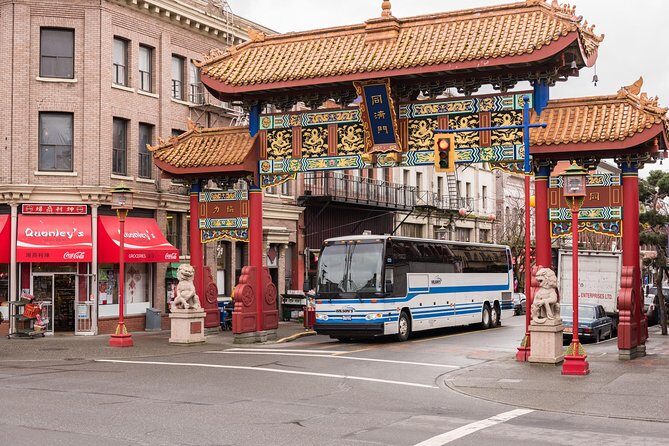
Most of this transfer is smooth, and many people love the sense that it just works. The bus gets you to the ferry connection and finishes at a central Victoria drop-off.
Still, boarding details can vary by day and by where staff direct you inside the terminal areas. Two patterns show up in real-life experience:
- Arrival timing can be strict. If you’re told to wait at a specific point, follow it. Don’t assume you can just hang out inside and drift toward the coach later.
- For some return or departure moments, passengers have found signage confusing and ended up waiting indoors before learning they needed to be outside at a specific location (like an aisle number).
So here’s what I’d do: when you arrive, find staff or signage early, then get your bearings fast. If the plan changes because of ferry operations, you’ll want to know where to wait right away. A short question to an attendant is worth far more than wandering around trying to guess.
Driver personalities: helpful service, with one practical caution
One of the most praised parts of this transfer is the human side—bus drivers who are courteous, helpful, and ready to answer questions. In some cases, drivers also shared a history lesson or local context during the ride, which adds personality to what could otherwise feel like pure transport.
The caution is about clarity. A strong accent can make announcements difficult. If you depend on spoken instructions, keep an eye out for what others are doing, and don’t be shy asking for clarification if you’re unsure about where you should stand or when to reboard.
Value for money: is $68.41 a smart deal?
At around $68.41 per person, this isn’t the cheapest way to cross the water, but it can be strong value because it bundles multiple headaches into one payment.
Here’s the value equation I’d use:
- You’re paying for coach and ferry as one coordinated transfer.
- You avoid rental car logistics (pickup lines, gas, parking, ferry ticketing, and the stress of driving onto the correct ramp at the right time).
- You also get luggage handling within the set limits, so you can spend the crossing focused on the ride instead of managing gear through terminals.
Some people choose flying, but flying often adds layers: getting to airports, arriving early for check-in, baggage rules, and then dealing with transportation at both ends. This transfer is more direct and often easier for short trips—especially if your schedule is packed and you don’t want to build a complex transit plan.
If you’re traveling with heavier bags, this kind of transfer can feel especially worth it. One big advantage repeatedly shows up: you don’t have to drag luggage through the ferry process like you would if you handled everything independently.
Who this transfer suits best (and who might want another option)
This transfer is a great fit if you:
- don’t want a rental car
- have at least one bag you’d rather not juggle through ferry terminals
- prefer a guided, scheduled connection rather than planning bus + ferry separately
- want the downtown convenience at the end (Capital City Station)
It may be less ideal if you:
- need to carry unusual or oversized equipment and aren’t sure it will be accepted
- have a super tight itinerary with zero buffer for ferry delays
- rely heavily on verbal announcements and struggle with accent-heavy communication
It’s also a straightforward option for many different ages because children must travel with an adult, and the service allows service animals. Strollers can be stored underneath the bus if they’re folded, under 50 lbs, and non-motor. That last part matters if you’re traveling with a little one and you want the stroller handled during the crossing rather than crammed into the aisle.
Should you book this Vancouver–Victoria coach-ferry transfer?
I’d book it if your priority is low-stress logistics. The coach-ferry combo is the real win: less moving around with luggage, a more relaxed crossing, and a downtown drop-off at Victoria Bus Depot. If you want to trade planning time for comfort time, this is exactly the kind of service that makes that trade.
I’d think twice if your day in Victoria is razor-tight or if you have to connect to something at a hard-to-miss time, because ferry operations can change with weather. In that case, either build buffer or consider a travel plan that gives you more redundancy.
If you’re booking it for the first time, do two things and you’ll set yourself up well:
- pack within the 1 suitcase (50 lbs max) + 1 carry-on luggage rule
- arrive early enough to find the check-in/boarding point, but don’t show up so early that you freeze waiting if the schedule is delayed
FAQ
How long is the Vancouver to Victoria transfer?
The transfer is about 4 hours (approx.). The exact timing can vary with the time of day and traffic conditions.
Where does the transfer start and end?
The end point is Victoria Bus Depot (Capital City Station), 721 Douglas Street, Victoria. The start is at a departure point in central Vancouver bus station with multiple departure times.
Do I need a print ticket?
No. A mobile ticket is used, and you show your voucher at the check-in desk.
What’s the luggage allowance?
Each person is allowed a maximum of 1 suitcase (up to 50 lbs) and 1 carry-on bag.
Are oversized items allowed?
Oversized or excessive luggage (like surfboards, golf clubs, or bikes) may have restrictions. You should inquire with the operator prior to travel to confirm.
Does the bus go on the ferry?
Yes. The coach travels via ferry, with the bus boarding the ferry and continuing afterward to Victoria.
Are service animals allowed?
Yes. Service animals are allowed, and certified guide dogs require valid certification to be presented to the driver during check-in.
Can children travel?
Children must travel with an adult.
Is there free cancellation?
Yes. Free cancellation is available up to 24 hours before the experience start time for a full refund.