REVIEW · VANCOUVER
Vancouver: Indian Arm and Granite Falls Zodiac Boat Tour
Book on GetYourGuide →Operated by Vancouver Water Adventures · Bookable on GetYourGuide
Three hours of glacier-air and granite walls. This zodiac boat tour pairs classic Vancouver harbor scenery with the quieter Indian Arm fjord, getting you right up to Granite Falls’ crashing cascades. You’ll pass big-city landmarks from the water, then trade crowds for the stillness of a glacial inlet and the sound of moving water.
What I like most is the mix: iconic views with real local context. The route threads together sights like Granville Island, Stanley Park, and the Lion’s Gate Bridge, then pushes farther north toward Siwash Rock, North Shore scenery, and the Granite Falls area. One heads-up: this is an open-water, rain-or-shine ride with real cold and spray at speed, and it’s not suitable for everyone (for example pregnancy, back problems, recent surgeries, or people under 120 cm).
In This Review
- Key things you’ll remember
- Granville Island start: suits, lifejackets, and a quick safety check
- Harbor highlights: Granville Island, English Bay, and Stanley Park from the water
- Under the Lion’s Gate Bridge: Siwash Rock, waterfalls, and shipping-port stories
- Pushing into Indian Arm: the glacial fjord moment that changes everything
- Granite Falls up close: peace, spray, and listening to cascades
- What the guides do best: commentary that ties landmarks to real context
- Wildlife chances: seals, eagles, and why binoculars help
- Weather and comfort: rain or shine, cold or not
- Price and value: $116 for a city-to-fjord combo
- Who should book, and who should skip it
- Should you book the Vancouver Indian Arm and Granite Falls zodiac tour?
- FAQ
- How long is the Vancouver Indian Arm and Granite Falls zodiac boat tour?
- Where do I meet for the tour?
- What should I do before departure time?
- What’s included in the price?
- Are food and drinks included?
- Does the tour run in bad weather?
- What language is the tour guide?
- Is this tour wheelchair accessible?
- Is the tour suitable for everyone?
Key things you’ll remember
- Granville Island start, safety gear first so you’re ready before the boat even leaves the dock
- Fast harbor sightseeing past Stanley Park and under the Lion’s Gate Bridge
- Stories tied to places like Vancouver’s role as a major shipping port near Seaspan
- Indian Arm glacial fjord time where the air feels different and the water is close
- Granite Falls up close with a quiet moment to listen to the cascades
- Wildlife chances like harbor seals and eagles, plus the occasional surprise
Granville Island start: suits, lifejackets, and a quick safety check
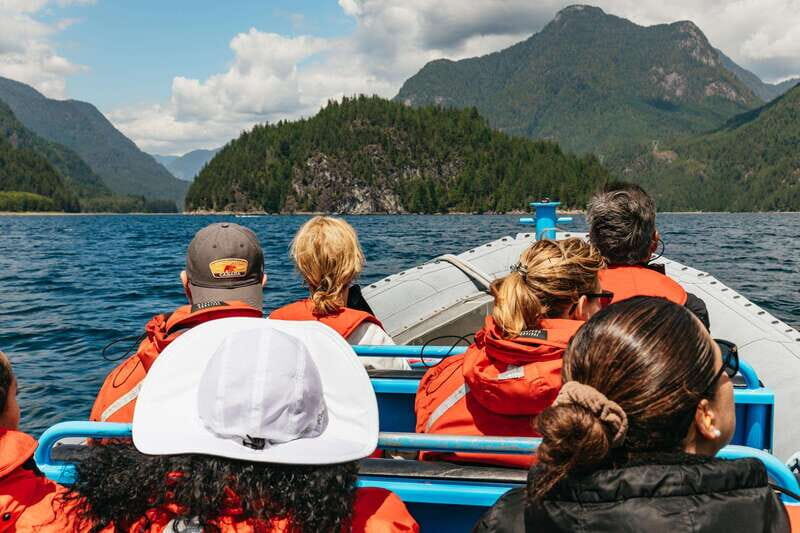
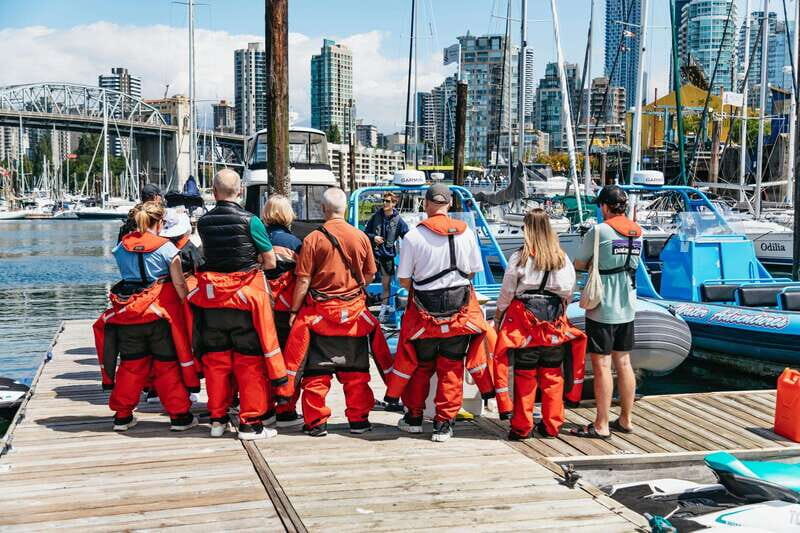
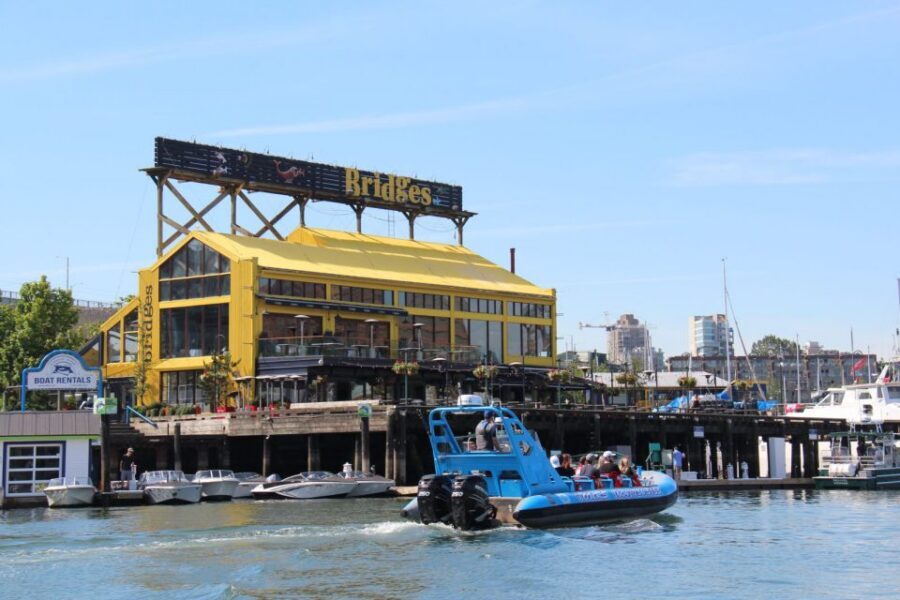
Your tour begins at Vancouver Water Adventures. Plan to arrive 30 minutes early. That time matters because you’ll be fitted with the survival suit and lifejacket before you board. It’s a straightforward system, and it makes the whole trip feel safer and smoother from minute one.
This is also the moment to think practically. If you’re bringing a phone or camera, keep a small plan for protection. Even on calm days, the zodiac ride is fast enough that you can get spray. The suits help a lot, but dry gear still makes your life easier later.
One more small tip: when you arrive early, you have time to ask questions about how the gear works for you. People on the boat are likely to share tips quietly with each other—how to wear the suit comfortably, how to keep sleeves positioned, and how to handle the wind.
You can also read our reviews of more boat tours in Vancouver
Harbor highlights: Granville Island, English Bay, and Stanley Park from the water
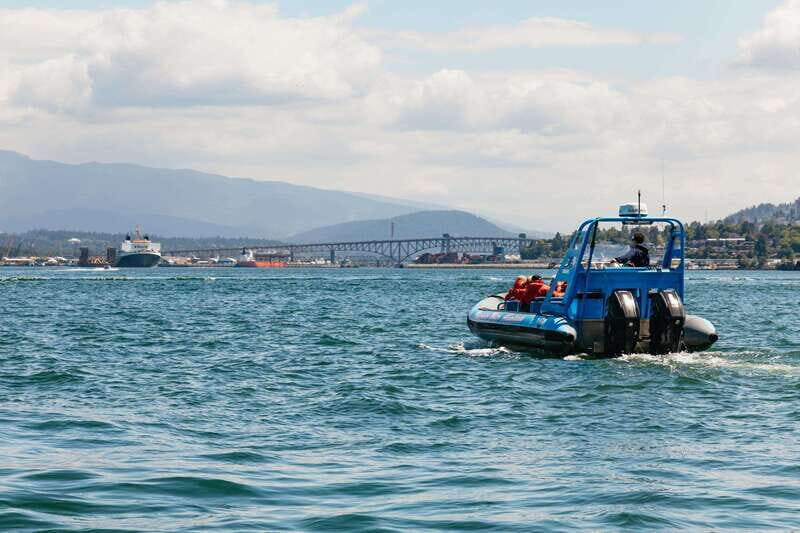
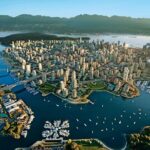
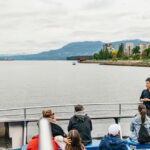
Once you’re aboard, the vibe shifts quickly from shoreline to moving viewpoint. You’ll travel through Vancouver Harbor and pass by Granville Island, then continue toward English Bay with its long beaches and seaside views.
A big part of why this works is that you don’t just see Vancouver—you see it layered. From the water, English Bay’s openness contrasts with the more sheltered feel of the harbor. And then you start watching how the city is shaped by water: the shoreline curves, boats fill the bays, and the buildings sit right on the edge of the harbor.
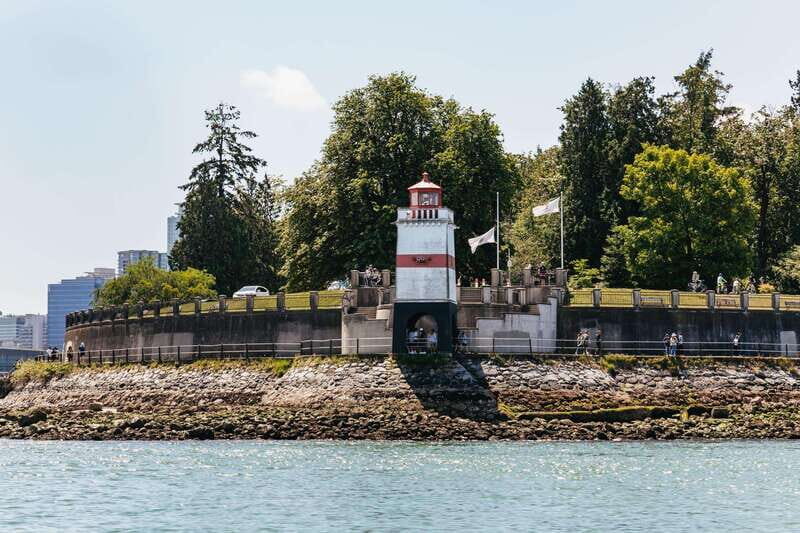
From there, you’ll pass Stanley Park. The tour experience gets extra interesting when your guide connects what you’re seeing to why Vancouver is the way it is—trees lining the seawall, old cedars and pines, and the engineering that lets the city function beside water every day. It’s the kind of perspective you miss if you only look from the sidewalk.
If you want photos, this is where you’ll get them fast. The boat moves, but it also gives you sweeping angles you can’t easily recreate. If you’re traveling with someone who’s less into boats, this harbor stretch is usually the easiest sell because the landmarks are instantly recognizable.
Under the Lion’s Gate Bridge: Siwash Rock, waterfalls, and shipping-port stories
After Stanley Park, you’ll go under the Lion’s Gate Bridge, and that moment feels like a reset. The North Shore mountains start taking over your view, and you get a new sense of scale: Vancouver isn’t just a city-by-the-sea. It’s framed by a mountain system that drops close to the water.
On the way, your route includes sights like Seaspan, where your guide can explain how Vancouver functions as a major international shipping port. That story is more than trivia. It helps you understand why the harbor looks the way it does—industrial routes, vessel traffic, and how the city balances tourism and trade.
Then you’ll head toward Siwash Rock. This is one of those Vancouver icons that many people only see from afar on land. From the water, the view has more depth: granite cliffs, water movement, and the feeling that you’re watching geology at work.
You may also catch views toward Deep Cove. Even when wildlife isn’t involved, this part can still feel special because you’re looking into the region’s water-and-rock texture rather than just the city skyline.
Practical note: if you’re the type who likes to plan photo moments, this mid-route stretch is worth paying attention to. The lighting can change fast under the bridge and around cliffs, and you’ll want to be ready with your camera put away and then pulled out at the right time.
Pushing into Indian Arm: the glacial fjord moment that changes everything
The biggest emotional shift comes when you head up Indian Arm. This is the glacial fjord section, and it feels quieter immediately. The sound changes too—less harbor clatter, more water texture, more wind.
That’s where you’ll feel the tour’s promise of ocean air and open exposure. The boat is moving fast, and you’ll feel the air on your face. It’s not delicate scenery under glass—it’s real outdoor conditions.
This section is also when the trip earns its “worth it” factor for me. You go from a city harbor tour into something that feels more like British Columbia’s nature geography is driving the experience. Your guide’s commentary on the geology and local history helps here. You’re not just staring at cliffs; you’re learning what those shapes mean and how the fjord works.
One more reason this is valuable: it’s a time-efficient way to see “farther north” without renting a car or planning a full-day excursion. In about three hours, you can go from city views to a more remote feel—especially if your day has decent visibility.
Granite Falls up close: peace, spray, and listening to cascades
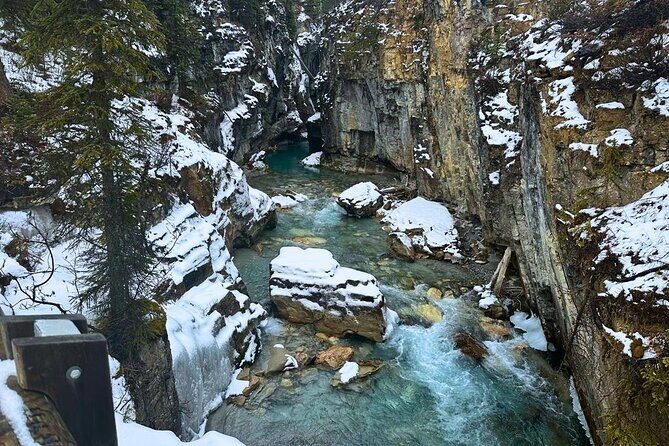
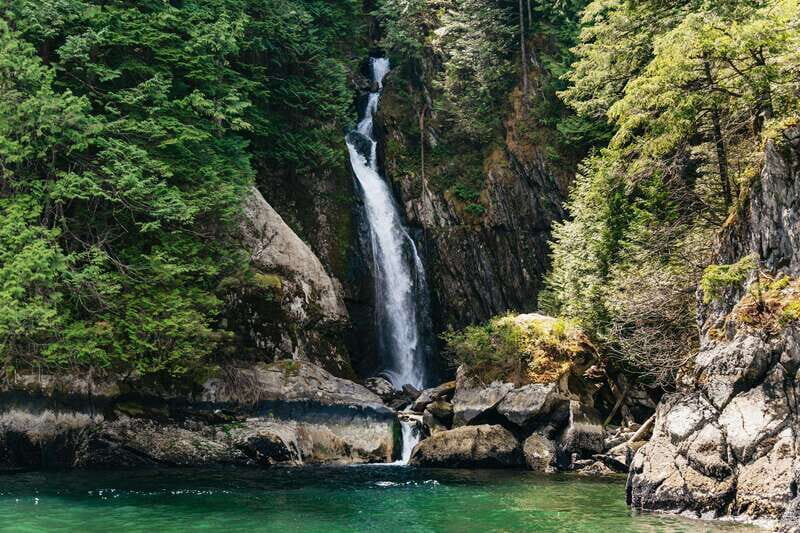
When you reach the Granite Falls area, the tour turns from sightseeing to something more intimate. You’re close enough to appreciate the scale of the cliffs and the movement of water.
This is also where the ride can feel more physical. Even if the water is calmer than expected, being near waterfalls and moving fast can mean you get damp. In at least some conditions, people do report getting a bit wet, and that’s normal for an active zodiac-style outing.
What helps is the survival suit system. Some days are warm enough that you might prefer options like folding or adjusting the suit at the waist, while keeping coverage where you need it. If you run cold, take the suit fully seriously—it’s the difference between enjoying the fjord and wishing you’d brought an extra layer.
Granite Falls itself may not feel huge in every moment. That said, people often find it’s still a memorable stop because you’re there up close, and you can sometimes spot more than the one main cascade. One traveler even described a pleasant surprise waterfall beyond what they expected.
If you’re the type who likes a quiet break, this is that moment. You’re not stuck in a long hike. You’re floating where the cascades can dominate your attention, so you can actually slow down and listen for a second.


What the guides do best: commentary that ties landmarks to real context
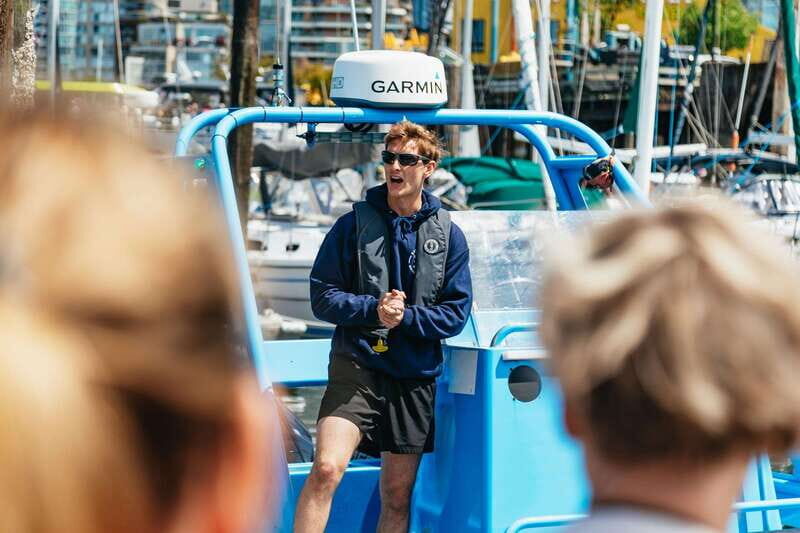
A tour like this lives or dies by its guide. The standout thing here is not just facts—it’s how the guide uses the moving scenery. Captains and guides are praised for being engaging and informative, and several names come up often: Captain Marco, Cassie, Alec, Captain Ray, Paul, Danny, Zach, Jeffrey, Graydon, and Simon. The common thread is clear: they’re comfortable pointing out what matters and explaining why it’s there.
If you care about context, this tour gives you plenty. You’ll get stories connected to Vancouver’s harbor life and shipping, plus background tied to the fjord and the cliffs as you move through Indian Arm. That kind of guided interpretation makes the trip feel less like a drive-by and more like a guided walk—just with wind.
You’ll also get practical help. Guides often adjust the ride so people can see better. On at least some departures, the boat is moved around so everyone gets a proper look at key sights. That matters a lot on water where viewing angles can change quickly.
And yes, there can be fun moments too. Some groups mention enjoying playful turns on the water. Just remember the core purpose stays the same: safe, scenic, educational motion.
Wildlife chances: seals, eagles, and why binoculars help
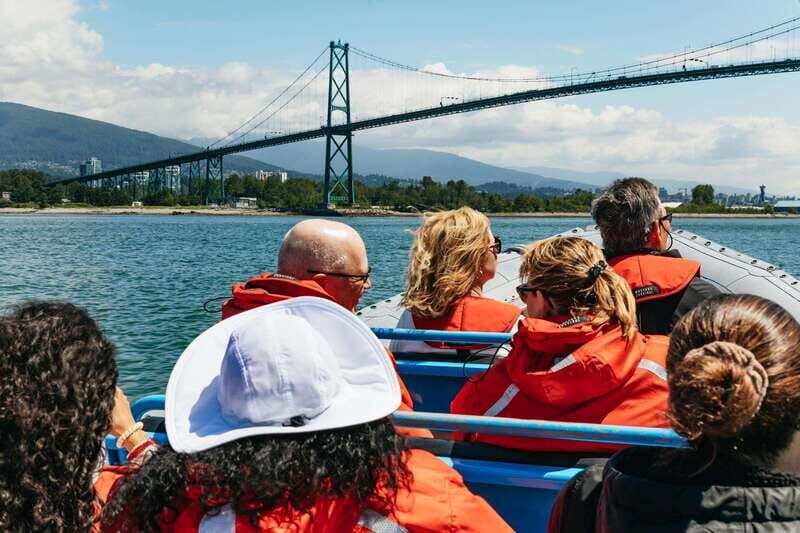
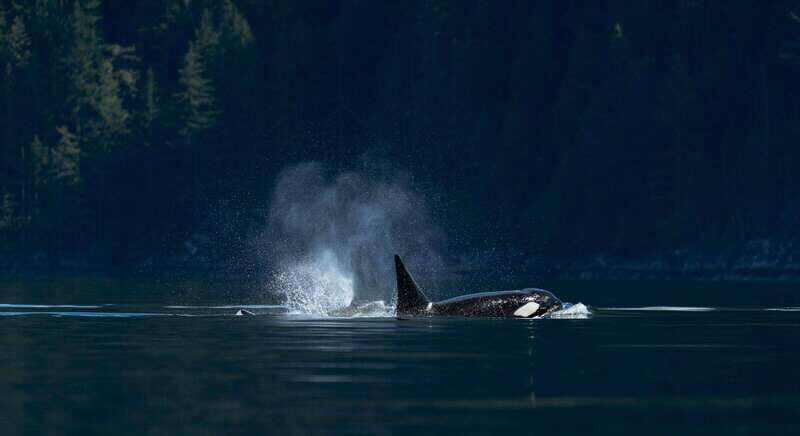
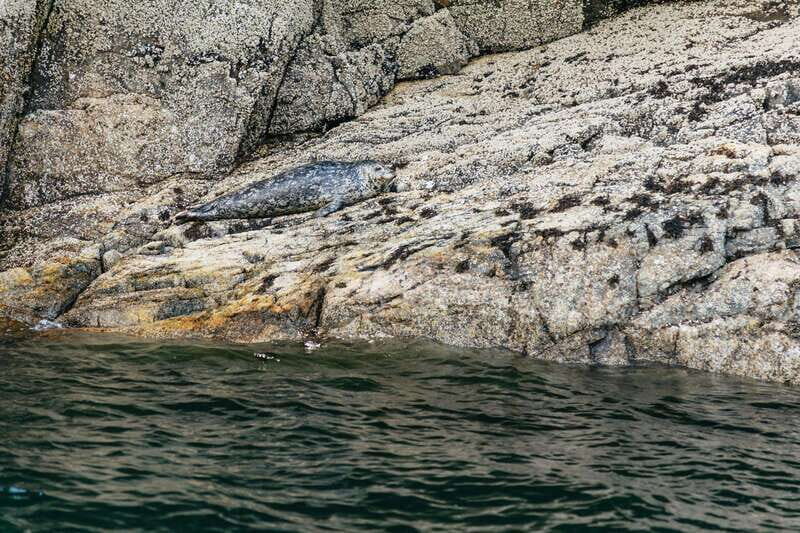
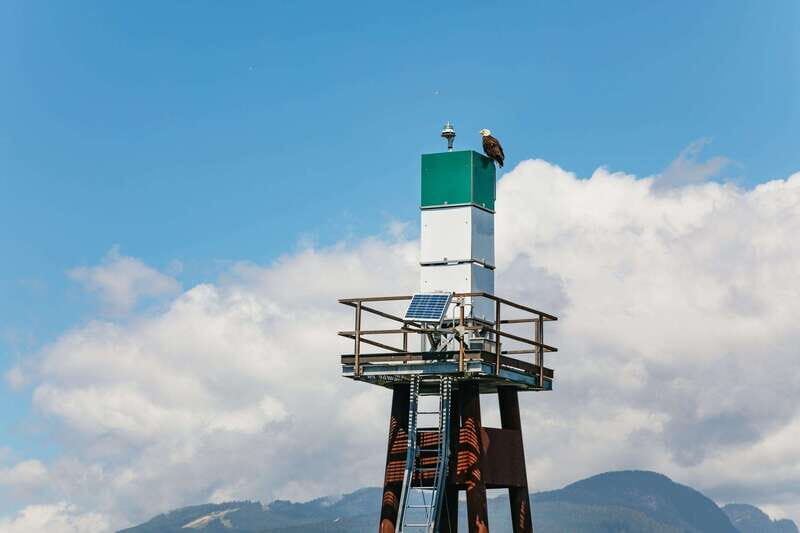
One of the reasons people talk about this tour is wildlife potential. You might spot harbor seals and eagles. Some travelers also reported jellyfish during calmer stretches, and those surprises add to the sense that you’re not watching a scripted show.
Here’s the practical part: wildlife may appear farther away than you expect. If you have them, bring binoculars. Several people specifically recommend them because seals and eagles can be spotted at distance, and zooming in on a phone doesn’t always work when you’re moving.
Also keep in mind that wildlife sighting is never guaranteed. Weather, water conditions, and timing all play a role. The good news is that even without wildlife, the scenery still delivers—the cliffs, waterfalls, and Indian Arm’s quiet feel don’t vanish.
Weather and comfort: rain or shine, cold or not
This tour runs rain or shine, and the water decides how it feels. Even on a warmer day, the motion and wind can chill you quickly. The survival suits and lifejackets help a lot, but your comfort still depends on basics like layers under the suit and how you manage damp gear after.
If you’re planning what to wear, think about this like you’re going out on a fast cold-water bike ride. You want warmth where it matters and a way to handle spray. The suits give the main protection, but you’ll still feel the weather while you’re moving.
On some departures, the water can be calm enough that people don’t get very wet. On others, there can be more swell, especially on the return. Either way, you’ll want to be ready for the reality of getting a little damp.
If you’re prone to motion sickness, keep that in mind too. While nothing in the provided info says motion sickness is a deal-breaker, zodiac boats do move quickly and turn. If you know you react, prepare accordingly.
Price and value: $116 for a city-to-fjord combo
At $116 per person for about three hours, you’re paying for three things at once: transportation by zodiac, guide commentary, and the survival suit/lifejacket gear.
Is it the cheapest way to see Indian Arm? No. But it is one of the most time-efficient. You get a full “Vancouver highlights from the water” sequence—Granville Island, Stanley Park, the Lion’s Gate Bridge—plus the fjord run up Indian Arm to Granite Falls. That combo would take separate logistics if you were piecing it together yourself.
The included gear also matters. Outdoor water tours can nickel-and-dime you for warmth and safety equipment. Here, the survival suits and lifejackets are part of the package, so you’re not showing up to rent thermal protection last minute.
Then there’s the feel factor. Small-boat riding can mean less crowding than some bigger-boat options, and people often like that the ride stays active rather than slow and stiff. You also get constant viewing angles because the boat is moving, not parked.
For value, I’d frame it like this: if you want one memorable water experience that covers both city icons and a glacial fjord feel, $116 can work. If you mainly want a gentle stroll with no exposure to wind and spray, you might feel the price better matched by a calmer option.
Who should book, and who should skip it
This tour is wheelchair accessible, which is a big plus. At the same time, it’s still a moving zodiac experience, and the provider lists several clear limitations: it’s not suitable for pregnant women, people with back problems, people under 120 cm, and people with pre-existing medical conditions or recent surgeries.
So here’s my practical advice:
- Book if you’re in decent health, comfortable with cold air and the possibility of spray, and you want a short trip with big scenery.
- Skip if you have any of the listed medical or physical limitations, or if the thought of fast open-water movement makes you uneasy.
This tour is especially good for couples, friends, and people who want to spend less time planning and more time outside. It also tends to work well on mixed-travel schedules because it fits into a half-day timeframe.
Should you book the Vancouver Indian Arm and Granite Falls zodiac tour?
I’d book it if you want a three-hour water story that starts with Vancouver landmarks and ends in a quieter glacial fjord setting. Granite Falls up close is a strong payoff, and the guide-led narration adds meaning to the geography—especially when you’re learning why the cliffs, fjord, and harbor all fit together.
I’d think twice if you’re sensitive to cold, easily motion sick, or you fall into the tour’s listed “not suitable” categories. Also, if your expectation is giant waterfall spectacle, calibrate it. Granite Falls can still be memorable because of the proximity and the sound of cascades, but it may not match the size you mentally picture.
If your day is flexible and you’re ready for rain-or-shine water time, this tour is a solid use of your Vancouver hours.
FAQ
How long is the Vancouver Indian Arm and Granite Falls zodiac boat tour?
It lasts about 3 hours.
Where do I meet for the tour?
Meet at Vancouver Water Adventures.
What should I do before departure time?
Please arrive 30 minutes early so you can be outfitted with the survival suits and review safety procedures.
What’s included in the price?
The tour includes the driver/guide, the zodiac boat tour, and survival suits and lifejackets.
Are food and drinks included?
No. Food and drinks are not included.
Does the tour run in bad weather?
Yes, it runs rain or shine.
What language is the tour guide?
The tour guide provides commentary in English.
Is this tour wheelchair accessible?
Yes, it is listed as wheelchair accessible.
Is the tour suitable for everyone?
No. It is not suitable for pregnant women, people with back problems, people under 120 cm, people with pre-existing medical conditions, or people with recent surgeries.