REVIEW · TORONTO
Toronto: Museum of Illusions Entry Ticket
Book on GetYourGuide →Operated by Museum of Illusions Toronto · Bookable on GetYourGuide
Perception gets playful at this Toronto stop. I love how the museum pairs optical illusions with hands-on challenges, so you’re not just watching. I also like the hologram and light-based rooms that practically beg for photos while you experiment with what your eyes think is true.
The visit is short, about 1 hour, and at around $25 it can feel a bit pricey if you’re the type who needs extra time in each room. It’s also not a good match if you’re sensitive to motion cues, since some exhibits can feel disorienting.
In This Review
- Key Highlights Worth Your Energy
- Museum of Illusions Toronto in 60 Minutes: What You’ll Really Do
- Starting in the Hologram and Light Rooms
- Vortex Tunnel and Infinity Room: When Your Brain Argues
- The Game Room: 3D Puzzles and Brain Teasers
- Photo Spots and How to Make Illusions Look Better
- The Value Question: Is $25 for Illusions Worth It?
- Who This Experience Fits Best (and Who Should Skip)
- Small Group Feel, Plus Practical Timing
- Should You Book This Museum of Illusions Ticket?
- FAQ
- How long is the Museum of Illusions entry ticket experience?
- How many exhibits are inside?
- What’s the price for the ticket?
- Is the museum suitable for people with vertigo?
- Is the museum wheelchair accessible?
- What language is the host or greeter?
- Is there a small group size?
- What items are not allowed?
Key Highlights Worth Your Energy
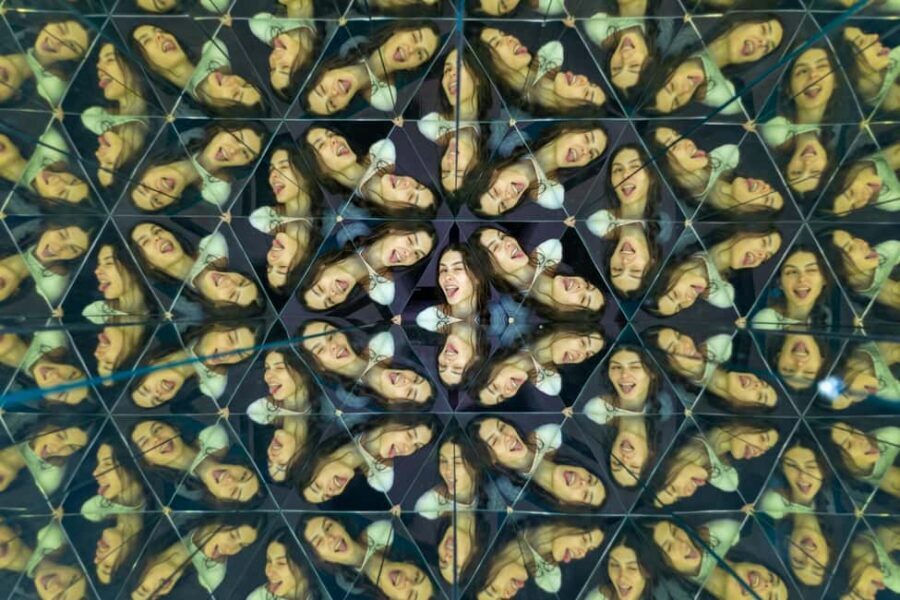
- 100+ interactive exhibits designed for hands-on experimenting, not passive viewing
- Vortex tunnel that makes you feel like the ground is moving while you stay put
- Infinity room that turns simple space into a visual mind game
- 3D puzzles and brain teasers that add a real challenge beyond taking photos
- Photo-friendly holograms where moving just slightly changes what you see
Museum of Illusions Toronto in 60 Minutes: What You’ll Really Do

This is the kind of place where your brain is the main character. You walk in, follow the flow of exhibits, and keep stopping because the visuals don’t behave. Some displays trick you with light and perspective, others ask you to interact with objects, and a few are built to make you doubt your sense of direction.
The big practical thing: you’re there for about an hour if you want to hit the main highlights without rushing. The layout supports a slow wander too, so if you like reading small details and trying every puzzle, plan a little extra time buffer for your own pace. The museum stays good for mixed ages, so you’ll often see kids playing right alongside adults trying to “beat” the illusions.
A few more Toronto tours and experiences worth a look



Starting in the Hologram and Light Rooms

Early on, you’ll get hit with that classic Museum of Illusions vibe: light and perspective doing weird things on purpose. Expect hologram-style visuals and optical illusions where your best tool is curiosity. Stand in one spot, then change position slightly—sometimes the illusion snaps into something totally different.
This part matters because it sets your expectations. The museum isn’t about one giant stunt. It’s about learning that your eyes rely on assumptions—your brain fills in gaps fast, and the exhibits exploit that.
I like starting here for one simple reason: you warm up. Once you’ve figured out how to approach the tricks (move carefully, compare angles, and take a breath when it feels off), the later rooms land harder.
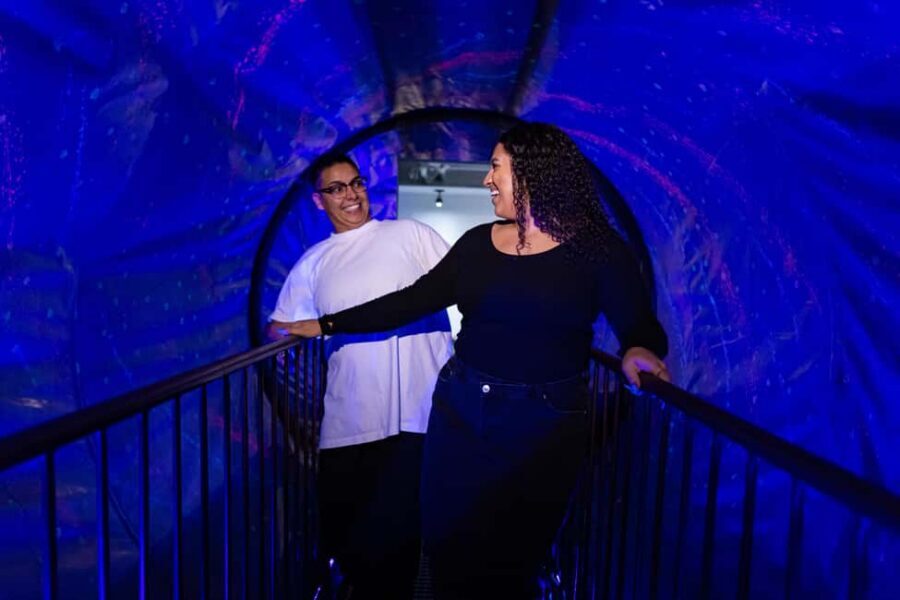
Vortex Tunnel and Infinity Room: When Your Brain Argues
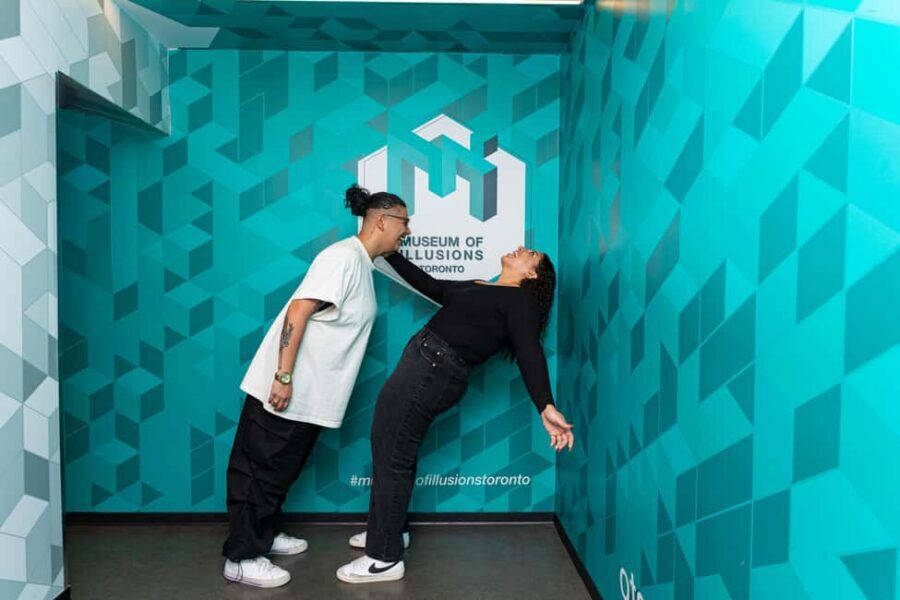
Next come the headliners: the vortex tunnel and the infinity room.
The vortex tunnel is designed to make you feel like the ground is shifting even though you’re not walking anywhere. That effect can be fun and genuinely surprising, especially if you enjoy optical illusions that feel physical rather than just visual. If you’re the type who gets motion-sensitive, treat this as a red flag. The museum isn’t suitable for people with vertigo, and it’s the kind of environment where “I’m probably fine” can turn into a bad time.
Then you’ll hit the infinity room, where space seems to stretch endlessly. The trick here is usually about reflections and alignment—your brain tries to interpret depth where there shouldn’t be depth. This is a great room for photos, but it’s also a good spot to slow down and actually watch how the lines repeat and where the illusion breaks if you step out of the ideal spot.
If you’re traveling as a group, this is also where the most laughs happen. One person thinks they’re standing perfectly; another person moves a little and suddenly the whole thing changes. It turns into a friendly argument with a camera.
The Game Room: 3D Puzzles and Brain Teasers
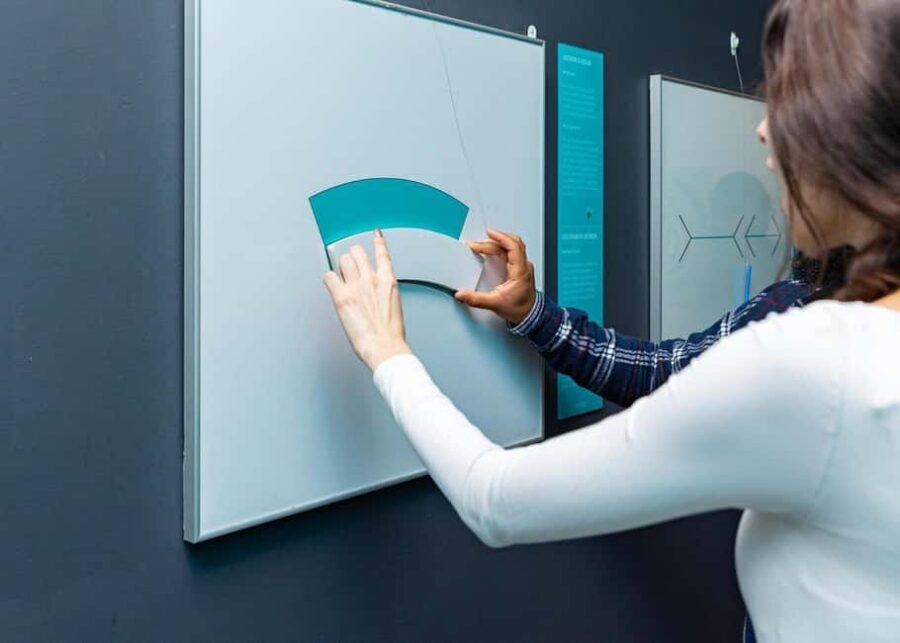
After the big visual rooms, the museum shifts gears into something more interactive: the game room with 3D puzzles and brain teasers. This is where you stop being only a spectator of your own confusion and start solving problems.
Why I think this part is valuable: it balances the visit. The illusion rooms can be pure wow-factor, but puzzles give you that satisfying feeling of progress. Even if you’re not a “puzzle person,” the style of challenges tends to be approachable. It’s also a nice equalizer in mixed groups—kids can enjoy the hands-on elements, while adults can lean into the challenge.
One thing to keep in mind: the whole experience is designed to be fast-paced enough to finish in about an hour. If you want deep puzzle time, you may not get it here, especially during busy periods.
Photo Spots and How to Make Illusions Look Better
Yes, this place is Instagram-worthy. But you’ll get better results if you treat photos like part of the activity, not the goal.
Here’s what helps:
- Move slowly and intentionally. Many of these illusions change with position, not with effort.
- Try a couple angles. In light and hologram areas, tiny shifts can make a big difference.
- Keep your camera steady for the infinity-style rooms. The illusion often depends on alignment.
- Don’t block others. Since it’s a small, interactive space, give people room to take their turn.
I also suggest taking a quick “test shot” before you go all-in. That way you’re not spending your best moment figuring out settings while the illusion is already in its perfect spot.
You can also read our reviews of more museum experiences in Toronto






The Value Question: Is $25 for Illusions Worth It?
Let’s talk money, plain and honest. At about $25 per person for a roughly 1-hour visit, you’re paying for a concentrated experience: lots of interactive exhibits, not a long museum crawl.
So, is it worth it? It depends on your style:
- If you like hands-on visuals, playful science, and fast, laugh-y challenges, you’ll likely feel it’s good value.
- If you’re expecting something like a big, multi-hour museum with lots of reading and galleries, it may feel short.
One practical takeaway from real-world behavior: the museum can feel crowded at certain times, and crowding can shrink the amount of time you get per exhibit. If you want maximum fun, aim for a time when you can actually linger in the vortex tunnel and puzzle rooms without feeling rushed.
Also, the museum works best when you lean into interaction. If you treat it like a quick walk-by, you may not feel the value.
Who This Experience Fits Best (and Who Should Skip)
This ticket is a strong match for:
- Families with kids (many exhibits are built for all ages)
- Friends traveling together who enjoy playful challenges
- Anyone who likes science-ish entertainment without homework
- People who want a compact activity in downtown Toronto
It’s not suitable for:
- Anyone with vertigo or strong motion sensitivity (the vortex tunnel is the main concern)
- People who dislike interactive spaces or get stressed by visual trickery
If you’re traveling solo, you can still have a great time. You’ll move at your own pace and enjoy the rooms without negotiating. Just keep your expectations aligned with the short duration.
Small Group Feel, Plus Practical Timing
One of the underrated perks here is the small group size—limited to 8 participants. Smaller groups usually mean less chaos, and you can get through exhibits without constantly squeezing past a crowd.
The museum is self-paced, so you decide how much time goes into photos, puzzles, and repeating your favorite rooms. That flexibility is handy if you’re traveling with people who go faster or slower than you do.
If you’re building a day plan, treat this as a pre-dinner or early-evening activity. It’s short enough to pair with other downtown time, and you’ll still have energy to explore nearby neighborhoods after you leave.
Should You Book This Museum of Illusions Ticket?
Book it if you want a fun, interactive hour that plays with how your eyes and brain work. At $25, it’s best viewed as an activity with lots of hands-on moments—holograms, vortex effects, infinity visuals, and a puzzle room that adds real challenge.
Skip or reconsider if you’re vertigo-prone, or if you hate the idea of crowds and quick turns through rooms. And if you’re the slow-and-immersive type, you may want to pair this with extra time in the area so the day doesn’t feel too compressed.
FAQ
How long is the Museum of Illusions entry ticket experience?
The experience is listed as 1 hour. You can explore at your own pace during that time.
How many exhibits are inside?
You can explore over 100 exhibits designed to challenge your perception.
What’s the price for the ticket?
The price is $25 per person.
Is the museum suitable for people with vertigo?
No. It is not suitable for people with vertigo.
Is the museum wheelchair accessible?
Yes, the attraction is wheelchair accessible.
What language is the host or greeter?
The host or greeter is in English.
Is there a small group size?
Yes. It’s limited to 8 participants.
What items are not allowed?
Smoking, alcohol, and drugs are not allowed.