REVIEW · VANCOUVER
Stanley Park Highlights 2.5 Hour Walking Tour
Book on Viator →Operated by Vancouver Toonie Tours Ltd. · Bookable on Viator
Stanley Park is good. Guided, it’s better. This 2.5-hour walking tour strings together the park’s biggest landmarks and quieter nature spots, with clear stories about Vancouver’s culture, ecology, and Indigenous history. It’s also paced to keep things enjoyable without turning into a slog.
I love the way the route stays efficient. You hit famous stops like the Totem Poles and 9 O’Clock Gun, then you still get to breathe at Beaver Lake. Another strong point: the guide storytelling focus. People doing this tour tend to light up when the history shifts from facts to meaning, which is exactly where guides like Alexis and Ondrej (Ondra) have been praised for bringing depth to the walk.
One consideration: you’re moving for about 2.5 hours on foot, so if you hate walking through parks or you’re sensitive to uneven ground, bring solid shoes and expect a steady pace.
In This Review
- Key things to know before you go
- Stanley Park Pavilion: Hollywood-Style Secrets and Vancouver Cred
- Rose Garden Break for Photos and Breathing Room
- Totem Poles Meaning: Indigenous Stories You Can Carry
- The Forest Walk: Trees, Trails, and Wildlife Stories
- Seawall Views at Girl in Wetsuit, Lions Gate, and North Shore
- Beaver Lake Loop: The Quiet Pause Most People Miss
- Hallelujah Point and 9 O’Clock Gun: Small Landmarks, Big Context
- Chehalis Cross Memorial to Japan Figurehead Replica: History at Human Scale
- Lions Gate Bridge Finish: One Last View Before You Head Back
- Price and Value: Why $34.99 Can Make Sense
- Who This Tour Fits Best (and Who Might Skip It)
- Should You Book This Stanley Park Walking Tour?
- FAQ
- Where does the Stanley Park tour start?
- Where does the tour end?
- How long is the tour?
- What time does the tour start?
- How much does it cost?
- Is the tour guided, and what language is it in?
- What’s included in the price?
- Are there admission fees for the stops?
- How large are the groups?
- Is there a cancellation policy?
- What happens if the weather is bad?
Key things to know before you go

- Small group size (up to 32) keeps the walk from feeling crowded.
- Admission at stops is free, so your money goes to the guide and the stories, not entry fees.
- A tight route helps you see major highlights without wasting time backtracking.
- Stop mix is smart: icons (Totem Poles, 9 O’Clock Gun) plus quieter nature (Beaver Lake).
- Guide styles matter, and names like Alexis, Erika, Cameron, Fio, and Fernando come up in standout feedback.
- A day-with-weather vibe: the tour needs good weather to run.
Stanley Park Pavilion: Hollywood-Style Secrets and Vancouver Cred

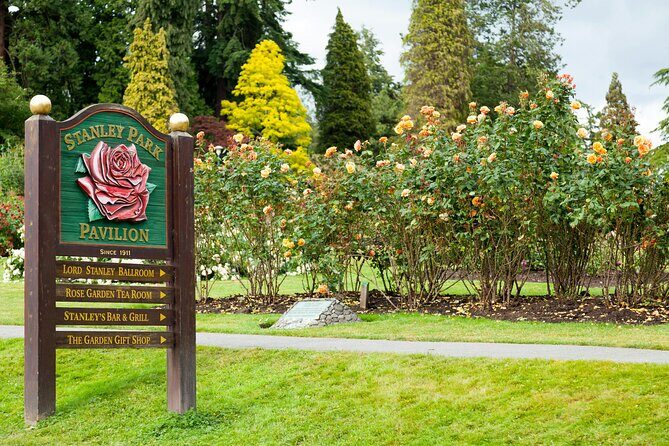
Stanley Park has a reputation for being a beautiful escape. This tour adds a layer that makes it feel bigger than a park. Your first stop, the Stanley Park Pavilion, sets the tone with the behind-the-scenes angle: why Vancouver matters to Hollywood and how that reputation shows up in the city’s public spaces.
Why I like starting here: it gives you context fast. Before you get pulled into trees and views, you learn how Vancouver’s identity got shaped in the wider world. That matters because Stanley Park isn’t just scenery. It’s part of how the city tells its story.
What to expect: a quick orientation stop, then you’re walking into the heart of the park.
Possible drawback: because it’s an early intro, you won’t get long photo time here unless the group moves slowly.
You can also read our reviews of more walking tours in Vancouver


Rose Garden Break for Photos and Breathing Room
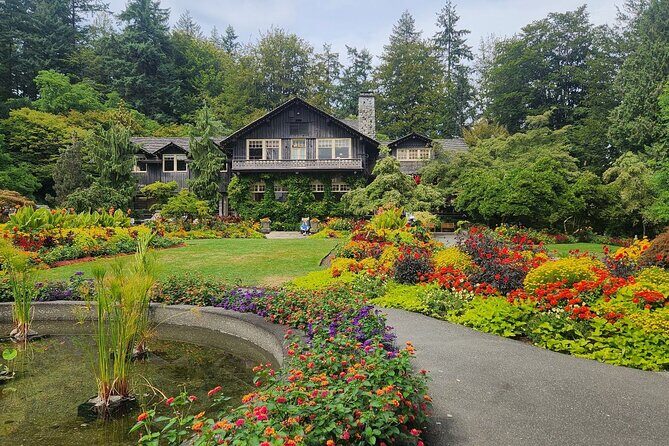
Next up is the Stanley Park Rose Garden. This is the calm palate cleanser. The tour frames it as peak-summertime magic, with over 3,500 rose bushes and a chance to slow down and smell the air.
This stop works for two kinds of travelers. If you love photos, you’ll appreciate the built-in beauty and the natural framing. If you want a breather, it’s a short pause where your brain can reset before the more story-heavy stops.
What to expect: a fragrant, light stop timed for looking around and taking pictures.
Possible drawback: roses are seasonal, so if you’re visiting outside summer, the garden might feel less showy than you hoped (still worth the walk, just manage expectations).
Totem Poles Meaning: Indigenous Stories You Can Carry
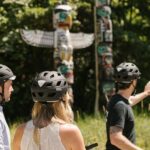
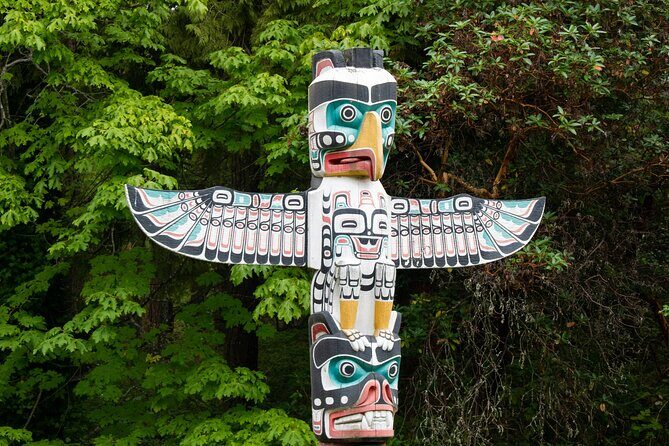
Then you reach one of the park’s most visited spots: the Totem Poles. This is where the tour shifts from seeing monuments to understanding them. You’ll hear the meaning behind the Indigenous totem poles, and that’s a big deal.
I don’t care how many photos you’ve seen online. Totem poles land differently in person, especially with interpretation. You start noticing details you’d normally miss, and you stop treating them like props.
What to expect: storytelling right at the park’s signature cluster, with enough time to take it in without rushing.
Possible drawback: the stop is focused and time-boxed, so if you want a long, slow read, you may want to do a quick follow-up visit on your own.
The Forest Walk: Trees, Trails, and Wildlife Stories
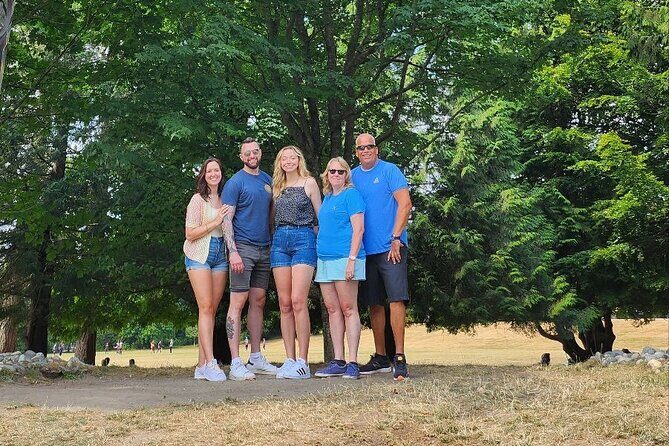
After the iconic landmarks, the tour returns to what makes Stanley Park feel special: its forest. This is the “walk and pay attention” section. You’ll wander through the trees, see trails, and get stories that connect the ecology to what you’re actually seeing.
This is also where the guide personality shows. Some guides are great at facts. Others are better at helping you notice. The walk descriptions in the feedback put emphasis on guides pointing out details people normally miss, including the calm feeling you get when you’re on smaller trails instead of only the busiest paths.
What to expect: a nature-forward chunk with wildlife and trail-focused commentary.
Possible drawback: if you’re expecting a full loop or lots of extra detours, this isn’t that. It’s a highlight route with selected quieter moments.
Seawall Views at Girl in Wetsuit, Lions Gate, and North Shore
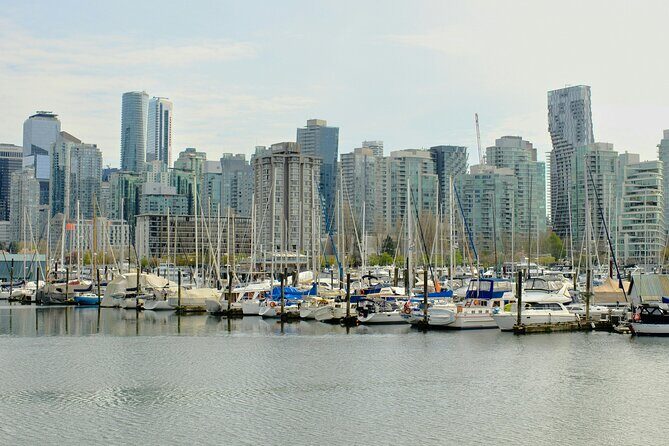
Now for the Vancouver payoff: water views. The Girl in Wetsuit stop is timed for the seaside feeling—North Shore Mountains in the distance and the Lions Gate Bridge in your line of sight. It’s the kind of scene that makes you understand why this city keeps pulling artists, filmmakers, and hikers back year after year.
I like this moment because it changes the tempo. The earlier stops are more about learning and looking closely. Here, you can widen your view and reset your eyes after forest greens.
What to expect: a scenic stroll by the water with big backdrop views.
Possible drawback: if it’s windy or rainy, you’ll feel it more by the water, so dress for the weather, not the forecast you wish you had.


Beaver Lake Loop: The Quiet Pause Most People Miss
Beaver Lake is the pause that turns the tour from a checklist into an actual experience. The tour describes it as tucked deep in the forest, and it’s known for being peaceful, lily-covered, and a local favorite. You might spot wildlife like beavers, herons, or even a curious raccoon if conditions are right.
The best part of Beaver Lake, in my opinion, is that it gives you contrast. You get the famous stuff, then you get something that feels like it belongs to quieter Stanley Park.
What to expect: a calm stop in a more secluded-feeling area, with time to look and listen.
Possible drawback: wildlife spotting is never guaranteed. If you go expecting a beaver sighting, you’ll be disappointed. If you go expecting a gorgeous, quiet moment, you’ll be happy.
Hallelujah Point and 9 O’Clock Gun: Small Landmarks, Big Context
Next comes the history layer, one stop at a time. Hallelujah Point is tied to the Salvation Army and former prayer meetings. It’s short and simple, but it reminds you that the park’s story isn’t only nature and recreation.
Then it’s the 9 O’Clock Gun at Brockton Point. This cannon has been fired every day since 1894 at 9:00 p.m. It originally signaled time to ships in the harbor. Today it’s a famous symbol of Vancouver’s maritime history.
This is one of those stops where interpretation changes how you see it. Without context, it can feel like another landmark. With context, it becomes a window into daily life from the past—how ships and time used to connect across the water.
What to expect: quick but meaningful stops that connect the park to Vancouver’s wider past.
Possible drawback: the 9 O’Clock Gun stop is brief, so you’ll want to return later if you want a longer photo session or to read more nearby.
Chehalis Cross Memorial to Japan Figurehead Replica: History at Human Scale
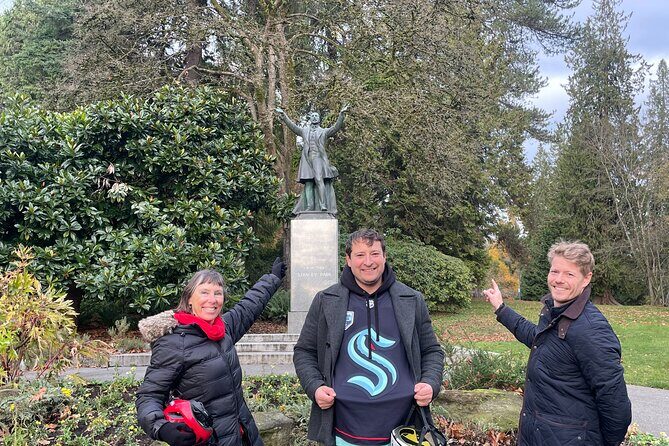
At the Chehalis Cross Memorial, the tour covers something that demands your attention: a monument erected in 1862 commemorating the Chehalis people who died during a smallpox epidemic. It’s described as one of the oldest monuments in the city and a reminder of early Indigenous history.
Then comes the S.S. Empress of Japan Figurehead Replica, which commemorates Empress Teimei of Japan. It symbolizes friendship between Japan and Canada and reflects historical ties between Vancouver and the Japanese community.
I love that this tour doesn’t treat history like trivia. It places different stories side-by-side—Indigenous history on one stop, then Japanese-Canadian ties on another. You come away with a clearer sense that Stanley Park is part of the city’s social history, not just its scenic one.
What to expect: short stops with heavy context, designed to make you look closer.
Possible drawback: if you prefer only light, fun sightseeing, these moments may feel heavy. They’re worth it, but they’re real.
Lions Gate Bridge Finish: One Last View Before You Head Back
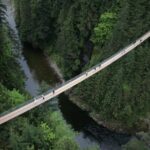
To close, you get the sweeping scene from Lions Gate Bridge: a suspension bridge connecting downtown Vancouver with the North Shore across Burrard Inlet. It’s used by cars, buses, cyclists, and pedestrians. From here you can see ocean, the skyline, and surrounding mountains.
This is a strong finish because it ties the whole walk together. You’ve gone from forest to landmarks to water. Now you’re seeing the big geography that Vancouver depends on.
What to expect: a final “look-out” moment, then the tour ends back at the meeting point.
Possible drawback: because this is a working bridge, the view can come with noise. If you’re noise-sensitive, just plan to keep your eyes on the scenery and not on the traffic soundtrack.
Price and Value: Why $34.99 Can Make Sense
At $34.99 per person for about 2 hours 30 minutes, this is not a bargain-by-default tour. But it can be good value if you care about interpretation.
Here’s the math that matters: you’re paying for a guide who brings together history, ecology, and culture in one route, with an easy plan to reach key sights without spending your energy figuring out logistics. Plus, the tour highlights list multiple stops marked as free admission tickets—so you’re not paying extra at each location.
Also, the group size limit (max 32) helps. A too-large group makes it hard to hear details and slows down quality storytelling. This one is kept small enough to stay personal.
If you’re the type who loves learning while walking, this price usually feels fair. If you just want scenery with no story, you’d save money by going solo and reading afterward.
Who This Tour Fits Best (and Who Might Skip It)
This walking tour is a great fit if you want a first-timer’s shortcut through Stanley Park, but with actual context. It’s also a smart choice if you’ve been to Stanley Park once and want to catch sections you might normally skip.
It’s especially good for people who care about Indigenous history, not as a footnote but as a central part of the park’s meaning. Guides named in the feedback, like Alexis and Ondrej (Ondra/Ondrej), are highlighted for passion and clear storytelling in that area. That’s the kind of guide focus that makes a monument tour feel worth repeating.
Skip it if you hate walking, dislike structured routes, or want a long unhurried stay at one place only. This tour is timed. It moves.
Should You Book This Stanley Park Walking Tour?
I think you should book it if you want a smooth, guided route that hits both the famous and the quieter parts of Stanley Park. You’ll get views, but you’ll also get explanations that make the park feel less like background scenery and more like a living slice of Vancouver.
Book it sooner rather than later if you can. The tour tends to sell with advance planning, and it runs only when conditions are suitable. If you’re traveling on a tight schedule, this is one of the more efficient ways to get the park’s best moments without turning it into a self-made routing problem.
If you want, tell me your travel month and your walking comfort level, and I’ll suggest the best time of day to prioritize views versus quieter forest spots.
FAQ
Where does the Stanley Park tour start?
It starts at the Stanley Park Bus Loop, Stanley Park, Vancouver, BC V6G 3E2, Canada.
Where does the tour end?
It ends back at the same meeting point.
How long is the tour?
The duration is about 2 hours 30 minutes.
What time does the tour start?
The start time listed is 10:30 am.
How much does it cost?
The price is $34.99 per person.
Is the tour guided, and what language is it in?
Yes, it’s a guided walking tour, and it’s offered in English.
What’s included in the price?
Included items are the guided walking tour, researched history/ecology/culture, an easy direct route to the highlights, and local recommendations and tips.
Are there admission fees for the stops?
The itinerary notes free admission tickets at the listed stops.
How large are the groups?
The tour has a maximum of 32 travelers.
Is there a cancellation policy?
Free cancellation is available. You can cancel up to 24 hours in advance for a full refund. If you cancel less than 24 hours before the start time, you won’t receive a refund.
What happens if the weather is bad?
The experience requires good weather. If it’s canceled due to poor weather, you’ll be offered a different date or a full refund.