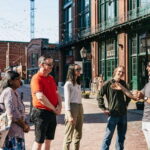
Some neighborhoods tell their story through architecture. This one does it through synagogues, schools, and street signs.
I like the way this walk turns a few blocks into a timeline, starting with late-1800s immigration and ending in the Kensington Market area. You’ll also get a street-level feel for how Jewish institutions clustered, shifted, and sometimes even changed purpose over time.
Two things I particularly love: the stop at the Holy Trinity Russian Orthodox Church, which used to be the Henry Street synagogue, and the careful look at Cecil Street, where multiple generations of organizations left their mark. One possible drawback: the focus is mostly on older neighborhoods and institutions, so if you want lots about Toronto’s current Jewish community today, you may find the emphasis runs more historical than present-day.
In This Review
- Key highlights worth your shoes
- Why this Toronto route makes the city click
- Art Gallery of Ontario: the late-1800s immigration story, right at the start
- Beverley Street (136 and 147): where institutions take shape
- 70 D’Arcy St: Eitz Chaim and the people behind the school
- 186 Beverley St and the George Brown House context
- The walk toward Henry St: commercial history you can feel
- 23 Henry St: Holy Trinity Russian Orthodox Church, once the Henry Street synagogue
- Cecil Street: the institutional hub, Labour Zionism, and the community centre
- Spadina Avenue: from 1930s cowboys to Yiddish theatre and the hat trick
- 10 St Andrew St and the Minsker Synagogue: Kensington as a neighborhood in miniature
- Price and timing: what $41.16 gives you for 2 hours
- Should you book this Jewish walking tour in Toronto?
- FAQ
- How long is the private Jewish walking tour in Toronto?
- Where does the tour start and where does it end?
- Is the Art Gallery of Ontario admission included?
- Are the other stops included for free?
- Is the tour offered in English, and is it private?
- What are the cancellation rules?
Key highlights worth your shoes
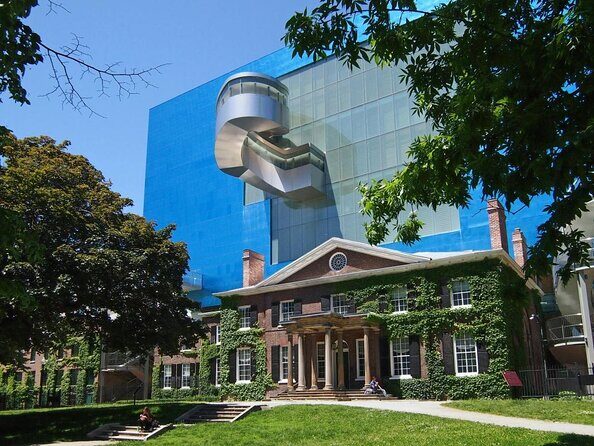
- Art Gallery of Ontario start: a strong kickoff on the era of mass immigration that shaped Toronto’s Jewish community.
- Beverley Street clues: quick stops that explain why institutions took root where they did.
- Eitz Chaim school site: a stop that brings education and distinctive personalities into the conversation.
- Henry Street synagogue story: you learn how a synagogue’s story can live on even when the building’s role changes.
- Cecil Street as the institutional hub: Labour Zionist HQ, schools, and an overview of major Jewish organizations concentrated in one area.
- Spadina Avenue’s two sides: you connect the more traditional world to the louder, more commercial Kensington-era scene.
Why this Toronto route makes the city click
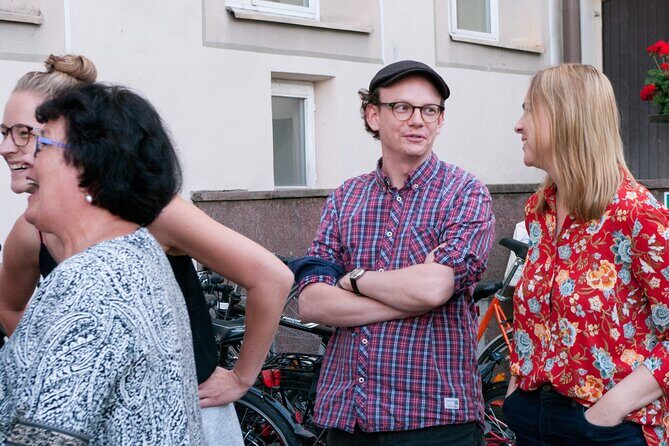
Toronto can feel like it grew in every direction at once. This tour works because it narrows your focus to one Jewish landscape and walks it block by block. The result is that you don’t just learn dates. You see how people used real streets for real life.
You’ll start downtown and gradually move into the older Jewish heart of the city, ending in Kensington Market. Along the way, the guide points out small building details and street patterns that explain bigger shifts: immigration policies, school communities, changing institutions, and the give-and-take between Jewish residents and the wider Canadian street scene.
For most people, the sweet spot is the way the walk blends places of worship with schools and social organizations. That mix helps you understand Jewish Toronto not as one single “type of site,” but as a network—religious, educational, political, and commercial.
You can also read our reviews of more walking tours in Toronto
Art Gallery of Ontario: the late-1800s immigration story, right at the start
You begin at the Art Gallery of Ontario, at 317 Dundas St W. Even before you hit the first “street stop,” this start matters. It sets the frame: the early history of Toronto’s Jewish community, tied to the mass immigration wave from the late 19th century into the early 20th.
This is a practical way to start. You’re not walking cold into unfamiliar neighborhoods. You’re getting context first—why people arrived, and what that meant for where they could live, work, and organize. It also helps you understand why later stops keep coming back to institutions like schools and synagogues.
One detail to keep in mind: admission to the Art Gallery is not included. That doesn’t mean you can’t enjoy the stop. It does mean you should decide whether you want to budget extra time and money if you plan to actually go inside the gallery.
Beverley Street (136 and 147): where institutions take shape

Next you move to Beverley Street with two brief, purposeful stops—136 Beverley St and 147 Beverley St. Each one is short, but they’re designed to teach you something specific about the neighborhood’s evolution.
At 136 Beverley St, the focus is on the original character of the area and how Jewish institutions formed there. You’ll learn how immigrants were absorbed into the local fabric—not just by moving in, but by setting up the structures that keep a community functioning. Think schools, communal spaces, and the practical organizations people relied on day to day.
At 147 Beverley St, the story shifts to government immigration policies and the Jewish reaction to those rules. This stop is valuable because it shows that immigration wasn’t only a personal story. It was also a political one, and the neighborhood responded to it.
These stops work best if you like “micro-stories.” They don’t try to overwhelm you with facts. They point to the street and explain the human pressure behind it.
70 D’Arcy St: Eitz Chaim and the people behind the school
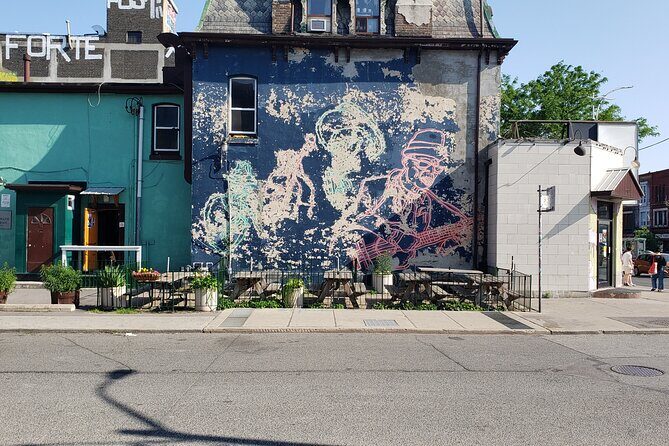
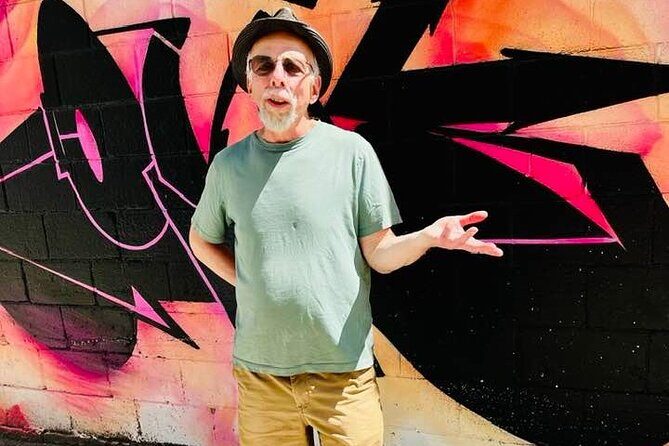
Then comes 70 D’Arcy St, a stop tied to the former Eitz Chaim school. This is one of the clearer examples of why this walk includes education among its major themes.
Schools tell you what a community valued and what it needed for the next generation. They also give you a more intimate story than a larger landmark might. You’re not only learning about public institutions. You’re learning about daily learning, family life, and the kind of identity communities tried to protect and pass on.
The stop also promises colorful characters in the school’s history. Even without a long museum-style stop, the guide’s framing helps you picture a school building as a social engine—where people met, argued, supported, and planned.
186 Beverley St and the George Brown House context
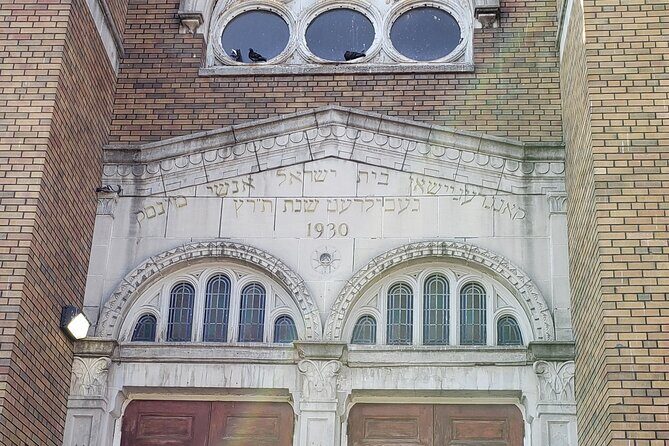
At 186 Beverley St, you visit the George Brown House, and the tour adds a wider lens: some non-Jewish Canadian context, and the Jewish history of the public school next door.
This part is smart because it resists the common history-trap of “one community in a bubble.” You get a sense of how Jewish life sat alongside other Canadian stories in the same neighborhoods. It also gives you a way to think about school buildings as shared space—sometimes shared by different groups over time.
The stop is brief, but the payoff is perspective. You’ll come away understanding that Jewish Toronto wasn’t isolated. It was part of city life, shaped by broader systems and neighbors who didn’t live the same story but still shared the same streets.
You can also read our reviews of more private tours in Toronto




The walk toward Henry St: commercial history you can feel
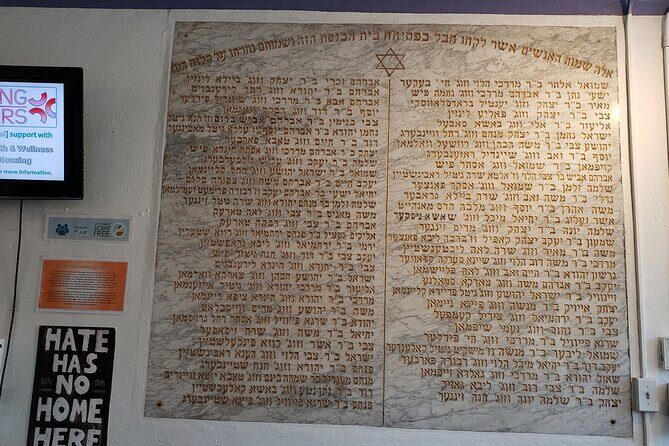
As you move through the street corridor toward Henry St, the tour adds the commercial layer. You’ll learn interesting details about the street’s commercial history as you go.
This matters because Jewish neighborhood history isn’t only about institutions behind doors. It’s also about what people sold, bought, and relied on. Commercial streets create daily contact, jobs, and meeting points. They also show you how a neighborhood gained stability.
If you’re the kind of traveler who loves “how people lived” more than only “what leaders did,” this commercial segment can be a highlight. It helps you imagine the rhythm of the days, not just the milestones.
23 Henry St: Holy Trinity Russian Orthodox Church, once the Henry Street synagogue
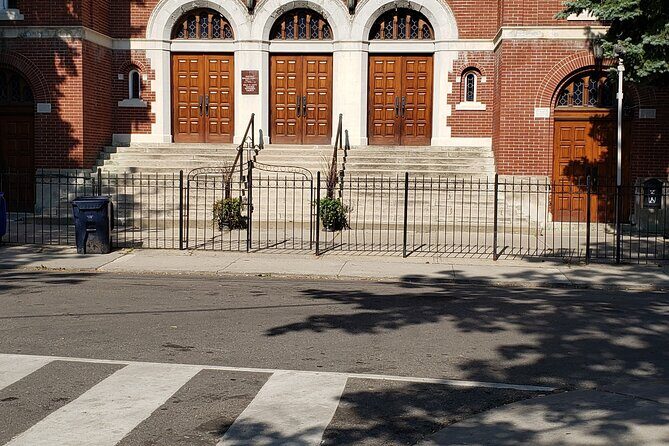
Then you reach 23 Henry St, where Holy Trinity Russian Orthodox Church stands today. The key connection here is that it was formerly the Henry Street synagogue.
This stop is one of the most emotionally resonant parts of the route because it ties architecture to change. You’re seeing a place that once served one purpose and now serves another. The tour discusses synagogue architecture and looks at early synagogues and Toronto’s first Jewish architects.
Even if you’re not an architecture buff, you’ll likely appreciate the logic: a synagogue building isn’t only a place to worship. It’s also a statement—about style, community pride, and identity. When you look at the current church through that lens, the exterior details suddenly feel like clues.
One practical note: admission here is listed as free, so you can enjoy the stop without worrying about entry costs.
Cecil Street: the institutional hub, Labour Zionism, and the community centre
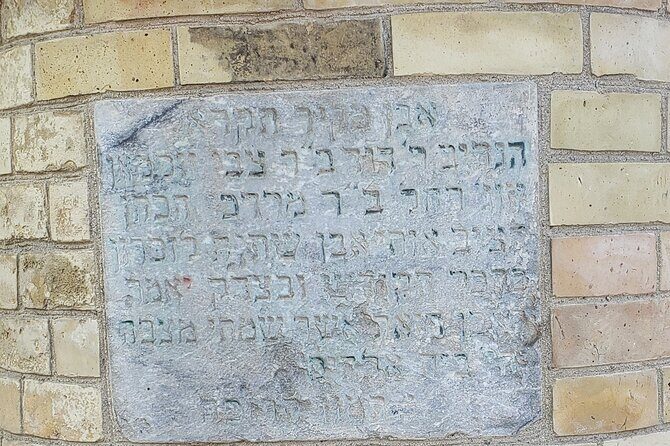
Cecil Street is where the tour really tightens the focus. It’s longer here because the guide maps the area’s importance like a map you can walk with.
You start with the rabbi of the Henry Street Synagogue, then shift into an introduction to Cecil Street as the institutional hub of the older Jewish community. That sets you up for why so many organizations matter here: it wasn’t random. It was concentrated.
A few stops make that concentration tangible:
- 206 and 207 Beverley: an introduction to Cecil Street as a key institutional area.
- 24 Cecil Street: Labour Zionist HQ and school, plus later political history.
- 33–58 Cecil Street: an overview of Jewish organizations and institutions once housed there.
- Cecil Street Community Centre: a building remembered for its past as a synagogue and a centre of traditional entertainment.
What I like about this stretch is how it covers different sides of community life. Some stops focus on religion. Others focus on politics. Others focus on schools and social life. That mix helps you understand how Jewish Toronto kept moving forward as the world around it changed.
Also, admission is listed as free for these stops, which means the value stays high. You’re mostly paying for the guided interpretation—the kind that helps you notice what you’d otherwise miss.
Spadina Avenue: from 1930s cowboys to Yiddish theatre and the hat trick
Spadina Avenue is where the tour adds a more surprising side of the neighborhood. You’ll spend time moving northbound from Cecil St to the El Mocambo, then come southbound back toward Cecil Street, then continue along Spadina’s edges and cross streets.
Northbound, you’ll hear about the less traditional side of the neighborhood and the Spadina Avenue cowboys of the 1930s and ’40s. That’s a fun detail, but it’s also a reminder: Jewish neighborhoods were not sealed-off worlds. People from many kinds of backgrounds shared the same streets.
Southbound, the tour points to Grossman’s Tavern and talks about commercial development on the street and the Spadina music scene. Again, the point isn’t to turn this into a pop-history walk. It’s to show how commerce and culture overlapped with community life.
Then you get specific Kensington-style street stories:
- At Spadina west side at Baldwin Street, you learn how Kensington became a market.
- On Spadina between Dundas and St. Andrew St, you hear about Yiddish theatre, delicatessens, dairy restaurants, and a history tied to the hat trick.
This is a great segment if you like your history to have texture. It’s not just “where people prayed.” It’s where they ate, listened, shopped, and hung out.
Admission is listed as free for these stops, so you can focus on the story without worrying about entry fees.
10 St Andrew St and the Minsker Synagogue: Kensington as a neighborhood in miniature
Next you reach 10 St Andrew St, the Minsker Synagogue. The tour frames St Andrew St as the neighborhood in miniature, which is exactly the kind of line that makes you look around with new eyes.
You’ll learn the synagogue’s history and that it’s the first synagogue in the Kensington area. The tour also connects it to the Labour Lyceum across the street, tying religious life to the educational and political energy that also shaped the community.
This is a good finish point because it pulls everything together. Earlier you learned about immigration and institutions. Now you see how those institutions physically anchored into Kensington itself.
It’s a short stop, but it’s packed. If you walked the first part fast, this is where you slow down mentally and really notice the street as a living archive.
Price and timing: what $41.16 gives you for 2 hours
At $41.16 per person for about 2 hours, this is priced like a serious neighborhood-walk experience, not a quick drive-by. The value is in interpretation. You’re paying for a guide to connect buildings, immigration shifts, schools, and street culture into a story you can remember.
Here’s the practical angle: only one of your key stops lists an admission ticket as not included—the Art Gallery of Ontario. Most of the other stops are listed as free. So your out-of-pocket costs should be low unless you decide you want gallery time beyond what the walk includes.
Because it’s a private tour, it’s also easier to ask focused questions and move at a pace that works for your group. That matters on a walking route, especially in neighborhoods where you’ll want a moment to look closely at signs and facades.
The tour works best in good weather, since it’s a walking experience. If you’re visiting in shoulder season, dress for changeable skies and plan for traction and comfort.
Should you book this Jewish walking tour in Toronto?
If you want Toronto history that feels personal and street-level, I’d book it. This tour is strong when you care about how communities built schools, synagogues, political organizations, and everyday commercial life—and how those patterns show up in the physical city.
I’d think twice only if your priority is today’s Jewish Toronto over the older neighborhood story. This walk is clearly oriented toward earlier immigration and the development of institutions. You’ll leave with a strong sense of origins and evolution, but it’s not trying to be a modern community directory.
If you do book, wear comfortable shoes and bring the mindset of a curious walker. The payback is that the neighborhood will start explaining itself to you, one corner at a time.
FAQ
How long is the private Jewish walking tour in Toronto?
The tour lasts about 2 hours.
Where does the tour start and where does it end?
It starts at the Art Gallery of Ontario, 317 Dundas St W, Toronto, and ends at 57 Kensington Ave, at the corner of Kensington Ave and St Andrew St.
Is the Art Gallery of Ontario admission included?
No. The Art Gallery of Ontario stop lists admission ticket not included.
Are the other stops included for free?
Most other stops are listed as admission free.
Is the tour offered in English, and is it private?
Yes, it’s offered in English, and it’s a private tour/activity where only your group participates.
What are the cancellation rules?
You can cancel for a full refund up to 24 hours before the experience starts. If you cancel less than 24 hours before, the amount paid is not refunded. If poor weather cancels the tour, you’ll be offered a different date or a full refund.