REVIEW · MONTREAL
Old Montreal Private Walking Tour
Book on Viator →Operated by Guidatour · Bookable on Viator
Old Montreal is not a place you should rush. This private walk turns you loose in the old streets with a guide who helps you connect the dots fast. You’ll get an orientation of Old Montreal’s key squares and landmarks, plus a route that’s flexible enough to match your interests.
What I like most is the private format. You’re not dodging other groups every ten seconds, so questions actually fit in the conversation. The second big win: the sights are placed in a logical order, starting with the big, recognizable anchors and moving toward the stories tucked into side streets and building facades.
One thing to consider: it’s a walking tour, so you’ll want comfortable shoes and some patience for uneven sidewalks. If you’re expecting a lot of indoor museum time, you may find it limited unless your guide builds in short breaks.
In This Review
- Key things that make this Old Montreal tour worth it
- Starting at Saint-Jacques: meeting point and what 2 hours really feels like
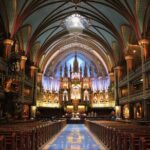
- Notre-Dame Basilica to Place d’Armes: the quick orientation you’ll reuse all trip
- Old Montreal’s narrow streets: how the route helps you read the city
- Place Jacques-Cartier and the courthouse corridor: architecture you’ll spot on sight
- Notre-Dame-de-Bon-Secours, City Hall, and St-Jacques Street’s former Wall Street vibe
- Sulpician Seminary photo moment and the Old Port wrap-up you’ll remember later
- Price and value: when $168.98 per group feels fair
- Guide style: why the best part is usually the questions
- Practical tips so the walk feels easy, not exhausting
- Who this Old Montreal private walk is best for
- Should you book this Old Montreal private walking tour?
- FAQ
- How long is the Old Montreal Private Walking Tour?
- Where do we meet for the tour?
- Where does the tour end?
- Is this tour private?
- What is the maximum group size?
- What languages are available?
- Is admission included?
- Are food and drinks included?
- What should we bring or wear?
- Is there a cancellation option?
Key things that make this Old Montreal tour worth it
- Private group up to 15: you keep your own pace and questions.
- Start at Notre-Dame Basilica area: easy orientation from the first minutes.
- Old streets plus key squares: Place d’Armes and Place Royale are typical highlights.
- Architecture-focused stops: you’ll look at buildings from the outside as stories come alive.
- Photo ops built in: including Sulpician Seminary.
- Guide-driven recommendations: food and drink suggestions can follow naturally from the route.
Starting at Saint-Jacques: meeting point and what 2 hours really feels like
Your tour begins near BMO Bank of Montreal, 119 Rue Saint-Jacques. The meeting point is close to the Notre-Dame Basilica area, which is a smart choice. You start where it’s easy to orient yourself, then you walk into the older maze-like streets that make Old Montreal feel like a different city.
Plan for about 2 hours on foot. That’s long enough to get your bearings and see a solid slice of the historic core, but not so long that you’re slogging through every corner “just because.” Since it’s private, your guide can slow down if you want more time at a square or speed up if you’re trying to fit in another stop afterward.
For most people, walking is very doable. Still, Old Montreal has cobbles and uneven spots. Comfortable walking shoes matter here more than you think—your feet will decide how much attention you can give to the buildings.
You can also read our reviews of more walking tours in Montreal



Notre-Dame Basilica to Place d’Armes: the quick orientation you’ll reuse all trip
Right at the start, your guide leads you through the “why” of what you’re seeing. That matters in Old Montreal, because the buildings are impressive, but the connections are what make it memorable.
From the Notre-Dame Basilica area, your route typically threads toward Place d’Armes and Place Royale. These are classic civic squares, and they work as an orientation shortcut. Once you understand what these spaces were for—public life, power, trade, and community—you start noticing the purpose behind the street layout.
This is also where you’ll feel the value of a private guide. Instead of you trying to figure out where to look first, you’re getting a guided sequence. You’re not just seeing famous places. You’re learning what to look for next time you walk the neighborhood on your own.
Old Montreal’s narrow streets: how the route helps you read the city
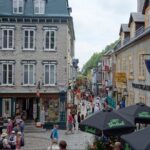
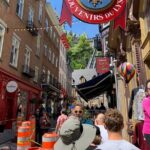
Old Montreal can feel like a puzzle box: narrow lanes, surprising sightlines, and buildings that look similar until you notice the details. On this tour, the guide helps you “read” the streets as you go.
Expect a walk through the historic core—your guide funnels you through a maze of narrow streets and leads you to the types of buildings that shaped the city’s early life. These aren’t just random stops. The streets and blocks are part of the story.
What you’ll likely notice:
- Architectural clues on facades—what’s older, what’s restored, what signals past uses.
- The way squares interrupt the street grid and change the vibe instantly.
- How side streets connect to the main public spaces without feeling forced.
If you’ve been to cities where you spend hours in transit between “must-see” stops, this is the opposite. You stay close to the heart of Old Montreal and let the guide’s route do the heavy lifting.
Place Jacques-Cartier and the courthouse corridor: architecture you’ll spot on sight
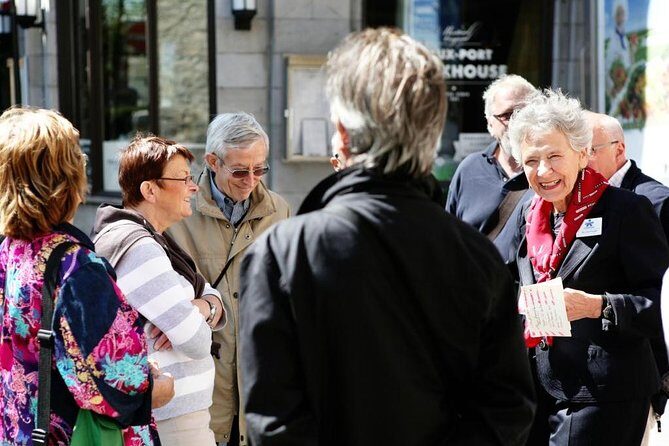
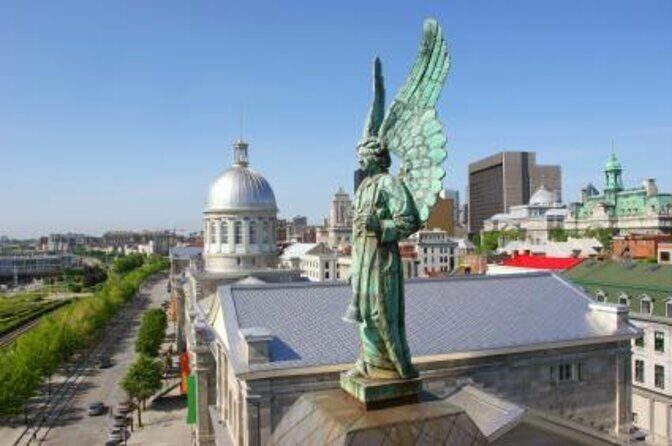
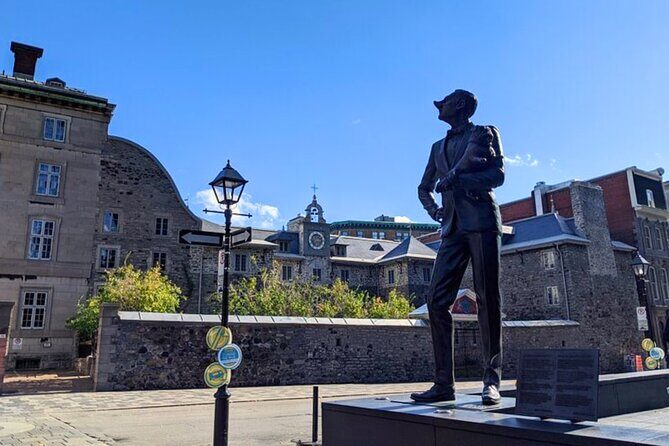
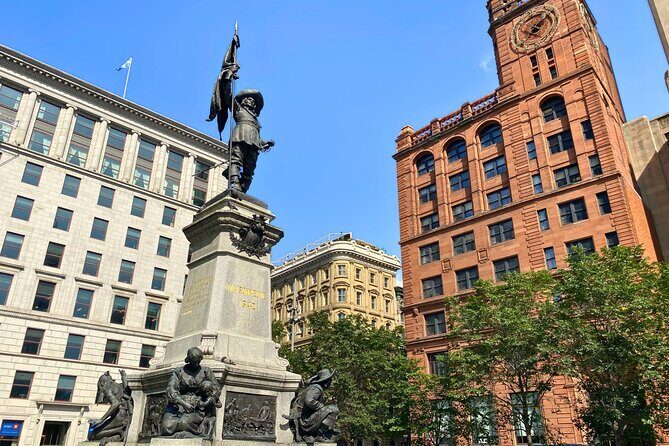
One of the most photo-friendly stops is Place Jacques-Cartier. Here you’ll see monuments and works of art, which gives you a visual pause mid-walk. It’s also a good moment to reset your eyes before continuing.
From there, you’ll spend time focused on external architecture—no ticket needed, just observation and stories. Typical highlights include:
- Three courthouses (viewed from outside)
- Château Ramezay
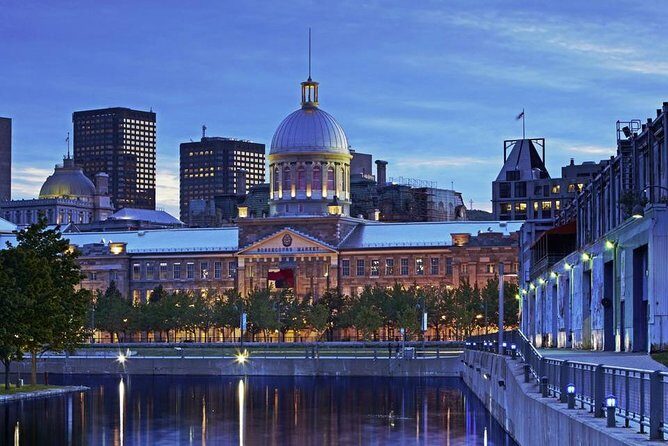
- Bonsecours Market (Marché Bonsecours)
This is where a guide earns their fee. When someone points out what you’re actually looking at—years, functions, and why the style matters—you stop treating buildings like scenery and start treating them like documents.
If you like architecture, you’ll probably come away with a stronger ability to spot differences at street level. And even if you don’t care about styles, you’ll still understand why certain buildings are “anchors” in the neighborhood.
Notre-Dame-de-Bon-Secours, City Hall, and St-Jacques Street’s former Wall Street vibe
As the walk moves along, you pass Notre-Dame-de-Bon-Secours Chapel and City Hall. These are the kinds of stops where it’s easy to glance and keep moving. On this tour, the guide helps you slow down just enough to understand the role these institutions played in the city.
Then you head along St-Jacques Street, often described as the former Wall Street of Canada. The wording is dramatic, but the point is practical: this area connected money, commerce, and civic power. When your guide ties that to what’s around you, the neighborhood starts making sense as a business-and-governance hub, not just a postcard.
Just off St-Paul Street, you’ll also find the foundation site of the city’s first hospital, Hôtel-Dieu, in Cours Le Royer. That stop adds a different angle. Old Montreal isn’t only about politics and trade. It’s also about where everyday care and survival were organized in the early days.
If you enjoy a “city story” tour—where each block adds a chapter—this part of the walk usually lands well.
You can also read our reviews of more private tours in Montreal





Sulpician Seminary photo moment and the Old Port wrap-up you’ll remember later
You’ll end with a photo op of the Sulpician Seminary, which is a standout visual in the historic district. Photo stops are more than convenience. They create a moment where you can compare what you’ve learned to what you’re seeing. By then, the city details tend to click faster.
Then your guide talks through the Old Port—its role in the city’s growth and why it mattered. This wrap-up is useful because it turns Old Montreal into a connected story. You stop thinking of it as “old streets” and start thinking of it as a functioning system: port access, trade, civic life, and the institutions that supported it.
The tour finishes at Le Vieux Montréal, 500 Place-d’Armes. That’s a good end point because it puts you near a lively area where you can keep exploring independently, grab food, or plan a next activity without backtracking across town.
Price and value: when $168.98 per group feels fair
The price is $168.98 per group for up to 15 people, with about 2 hours of guiding. That structure matters.
Here’s the quick value math:
- If it’s just 2 people, you’re paying about $84.49 each.
- If it’s 4 people, about $42.25 each.
- If it’s 10 people, about $16.90 each.
- If it’s 15 people, about $11.27 each.
So for couples and solo travelers, the cost is a premium you’re paying for the one-on-one attention and flexible pacing. For families and friend groups, it becomes a smarter deal because you split the private guide cost across more people.
If you’re the type who wants a well-structured orientation and solid restaurant ideas afterward, the price can feel easier to justify. A great guide can save you time later—time you’d otherwise spend figuring out what to do first.
Guide style: why the best part is usually the questions
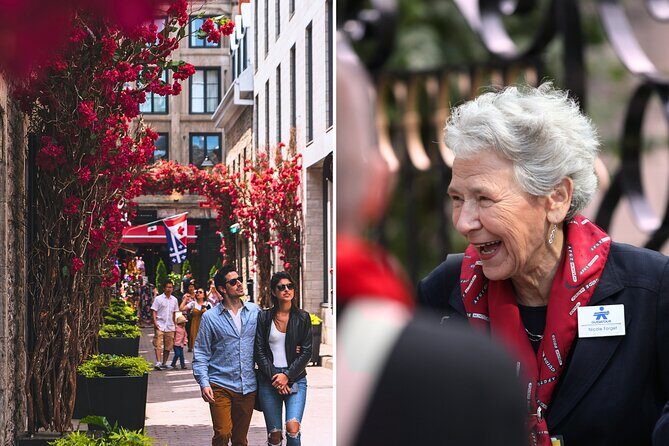
The tour’s biggest strength is how it gets answered in real time. In practical terms, you’ll likely get:
- a paced route that fits your group
- time to ask questions
- history and architecture explained in plain language
Many different guides take people through this walk. Names that show up as standout examples include Sarah, Stacy, Frederic, Pierre, Joann, Debbie, Robert, Luc, and Gaston. Across these guides, the pattern is consistent: people come away feeling they learned things they wouldn’t have found quickly on their own, and they appreciated being able to discuss what they were seeing as they walked.
You may also get food and drink pointers that match the day’s route. For example, I’ve seen mention of recommendations like Chez Suzette for crepes, Pastek for tapas, and Crew for coffee in an older bank setting. Even if you don’t follow every suggestion, it’s helpful to have a local shortlist in your pocket.
In winter, guides may build in short indoor breaks. One tour note specifically called out added indoor time during snowier weather, which is a big deal when you’re trying to keep the energy up and not turn into a human popsicle.
Practical tips so the walk feels easy, not exhausting
A few small things will make your tour smoother:
- Bring comfortable walking shoes. Old Montreal sidewalks can be unforgiving.
- Dress for the weather. If it’s cold, layer up because you’ll be outside for the full time.
- Wear something you can move in easily—this is a walk through tight streets.
- Think of this as orientation. Then use the rest of your day to explore where you feel curious.
- If you care about architecture, mention it early. Your guide can lean more into exterior details.
Also, it’s a private experience only for your group. With a max of 15 people, your guide still has room to keep it interactive rather than turning it into a scripted monologue.
Who this Old Montreal private walk is best for
This is a strong fit if you want:
- A first-time Old Montreal orientation without wasting a day getting lost
- A flexible pace for families, couples, or friend groups
- Architecture and civic history in a format that doesn’t feel like a classroom
It’s also a good choice if you’re traveling with kids. Specific guide experiences mention keeping children engaged and customizing the tour so younger travelers stayed interested. And even for adults, the private format helps when you want to ask follow-up questions instead of waiting your turn.
If you’re short on time but want more meaning than a quick photo stop, this walk can do that job well.
Should you book this Old Montreal private walking tour?
I’d book it if you fall into one of these categories:
- You want an efficient way to learn the layout and stories of Old Montreal.
- You prefer a private guide who can adjust the pace and answer questions.
- You’re traveling with a group that can split the per-group price and get a true value boost.
I’d think twice if you hate walking or if you’re expecting a mostly indoor tour. This is built around streets, squares, and exterior architecture. On a good day, that’s exactly the point.
If you want a smart start to your Montreal trip—so you leave feeling like Old Montreal makes sense—this private walk is an easy yes. It turns the neighborhood into something you can navigate, not just something you look at.
FAQ
How long is the Old Montreal Private Walking Tour?
The tour lasts about 2 hours.
Where do we meet for the tour?
You meet at the Notre-Dame Basilica area, with the start point listed as BMO Bank of Montreal, 119 Rue Saint-Jacques, Montréal.
Where does the tour end?
It ends at Le Vieux Montréal, 500 Place-d’Armes, Pl. d’Armes, Montréal.
Is this tour private?
Yes. It’s a private tour/activity, and only your group participates.
What is the maximum group size?
A maximum of 15 people per booking.
What languages are available?
The tour is offered in English, and you can pick between two language options and start times.
Is admission included?
The tour includes a typical “admission ticket free” note for the Old Montreal stop, and there are no additional tickets listed as included costs in the details provided.
Are food and drinks included?
No. Food and drinks are not included.
What should we bring or wear?
Comfortable walking shoes are recommended.
Is there a cancellation option?
Yes. Free cancellation is available up to 24 hours in advance for a full refund.