REVIEW · BANFF
Lake Louise: Cross Country Skiing Lesson with Tour
Book on GetYourGuide →Operated by Freeheelin' Adventures · Bookable on GetYourGuide
A frozen lake teaches quick control. This Lake Louise cross-country skiing lesson mixes beginner coaching with real trail time around the iconic shoreline. You’ll go from basics like getting up after a fall to feeling confident gliding and stopping on nordic skis.
What I like most is the personal tuition angle in a group capped at 4, plus the way the day is paced with structured instruction followed by guided skiing. One recent review specifically called out Shauna’s patient teaching and the extra time spent nailing the fundamentals.
One drawback to plan for: you’ll need to arrive ready with the correct gear—especially waxless skis—since equipment isn’t included and the lesson is weather-dependent.
In This Review
- Key points before you go
- Why Lake Louise cross-country feels different from a typical lesson
- Meeting at the public washrooms bench: timing and what to expect
- Safety briefing and orientation: the first 15 minutes are not wasted
- Lesson focus: falling, gliding, and stopping with coached technique
- Two hours of guided skiing around Lake Louise
- Secret stop break: use the 25 minutes to reset
- Afternoon confidence-building: second guided tour and the payoff
- Equipment reality check: what’s included, what isn’t, and what you must bring
- Price and value: is $146 worth five hours in a group of 4?
- Who this is best for (and who should pass)
- Practical tips I’d use to get the most out of the day
- Should you book this Lake Louise cross-country lesson?
- FAQ
- What time does the Lake Louise cross-country skiing lesson start?
- How long is the experience?
- Is ski equipment included in the price?
- Do I need waxless cross-country skis?
- What does the lesson cover for beginners or refresher skiers?
- Where is the meeting point?
- Do I need to bring lunch?
Key points before you go
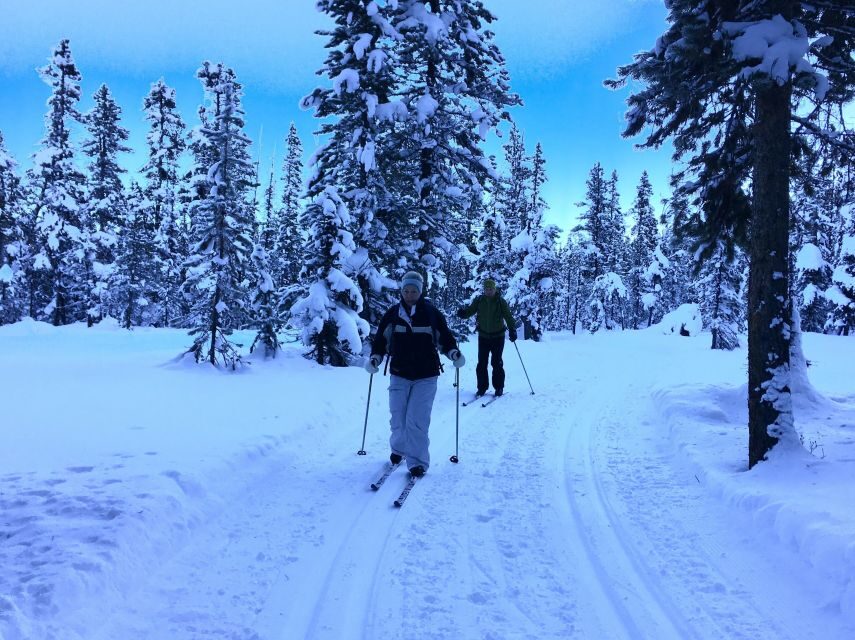
- Max 4 people means you’re not lost in a crowd; you get hands-on feedback.
- Beginner or refresher training covers falling and getting back up, plus gliding and stopping.
- Two guided skiing blocks keep your skills improving while you’re moving through the scenery.
- A 25-minute secret stop break gives you a breather mid-day and time to reset.
- Waxless requirement matters for smooth glide and an easier learning curve on the day’s conditions.
- Lunch is on your schedule since the activity runs through the lunch period.
Why Lake Louise cross-country feels different from a typical lesson
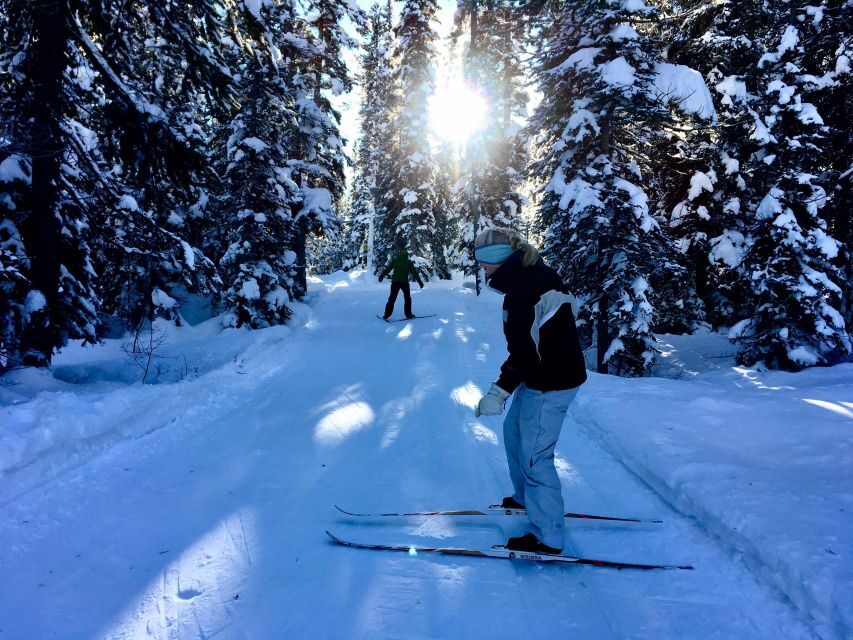
Lake Louise has a way of making winter training feel like a trip, not homework. You’re learning the motion of cross-country skiing while looking at one of the Canadian Rockies’ most famous backdrops, and that changes your attitude in a good way.
This is also the kind of lesson where the learning sticks because it’s practical. You’re not just standing around listening; you’re practicing the movements you’ll use immediately on the trails. You’ll cover the stuff that actually makes you independent on skis—control, balance, and stopping—not just how to start.
And with Freeheelin’ Adventures running a small group, it’s easier for your instructor to spot what you’re doing wrong and correct it quickly. In one review, Shauna was praised for taking time to make sure the basics were right before moving on.
A few more Banff tours and experiences worth a look
Meeting at the public washrooms bench: timing and what to expect
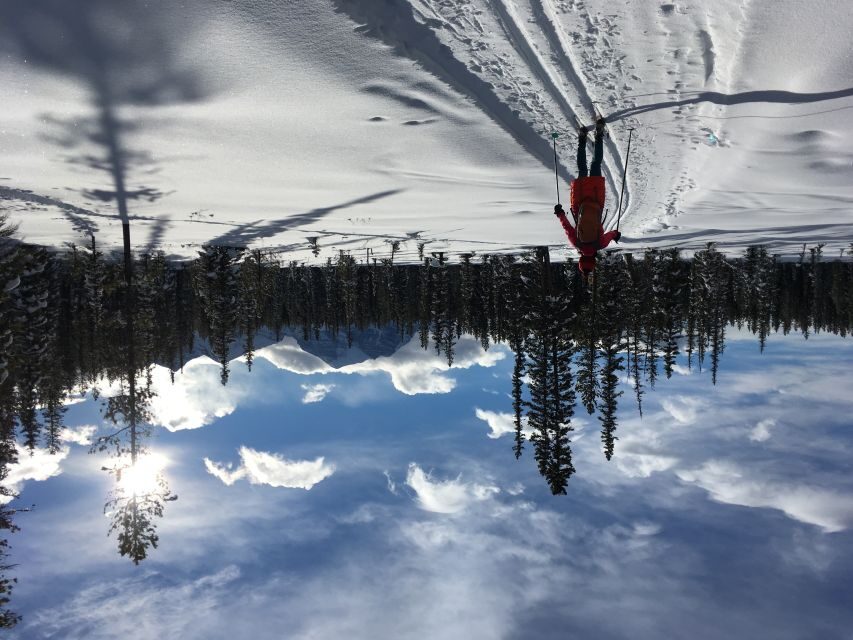
Your day starts at 10:30 AM, and you’ll meet at the public washrooms area—specifically the bench out front in front of the washrooms near the Lake Louise parking area. You’ll sign a waiver and medical form before you get moving.
That waiver step matters because winter sports come with real risks. Expect a short orientation before the skiing lesson begins, then a clear safety briefing. In practice, this reduces the chaos factor: you’ll know how the group will move and what to do if something feels off.
Dress readiness is the other big part of your morning. The day is outdoors in winter conditions, so you’ll want warm layers and gloves from the start—not after you’re already chilly.
Safety briefing and orientation: the first 15 minutes are not wasted
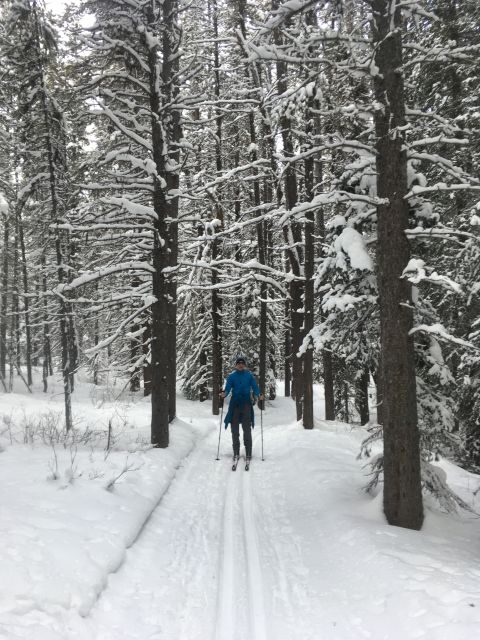
Before you hit the trails, you’ll get a 15-minute safety briefing plus an orientation. This is where you learn the rules of the road for your group and how to use your gear properly.
Even if you’ve skied before, this part can still help. Cross-country skiing has its own rhythm—your edges, your pole timing, and how you stop are different from downhill. A good orientation helps you avoid the common beginner mistake of trying to force speed before control.
You’ll also get oriented to what the lesson will focus on: falling and getting back up, gliding, and stopping. That set of topics is a big clue about the teaching style—this isn’t a test of athleticism. It’s coaching aimed at confidence.
Lesson focus: falling, gliding, and stopping with coached technique
The core of the experience is learning (or refreshing) how to ski on nordic cross-country skis in a structured way. You’ll start with the fundamentals, including how to handle the inevitable moments when skis slip or you lose balance.
Yes, that includes falling. But the important part is what comes right after: getting back up. Cross-country is about efficient movement, and learning how to recover quickly keeps you from spiraling into frustration or fatigue.
From there, you’ll work on gliding and stopping—two skills that turn skiing from wobbly motion into something you can control. If you’re a complete beginner, gliding is where it starts to click. If you’re a refresher, stopping is often where confidence is regained.
Two hours of guided skiing around Lake Louise
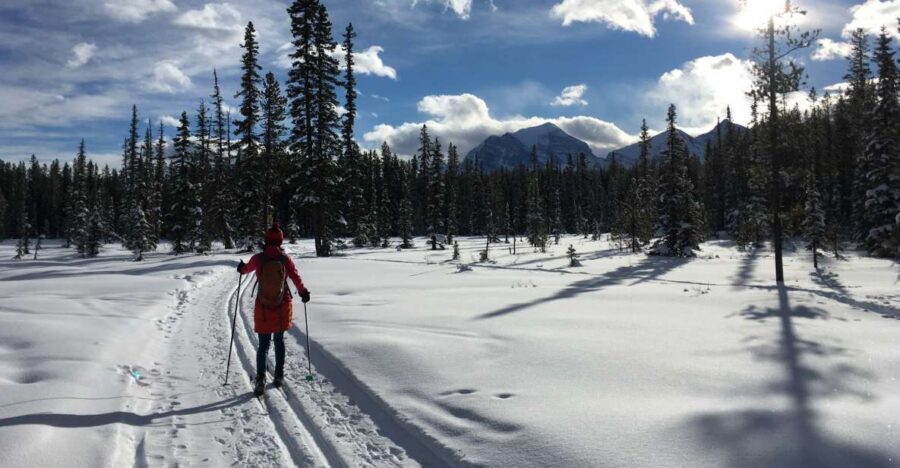
After instruction, you’ll move into a guided tour segment of about 2 hours near the iconic Lake Louise area. This is the portion that turns “I learned the motion” into “I can actually use it out there.”
A guided route matters because it helps you pace the learning. Your instructor can steer you through terrain and conditions while reminding you of the key technique points—like how to manage your weight and use poles for support.
One thing to watch for: Lake Louise conditions can change quickly in winter. You’ll be outside most of the day, so your job is to stay bundled, keep moving, and focus on the technique cues your instructor gives you. If you’re cold, your form usually suffers—so warm layers aren’t optional comfort. They’re part of the lesson.
A few more Banff tours and experiences worth a look




Secret stop break: use the 25 minutes to reset
Midday brings a 25-minute break at a secret stop. You’ll have time to pause, warm up, and take stock of how you’re doing.
This is also where lunch planning becomes real. The activity operates over lunch, and you’re expected to pack a lunch for the day. So treat this break like your checkpoint: eat, drink something, and make sure your hands are warm enough to keep grip and control when you start skiing again.
Keep in mind the lesson is small-group coached. If you’re feeling tired, this break is your chance to recover so you can get the best value from the next guided stretch.
Afternoon confidence-building: second guided tour and the payoff
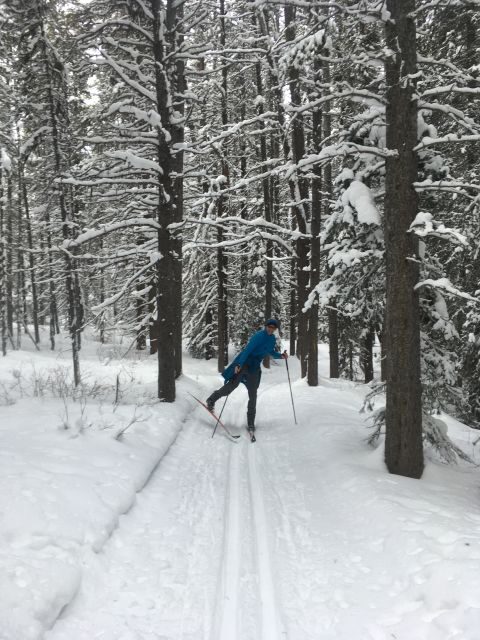
The second 2-hour guided skiing session is where your skills typically start to feel more connected. You’ll be practicing in the real setting you came for, not only drilling moves in place.
By now, the instructor can tailor attention based on what you’re still struggling with. That’s a major reason the small-group size is such a big deal: your feedback can be specific instead of generic.
The summary also notes you’ll enjoy a short tour at the end of the lesson. That’s often the payoff moment—when you stop thinking so hard and simply ski the route with better control. In a review rating this highly, that personal tuition theme lines up with the idea that the instructor helps you leave with usable skills, not just a fun morning.
Equipment reality check: what’s included, what isn’t, and what you must bring
Cross-country ski instructions are included, but cross-country ski equipment is not included. That means you’ll need your own gear or plan to rent.
Here are the rental costs noted:
- Chateau Lake Louise rentals cost $60 per person
- Gear Up in Canmore charges $30 per person
- Wilson Mountain Sports in Lake Louise charges $29 per person
Before you book anything, double-check the equipment requirement that matters most: you need waxless cross-country skis, plus boots and ski poles. Waxless is specifically mentioned for this experience, and it’s not a casual suggestion. If you show up with the wrong skis, your glide and overall learning experience can take a hit.
What to bring is equally specific:
- Warm clothing and outdoor clothing
- A hat and winter sports gear
- Gloves
- Packed lunch
- Medical mask and hand sanitizer or tissues
- Winter-ready waterproof layers, plus a neck warmer
If you’re shopping for gear last-minute, focus on staying warm and dry first. Your technique depends on your body being able to stay loose rather than bracing against cold.
Price and value: is $146 worth five hours in a group of 4?
At $146 per person for about 5 hours, you’re paying for more than time outside. You’re paying for coaching in a small group limited to 4 participants, which directly affects how much correction you get.
If you’ve tried group lessons where you spend half your time waiting, you’ll feel the difference immediately here. With only a few people, your instructor can slow down the parts that are confusing and speed through the parts that are already working.
The other value driver is the structure: instruction in the morning, then two guided sessions afterward. That means you’re not only learning technique; you’re applying it while moving through the Lake Louise area. That combination is where lessons turn into confidence.
On the cost side, add-ons are real: you may need rentals, and the price of equipment can change your total outlay. Still, compared with buying full gear when you might not ski often, renting can keep this experience economical.
Also, it’s English instruction, which can matter if you want technique explained clearly without a language barrier in the middle of snowy, cold movement.
Who this is best for (and who should pass)
This lesson is a good fit if you want to learn cross-country skiing basics near Lake Louise or you want a refresher that focuses on control. The described topics—falling and recovery, gliding, and stopping—are exactly what beginners need and what intermediate skiers often want reviewed.
It’s also well suited to people who prefer direct coaching and a small group format. If you’re the type who learns faster when someone watches your form and gives cues, the max-4 setup is a big plus.
It’s not suitable for:
- Children under 14
- People with mobility impairments
- Wheelchair users
So if you’re thinking of bringing someone with accessibility needs, check first how winter movement requirements would be handled. The activity description is clear that it isn’t designed for wheelchair access.
Practical tips I’d use to get the most out of the day
First, plan your clothing like you’re going to be outside for hours, not like you’ll “warm up once skiing starts.” Cold hands and stiff fingers make it harder to grip poles and maintain control.
Second, pack your lunch in a way that works in winter. Keep it accessible for the midday break, and consider drinks too. Staying hydrated supports coordination and reduces the “heavy legs” feeling that can show up after a couple hours.
Third, arrive with waxless skis and the right setup. The experience explicitly asks for waxless skis, boots, and poles, so take that seriously. If you’re renting, confirm what’s available before you arrive so you’re not trying to solve gear problems while everyone else is already in motion.
Should you book this Lake Louise cross-country lesson?
Book it if you want a guided path to confidence in cross-country skiing, with coaching that focuses on the skills that matter—especially stopping and getting back up after a fall. The small group limit and the high marks for personal tuition (including praise for Shauna’s patience with basics) are exactly what you want if you’re learning for real, not just checking a winter activity off.
Skip it if you don’t want to deal with gear planning, cold-weather prep, and the fact that you’ll be active for about five hours. Also pass if accessibility is a concern for you, since the experience isn’t suitable for wheelchair users or people with mobility impairments.
If you’re ready to show up prepared and you want guided time around Lake Louise, this is one of the more sensible ways to turn cross-country skiing into something you can do with confidence.
FAQ
What time does the Lake Louise cross-country skiing lesson start?
You meet at 10:30 AM at the public bench in front of the washrooms near the Lake Louise parking area, and you’ll complete waiver and medical form steps before skiing.
How long is the experience?
The total duration is 5 hours.
Is ski equipment included in the price?
No. Cross-country ski equipment is not included, and you’ll need to bring your own waxless skis, boots, and ski poles or rent locally.
Do I need waxless cross-country skis?
Yes. The activity notes that you should make sure to bring waxless cross country skis, along with boots and ski poles.
What does the lesson cover for beginners or refresher skiers?
You’ll practice topics like falling down and getting back up, plus gliding and stopping on nordic cross-country skis.
Where is the meeting point?
Meet at Lake Louise parking in front of the public washrooms by the bench (the location is shown on the provided Google Maps link).
Do I need to bring lunch?
Yes. The activity operates over lunch, so you should pack a lunch for the day.