REVIEW · TORONTO
Kensington Market and Chinatown: A Self-Guided Tour
Book on Viator →Operated by VoiceMap Audio Tours · Bookable on Viator
Toronto’s side-street stories play in your headphones. This self-guided audio tour strings together Art Gallery of Ontario, Kensington Market, and Toronto Chinatown with real place-based narration, so the neighborhoods feel like more than just stops. You’re also moving through key downtown sites without the hassle of joining a group and stopping for everyone else.
I like that you get lifetime access and the tour won’t expire, so you can revisit your favorite blocks later. I also like the practical tech: the VoiceMap setup includes offline audio plus offline maps and geodata, which matters in a city where cell signal can be hit-or-miss.
One thing to consider: you’ll need your own smartphone and headphones, and tickets to museums or attractions are not included. In other words, you can enjoy the narration on the walk, but you may need to pay separately if you want to go inside a stop.
In This Review
- Key highlights worth your time
- Price and time: a short walk with long audio value
- Starting at Grange Park: how to make your walk effortless
- Art Gallery of Ontario: a museum stop that works even without tickets
- Kensington Market: 240+ shops plus story-driven street scenes
- Chinatown on the sidewalk: produce, herbs, and street-level energy
- Grange Park and the AGO connection: the past under your feet
- OCAD University: art and design as a living downtown institution
- Kiever Synagogue and the Denison story: layers of Toronto built in
- Navigation and the VoiceMap app: why this tour feels easy
- Who should book this Kensington and Chinatown walk
- Quick value check: is $9.99 fair for what you get?
- Should you book it? My practical recommendation
- FAQ
- How much does the tour cost?
- How long is the self-guided tour?
- Does it include the VoiceMap app and offline audio?
- What do I need to bring?
- Where do I start and where does it end?
- Is the tour only available at certain times?
- Can I cancel for a refund?
Key highlights worth your time
- Never-expiring audio you can reuse whenever you’re back in Toronto
- Offline VoiceMap support for maps, audio, and geodata
- Two major neighborhoods on one route: Kensington Market and Chinatown
- Simple self-guided flow to beat crowds and move at your pace
- Downtown anchors included like Grange Park and the Ontario College of Art and Design University
- On-the-street storytelling that explains what you’re seeing as you walk
Price and time: a short walk with long audio value
At $9.99 per person for about 1 hour 15 minutes, this is the kind of tour that fits real schedules. You get a meaningful slice of downtown Toronto without burning a whole afternoon or paying big-ticket attraction fees as part of the package. The best part is that the cost is for the audio guide and navigation, not for museum entry—so you’re choosing a walk-and-learn experience rather than a sit-and-enter day.
The other value point is lifetime access. If Toronto becomes your “repeat city” (or you’re traveling with someone who wants to return), this format turns into a low-cost habit: one purchase, then multiple uses when you’re in the area again.
If you’re hoping for a guided group tour with a live human, this isn’t that. It’s a private self-guided experience for your group only, delivered through the VoiceMap app.
You can also read our reviews of more guided tours in Toronto


Starting at Grange Park: how to make your walk effortless
Your start is at the Grange Park Dog Off Leash Area at Beverly Street & McCaul Street. Your end is at College Street & Augusta Avenue. The route is designed to be walked comfortably, with the audio acting like your guide-in-your-ear.
A big practical win: the meeting point is near public transportation. That helps a lot in Toronto, where you may want to arrive by transit and then do the walk car-free. Also, the activity lists service animals allowed, which is useful if you need that.
Plan to begin with a quick tech check:
- Bring a fully charged phone
- Use headphones (they aren’t included)
- Before you step out, open the VoiceMap app and confirm your audio and maps are available for offline use
When your directions and tracking are working smoothly, you waste less time figuring out where to go next. The whole point is to keep walking while the stories roll.
Art Gallery of Ontario: a museum stop that works even without tickets
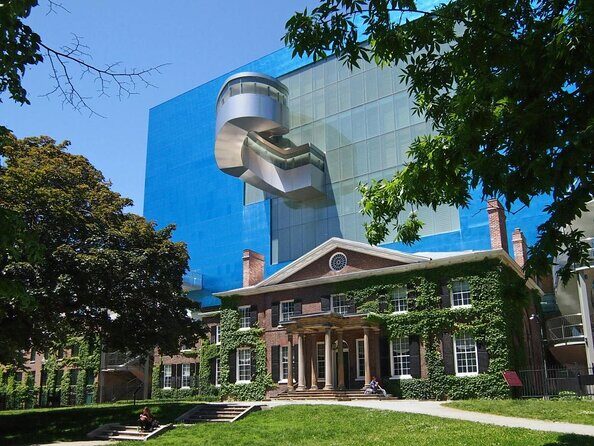
One of the downtown anchors on the route is the Art Gallery of Ontario (AGO). The audio narration sets this up as a big deal in scale and scope, highlighting that the collection includes close to 95,000 works, spanning from the first century to the present. It also points out the gallery’s physical size—about 45,000 square metres—and that it’s among the largest galleries in North America.
Here’s how to think about this stop for your plan: the tour does not include tickets or entrance fees. So unless you buy museum admission separately, you’ll most likely experience the AGO as an exterior and street-view story. That’s not a disappointment; it’s actually a smart way to get context without paying for an extra entry if your schedule is tight.
If you do want to go inside later, the audio gives you something helpful: you’ll know what to look for when you’re standing there, instead of walking in cold.
Kensington Market: 240+ shops plus story-driven street scenes
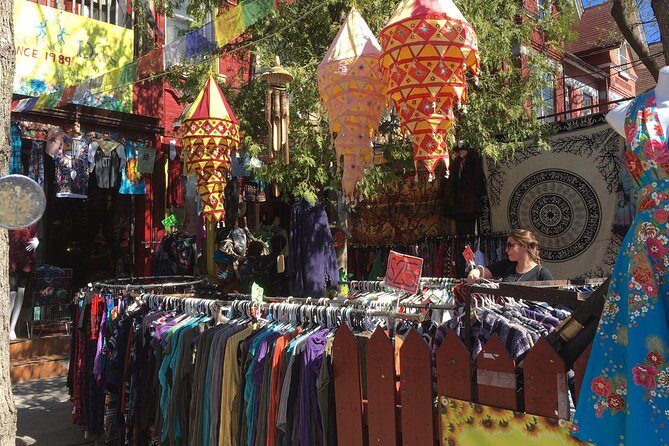
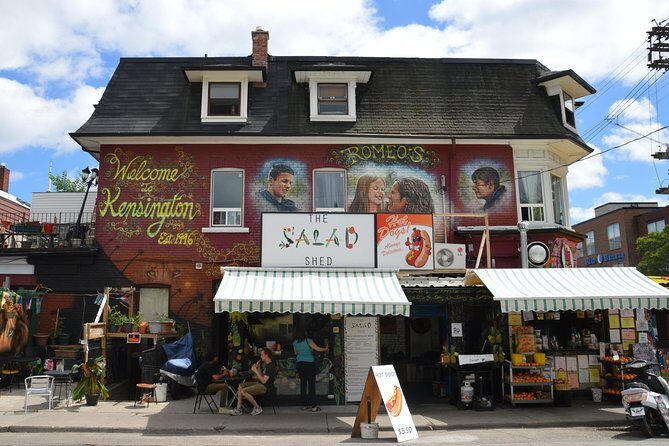
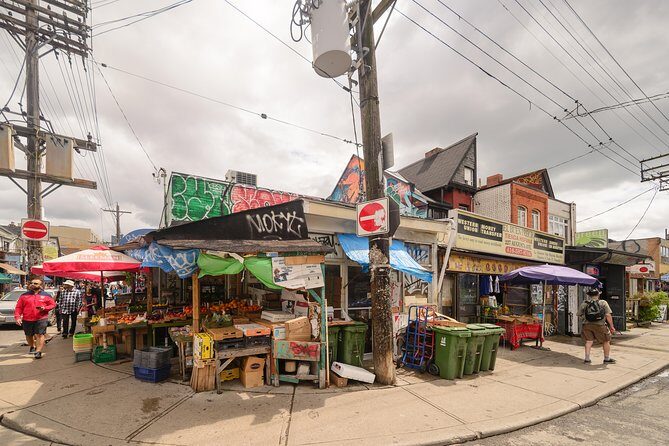
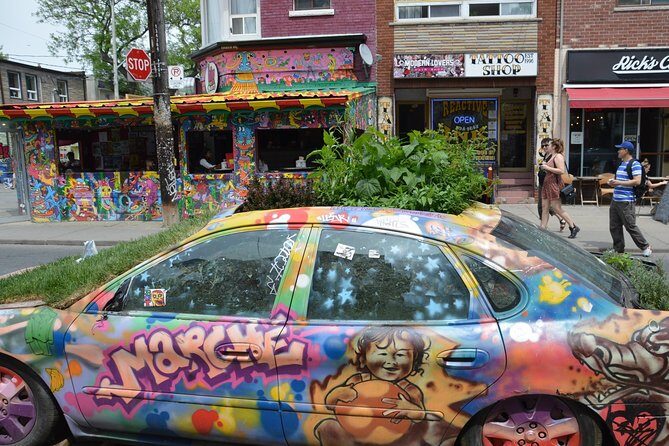
Next you head into Kensington Market, a dense neighbourhood and marketplace known for its mix of shops, restaurants, bars, and cafes—over 240 unique spots. The narration also focuses on the human side of the area: a large population of writers, artists, and musicians living alongside a diverse immigrant community.
This is the part of the walk where I think you’ll feel the most payoff from a self-guided audio format. Kensington works best at walking speed. You can pause when a doorway or storefront catches your eye, then resume when you’re ready. The audio helps connect what you see to why the area has that feel.
Practical tip: since Kensington is packed, your best move is to pick a couple of food breaks you can actually finish. The tour itself doesn’t include food, so budget a little extra time if you want to shop or snack. If you’re in a hurry, you can still keep it moving—audio keeps you oriented without you constantly checking your phone.
Chinatown on the sidewalk: produce, herbs, and street-level energy
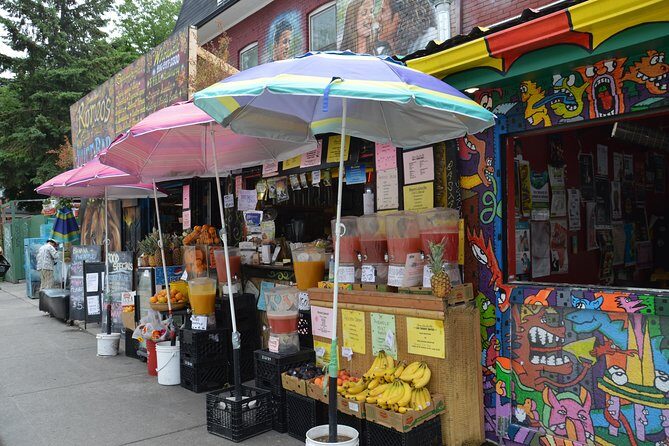
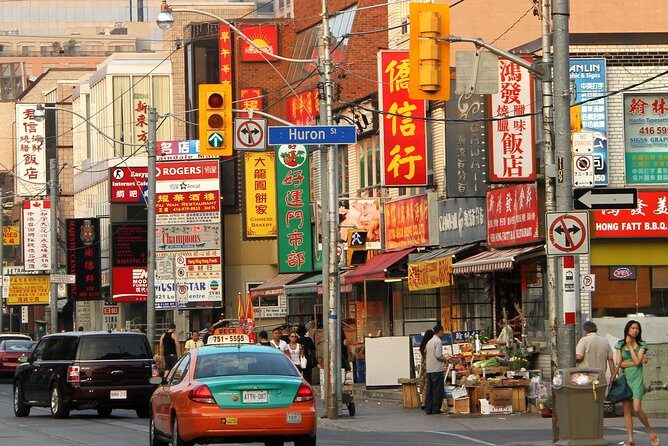
From Kensington you shift into Chinatown, and the narration explains what makes the area feel immediate. On most days, the flavor of Chinatown spills out onto the sidewalk as you pass produce markets and grocers with mounds of herbs, fruits, vegetables, and dried seafood. You’ll also see vendors lining the sidewalk with wares sold right out of grocery carts and pop-up tables.
This section is a great example of why audio tours can beat picture-only sightseeing. The Chinatown streets are visually busy, and the audio gives you a way to interpret what you’re seeing without needing to do research on the spot.
How to get the most out of this block:
- Keep your route flexible. If something grabs your attention, step in and then rejoin when you’re ready.
- Bring practical comfort items. Wear shoes you don’t mind getting close to crowded sidewalks and market entrances.
- If you’re sensitive to strong smells (spices, dried goods, produce), you’ll still be fine—but just expect the sensory intensity the tour description warns you about.
A few more Toronto tours and experiences worth a look



Grange Park and the AGO connection: the past under your feet
You’ll circle back to a key downtown anchor: Grange Park. The audio frames it as a prominent, well-used public park, and it ties it to the local neighbourhood name. The narration also includes a specific origin story: the park was historically the backyard of The Grange manor, which later expanded and became the Art Gallery of Ontario.
This kind of connection is why this tour is more than a walk through cute streets. You’re learning how place names and land use evolved, which makes the area feel less random. Standing near a park that’s serving people today, you can also picture it as part of an older estate—then you understand why the AGO matters in the first place.
If you’re trying to plan a day with other stops nearby, this is also a helpful mental anchor. Grange Park sits at the kind of intersection where you can pivot your afternoon depending on what you feel like doing next.
OCAD University: art and design as a living downtown institution
The route continues toward the Ontario College of Art and Design University (OCAD University). The audio describes it as a public university in Toronto, and notes that it’s Canada’s largest and oldest educational institution for art and design. It also mentions that OCAD offers courses through the Faculties of Art, Design, Liberal Arts and Sciences, and alternative programs.
Even if you’re not visiting campus, this is a smart stop for a self-guided tour. It reminds you that these neighborhoods aren’t only for tourists. Downtown Toronto is an active education and creative hub, and the audio helps you recognize the role of institutions next to the street life.
The practical way to treat this stop: don’t try to turn it into a museum visit. Let it be a context point. If you’re into street art, design, creative culture, or you just like understanding how cities function day to day, you’ll enjoy this part.
Kiever Synagogue and the Denison story: layers of Toronto built in
One of the more meaningful details on the route is the Kiever Synagogue. The audio explains that the congregation originally resided in the Ward, then purchased the property in 1914 from the Denison family estate and built a new synagogue.
From there, the narration connects to the broader Denison land story. It describes how George Taylor Denison used the land (now occupied by Grange Park) as a parade ground for his volunteer cavalry troop during the Rebellion of 1837.
That’s a lot of timeline for one walk—and that’s the point. When you hear it while you’re moving through the area, the city stops being a collection of photos and starts being a sequence of decisions: estates sold, institutions built, land used differently over time. It’s the kind of context that makes your last stop feel connected to your first.
And yes, it’s also a reminder: you don’t need a paid “heritage” ticket to get real historical texture. You just need good narration and the willingness to walk.
Navigation and the VoiceMap app: why this tour feels easy
This experience is powered by VoiceMap Audio Tours, and the included package gives you the app plus offline access to audio, maps, and geodata. That means you can plan to keep moving even if you’re between wifi spots.
It’s also an easy setup for a one-and-done walk. You’re not juggling browser tabs or hunting down directions every few minutes. You follow the audio prompts and the map guidance.
If you like tours that keep your hands free, this is a strong fit. I’ll put it plainly: the experience is designed for walking. You’re not stopping constantly to figure out the next turn.
Who should book this Kensington and Chinatown walk
This tour is ideal if you want:
- A low-cost way to see two major Toronto neighbourhood areas—Kensington Market and Chinatown—on foot
- A short activity that won’t hijack your whole day
- Audio storytelling that helps you interpret what you’re seeing, instead of just passing by
- A route you can do independently, at your pace, with no group coordination
It may not be ideal if:
- You’re expecting museum entry included (tickets aren’t included)
- You want a live guide to answer spontaneous questions
- You don’t want to use your own phone and headphones
Quick value check: is $9.99 fair for what you get?
For $9.99, you’re paying for access to a guided walking experience through a neighbourhood-heavy part of Toronto. You’re not paying for transportation, food, or attraction tickets. You’re also getting lifetime access, plus offline audio and navigation.
If you’re the type of traveler who prefers to roam with structure—audio in your ears, direction on your screen—this is one of the better ways to stretch that $9.99 into a full, memorable hour-plus of city context.
And if you don’t love the first use, the lifetime access lowers the risk. You can try again later when your schedule is different.
Should you book it? My practical recommendation
Book it if you want a smart, budget-friendly way to connect Toronto’s arts and design world with street-level culture in Kensington and Chinatown. The format works especially well when you want to beat crowds and move at a human pace, not a tour-group pace.
Skip it if you’re looking for a live guide, you need museum admissions included, or you dislike self-navigation tech. If you’re comfortable using VoiceMap offline and you have a phone and headphones ready, this walk is a very good deal for the time it takes.
FAQ
How much does the tour cost?
It costs $9.99 per person.
How long is the self-guided tour?
The duration is about 1 hour 15 minutes.
Does it include the VoiceMap app and offline audio?
Yes. It includes the VoiceMap app for Android and iOS, along with offline access to audio, maps, and geodata.
What do I need to bring?
You’ll need your own smartphone and headphones. Transportation, food, and drink are not included, and tickets or entrance fees to attractions along the way are not included.
Where do I start and where does it end?
You start at the Grange Park Dog Off Leash Area on Beverly Street & McCaul St, and the tour ends at College St & Augusta Ave.
Is the tour only available at certain times?
The listed opening hours are 12:00 AM to 11:59 PM, Monday through Sunday.
Can I cancel for a refund?
No. The experience is non-refundable and cannot be changed for any reason. If you cancel or request an amendment, you won’t get your money back.