REVIEW · SOUTHERN GULF ISLANDS
Victoria BC: 3-Hour Whale Watching Expedition
Book on GetYourGuide →Operated by Five Star Charters Ltd (Five Star Whale Watching) · Bookable on GetYourGuide
Whales feel close on this Victoria cruise. You’re out on a smooth 40-passenger catamaran with captain-led spotting and live naturalist commentary, so you’re not just looking—you’re learning what the crew is seeing and why it matters. On a good run, you’ll also get long, unobstructed views from inside and outside as the boat searches the productive waters around Southern Vancouver Island.
One practical caution: this is still open-water wildlife time, and conditions can change. The operator also flags that it’s not suitable for wheelchair users or people with back/stability issues, so if that applies to you, check carefully before you book.
In This Review
- Key highlights to know
- Where You Meet in Victoria: Fairmont Empress Area, Then Out to the Water
- The Ride: A 40-Passenger Catamaran Built for Views (Inside and Out)
- How the Crew Finds Whales: Salish Sea Feeding Areas and Expert Tracking
- The Main Targets: Orcas, Humpbacks, Minke, and Gray Whales
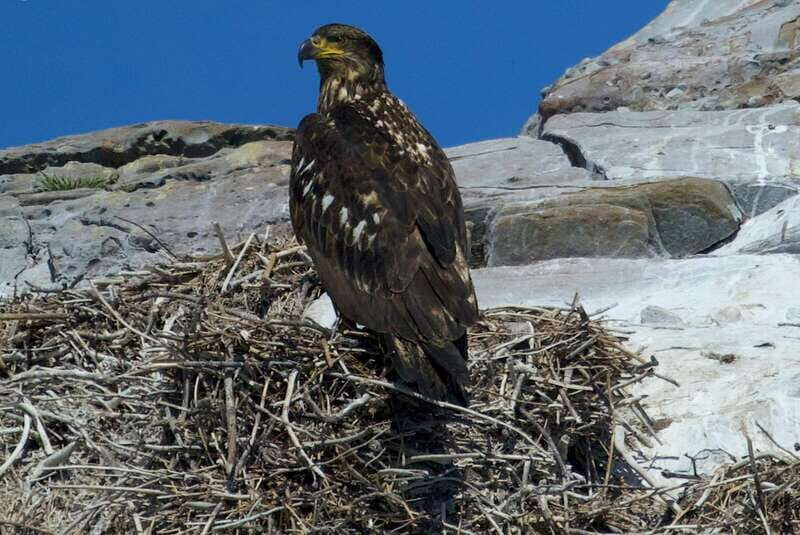
- Beyond Whales: Seals, Sea Lions, Otters, and Marine Birds
- The Onboard Experience: Jackets, Drinks, and What to Expect When Conditions Turn
- Price and Value: What $130 Buys in Victoria
- Who Should Book This Whale Watch (and Who Should Rethink)
- Quick Practical Tip: How to Get Better Viewing During the Search
- Should You Book the Victoria BC 3-Hour Whale Watching Expedition?
- FAQ
- How long is the whale watching expedition?
- What is the price per person?
- Where do tours depart from in Victoria?
- Where does the tour finish?
- What’s included in the ticket price?
- Is smoking, alcohol, or drugs allowed?
- Is this tour wheelchair accessible?
Key highlights to know
- Expert crew search: veteran captains and certified naturalists call out wildlife as they locate whales and feeding areas
- Comfort for viewing: jackets plus indoor and outdoor viewing for different ages and weather moods
- Salish Sea focus: operations around Southern Vancouver Island, the Gulf Islands, and Juan de Fuca Strait
- High-likelihood targets: humpback whales, Bigg’s killer whales (orcas), minke whales, and gray whales are all possible
- More than whales: keep watching for seals, sea lions, otters, and lots of marine birds
- Small-but-not-tiny boat: a 40-passenger catamaran helps with stability and general visibility
Where You Meet in Victoria: Fairmont Empress Area, Then Out to the Water
This tour starts at 645 Humboldt St, on the side of the Fairmont Empress Hotel, next to Miniature World. Aim to arrive about 30 minutes early so you have time to park, find the right side of the building, and get oriented before boarding.
That matters more than people think. Whale watching can move fast once you’re on the dock: you’ll want to be settled early so you can grab the best viewing spot—especially if you’re planning to stay outside for long stretches.
At the end, you finish at 812 Wharf St in Victoria. In practice, that leaves you with a straightforward plan for dinner afterward, since you’ll still be in the central waterfront area.
The Ride: A 40-Passenger Catamaran Built for Views (Inside and Out)
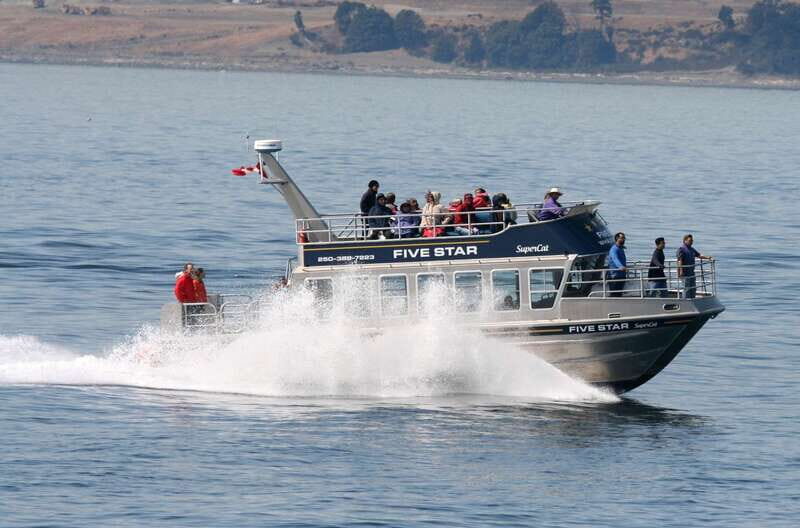
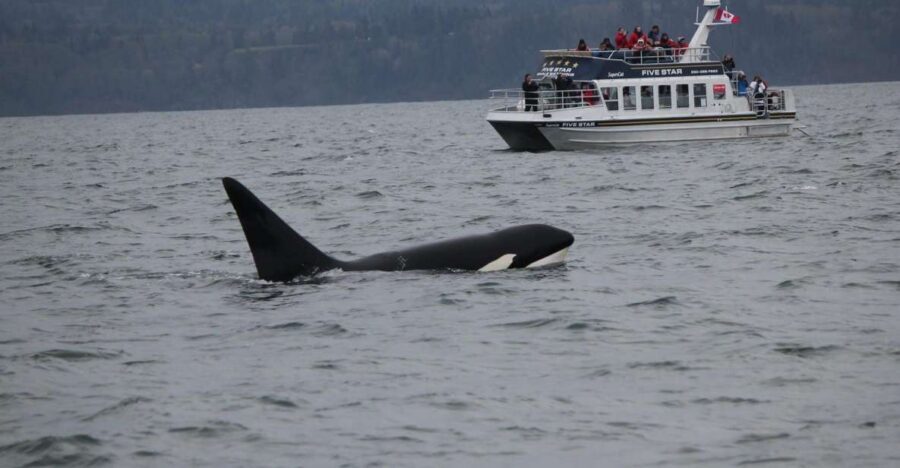
The boat here is a 40-passenger catamaran, and the big win is stability. Whale watching is calmer when the vessel doesn’t feel like a rocking carnival ride every time the sea breathes.
You’ll also have unobstructed views from both indoors and outdoors. That’s a smart setup in the Salish Sea, where weather can shift quickly. If it’s sunny, you’ll see whales from the open air. If it’s windy or cold, you can switch inside without giving up the action.
Included comfort items help too:
- Jackets are provided
- Hot chocolate and coffee are included
- You can lean back and just watch rather than spend the cruise managing gear
One small reality check: even on comfortable boats, crowding happens once wildlife shows up. If you want the best outside angle, be ready to move when the crew calls attention. Also, one downside that has shown up on past trips is that the engine may be kept running continuously to avoid startling whales, which can mean you notice fuel odor if you’re sensitive to smells. You might not feel it, but it’s worth knowing.
How the Crew Finds Whales: Salish Sea Feeding Areas and Expert Tracking
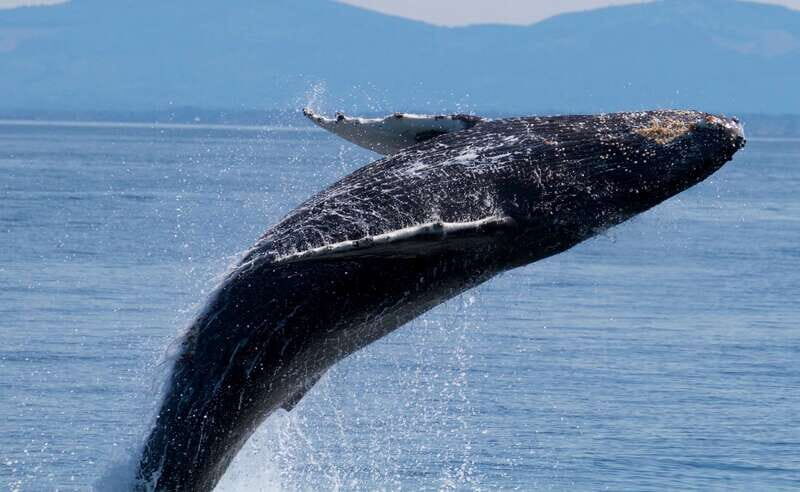
This isn’t a drive-by where you cruise past and hope. The operator runs a long-time operation and emphasizes locating whales around a critical wildlife zone off Southern Vancouver Island, the Gulf Islands, and Juan de Fuca Strait.
That tracking approach is what you’re really paying for. Whales are not in one random spot on a map. They move to feed, and where they feed depends on food availability—so the crew’s job is to time the search and then position you at a safe, respectful distance.
When whales are spotted, you’ll hear live guidance from the onboard team, including veteran captains and certified naturalists. The point isn’t just to say there’s a whale. It’s to explain what you’re seeing—breathing, movement patterns, and what behavior might suggest feeding or traveling.
You also get the chance to explore feeding areas that attract whales to local waters. That’s a useful concept for you as a viewer: when food is present, the odds improve that you’ll see more than a quick tail flick and then nothing.
The Main Targets: Orcas, Humpbacks, Minke, and Gray Whales
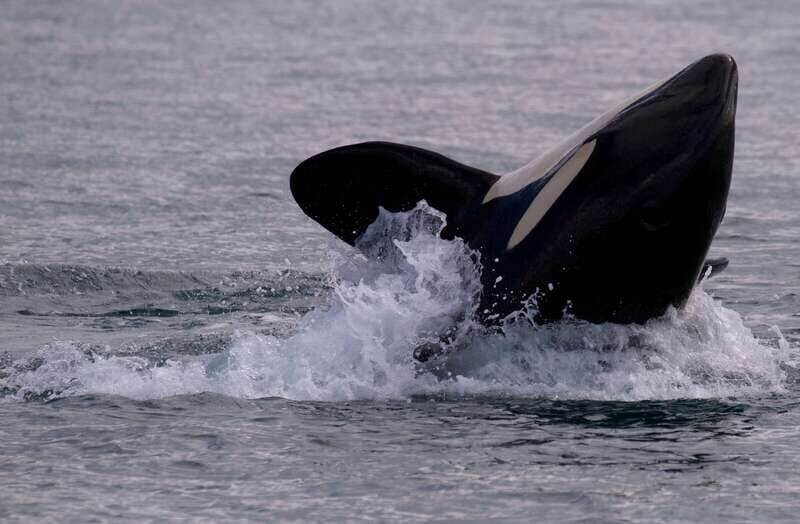
The possible whale species in this area include:
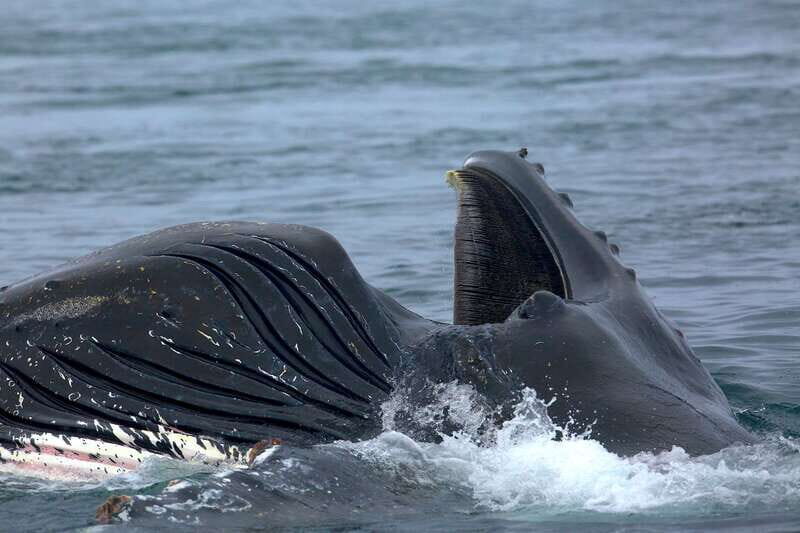
- Humpback whales
- Bigg’s killer whales (orcas)
- Minke whales
- Gray whales
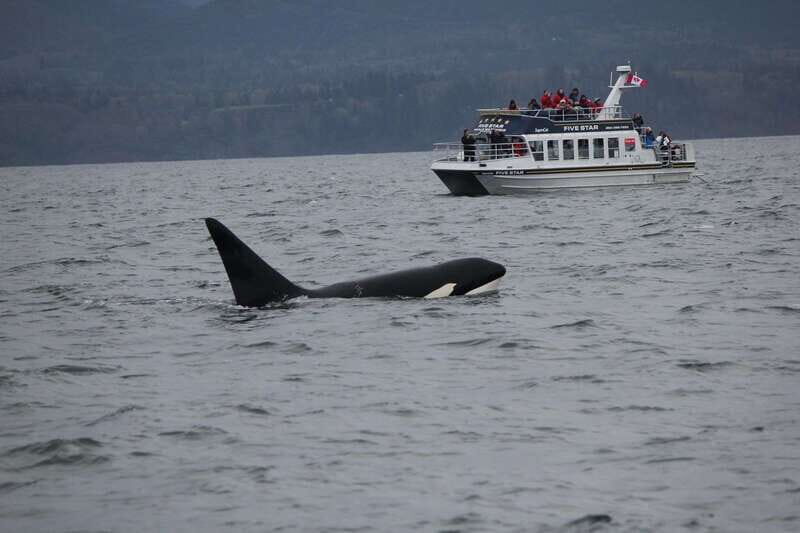
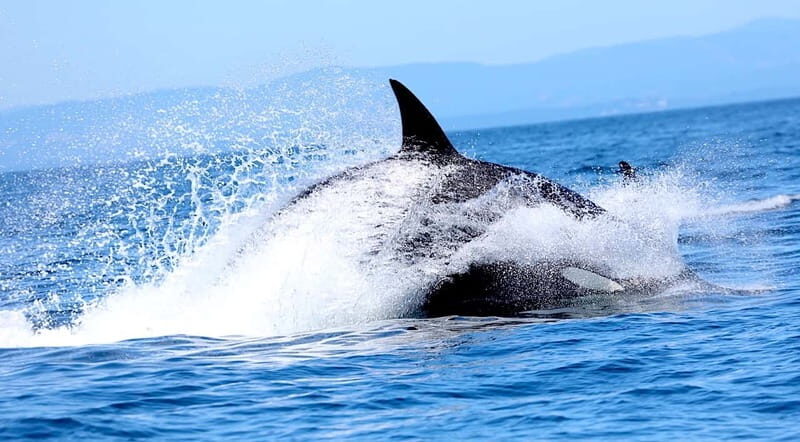
Orcas and humpbacks are the most commonly anticipated sightings because the local waters support both. And in the best scenarios, you’re not just seeing one brief surface event—you can get longer viewing time if an orca pod stays active nearby.
There’s also something calming about how the crew works. More than once, the emphasis is on keeping you at a viewing distance that’s safe for the animals. That means you’ll be close enough to actually enjoy the encounter, but not pushing in.
One more reality check: wildlife is wildlife. Even when the crew searches hard, you might have a day with fewer whale sightings. On some departures, people still end up with excellent wildlife moments—just not whales on the clock. The key is that the team doesn’t treat it as a check-the-box event; they keep working the area and sharing what they’re seeing.
Beyond Whales: Seals, Sea Lions, Otters, and Marine Birds
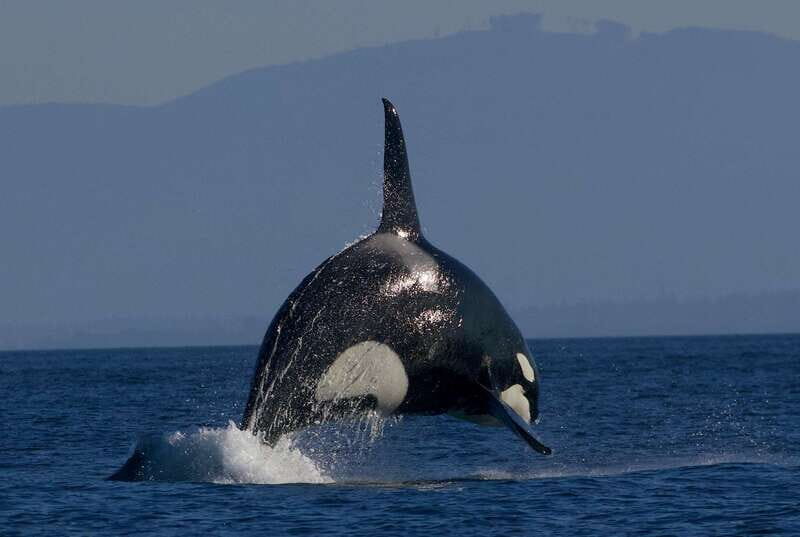
This is a sea-life tour, not a single-species show. While whales are the headline, the Salish Sea is packed with other animals you can often spot while you wait.
Keep your eyes peeled for:
- Seals
- Sea lions
- Otters
- Marine birds
These sightings matter because they fill the time between major whale moments. Even if whales are moving, you can still scan for heads popping up, birds riding the currents, or sea mammals along the shoreline.
There’s also mention of possible rarer encounters like elephant seals and dolphins. Are those guaranteed? No. But knowing they’re in the mix helps you stay alert, since the crew’s commentary tends to connect what you see to the broader ecosystem.
The Onboard Experience: Jackets, Drinks, and What to Expect When Conditions Turn
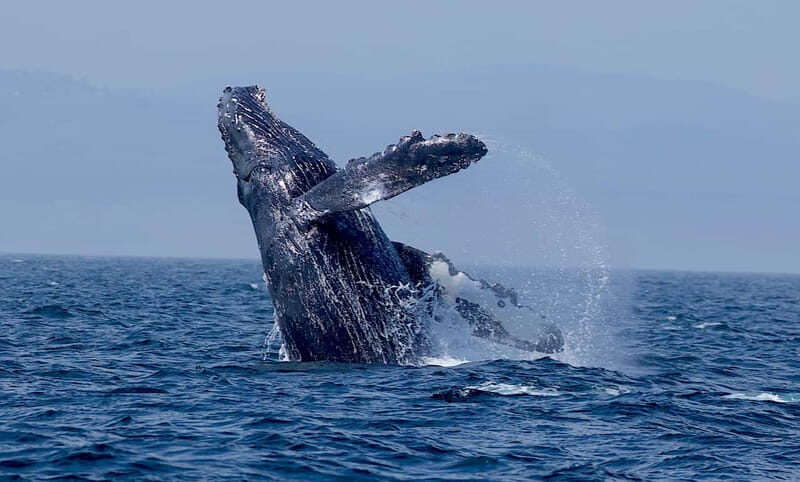
The tour is 3 hours, which is a good length: long enough to search and react to sightings, but not so long that you feel cooked by the end.
Included items make a difference. Jackets help you stay comfortable without packing layers you won’t need back in town. Coffee and hot chocolate are simple, but they help the whole trip feel friendlier—especially if you’re traveling with kids or anyone who gets cold easily.
That said, the operator notes that sea conditions can change and become rough. If you’re prone to motion sickness, I’d plan layers and bring your preferred remedy. This is also important for safety, because the operator flags that the activity isn’t suitable for people with stability issues.
Also worth noting: smoking is not allowed, and alcohol and drugs are not allowed. If you’re thinking of treating the trip like a party boat, you’ll want to adjust your expectations.
Price and Value: What $130 Buys in Victoria
At $130 per person for a 3-hour cruise, this sits in the mid-to-upper range for whale watching, and the value depends on what you care about.
Here’s what you’re getting for the price:
- A guided 3-hour cruise in prime local waters
- Live commentary from a crew that includes veteran captains and certified naturalists
- Jackets plus hot drinks
- Taxes included
What you’re not getting is also part of the math: gratuities are not included. So plan a little extra if you want to tip the crew for their work.
To me, the strongest value signal is the focus on search success and education. If you’ve ever done whale watching where you just stare at the water and wait for a lucky splash, this is the opposite style: the crew explains what’s happening and why you might be seeing one thing now and something else later.
Is it possible to pay less for a tour that’s shorter or more basic? Sure. But if you care about learning and you want the best shot at high-quality wildlife time, this format makes sense.
Who Should Book This Whale Watch (and Who Should Rethink)
This tour works well for:
- People who want real interpretation, not just passive sightseeing
- Families and mixed-age groups, because you can view from inside or out
- Travelers who enjoy nature facts and want context for humpbacks, orcas, and the rest of the Salish Sea cast
It’s less ideal if:
- You have known back problems, or stability issues
- You need wheelchair suitability for comfort and safety (the information provided is contradictory—marked wheelchair accessible, yet also stated not suitable for people in a wheelchair). If that affects you, I’d confirm directly with the operator before booking.
If you’re mainly after a quick photo and you hate waiting, you might feel restless. But if you’re happy to slow down, scan, and let the crew do the tracking, this kind of tour tends to land well.
Quick Practical Tip: How to Get Better Viewing During the Search
Whales can pop up anywhere, so your best strategy is simple: be ready to switch positions and keep your eyes moving.
A few practical moves I’d use:
- Dress for shifting weather and use the included jacket
- Plan to alternate between indoor warmth and outdoor spotting
- When the crew points out activity, stop fiddling with your phone and focus on the waterline where movement happens
Also, because the crew may keep you at a safe distance and sometimes stay put once whales are spotted, you’ll get better results by staying patient rather than scanning only the far horizon.
Should You Book the Victoria BC 3-Hour Whale Watching Expedition?
If you want a guided, interpretive whale watch with veteran captain commentary, a stable catamaran, and the chance to see orcas and humpbacks in the Salish Sea, I’d book it—especially if you appreciate knowing what you’re looking at.
I’d think twice if you need wheelchair suitability or you have back/stability concerns, since the operator’s own notes say it isn’t suitable for those situations. And if you’re highly sensitive to motion or smells, remember that sea conditions can change, and one reported downside involves engine odor when the boat keeps running.
Overall: this is a solid value choice for your time in Victoria. You’re paying for effort—real searching, expert talk, and a comfortable way to watch the ocean do its thing.
FAQ
How long is the whale watching expedition?
The cruise lasts 3 hours.
What is the price per person?
The price is $130 per person.
Where do tours depart from in Victoria?
Tours depart from 645 Humboldt St, on the side of the Fairmont Empress Hotel next to Miniature World.
Where does the tour finish?
The tour finishes at 812 Wharf St, Victoria, BC V8W 1T3, Canada.
What’s included in the ticket price?
Included: the 3-hour cruise, hot chocolate and coffee, use of jackets, and taxes.
Is smoking, alcohol, or drugs allowed?
No. Smoking is not allowed, and alcohol and drugs are not allowed.
Is this tour wheelchair accessible?
It is listed as wheelchair accessible, but the provided information also says the tour is not suitable for someone in a wheel chair, with stability issues, or known back problems. If this applies to you, confirm safety suitability with the operator before booking.