REVIEW · JASPER
Jasper: Planetarium Indoor Dome Experience
Book on GetYourGuide →Operated by The Jasper Planetarium · Bookable on GetYourGuide
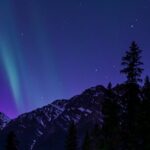
Auroras, planets, and stories all under one dome. This is Jasper’s planetarium experience in Alberta, with an astronomy guide showing sky-scapes like the Northern Lights and far-off objects. I love the climate-controlled dome (comfort matters when you’re on a Jasper schedule), and I love the built-in Q&A that gives you a chance to ask follow-up questions.
One thing to watch: the experience is only 35 minutes, and timing is strict. Parking is free, but you may have to park farther than you expect at Jasper Park Lodge, and late arrivals aren’t admitted.
In This Review
- Key highlights
- Jasper Planetarium Dome: What You’re Really Buying With 35 Minutes
- Where to Check In at Jasper Park Lodge Without Losing Time
- Inside the 42-Seat Dome: How the Show Keeps Moving
- Northern Lights Over Jasper: Aurora Without Waiting for Luck
- Planets, Nebulas, and Star Clusters: The Part That Makes It Feel Bigger
- Indigenous Constellations: Local Sky Stories, Not Just Random Star Names
- The Q&A With Astronomy Guides: When the Tour Becomes About You
- Rules That Affect Your Comfort: Phones, Photos, and Quiet Viewing
- Price and Value: Is $34 Worth 35 Minutes?
- Best Time to Go: Small Group Chances and a Smooth Start
- Who This Jasper Planetarium Dome Experience Fits Best
- Should You Book Jasper Planetarium?
- FAQ
- How long is the Jasper Planetarium Dome Experience?
- What does the tour cost, and what’s included?
- Where do I check in for the planetarium?
- Is this experience wheelchair accessible?
- Are phones or cameras allowed inside the dome?
- What is the cancellation window?
Key highlights
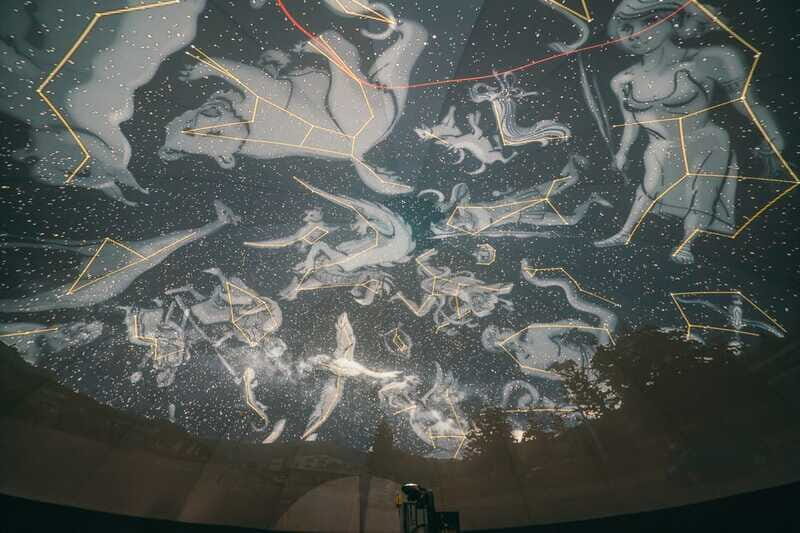
- Aurora Borealis visuals presented over Jasper National Park skies inside the dome
- Indigenous constellations included as part of the night-sky story
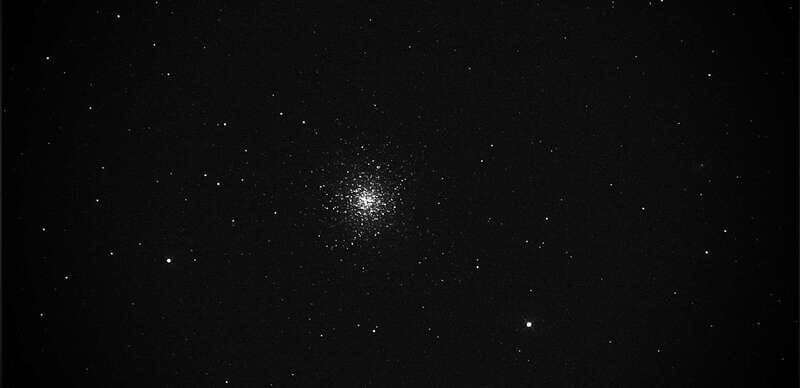
- Planets, nebulas, and star clusters shown beyond what you can see with the naked eye
- Rocky Mountain glaciers from space as a surprising anchor for the scale lesson
- 42-seat theatre keeps the group feeling small enough to actually talk with your guide
- No cellphones or inside photography, so everyone focuses on the show
Jasper Planetarium Dome: What You’re Really Buying With 35 Minutes
You’re not buying a long, late-night “look up and hope” session. You’re buying a guided, structured night-sky show that recreates the feeling of Jasper’s dark skies, even if the weather is acting up.
The best part is that the dome experience is designed around scale. One moment you’re learning constellations with local context, and the next you’re looking at the universe “from space” and then back to Earth again. If you like astronomy that comes with a human voice and a clear path, this is a strong match.
And because it’s in a climate-controlled theatre, you won’t be stuck shivering while you try to figure out where the guide is pointing.
You can also read our reviews of more tours and experiences in Jasper.


Where to Check In at Jasper Park Lodge Without Losing Time
The tour starts at the Main Lodge of Fairmont Jasper Park Lodge, right by the 42-seat dome theatre. You check in at the Planetarium Retail Desk inside the lodge.
Here’s the practical trick that keeps things smooth: walk straight past the front desk, and look for the retail desk in the SW corner of the lobby, across from the Emerald Lounge. Then check in 15 minutes before departure.
If you drive, you can park in lots P2, P3, or P4, with P2 closest to the planetarium. The key detail is that latecomers won’t get admitted, and you may be rebooked on a later tour day if you miss the start. With a short 35-minute format, that’s not a small deal.
Inside the 42-Seat Dome: How the Show Keeps Moving
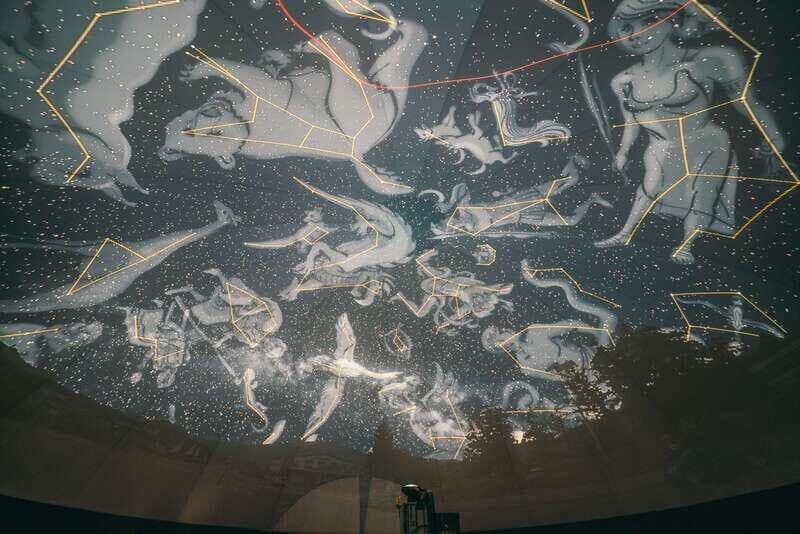
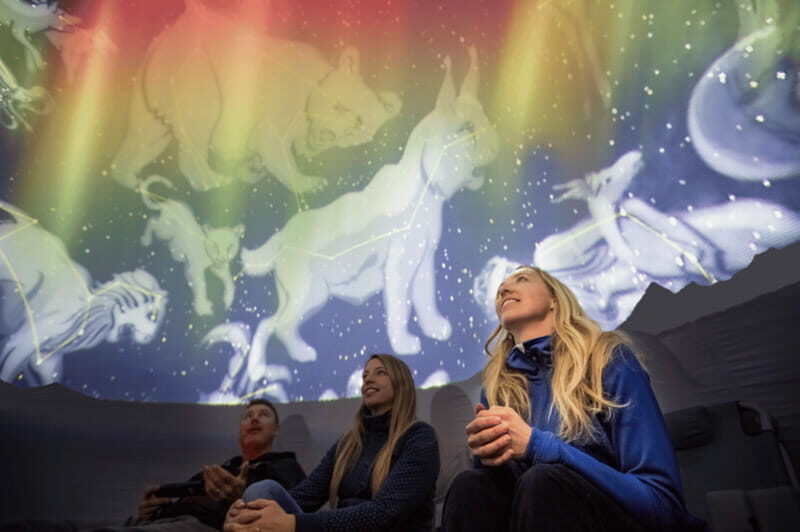
Jasper’s dome theatre is small—42 seats—so the experience doesn’t feel like you’re watching from the far end of a dark auditorium. The guide can actually interact with the group, especially on quieter showings.
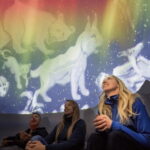
The pacing is built for attention. You’ll learn in sections—objects in the sky, then a shift to local Indigenous constellations, then visuals tied to mountain-country views (including aurora over peaks). The show also builds toward the “edge of the universe and back” idea, which is basically the theme of cosmic perspective.
And after the dome segment, there’s a descent back to Earth followed by a Q&A. That’s where the experience stops being only visual and turns into something you can talk through.
Northern Lights Over Jasper: Aurora Without Waiting for Luck
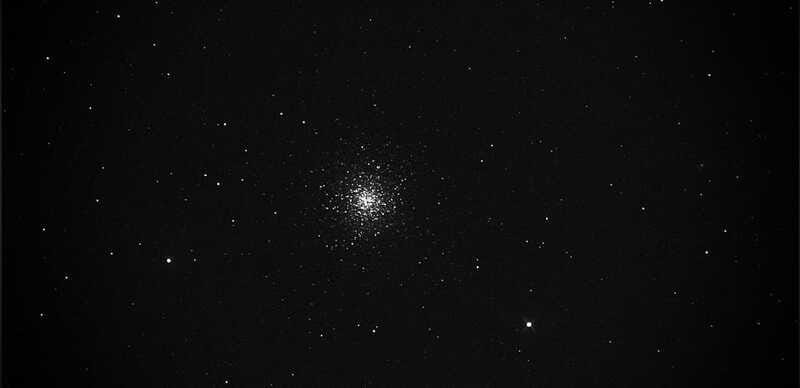
The headline promise is clear: you get views of the Northern Lights over the skies of Jasper National Park. But it’s a planetarium presentation, so think of it as seeing aurora-like scenes through the dome’s projected sky, not relying on a live sky event.
Why I like that for Jasper: it removes the stress. You can plan the evening around this show rather than crossing your fingers for clear skies and aurora conditions.
The dome format also helps you learn what you’re seeing. Instead of just admiring light patterns, you get context tied to the night-sky story the guide is telling, which is a lot more satisfying than a generic “pretty lights” moment.
Planets, Nebulas, and Star Clusters: The Part That Makes It Feel Bigger
This isn’t only about what’s visible on a casual night out. You’ll learn about planets, nebulas, and far-away star clusters—stuff that usually needs a telescope or a sky chart to wrap your head around.
The value here is that the guide connects those objects to the bigger idea: the universe is huge, and your place in it is part of the story. Jasper is a mountain town, and the show keeps using those surroundings as a reference point so the science lands.
One segment also references Rocky Mountain glaciers from space. That’s a smart teaching move because it mixes familiar geography with the “we’re tiny from far away” lesson. It helps you stop thinking of the sky as separate from the world you’re standing on.



Indigenous Constellations: Local Sky Stories, Not Just Random Star Names
One of the most meaningful elements is the inclusion of local Indigenous constellations. This matters because star stories aren’t just astronomy facts—they’re cultural ways of reading the sky, tied to land and knowledge.
In a planetarium, it’s easy for things to become purely visual and “educational” in a dry way. Here, the constellation section is part of the show’s structure, so it’s not tacked on like an afterthought.
If you care about learning with respect, this is the part I’d prioritize in your own mindset. Go in ready to listen and to ask questions afterward during the Q&A.
The Q&A With Astronomy Guides: When the Tour Becomes About You
The dome show itself is guided, but the real payoff often comes after. Once you’re back down to Earth, you can ask your guide questions.
That Q&A is exactly where you can turn general curiosity into specific answers. Want to know what makes aurora different from other night-sky phenomena? Ask. Confused about how to recognize constellations outside the dome? Ask.
It’s also the best opportunity to adjust expectations. If you felt the show was going fast, you can ask for clarification. If you loved a topic—planets, nebulae, or the scale lesson—you can ask for pointers on what to look for next time in the real sky.
On some evenings, groups can be small enough that interaction feels easier. One visitor even noted a quieter showing gave them extra chances to talk with the guide/narrator, and that’s a real advantage when you’re the type who likes follow-ups.
Rules That Affect Your Comfort: Phones, Photos, and Quiet Viewing
This experience has strong “keep it focused” rules. You can’t use cellphones, and photography inside isn’t allowed. Flash photography is also prohibited, and audio recording isn’t allowed.
It can feel strict at first, but there’s a practical reason: the dome show works best when the room stays dark and attention stays on the projected sky. If you’re the kind of person who likes to record every moment, you’ll likely find this annoying.
Also note what’s not allowed: smoking, food and drinks, and pets (assistance dogs allowed). Unaccompanied minors aren’t allowed, and it’s not suitable for children under 4.
If you travel with kids, plan for the age fit and for the fact that phones and recording are off the table.
Price and Value: Is $34 Worth 35 Minutes?
At $34 per person for a 35-minute experience, it’s not a budget add-on. You’re paying for (1) a guided, technology-driven planetarium show and (2) a live Q&A component.
So is it good value? It can be, especially if:
- you want a guided introduction to aurora visuals, nebulae, and star clusters
- you appreciate learning local context like Indigenous constellations
- you prefer comfortable, weather-proof viewing over waiting for ideal conditions
It might not feel like value if you’re expecting something more hands-on, like telescope time or a longer evening of astronomy. One negative take in the mix was that the show felt too much like a kid show or didn’t justify the time and money. That reaction usually comes from a mismatch in expectations—if you want deep astrophotography or lots of time outdoors, this dome format is the wrong tool.
My advice: treat it as a short, guided “big picture astronomy course,” not a full night of observing.
Best Time to Go: Small Group Chances and a Smooth Start
Because it’s only 35 minutes, your start time matters. Check in early. Walk in, find the SW-lobby retail desk, and get seated without rushing.
If you’re aiming for a more interactive feeling, choose a showing where you expect fewer people. One visitor specifically called out that a smaller evening group created a better chance to interact during the experience.
Even if your group isn’t tiny, the Q&A gives you a way to slow things down and get answers tailored to your questions.
Who This Jasper Planetarium Dome Experience Fits Best
This tour fits best if you’re:
- new to astronomy and want a guided path
- curious about what Jasper’s dark-sky reputation means in practice
- interested in learning Indigenous constellations through a guided presentation
- traveling with mixed interests (science lovers and general sight-seers can both get something)
It’s also a smart choice for families with the right age range, since it’s indoors and controlled. But it’s not built for unstructured wandering, and the phone-free rules mean your group needs to be ready to sit and watch.
If you’re an advanced astronomy nerd who wants lots of technical detail, you might wish there were more time per topic. Still, the show’s strengths are clarity, pacing, and the human Q&A.
Should You Book Jasper Planetarium?
I’d book it if you want a short, comfortable way to experience Jasper’s night-sky story—Northern Lights visuals, Indigenous constellations, and space objects like planets and nebulas—plus a chance to ask questions after.
I wouldn’t book it if you’re hoping this will replace a long outdoor stargazing session with telescopes, or if you strongly need phone recording. Also don’t treat it like a casual drop-in. The rule is simple: arrive on time, or you risk being turned away and rebooked.
If you’re visiting Jasper and want a high-impact astronomy stop that doesn’t depend on weather, this is one of the most efficient ways to do it.
FAQ
How long is the Jasper Planetarium Dome Experience?
It lasts 35 minutes.
What does the tour cost, and what’s included?
The price is $34 per person. Admission to the Planetarium Dome Theatre is included, plus free parking and a Q&A with the tour guides.
Where do I check in for the planetarium?
Check in at the Planetarium Retail Desk inside the Main Lodge at Jasper Park Lodge. Once inside the lodge, walk past the front desk, and the retail desk is in the SW corner of the lobby across from the Emerald Lounge.
Is this experience wheelchair accessible?
Yes, it is wheelchair accessible.
Are phones or cameras allowed inside the dome?
No. Cellphones are not allowed, photography inside isn’t allowed, and audio recording is also not allowed.
What is the cancellation window?
You can cancel up to 24 hours in advance for a full refund. Within 24 hours, refunds aren’t offered, but you can change your booking to a different time.