Victoria is a city you can read on foot. This 2-hour walk stitches together the big-name sights and the quieter streets, with local storytelling that turns postcards into places. I especially liked how the route focuses on architectural details you’d miss if you just speed-walked the downtown core.
I also like the way it mixes light and shadow. You’ll go from classic waterfront views to Bastion Square’s darker past, then end in Chinatown where narrow alleys like Fan Tan Alley bring the Gold Rush era into everyday street life.
One heads-up: the guide style can be strongly opinionated. For example, I’ve seen one guide take a notably negative tone toward the Fairmont Empress Hotel, so if you hate personal commentary, you might want to keep that in mind.
In This Review
- Key highlights worth your time
- From the Emily Carr Statue to the Empress and Legislature
- Government Street: the easiest way to spot Victoria’s old-meets-new style
- Bastion Square cobblestones and the square’s tougher chapters
- Market Square: small-block heritage with room for browsing
- Chinatown National Historic Site: Fan Tan Alley and the Gold Rush era
- Guides: Fish, Dave, Stephen, Sarah, and Michael really shape the walk
- Price and group size: $17.05 is how you buy orientation
- Who should book this walk, and who should skip it
- Should you book the Iconic & Obscure Walking Tour?
- FAQ
- FAQ
- How long is the Victoria walking tour?
- How much does it cost?
- Where does the tour start and end?
- What time does the tour run?
- Is the ticket mobile?
- Do I need to pay admission at the stops?
- Are service animals allowed?
- Is there free cancellation?
- How big is the group?
Key highlights worth your time
- Inner Harbour landmarks: Fairmont Empress Hotel views and the BC Legislature area at street level
- Government Street browsing without a plan: historic storefronts plus modern shops on one main drag
- Bastion Square cobblestones: the feel of old markets and the square’s tougher chapters
- Market Square to Chinatown: a smooth shift from heritage blocks to alleyway-era stories
- Small group format: up to 20 people, plus a mobile ticket
From the Emily Carr Statue to the Empress and Legislature
Your tour starts at the Emily Carr Statue at Government St and Belleville St, right in the heart of downtown. The timing is set for a classic sightseeing window too: the walk begins at 11:00 am and runs about 2 hours. You’re not doing “one more photo stop” tourism. You’re getting a guided route that makes each area feel connected instead of random.
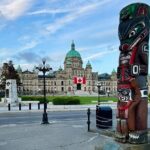
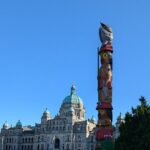
The first stretch is the Inner Harbour, where the Fairmont Empress Hotel and the British Columbia Legislature sit in the same visitor mind-map. Even if you’ve seen both from afar, being on the sidewalks lets you clock the scale and design choices up close. You’ll get a sense of why this waterfront became Victoria’s stage: it’s where the city meets the water, and where visitors naturally cluster.
This is also a good place to slow down, because Inner Harbour is compact but visually layered. You’ll be watching architecture, looking out toward the water, and hearing how the buildings fit the city’s growth over time. The tour keeps things moving—your Inner Harbour stop is about 30 minutes—but it’s enough time to take in the big shapes and then understand what they meant for the city.
Practical note: this portion is outdoors and mostly on streets/sidewalks. Wear shoes you trust. If weather is dicey, bring a light layer and you’ll be fine.
You can also read our reviews of more walking tours in Vancouver Island


Government Street: the easiest way to spot Victoria’s old-meets-new style
Next you’ll head to Government Street, the main shopping spine that blends heritage building fronts with current-day shop energy. This stop is about 20 minutes, and that’s the right amount of time if you want orientation without losing the thread of the tour.
What I like about Government Street on this walk is how it’s framed as more than a shopping street. You’ll notice how the streetscape holds onto older forms while still making room for new storefronts, signage styles, and visitor needs. It’s an easy way to understand Victoria’s vibe: it remembers what it was, but it doesn’t freeze in time.
It also sets you up well for the next areas. When you’ve just been looking at waterfront grandeur and civic architecture, shifting to a human-scale street gives your brain a reset. Plus, Government Street is the kind of place where you can mentally bookmark things for later—cafes, small boutiques, bookstores—without turning the tour into a shopping spree.
If you hate crowds, you’ll still feel some downtown foot traffic. But the stop length is short, and the guide keeps you moving with a purpose.
Bastion Square cobblestones and the square’s tougher chapters
Bastion Square is the kind of place that makes you slow down automatically. The streets are cobblestoned, and the square carries that old-Victoria feel where the ground itself seems to hold stories.
You’ll spend about 20 minutes here, and the tour focuses on why the square became important in the first place. You’ll learn about its past as a marketplace and a site of public executions, which adds a very real edge to what otherwise looks like a charming gathering space. Then the story continues into the present: the square is now used as a cultural center.
This is where the walking tour earns its “iconic & obscure” label. Most quick downtown walks hit the Empress and call it done. Here you’re asked to look at the same square from two angles: what it used to represent, and what it represents now. It’s not heavy in a grim-monologue way; it’s more like context that makes your surroundings make sense.
One thing to watch: the tone can include personal judgment, depending on the guide. If you’re the type who prefers strictly neutral storytelling, keep your expectations flexible. The best approach is to listen for the facts and let the guide’s opinions sit where they are.
Market Square: small-block heritage with room for browsing
From Bastion Square, the route moves to Market Square for another 20 minutes. This part of Victoria tends to work well for people who want a short heritage-style shopping break without getting stuck browsing for an hour.
Market Square is described as a heritage district where boutique-style shops and artisanal items exist alongside the everyday visitor flow. On the ground, what that means is you can look at the buildings, notice the street rhythm, and then stop for a quick peek inside a shop or two—without turning your whole day into a detour.
This stop also matters because it bridges the story between downtown and Chinatown. Market Square feels like a “transitional” block: less monumental than the Legislature, less maritime than the Inner Harbour, but still clearly part of the downtown’s original layout and commercial life.
If you’re the type who likes to take a snack break later, Market Square is a good mental marker. Even if you don’t buy anything right then, you’ll know where you are and what direction the smaller streets head next.
Chinatown National Historic Site: Fan Tan Alley and the Gold Rush era
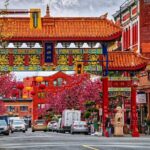
The final stop is Victoria’s Chinatown National Historic Site, and you’ll spend about 30 minutes there. This is the part of the walk that feels like the city narrows and human details take over.
Chinatown is known for its long thread from the Gold Rush and the Canadian Pacific Railway era. You’ll walk past the kinds of narrow alleys that shaped day-to-day life and commerce, including Fan Tan Alley. These lanes aren’t just scenic shortcuts. They’re a physical reminder that history here wasn’t confined to grand buildings—it lived in street-level movement, small businesses, and community spaces.
You’ll also see the modern side at the same time: shops and cafes. That mix is exactly why this ending works. If you end your sightseeing in a place that only looks like a museum set, it can feel like a letdown. Chinatown doesn’t do that. It stays active as a neighborhood.
The tour ends on Fisgard St in Chinatown (500 Fisgard St). The nice bonus: Chinatown is about a 10-minute walk from the starting area, so you can easily continue your day afterward without needing to plot a complex transport plan.
Practical note: downtown sidewalks can be uneven and busy. Give yourself a little extra care on turns and alley entries.






Guides: Fish, Dave, Stephen, Sarah, and Michael really shape the walk
A walking tour lives or dies on the guide. On this route, the best parts come from locals who can connect street corners to why those corners mattered.
I’ve seen a standout called David, also known as Fish. The praise is consistent: engaging delivery, strong command of history and architecture, and a genuinely caring style—one person even reported that Fish let them use his jacket when they got cold. That’s the kind of small human gesture that turns a simple walk into a comfortable experience.
Other guide names that show up strongly include Stephen and Michael. Stephen’s contribution is described as bringing the hidden past of Victoria to life, including a balance between Western and First Nations perspectives. Michael’s strength is framed as making history feel real and story-driven rather than like a list of dates.
You’ll also hear about Sarah, who’s praised for answering questions and sharing historical tidbits in a way that kept people engaged. And Dave gets credit for a mix of energy and humor, plus a clear line through built heritage and everyday city life.
Now for the balanced note: one review example points to a guide with strong personal opinions and a negative tone about the Fairmont Empress Hotel. That doesn’t mean the tour is bad—it does mean your experience may lean subjective. If you prefer strictly factual delivery, you might want to keep an open mind and focus on the facts and the architectural cues.
Price and group size: $17.05 is how you buy orientation
At $17.05 per person for about 2 hours, this tour is priced like a serious value play—especially if you’re new to Victoria or short on time. You’re not paying for museum entry. The stops are mostly street-level sightseeing: Inner Harbour, Government Street, Bastion Square, Market Square, and Chinatown. The itinerary is built around what you can see and understand outside.
You’re also in a small group with a maximum of 20 travelers, which matters more than it sounds. Smaller groups usually mean you can hear the guide more clearly and ask questions without the whole line grinding to a stop.
The mobile ticket helps too. If you don’t want paper receipts flapping in your bag, this is a clean setup. Also, the tour includes a local English-speaking guide, which keeps the storytelling accessible without needing translations.
One other value point: all the listed stops are listed as free in the sense of no admission ticket requirement for you at each stop. That keeps the tour from turning into a “plus fees” situation.
Who should book this walk, and who should skip it
This is a smart choice if you want quick orientation plus depth in the right places. I’d put it at the top of your list if:
- you only have a couple days in Victoria and want the downtown story in one go
- you like architecture and street-level history more than indoor museums
- you want a guided way to connect Inner Harbour, the Squares, and Chinatown
It might be less ideal if:
- you need long, quiet stops for photos or detailed shopping (this is paced at tour speed)
- you’re extremely sensitive to opinionated commentary from guides
Because the walking time is about 2 hours, it’s also not an all-day commitment. You can pair it with a later meal plan on Government Street or a post-walk wander through Chinatown.
And since it’s near public transportation and allows service animals, it’s designed to be practical for more people than the usual “only for super-fit hikers” walking tours.
Should you book the Iconic & Obscure Walking Tour?
If you’re visiting Victoria for the first time, or if you’ve been before but want a guided path that links the waterfront to the neighborhoods, I’d book this. For $17.05, you get a focused downtown route, a small-group format, and storytelling that hits both the famous sights and the parts people often skip.
My main reason to hesitate is the personal-opinion factor. If you want everything delivered in a strictly neutral way, you might not love that. But if you’re okay hearing a guide react to places—while still sharing real context—this walk is a strong way to get your bearings fast and leave with a clearer sense of how Victoria works.
FAQ
FAQ
How long is the Victoria walking tour?
The tour lasts about 2 hours (approx.).
How much does it cost?
It costs $17.05 per person.
Where does the tour start and end?
It starts at the Emily Carr Statue at Government St and Belleville St in Victoria and ends at Victoria’s Chinatown National Historic Site, 500 Fisgard St.
What time does the tour run?
The start time listed is 11:00 am.
Is the ticket mobile?
Yes, you get a mobile ticket.
Do I need to pay admission at the stops?
The stops listed show admission ticket free, meaning you’re not paying separate entry fees for each location.
Are service animals allowed?
Yes, service animals are allowed.
Is there free cancellation?
Yes. You can cancel for a full refund up to 24 hours before the experience’s start time.
How big is the group?
The tour has a maximum of 20 travelers.