REVIEW · BANFF
Ice Climbing Adventure in Banff: Beginner
Book on Viator →Operated by Alpine Air Adventures · Bookable on Viator
Banff’s frozen walls teach fast. This beginner-friendly ice climbing day gets you off the ground on real waterfall ice, with gear fitting and safety instruction that moves at your pace. You’ll learn core rope skills and how to handle steep ice with crampons and swinging ice tools, all while taking in the Canadian Rockies around Banff.
I especially like that the instruction is practical and hands-on: you’re not watching from a distance. You’ll also get to choose your comfort level—complete beginner or someone who wants to add skills—without feeling like you’re in the wrong place. Still, there’s one big reality check: you’ll need to handle private transportation to the climbing site, and extreme cold can shorten the day if conditions are unsafe or just miserable.
In This Review
- Key Points You’ll Actually Care About
- Why Beginner Waterfall Ice in Banff Makes Sense
- Price and Value: What $194.36 Covers (and What It Doesn’t)
- Meeting at 229 Bear St and the Transportation Reality
- Banff National Park Stop: Gear Fit, Safety, and Getting Your Bearings
- Johnston Canyon Icefall: Crampons, Belaying, and Your First Real Moves
- Grassi Lakes and Extra Waterfall Options: More Practice When Conditions Allow
- Beginner Skills: What You’ll Leave Able to Do
- Weather Reality: When It’s -24°C, the Day May Change
- Group Size and Guide Attention (Max 12)
- Who This Tour Fits Best
- Should You Book This Beginner Ice Climbing Day?
- FAQ
- How long is the ice climbing experience?
- Where does the tour start and end?
- What climbing gear is included?
- Do I need transportation to the climbing site?
- What skills will beginners learn?
- What’s the cancellation window?
Key Points You’ll Actually Care About
- ACMG/IFMGA instruction with a clear focus on safety and fundamentals for first-timers
- Complete gear included (helmet, harness, ice tools, crampons, and climbing boots) so you can show up ready
- Beginner-to-advanced ladder of skills, from crampon walking and top-rope belaying to more advanced techniques
- Johnston Canyon area ice time, with the chance for additional waterfall options depending on conditions
- Small groups (max 12), which helps when you’re learning knots, movement, and belay basics
Why Beginner Waterfall Ice in Banff Makes Sense
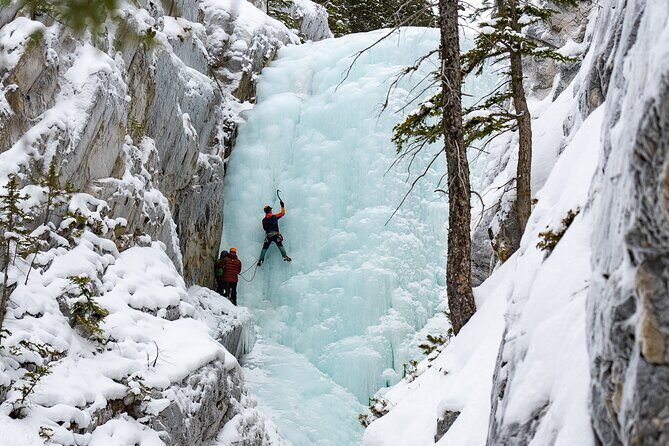
Ice climbing has a reputation for being intimidating. That’s fair—ice is sharp, slopes are steep, and everything feels new when you first put crampons on your boots. The good news with this Banff beginner program is that it treats ice climbing like a skill-building day, not a dare.
Instead of rushing you into a big lead, you’ll start with the building blocks: site awareness, how to walk in crampons, how to belay top-rope climbers, and how to move on steep ice using your feet and tools. You’ll get enough practice that the experience stops being a mystery and becomes something you can picture doing later—maybe not tomorrow, but someday with more confidence.
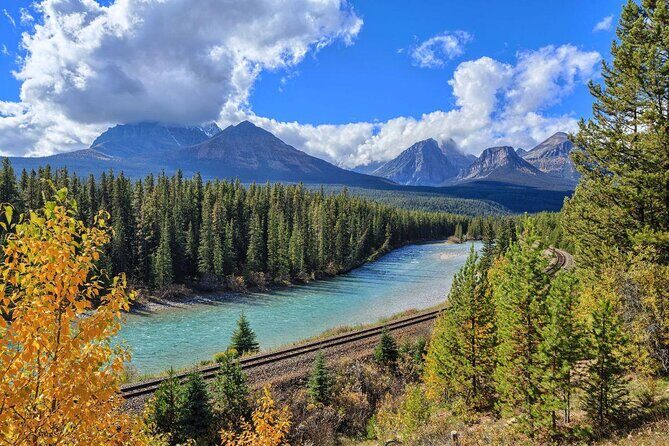
And Banff matters here. Waterfall ice in the Canadian Rockies is world-class because the ice forms reliably enough to build a real learning day around it. Even when exact icefall locations can vary, the setting is still that dramatic Rocky Mountain world: steep rock, cold air, and the kind of quiet you only get when everyone’s paying attention to where their feet go.
You can also read our reviews of more tours and experiences in Banff.

Price and Value: What $194.36 Covers (and What It Doesn’t)
At $194.36 per person for about 7 hours, the value depends on two things: instruction quality and what’s included on your body.
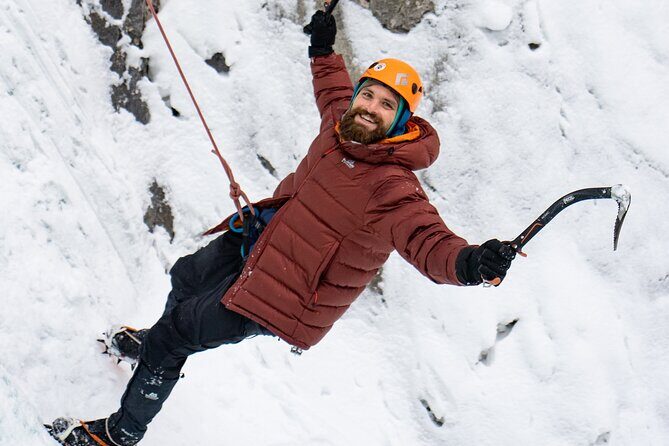
You do get the big-ticket safety gear: helmet, harness, ice tools, crampons, and climbing boots. That matters because buying or renting the right ice setup can get expensive quickly—and beginners often don’t know what they actually need until they’re in it. With this tour, you’re paying for the gear plus the guide-led learning time.
You also get professional Mountain Guides (ACMG/IFMGA). That’s the part you can’t DIY easily. Good ice instruction isn’t just teaching you steps—it’s about teaching safe habits: where to stand, how to manage rope systems, and how to move without getting careless.
Two costs are not included:
- Lunch
- Private transportation to the climbing site
So, the best way to think about the price is this: you’re paying for a guided day that handles the technical setup and the skill coaching, while you handle getting there and food. If you already have a plan for lunch and transportation, this becomes a fairly straightforward way to try waterfall ice without the upfront hassle.
Meeting at 229 Bear St and the Transportation Reality
Your start point is 229 Bear St, Banff, AB. The start time is 7:45 a.m., and the activity ends back at the meeting point.
One practical heads-up: you may find the office location a little tricky. There’s a report of an office in the bottom floor of an indoor mall, and it was stressful for someone who had trouble finding it. The takeaway for you: give yourself a little extra time to arrive early, and confirm your exact check-in spot.
Also, private transportation is required to get to the climbing site. That’s important because it affects how smooth your morning feels. If you’re relying on a ride you haven’t organized yet, build in buffer time.
If you like structure, this part can still work smoothly. Start early, check in, and then plan your ride so you’re not scrambling once the guide is ready to move.
Banff National Park Stop: Gear Fit, Safety, and Getting Your Bearings
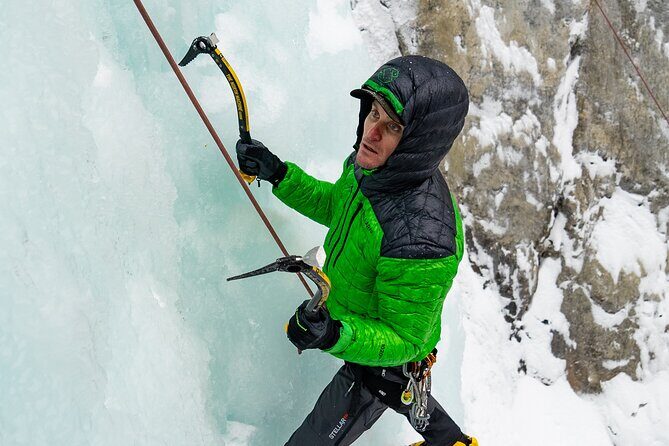
The first stop is Banff National Park. In a tour like this, that’s where the day usually tightens into a rhythm.
You should expect the guides to run through setup and safety basics right away—helmet and harness checks, proper crampon fit, and a quick run through what the rope system is doing. For beginners, this matters more than you might think. When you’re learning knots, belaying, and tool use, you need to trust that you’re using the gear correctly before you add any movement.
This is also where the “how-tos” begin. The program is built for all skill levels, and that shows in how the teaching is paced. Even if you’ve never tied a climbing knot in your life, the goal is to get you comfortable with the sequence of actions: clip in, learn what you’re responsible for, then practice the movement.
If you’re the nervous type, this phase is what calms you down. You’re not jumping straight to the hardest motions. You’re building a base layer of skills that makes the climb feel doable.
Johnston Canyon Icefall: Crampons, Belaying, and Your First Real Moves
Johnston Canyon is the centerpiece for a reason. It’s an area where you can access waterfall ice and get real practice time on the ice itself.
Here’s what you’ll likely do (in the beginner-friendly order that makes sense):
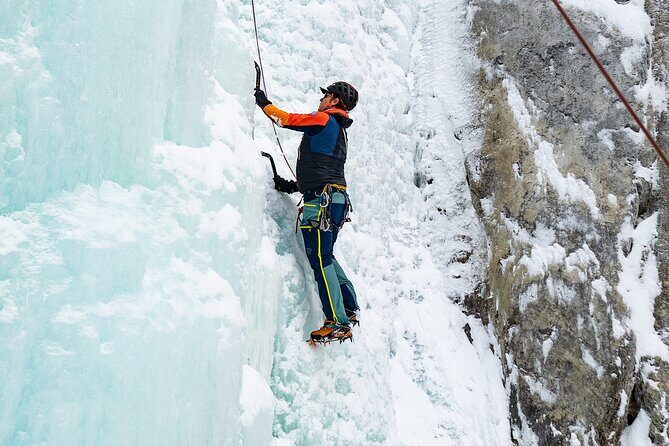
- Walk in crampons so you feel stable on steep, icy surfaces
- Learn how to belay top-rope climbers (including tying knots)
- Practice moving on steep ice with swinging ice tools and secure footing
For first-timers, the biggest surprise is usually footwork. Crampons give you grip, but they don’t magically make you a pro. You’ll need to learn how to place your feet deliberately and how to trust the points rather than panic.
Then comes the rope side. Top-rope belaying is one of the best ways to learn because you’re not leading into unknown territory. You’re working a system that’s designed to keep climbers safe while you learn control and timing.
If you’re lucky enough to get a guide like Shea, the teaching style is described as excellent and confidence-building. Another guide named Nolan is also mentioned as working hard in extreme cold while keeping instruction focused. Even though your guide might be different, the pattern is consistent: clear instruction, real setup, and enough time for you to get a feel for the wall.


Grassi Lakes and Extra Waterfall Options: More Practice When Conditions Allow
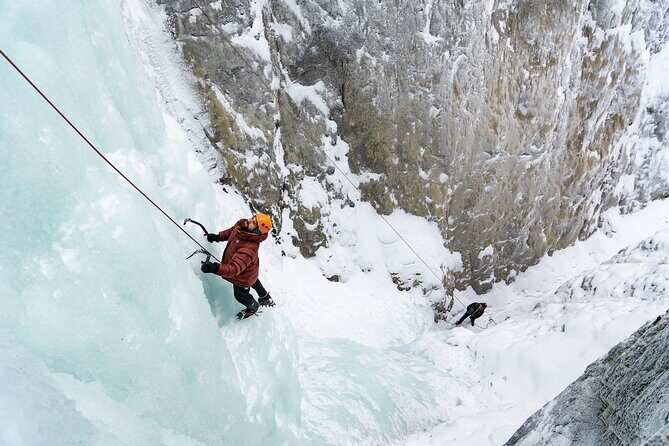
After Johnston Canyon, Grassi Lakes comes into the mix. In a 7-hour beginner program, this often means additional time for learning and/or adjusting the plan based on what the day’s ice conditions allow.
The program information also notes that icefall location may vary, and full day or 2-day versions may include more waterfall options. The practical benefit for you is flexibility: guides can shift to a waterfall that offers the best learning conditions for your group.
So what does Grassi Lakes add? In plain terms, it gives the day breathing room and creates opportunities for more climbing time. When you’re a beginner, you don’t just want one short burst—you want repeated chances to practice the same core movements until they start feeling normal.
Just keep your expectations flexible. Ice climbing is weather-dependent, and the best learning comes from ice that’s climbable and safe.
Beginner Skills: What You’ll Leave Able to Do
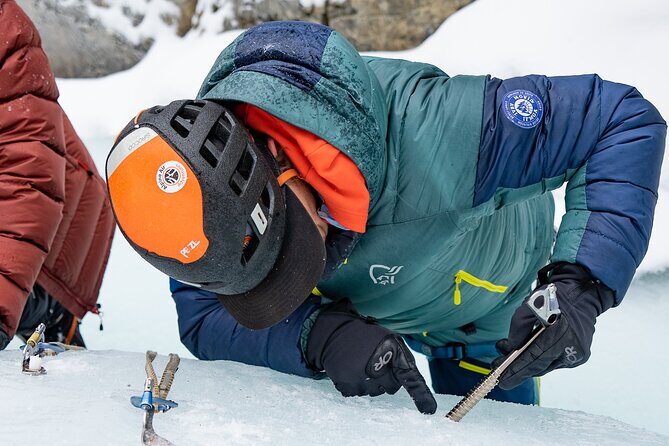
This program isn’t just about getting to the top of a wall once. It’s built around skill transfer—things you can carry forward into future climbing days.
You’ll cover:
- Site safety and awareness (so you know how to behave around climbing activity)
- Walking in crampons (the foundation for everything else)
- Belaying top-rope climbers (including knot tying)
- Moving on steep ice using swinging ice tools and your crampons
And if the day conditions and your group’s progress allow, you may also be introduced to more advanced skills such as:
- Advanced movement on steep ice
- Placing ice screws and building V-threads
- Mock leading and rappelling
For beginners, that advanced list can sound intimidating. Here’s the helpful way to read it: it doesn’t mean you’ll be expected to do everything. It means the guide can add extra challenges for people who move quickly, while beginners stay in the zone that matches their comfort level.
The best part is that the instruction is customizable for all skill levels. If you’re brand-new, you get the fundamentals. If you already climb, you can use the day to learn new ice-specific movements and systems.
Weather Reality: When It’s -24°C, the Day May Change
Ice climbing days live and die by temperature and conditions. One report notes a day at -24°C where the climbing was cut short, and the guide was still working hard in the extreme cold.
That’s not a reason to avoid ice climbing—it’s a reason to prepare your expectations and clothing choices.
Bring layers you can manage in freezing weather, and make sure you’re not only warm but also able to move comfortably. On ice, you’re often standing around while the guide checks setups and teaches. That means warmth matters even between climbs.
If the forecast looks harsh, consider this your reminder: the guide will prioritize safety and comfort. If conditions are too extreme, they may shorten the day rather than push through.
Group Size and Guide Attention (Max 12)
A maximum group size of 12 is a sweet spot for a beginner course. You get company, but you’re not lost in a crowd when it’s time to practice knots, crampon steps, or tool control.
In a small group, you’re more likely to get corrections that actually land. You’ll be learning physical technique, and that takes feedback.
It also helps that the guides are professional Mountain Guides (ACMG/IFMGA). That credential matters because ice climbing isn’t forgiving. The learning is fast—but the safety culture is what makes the fast learning possible.
Who This Tour Fits Best
This beginner ice climbing adventure is best for you if:
- You want waterfall ice experience without needing prior ice climbing skills
- You like structured coaching that breaks skills into clear steps
- You want a new story and a real activity, not just a photo stop
It’s also a good fit if you already climb but want ice-specific practice, because you can progress to more advanced movements and systems depending on the group and conditions.
You might want a different plan if:
- You hate cold and don’t have a way to dress for very low temperatures
- You don’t have transportation sorted to reach the climbing site
And if you’re the kind of person who freezes (literally) when things feel unknown, don’t worry. This program is designed to teach you what you need so you’re not guessing.
Should You Book This Beginner Ice Climbing Day?
If you want to try waterfall ice in the Canadian Rockies, I think this is a smart first step. The price covers gear and ACMG/IFMGA instruction, and the skills taught are exactly what you’d hope to learn first: crampons, top-rope belaying, and safe movement on steep ice.
Book it if you’re ready for hands-on learning and you can handle the cold. Also, make sure your transportation plan is real before morning—since you’ll need private transport to the site.
Skip it (or switch to a different option) if you’re trying to do ice climbing with no logistics and no cold tolerance. Ice climbing isn’t a casual stroll; it’s a guided skill day, and it will run best when you show up prepared.
FAQ
How long is the ice climbing experience?
It runs about 7 hours (approx.).
Where does the tour start and end?
It starts at 229 Bear St, Banff, AB T1L 1C3, Canada at 7:45 a.m., and it ends back at the meeting point.
What climbing gear is included?
You’ll get all climbing gear: helmet, harness, ice tools, crampons, and climbing boots.
Do I need transportation to the climbing site?
Yes. Private transportation is needed to get to the climbing site.
What skills will beginners learn?
You’ll cover site safety and awareness, walking in crampons, belaying top rope climbers (including tying knots), and moving on steep ice using ice tools and crampons.
What’s the cancellation window?
You can cancel up to 24 hours in advance for a full refund.