A long, steep day with serious payoff. This Panorama Ridge hike in Garibaldi Provincial Park pairs a calm start from Rubble Creek with a later stretch of technical footing, then rewards you with a summit viewing platform and big mountain-and-lake views. You’ll also spend time on the Sea to Sky Highway, so the day isn’t just trail time—it’s a whole rim-to-ridge taste of British Columbia.
Two things I really like: the trail design gives you a chance to build up gradually (switchbacks early on), and then the route becomes more confidence-building with handrails and footholds when it gets trickier. I also like that you’re not left to guess your way through safety gear—this trip includes trekking poles and microspike crampons if necessary, plus emergency equipment (including a satellite phone).
One drawback to weigh: the hike is long—about 11.5 hours total—and conditions matter. The experience requires good weather, and it also has a minimum number of travelers, so there’s some chance of date shifting or cancellation.
In This Review
- Key things to know before Panorama Ridge
- Panorama Ridge, framed by Garibaldi’s purpose
- The full-day schedule: more than just the hike
- Sea to Sky Highway (morning drive)
- Garibaldi Park (the hiking core)
- Garibaldi Lake stop
- Whistler Village (short pause)
- Sea to Sky Highway (return drive)
- Getting started from Rubble Creek: where pacing wins
- The technical trail sections: handrails and footholds do real work
- Summit payoff: the viewing platform and what you’ll actually see
- What’s included for $148.46: where the value shows up
- The real-world tradeoffs: weather, cancellations, and day-of stress
- Who Panorama Ridge suits best (and who should rethink it)
- Should you book Panorama Ridge with Inspire Trail Expeditions?
- FAQ
- FAQ
- How long is the Panorama Ridge hike tour?
- What time does the tour start?
- What is the price per person?
- Where does the hiking start?
- Does the tour include pickup and a ticket?
- How many travelers are in the group?
- What hiking gear is included?
- Is park access included?
- What happens if the tour is canceled due to weather or not enough travelers?
- What is the cancellation window for a full refund?
Key things to know before Panorama Ridge
- Small group size (max 12): easier pacing and more attention on the technical sections.
- Guided safety on the rough bits: handrails and footholds are part of the trail, not something you have to invent.
- Included trekking support: poles and microspikes if conditions call for them.
- A purpose-built summit viewing platform: big views without having to find your own footing at the end.
- Garibaldi’s cultural and wildlife significance: the park links natural protection with Squamish and Lil’wat Nations heritage.
Panorama Ridge, framed by Garibaldi’s purpose
This isn’t just a workout with a pretty finish. Garibaldi Provincial Park—established in 1927—exists as a protected space for wildlife and for cultural meaning tied to the Squamish and Lil’wat Nations. Knowing that helps you approach the hike with the right mindset. You’re not just “checking a box.” You’re walking through a protected wilderness that’s meant to stay healthy for the next generation.
The route itself reflects that same idea. Early on, you get a gentler rhythm with switchbacks and stream crossings, which is exactly what you want on a day that lasts most of your daylight hours. Later, the trail asks more of you, but it does it in a controlled way: there are handrails and footholds in the technical segments, so you’re not stuck improvising when the terrain gets steeper or rockier.
One more reason I like this park for a day hike from Vancouver/Whistler: it sits along the Sea to Sky corridor. That means you get scenery on the drive too, without turning your day into a constant bus-and-bus routine.
You can also read our reviews of more hiking tours in Vancouver
The full-day schedule: more than just the hike
Your start is early—6:00 am—and the day stretches to about 11 hours 30 minutes. It’s built like a classic long outing: morning drive, main hiking block, short scenic pause, then return.
Here’s how the timeline tends to feel:
Sea to Sky Highway (morning drive)
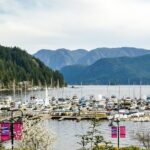
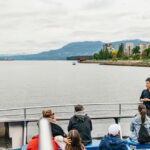
You’ll spend about 2 hours on the Sea to Sky Highway, with ocean panoramas at Horseshoe Bay along the way. This is useful even if you’re itching to start hiking. The drive gives you a chance to settle in, check your gear, and get your eyes used to the mountains you’ll soon be walking toward.
A practical plus: it’s also when you’ll be mentally switching from city-mode to trail-mode. If you’re someone who gets energized by views, this early segment helps you start the hike with better focus.
Garibaldi Park (the hiking core)
The main block is about 6 hours tied to Garibaldi Park. This is where most of your effort goes: from Rubble Creek up toward Panorama Ridge, with switchbacks early and more technical terrain later.
This portion matters because it’s where the guiding really shows. A trail like this isn’t only about strength; it’s about foot placement, timing, and knowing where the safer lines are when the surface gets rugged.
Garibaldi Lake stop
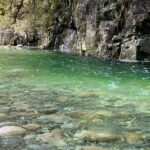
You get about 30 minutes at Garibaldi Lake. That’s not a long lunch-and-stay session. Think of it as a moment to reset and take in the turquoise-blue water with the surrounding mountain backdrop. It’s also a good chance to hydrate and refuel before the final return.
A few more Vancouver tours and experiences worth a look

Whistler Village (short pause)
Then there’s about 1 hour in Whistler Village. This is perfect if you want a little human-scale break at the end of the day—coffee, a stretch, and a place to lose your hiking boots for a bit.
Sea to Sky Highway (return drive)
The final 2 hours are your unwind time on the highway back. You’re already tired, so the goal here is not sightseeing overload. It’s more about getting you back comfortably after a long outing.
Getting started from Rubble Creek: where pacing wins
The hike begins gently from Rubble Creek. That matters more than it sounds. A gentle start doesn’t make it easy—it just makes it fair. Switchbacks early on help you conserve energy and reduce the shock of going from flat to steep all at once.
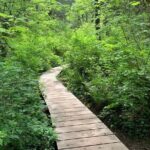
As you gain elevation, you’ll cross streams via bridges. These aren’t just functional. They also keep you from losing time fighting for the safest crossing spots. And because you’re with an ACMG Hiking Guide, you’re less likely to fall into the common trap of moving too fast early and paying for it later.
Here’s what I’d keep in mind if you’re judging this hike based on fitness alone: Panorama Ridge is not only “steep.” It’s also “long, with moments that require attention.” Early pacing is how you stay strong for those later sections.
The technical trail sections: handrails and footholds do real work
At some point, the hike shifts from comfortably challenging to technically serious. The route includes sections with handrails and footholds, and that detail is a big deal for most people.
When a trail includes handholds, it can reduce fear and help you keep three points of contact on steeper stretches. Footholds also mean you’re guided by the trail’s design rather than guessing where your feet will land. In other words, it’s safety built into the route.
I also like that the wilderness experience isn’t stripped away just to make it easier. You still feel out there, surrounded by the park. But you’re not left alone with “good luck” terrain.
One thing to watch: technical trails are where micro-features matter—small slips can snowball. That’s why having the right tools (like poles) and paying attention to footing is part of the experience, not optional.
Summit payoff: the viewing platform and what you’ll actually see
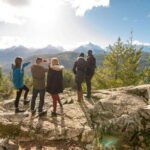
The reward is a well-designed viewing platform at the top of the ridge. This is your “no scrambling for the best photo angle” zone. You can take your time, look around, and drink in the bigger picture without feeling like you must balance on questionable rocks just to see well.
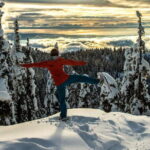
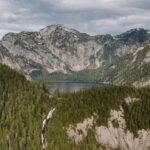
From the summit area, you’re looking for snow-capped peaks and turquoise lakes. That combination tends to hit hard on days with clear visibility, because the colors and snow lines create strong depth—ridge against lake, peaks against sky.
And if you’re the type who wonders what a hike is really for, the summit platform gives a straightforward answer: the trail builds you into position for the view, and then it lets you absorb it.
In at least one review, the guide Marc led the group to the summit with a viewpoint that truly took people’s breath away. Another theme: the guide prioritized safety and motivated hikers to keep going. That fits the reality of Panorama Ridge—this is a day where encouragement and steady guidance help you finish stronger than you thought.
What’s included for $148.46: where the value shows up
At $148.46 per person, this is not a cheap half-day hike. But for an almost 12-hour guided outing with park access and gear, it can be good value—especially if you don’t already own the right cold-weather traction.
Here’s what you get that matters on a long day:
- Air-conditioned vehicle (you ride comfortably on the drives)
- ACMG Hiking Guide (the biggest quality factor for safety and route management)
- Trekking poles and microspike crampons if necessary (gear support you might otherwise have to rent or carry)
- Entrance fees and provincial park permits (you don’t have to figure out permits on your own)
- Emergency equipment, including a company-issued first-aid kit and satellite phone
That package is the practical backbone. You’re paying for time, transportation, guide expertise, and the risk-management side of hiking in rough terrain.
What’s not included: guide gratuity, with an industry recommendation of 10–15% of the trip cost. If you usually tip, plan for it. If you don’t, at least be aware the cost doesn’t cover gratuity.
Also note the group limit: maximum of 12 travelers. Smaller groups usually mean less “traffic jam pacing” on narrow or technical sections.
The real-world tradeoffs: weather, cancellations, and day-of stress
This experience requires good weather. If conditions aren’t right, it can be canceled, and you’ll be offered a different date or a full refund.
It also has a minimum number of travelers. That’s a common policy for guided outdoor tours, but it can still be stressful if you booked around other plans. The general cancellation structure is: you can cancel for a full refund up to 24 hours before the start time. After that, refund rules can tighten.
A balanced takeaway: the hiking itself is well-supported, and the itinerary is structured. But the outdoors don’t care about your calendar. If you’re tight on time in the Vancouver/Whistler area and you can’t tolerate plan changes, factor that risk into your decision.
Who Panorama Ridge suits best (and who should rethink it)
This hike is described as suitable for travelers with moderate physical fitness. That’s a helpful clue. You don’t need to be an ultra-hiker, but you should be comfortable with a long day and with terrain that includes technical segments.
You’ll likely enjoy this tour most if:
- you want a guided hike with safety features built into both the route and the tour support
- you’re okay with an early start and a full day outdoors
- you want both the mountain-and-lake views and a short taste of Whistler Village
You might want to choose a different outing if:
- you dislike technical footing or exposed handrail sections
- you’re sensitive to weather changes and can’t adjust your schedule
- you’re looking for something short and low-effort
The small group size (up to 12) helps people who benefit from a steady pace and clear guidance.
Should you book Panorama Ridge with Inspire Trail Expeditions?
If you’re deciding whether this is worth your time, I’d say: book it if you want a properly guided, long-format day hike with traction support, clear safety on the rough parts, and a summit payoff that doesn’t require extra figuring. The inclusion of trekking poles, microspikes if necessary, and a guide with emergency support is exactly what makes a steep hike feel manageable.
I’d hesitate only if your schedule is inflexible. This is weather-dependent, and there’s also a minimum group requirement, so there’s some chance of date changes.
Overall, this is the kind of outing that makes the day feel full: a scenic Sea to Sky start, real time in Garibaldi Park, a quick lake break, and then a return that leaves you tired in a satisfying way—not stressed about logistics.
FAQ
FAQ
How long is the Panorama Ridge hike tour?
The tour lasts about 11 hours 30 minutes (approx.).
What time does the tour start?
The start time is 6:00 am.
What is the price per person?
The price is $148.46 per person.
Where does the hiking start?
The hike starts gently from Rubble Creek.
Does the tour include pickup and a ticket?
Pickup is offered, and you’ll use a mobile ticket.
How many travelers are in the group?
The tour has a maximum of 12 travelers.
What hiking gear is included?
You get use of trekking poles, and microspike crampons if necessary.
Is park access included?
Yes. Entrance fees and provincial park permits are included.
What happens if the tour is canceled due to weather or not enough travelers?
If it’s canceled due to poor weather, you’ll be offered a different date or a full refund. If it’s canceled because the minimum number of travelers isn’t met, you’ll be offered a different date/experience or a full refund.
What is the cancellation window for a full refund?
You can cancel up to 24 hours in advance for a full refund. Cancel less than 24 hours before, and the amount you paid won’t be refunded.