REVIEW · EDMONTON
Edmonton City Highlights 3 Hour Walking Tour | Gratuity-Based
Book on Viator →Operated by Toonie Tours Calgary · Bookable on Viator
Edmonton reveals a lot on foot. This 3-hour walking tour strings together downtown highlights and practical city orientation, from theatre lobbies and public squares to the ICE District and the Alberta Legislature dome. You get local stories to connect the buildings to how Edmonton grew, plus a strong “what to eat and where to go next” vibe. The main thing to keep in mind: the tour’s punch depends on your guide’s curiosity and how easily they answer follow-up questions.
The route has worked especially well with friendly, local-feeling guides such as Hailey and Julie, who focus on pacing, smart photo moments, and clear context. One standout detail from past groups: many people appreciated a built-in coffee/restroom pause and help spotting the best angles as you move between sights. If you like a walking tour that feels like someone is showing you their home turf, this one is made for you.
You’ll cover a lot without paying for entry tickets at the stops, and you’ll finish with a wide-open view over the North Saskatchewan River Valley. Just remember it runs in good weather only, so pack for whatever the day gives you.
In This Review
- Worth Your Feet: Quick Highlights
- A 3-Hour Taste of Downtown Edmonton on Foot
- Where You Start: Citadel Theatre and the Arts in Alberta
- Churchill Square: Architecture Plus the British Thread
- The CN Tower Stop: Rail History and City Growth
- ICE District and Rogers Place: Modern Edmonton With Sports at the Center
- Neon Sign Museum: Lost Businesses and Post-War Edmonton
- 4th Street Promenade: Cafés, Shops, and Public Art
- Alberta Legislature Building: The Dome, the Details, and the Meaning
- Frederick G Todd Lookout: 360 Views Over the North Saskatchewan River Valley
- Guide Style, Pacing, and How to Get More From It
- Price and Value for a Downtown Orientation Walk
- Who Should Book This Walk (and Who Might Skip It)
- Should You Book Edmonton City Highlights?
- FAQ
- How long is the Edmonton City Highlights walking tour?
- Where does the tour start and end?
- How much does it cost?
- Are there admission fees for the stops?
- Is the tour offered in English?
- What weather conditions does the tour require?
- What refund do I get if I cancel?
Worth Your Feet: Quick Highlights
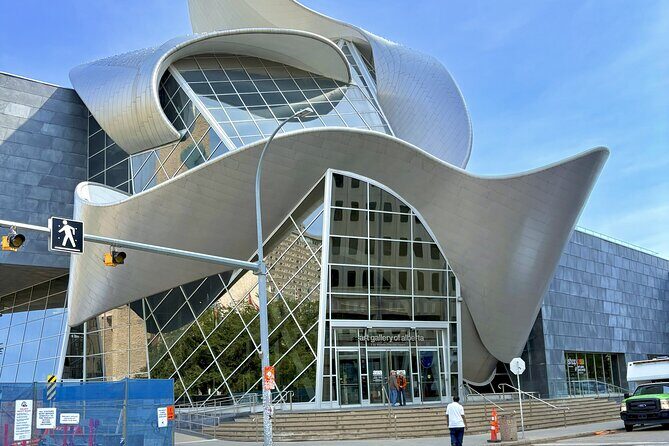
- Citadel Theatre lobby gardens with arts history tied to Alberta’s cultural growth
- Free, public-entry stops across the core, so your money stays in your pocket
- ICE District context that connects hockey, design, and downtown revitalization
- Neon Sign Museum + Alley of Light for Edmonton’s post-war business story and public art
- A great finish with 360-degree views from the Frederick G Todd Lookout
A 3-Hour Taste of Downtown Edmonton on Foot
This is a focused downtown walk that’s long enough to feel satisfying, but short enough that you still have energy afterward. Plan on about three hours, and expect a steady pace with quick stops that let you absorb a bit, snap photos, and then move on.
The big value for me is how the tour mixes old Edmonton and newer Edmonton without turning it into a lecture. You get the why behind the streets you’re already going to use later. It’s also easy to treat this as your starter trip: do this early in your visit, and the rest of your day in downtown makes more sense.
And since it’s max 32 people, it’s not a cattle-car style shuffle. You should still be able to ask a question or two without feeling lost in the crowd.
You can also read our reviews of more walking tours in Edmonton



Where You Start: Citadel Theatre and the Arts in Alberta
Your tour begins at 10065 100 St NW, at the Citadel Theatre area. Stop 1 is built around the Citadel’s lobby gardens, which is a nice way to begin: greenery inside a cultural hub makes the start feel calmer than a purely urban streetscape crawl.
From there, you connect the dots between the Citadel Theatre and Alberta’s arts story—especially its origins as an arts powerhouse in the province. The complex includes multiple performance venues (like Shoctor, Maclab, Rice, Zeidler, and Tucker), plus the Foote Theatre School. Even if you’re not catching a show, it’s a useful perspective on how a city builds creative infrastructure.
What I like here: it sets a tone. Instead of treating downtown like a museum of buildings, you start with an active place that supports culture, training, and performance. Quick note for your comfort: it’s only around 10 minutes, so arrive with shoes ready for movement right after.
Churchill Square: Architecture Plus the British Thread
Next up is Sir Winston Churchill Square, where the architecture around you matters almost as much as the stories you hear. You’re near the Art Gallery of Alberta and Edmonton City Hall, and that location is perfect for understanding why Edmonton developed the way it did.
This stop focuses on Edmonton’s history as a small northern prairie town and the British impact on its early identity. The result is more than names and dates—it helps you read the civic design around you and understand what those buildings were meant to project.
If you enjoy city history that stays connected to what you can see, this part works well. If you prefer deep political detail, you may need to ask targeted questions, since the stop is brief and aims for orientation.
The CN Tower Stop: Rail History and City Growth
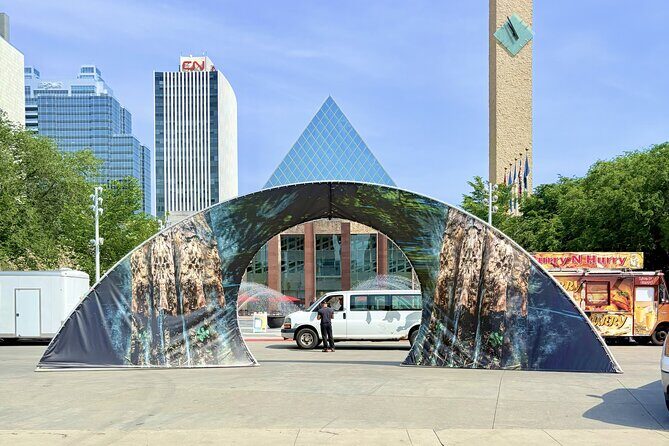
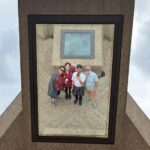
Stop 3 is the CN Tower area, and the theme shifts clearly: rail in Edmonton and how it helped shape the city. It’s a reminder that downtown didn’t just “happen.” Connections—routes, transport, and industry—drove development, and that shows up in what you can still see today.
This is about 15 minutes, which is enough time to grasp the concept and make the rest of your day feel less random. You’ll walk away with a clearer sense of why the city’s core looks the way it does and how transportation helped pull it together.
A practical tip: if you’re a photo person, keep your camera ready here. Even without going inside anywhere (admission is free for the stop), the view lines and city geometry can make nice shots.
ICE District and Rogers Place: Modern Edmonton With Sports at the Center
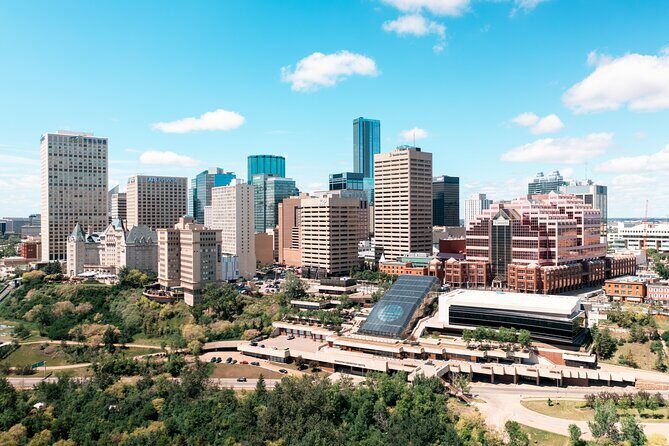
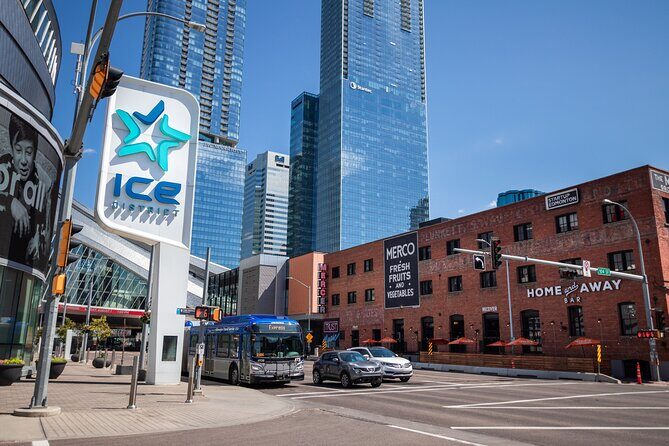
Stop 4 is a highlight for anyone who likes how cities reinvent themselves. Rogers Place anchors ICE District, a 25-acre mixed-use sports and entertainment hub downtown. You’ll learn how this area revitalized the city core and how it’s designed for movement—pedways, LRT connections, parking, and Ford Hall all help link parts of the district.
There’s a lot here, and the context helps. Rogers Place is home to the NHL’s Oilers and also serves as a major concert venue. Around it, you have a public plaza, high-end dining, boutique retail, the Grand Villa Casino, and a JW Marriott hotel with luxury residences. Two office towers—one being the 66-story Stantec Tower, noted as Canada’s tallest outside Toronto—add a big scale element to the mix.
What I like: the tour doesn’t treat this as just a sports stop. It frames ICE District as a living downtown ecosystem, not a single arena with empty streets outside game nights.
You’re looking at about 15 minutes, so it’s not a long wander—more like a guided orientation. Still, if you’re heading back later for a game, a concert, or a meal, you’ll know what’s where and why the area feels different than older downtown blocks.
You can also read our reviews of more city tours in Edmonton


Neon Sign Museum: Lost Businesses and Post-War Edmonton
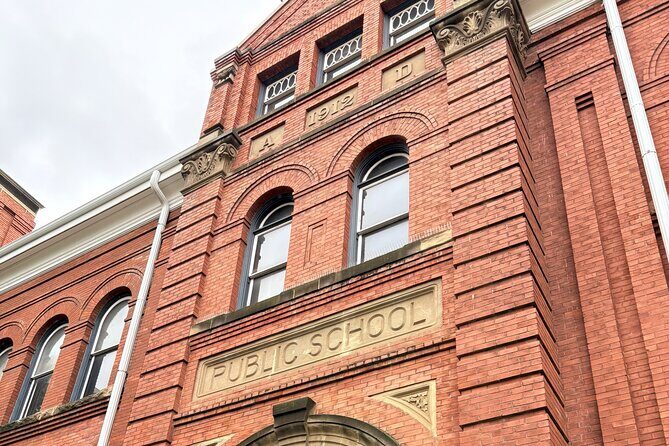
Stop 5 is the Neon Sign Museum, an outdoor tribute to Edmonton’s lost businesses. This isn’t a “sit and watch” museum. You move through it, and you learn the background behind what the signs represent—especially the city’s post-war economy and the local stories attached to it.
It’s about 15 minutes, which is ideal because it gives you time to read several pieces without turning it into a full museum visit. The best part is the human angle: the information comes from a local guide, which means you usually get meaning beyond just the visuals.
If you like urban artifacts—signs, storefront remnants, and the way a city remembers itself—this is one of the stops that tends to stick. It adds character to the walk and gives you something you can’t easily replicate on your own.
4th Street Promenade: Cafés, Shops, and Public Art
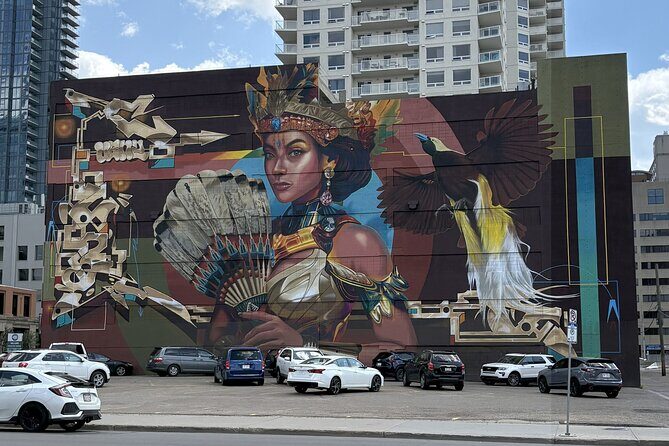
Stop 6 takes you to the 4th Street Promenade, a revitalized terrace downtown between Jasper Avenue and the ICE District. This section sits in historic warehouse-era buildings, and that mix of old structure and newer street life makes it feel like a real place, not a staged attraction.
You’ll pass upscale boutiques, artisanal shops, and cafés such as Credo and KB&Co. If you’re hungry, the area is loaded with restaurant energy, too—people often point to places like Corso 32 and Cask & Barrel. There are also pubs for a later evening plan.
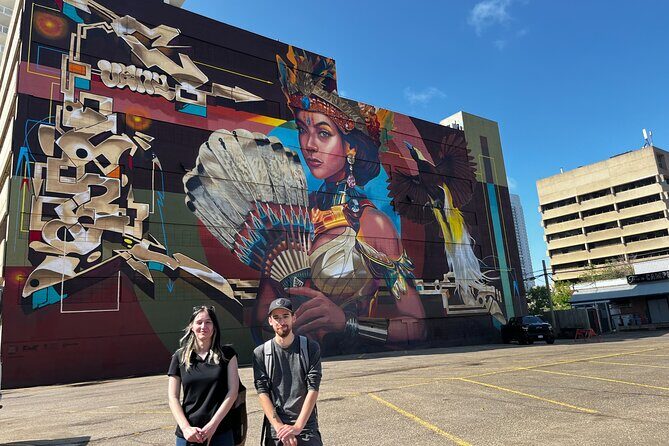
Two unique attractions you’ll likely notice: the Neon Sign Museum presence here ties back to your earlier stop, and the Alley of Light outdoor galleries add a visual art element you can keep returning to after the tour.
In summer weekends, it can shift into an Al Fresco market vibe with patios, pop-ups, and community events. Your guide may mention the seasonal energy, but even out of season, it’s a strong “what to do next” zone because it’s built for lingering.
This stop is also about 15 minutes. The goal is to point out options and help you feel where you can easily spend more time later.
Alberta Legislature Building: The Dome, the Details, and the Meaning
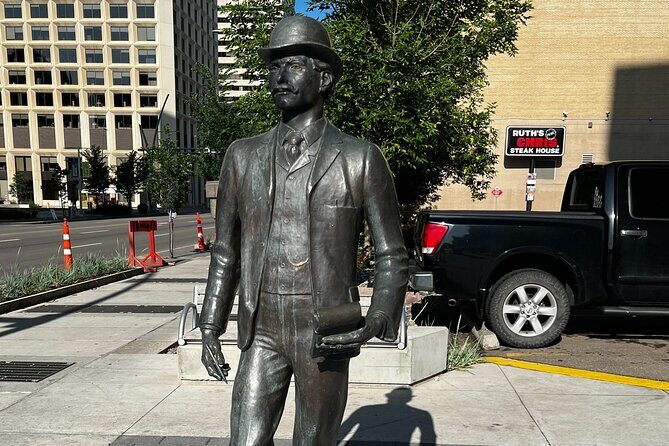
Stop 7 is a bigger one: the Alberta Legislature Building, often called the Ledge. It’s set within a green space, and you’ll get a chance to slow down a bit—this stop is about 30 minutes.
The building matters architecturally. It was built between 1907 and 1913 in grand Beaux-Arts (Classical Revival) style. You’ll learn about its designers, Allan Merrick Jeffers and Richard Blakey, and you’ll take in the 57 m dome above a marble-columned rotunda. Outside, the structure uses granite and sandstone, and inside the materials list is impressive—marble, mahogany, oak, and brass.
But the best part is how the tour connects the grandeur to Alberta coming to be. You’re not just looking at a showpiece. You’re hearing how the place fits into provincial identity and governance.
If you’re traveling with someone who loves architecture or government history, this stop gives both. It’s long enough to absorb details without feeling rushed.
Frederick G Todd Lookout: 360 Views Over the North Saskatchewan River Valley
You wrap up at Stop 8, the Frederick G Todd Lookout. This is your view payoff, and it’s a good way to end a walking tour because it resets your perspective.
You’ll look over the North Saskatchewan River Valley, described as the largest natural urban area in North America. From the lookout, you get 360-degree views of the valley and the city—exactly the kind of broad overview that helps everything you just walked click into place.
It’s only about 10 minutes, but finishing here is smart. After you’ve seen civic buildings, sports district design, and downtown streets, a wide horizon makes it easier to plan what to revisit on your own.
Guide Style, Pacing, and How to Get More From It
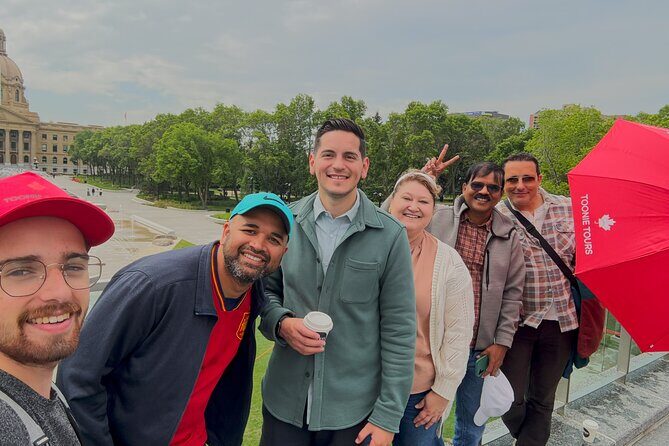
Even the best route depends on the person leading it. The good news: many past groups praised guides who bring real enthusiasm and local context to the stops. Names like Hailey and Julie show up in positive experiences, especially for a friendly style and thorough answers to questions.
I’d treat it like this: go in ready to ask one or two questions early. The tour moves through several zones quickly, so if you want specific details—like what a building’s role was or what a symbol means—ask when you’re standing right by it.
Pacing also seems to be a strong point. One experience described a coffee/restroom break at a local coffee house, which is exactly the sort of practical kindness that makes a 3-hour walk feel easier. If you need breaks, you’re more likely to get them when you mention what you need, not after you’re already worn out.
Also, the tour includes recommendations for food, entertainment, and nightlife. That’s useful only if your guide actually connects it to where you are. A good guide will point you toward spots that fit your timing—something you can use later the same day rather than generic advice.
Price and Value for a Downtown Orientation Walk
The listed price is $5.00 per person, and the experience is described as gratuity-based. Translation: the base cost is low, so your spending can mostly go toward meals and local treats afterward. That alone makes this a smart “first or second day in town” choice.
Here’s the value breakdown I see:
- All the major stops are free to enter at the point you’re visiting them, including the Citadel Theatre, Churchill Square area sights, CN Tower area stop, and the Legislature Building.
- You get a local English-speaking guide plus researched history and culture.
- You also get practical “what next” suggestions, which can save you time hunting for ideas later.
Group size is capped at 32, and the tour starts and ends back at the meeting point. That keeps it simple if you’re also using buses or LRT nearby.
If you’re trying to budget, this tour is a strong way to buy context instead of paying for multiple paid attractions. If you want a deep museum day, though, this isn’t that. Think orientation plus stories plus a view, not a full-day ticket marathon.
Who Should Book This Walk (and Who Might Skip It)
You should book if you want:
- A high-signal downtown introduction to Edmonton
- A mix of civic sites (Legislature), arts (Citadel Theatre), and modern city planning (ICE District)
- A route that ends with a viewpoint that makes the city feel navigable
You might skip or at least adjust expectations if:
- You’re expecting slow, museum-level explanations at every stop. The timing is short for most sights.
- You need a guide to handle lots of highly specific questions on demand. The tour can still work, but you’ll get the best results when you ask early and keep your questions tied to what’s in front of you.
This is also a decent pick for couples, solo travelers, and visitors who like walking through neighborhoods they’ll likely return to for dining and photo time.
Should You Book Edmonton City Highlights?
If you’re in Edmonton for a short visit, I’d book this. It’s one of those deals where the price is almost irrelevant compared to what you learn and how quickly you get your bearings. The mix of free stops, strong downtown landmarks, and a view finish at Frederick G Todd Lookout makes it a practical use of a few hours.
My final advice is simple: wear good walking shoes, bring a layer (downtown can feel brisk), and be ready to ask your guide one or two questions while you’re at the sights. If you do that, the tour feels less like a checklist and more like a helpful local walkthrough you’ll benefit from all week.
FAQ
How long is the Edmonton City Highlights walking tour?
It runs for about 3 hours.
Where does the tour start and end?
The tour starts at 10065 100 St NW, Edmonton, AB T5J 0N6, Canada, and ends back at the same meeting point.
How much does it cost?
The price is listed as $5.00 per person. The experience is described as gratuity-based.
Are there admission fees for the stops?
The stops listed on the route show admission ticket free for each major stop.
Is the tour offered in English?
Yes, it’s offered in English.
What weather conditions does the tour require?
The experience requires good weather. If it’s canceled due to poor weather, you’ll be offered a different date or a full refund.
What refund do I get if I cancel?
You can cancel for free up to 24 hours in advance for a full refund. If you cancel less than 24 hours before the start time, the amount you paid will not be refunded.