REVIEW · TORONTO
Discover Toronto’s Underground – PATH walking tour
Book on Viator →Bookable on Viator
Toronto without fighting traffic? Try the underground PATH. This guided walk strings together downtown sights with a smooth route through Toronto’s mostly underground pedestrian network, where you’ll get oriented fast and still see big names along the way. Think PATH practicality plus landmark stops in just about 2 hours.
I especially like that the guide makes it feel useful, not just scenic. On this tour, Leo is called out for being fun, patient, and the kind of host who shares tips for how to get around Toronto. I also like the stop mix: you touch everything from sports squares to major transit and landmark architecture without spending your whole day in transit lines.
One possible drawback: it’s mostly underground, so if you’re chasing lots of open-air street time, this route won’t fully scratch that itch. Also, the stops are brief—around 10 minutes each—so you’ll see highlights rather than linger like you would on your own.
In This Review
- Key highlights you’ll care about
- Entering Toronto’s PATH: the underground city lesson
- Starting at Bay St and ending at Queen St: plan your day around the arc
- Scotiabank Arena and Maple Leafs Square: sports you can see quickly
- Union Station’s Beaux-Arts style: a major hub with real presence
- Hockey Hall of Fame: what to expect and what to do next
- Brookfield Place and Santiago Calatrava: noticing design without a class
- Financial District density and the Mies van der Rohe black building
- Commerce Court North and the 32nd-floor Toronto view
- Old City Hall: Romanesque Revival details you’ll remember
- Nathan Phillips Square and the Toronto sign: end on a classic
- Price and pacing: is $25.39 worth it?
- Who should book this PATH walking tour?
- Final verdict: should you book it?
- FAQ
- How long is the Discover Toronto’s Underground PATH walking tour?
- Where does the tour start and end?
- How much does the tour cost?
- What language is the tour offered in?
- What stops are included?
- Is admission required for the stops?
- Is there a group size limit?
- Do I need to bring a paper ticket?
- Is it easy to reach the start area with public transport?
- What’s the cancellation policy?
Key highlights you’ll care about

- A route through Toronto’s PATH, a pedestrian network over 30 kilometers long
- Big-name downtown stops in a tight window: Scotiabank Arena, Union Station, Hockey Hall of Fame, and more
- Architecture education you can spot in seconds, including work by Calatrava and Mies van der Rohe
- Fast pacing (about 10 minutes per stop, 15 at Nathan Phillips Square)—great for a first-time day
- Small group size (max 20) plus a guide who shares real get-around tips
Entering Toronto’s PATH: the underground city lesson
Toronto’s PATH system is one of those “once you get it, you love it” things. This network is mostly underground, built for pedestrians, and it stretches more than 30 kilometers through downtown. The tour uses that network as the connective tissue, so you’re not jumping from street to street with every new stop.
Here’s what makes that valuable for you: PATH is a practical shortcut. In a city where winter can be… intense, being able to walk between major areas without constantly stepping outside can feel like you’ve hacked your own itinerary. Even in mild weather, it’s a time-saver because you’re always moving toward the next sight instead of searching for the next corner.
I like that this tour doesn’t treat PATH like a boring corridor. It frames it as a way to understand downtown Toronto’s layout—where the major hubs cluster, how the streets and buildings connect, and what’s worth knowing before you go off on your own.
Practical note: since you’ll be spending a lot of time under cover, plan for some indoor-outdoor transitions when you reach the open landmarks. Wear layers. Your body will be happy you did.
You can also read our reviews of more walking tours in Toronto


Starting at Bay St and ending at Queen St: plan your day around the arc
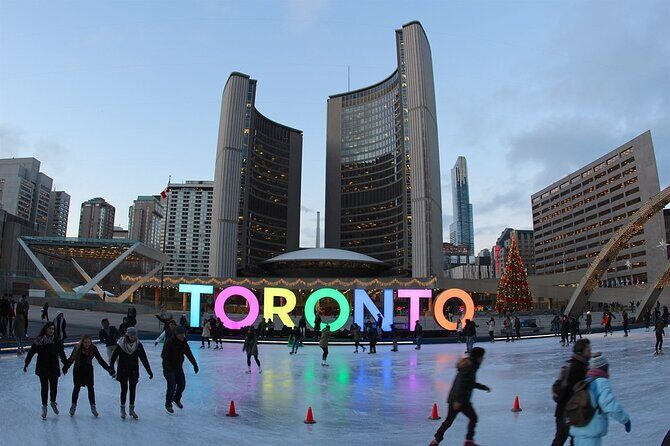
You meet at 10 Bay St, Toronto, ON and the tour ends at 100 Queen St W, right by Nathan Phillips Square (also where you’ll see the famous Toronto sign and the seasonal ice rink). That start-to-finish arc is helpful. It naturally guides you from the core downtown zone toward a classic public square.
The tour runs about 2 hours total, and the time listed is the time you spend on the walking journey through the stops. With a structure like this, you can use it as either:
- your first taste of downtown (so you learn the “shape” of the city), or
- a compact add-on day activity when you still want time for museums, neighborhoods, or dinner plans.
With a maximum group of 20, you’re not packed in like a human bus. That matters because you’ll be moving through corridors and around transit-adjacent areas where flow can get tight.
Scotiabank Arena and Maple Leafs Square: sports you can see quickly
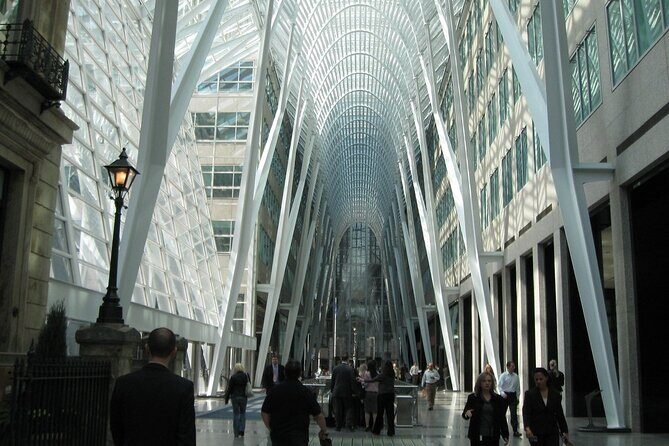
One of the most fun early stops is Scotiabank Arena, home to the Toronto Maple Leafs and the Toronto Raptors. Even if you’re not catching a game, the arena area gives you that big-city buzz—just without needing tickets.
Right nearby, you’ll also get a look at Maple Leafs Square, often called Jurassic Park. That nickname is a useful way to remember the vibe: it’s the public gathering space people talk about when the teams are playing. In other words, it’s not just a building stop. It’s a window into how Toronto celebrates sports culture.
The benefit for you is simple: you’re bundling entertainment landmarks into a route that also covers transit, history, and architecture. It keeps the day from turning into one long “look, another building” walk.
Union Station’s Beaux-Arts style: a major hub with real presence
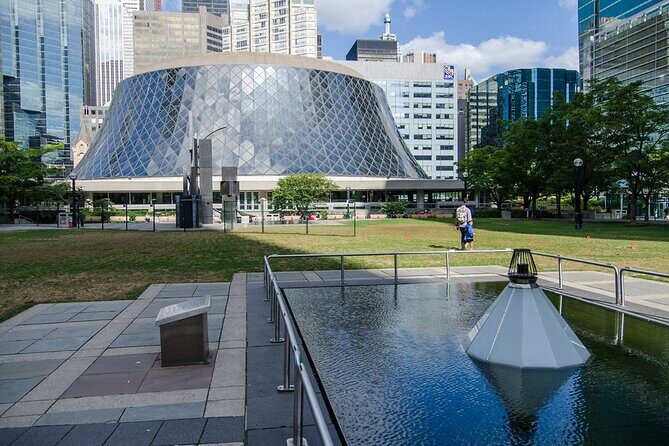
Next up is Union Station, Canada’s major train station, known for its Beaux-Arts design. This is the kind of stop that pays off even if you only have a few minutes, because Union Station is built for visual impact.
What you’re likely to notice fast is that the station feels like a landmark, not just a transit tool. That matters when you’re traveling: knowing the scale and style of a place like this helps you orient yourself later. You’ll remember where it is and how it fits into downtown.
This is also a smart pause point. You’re moving through an underground network, then meeting a major above-ground anchor with clear lines in the urban fabric. It makes your mental map click.
Hockey Hall of Fame: what to expect and what to do next
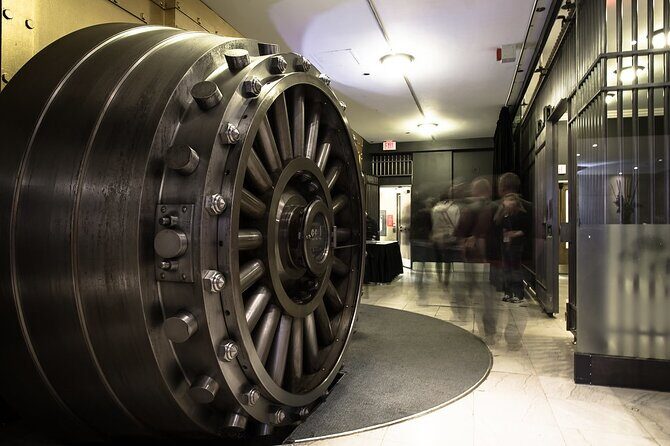
At Hockey Hall of Fame, the tour points you to the heart of Canadian ice hockey history. The space is described as 65,000 square feet, and it includes a range of activities, including hockey simulation games.
Even if you don’t plan to spend a long time inside right then, this stop is still worth it. Why? Because it tells you what the building is actually for, so when you pass by later—or decide to return—you’ll know what kind of experience awaits.
A small caution: the stop time is short (about 10 minutes). If you’re the type who likes to go deep immediately, you might want to treat this as a “set up” stop, then plan a separate museum block later in your trip. The tour helps you decide if it’s your kind of thing.






Brookfield Place and Santiago Calatrava: noticing design without a class
The tour then hits Brookfield Place, noted for its design by architect Santiago Calatrava. Calatrava’s work tends to feel dynamic—shapes that don’t look like they were made for a strict box. So even in a quick stop, you can start training your eye to spot style choices and how buildings create movement.
This is another reason I like this itinerary: it doesn’t only show you famous names. It gives you the “why” behind what you’re seeing—at least enough to make you notice more on your own afterward.
In practical terms, this stop also helps you connect the downtown office corridor world with the spaces where people actually walk and gather. You’re learning the city’s rhythm, not just its skyline.
Financial District density and the Mies van der Rohe black building
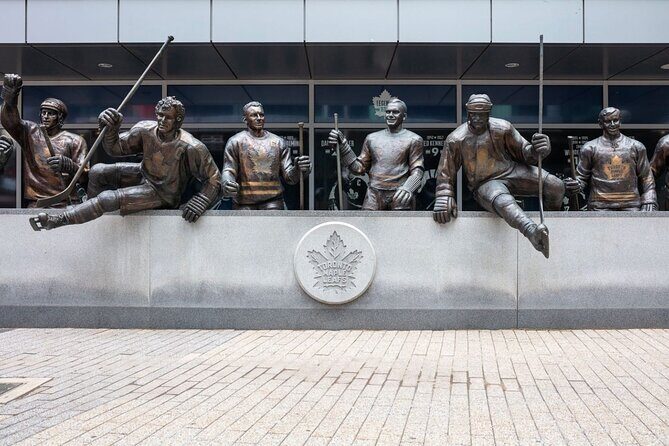
Next comes the Financial District, where skyscrapers cluster tightly. You also get a specific architecture callout: a black stainless-steel building designed by Ludwig Mies van der Rohe.
That detail is useful because it gives you a target. Instead of hoping you’ll casually recognize important architecture, you have something concrete to look for. That turns a fast stop into a mini scavenger hunt.
Why that’s valuable: the Financial District can feel abstract when you’re visiting for the first time. A guided prompt helps you decode the area quickly. You start to understand which buildings are important and what architectural ideas they represent—clean lines, modern materials, and a confidence in minimal design.
One more practical upside: this is a great time to use the tour as your “navigation rehearsal.” After the walking and the orientation, you’ll be better prepared to move through this part of downtown independently later.
Commerce Court North and the 32nd-floor Toronto view
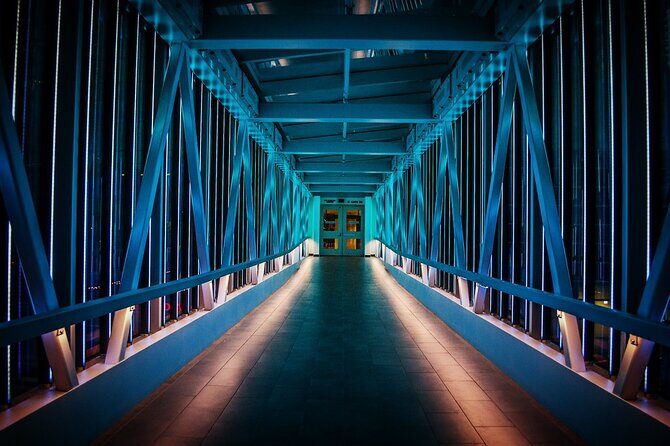
At Commerce Court North, the tour points out a famous viewpoint: between 1931 and the mid-1960s, there was an observation deck on the 32nd floor where people could view Toronto.
This is a history-flavored stop that does more than repeat dates. It helps you understand how people once experienced the city from above—and it connects the downtown skyline to how it used to be “experienced” as a destination.
Even though the observation-deck moment is historical in the description, the idea is still useful for you. It reminds you to look for viewpoints and elevated perspectives when planning your day. If you love photos and city scale, Toronto rewards that.
Old City Hall: Romanesque Revival details you’ll remember
The tour then reaches Old City Hall, highlighted for the Romanesque Revival building style and the attention to exterior and interior detailing. It’s also described as one of Toronto’s most photographed places.
This stop is where you can shift your brain from “fast orientation” into “slow looking,” even if you only have about 10 minutes. Look at the textures, the shape language, and the way the building presents itself. When architecture is detailed, it often rewards repeat viewing—so even a brief stop can stick with you later.
Also, Romanesque Revival tends to feel solid and grounded. That tone works well after the sleek modern lines you’ve seen in the Financial District. You’re getting contrast, and contrast makes the day feel richer.
Nathan Phillips Square and the Toronto sign: end on a classic
The final stretch builds toward Nathan Phillips Square, with about 15 minutes here—your longest stop. This is where you’ll see the Toronto sign installation and, in winter, the famous ice rink.
Even if you visit outside the rink season, the square still works as an anchor because it’s public, open, and easy to recognize. Ending here is smart because it’s not tucked away underground. You finish in a place where you can keep sightseeing right away, grab food nearby, or connect to transit.
One small consideration: if you’re visiting in winter, the ice rink area can draw crowds and activity. That can be fun, but it’s worth keeping extra time in your plans if you want photos without pushing through people.
Price and pacing: is $25.39 worth it?
At $25.39 per person, this is a relatively low-cost way to get a guided downtown “routing lesson.” The big value isn’t that you’re paying for attractions with hefty ticket fees. The stops are marked as ticket free for admission at each location, so your money is really paying for:
- a planned sequence of downtown sights,
- an efficient route through PATH, and
- a guide who helps you connect the dots.
The pacing is the trade-off. In about 2 hours, you’ll only have a short look at each stop. If your travel style is “show me everything,” this won’t replace a full museum day or a long architecture walk. But if you want to learn quickly and then explore on your own, it’s a strong value.
The fact that the group is limited to 20 people also matters here. A small group plus a short itinerary tends to make for a better flow through tight corridors.
For planning: booking seems popular, with an average booking window of about 50 days in advance. If you’re traveling in peak periods, don’t wait until the last week to reserve.
Who should book this PATH walking tour?
Book it if you want:
- a fast downtown orientation that makes your next day easier,
- a mix of transit landmarks, sports landmarks, and architecture stops,
- an itinerary that is weather-friendly because a big chunk is underground,
- guidance from a host like Leo, known for being patient and offering practical get-around tips.
Skip it (or pair it carefully) if you prefer long stops, museums as your main focus, or mostly outdoor strolling. Also, if you hate enclosed spaces, note that PATH is a major part of the experience.
Final verdict: should you book it?
Yes—if your goal is to get your bearings fast and see a concentrated slice of downtown Toronto in a short, low-stress package. The route through PATH plus the selection of recognizable landmarks makes it a smart primer day. The price is fair for the guidance you get, and ending at Nathan Phillips Square gives you an easy place to transition into your own plans.
If you want a slower, deeper architecture or museum day, use this as your setup. You’ll know what to revisit afterward.
FAQ
How long is the Discover Toronto’s Underground PATH walking tour?
It’s about 2 hours (approx.), and the time includes the walking journey and stops.
Where does the tour start and end?
It starts at 10 Bay St, Toronto, ON M5J 2G4, and ends at 100 Queen St W, Toronto, ON M5H 2N2 near Nathan Phillips Square.
How much does the tour cost?
The price is $25.39 per person.
What language is the tour offered in?
The tour is offered in English.
What stops are included?
The tour includes the PATH, Scotiabank Arena (Maple Leafs Square/Jurassic Park area), Union Station, Hockey Hall of Fame, Brookfield Place, the Financial District, Commerce Court North, Old City Hall, and Nathan Phillips Square.
Is admission required for the stops?
The stops listed are marked as ticket free for admission at each location.
Is there a group size limit?
Yes. The tour has a maximum of 20 travelers.
Do I need to bring a paper ticket?
No. You get a mobile ticket.
Is it easy to reach the start area with public transport?
Yes, it’s near public transportation.
What’s the cancellation policy?
You can cancel for a full refund up to 24 hours before the experience’s start time, with no refund if you cancel within 24 hours.