REVIEW · MONTREAL
The Original Montreal Mural Arts Tour by Spade & Palacio
Book on Viator →Operated by Spade & Palacio Tours · Bookable on Viator
Street art turns Montreal into an open-air classroom. I love the small-group size (max 10) and how the tour ties each wall to real meaning, from graffiti styles to huge mural scale along Saint-Laurent Boulevard. One thing to plan for: it’s a steady walking loop, and you’ll want shoes that can handle lots of sidewalks and alleys.
I also like the value. At $30.10 per person for about two hours, you’re paying for more than photos—you’re getting a local guide plus a recommendations list for where to eat and drink right after. And yes, it’s an English tour with a mobile ticket.
You’ll hit three main areas in a tight, easy rhythm: Plateau Mont-Royal back streets for the first stretch, the Leonard Cohen mural as a standout stop, then a long walk on Saint-Laurent Boulevard through Montreal’s major street-art corridor.
In This Review
- Key things to know before you go
- Street Art on the Main: why this tour is more than picture-taking
- Meeting point to the walking loop: how the route is paced
- Stop 1: Plateau Mont-Royal backstreets and wheat-paste energy
- Stop 2: the Leonard Cohen mural stop that anchors the whole tour
- Stop 3: Saint-Laurent Boulevard and why it’s Montreal’s street-art spine
- What you learn: techniques, meaning, and local vs. international artists
- Group size, pace, and what to wear (so you enjoy every stop)
- Price and value: what $30.10 gets you in real terms
- Where to go after: using the recommendations list the right way
- Booking this original Montreal mural tour: should you choose it?
- FAQ
- How long is the Montreal Mural Arts Tour?
- What does the tour cost?
- Is the tour offered in English?
- How big is the group?
- Where does the tour start and end?
- Is it a walking tour?
- What’s included in the price?
- What happens if the weather is bad?
- Can I get a refund if I cancel?
Key things to know before you go
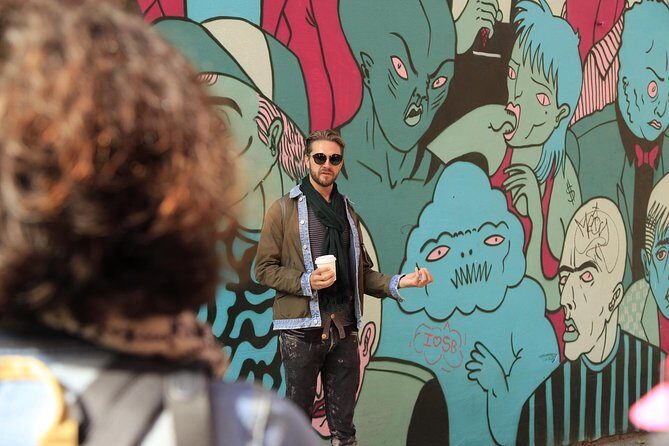
- Max 10 people means you get actual conversation, not a parade.
- Saint-Laurent Boulevard is the core route, shaped by years of immigration and mural culture.
- You’ll see both small street techniques and massive walls, including works that can reach enormous height.
- Leonard Cohen gets his own major mural stop, with context your eyes might miss on a casual walk.
- Your guide builds the story behind the art, including local and international artists and how murals change over time.
- You leave with a printed-style list of recommendations for food and bars to keep the day going.
Street Art on the Main: why this tour is more than picture-taking
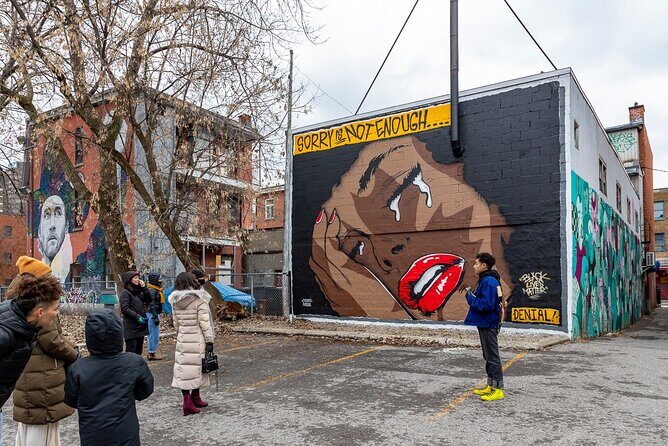
This is the kind of Montreal experience that changes how you walk the city afterward. The tour follows the same idea street artists work with: public space is a canvas, and the sidewalk is the gallery. Instead of treating murals like random decor, you learn how artists use scale, style, and placement to say something about place, politics, and community.
The best part, in my view, is the balance. You get both big-name cultural references—like the Leonard Cohen mural—and the smaller, more street-level pieces tucked into back streets and alleys. That mix matters because Montreal street art isn’t just one look. It can be wheat-paste style work, classic graffiti, political mural messages, and international influences all in the same day.
There’s also real momentum here. The route is a zigzag walk, so you keep turning corners and finding new walls. It feels like an outdoor museum, but with real street energy.
You can also read our reviews of more tours and experiences in Montreal.


Meeting point to the walking loop: how the route is paced
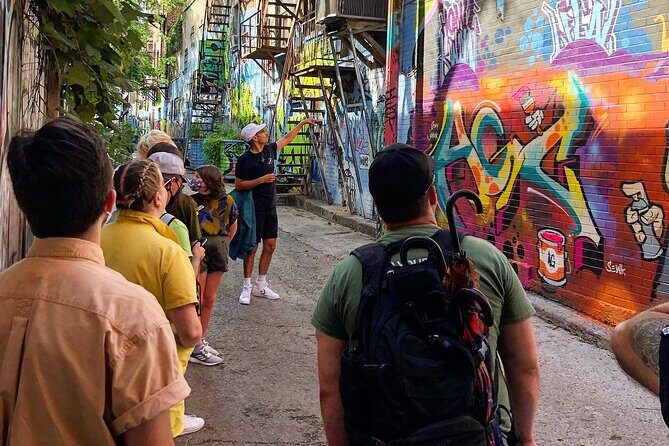
The tour starts at 3526 Boul. Saint-Laurent (near the Plateau area) and ends near the Park of Portugal, Rue Marie-Anne. The tour runs about 2 hours total, and the experience is built around three timed stops.
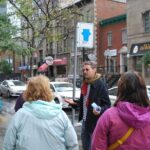
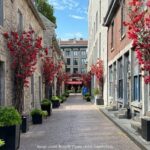
Stop 1 is about 45 minutes in Plateau Mont-Royal, where you’re walking back streets and alleys. That’s enough time to notice style changes—how one block might show street posters or layered wheat-paste texture, while the next might show a larger mural approach.
Stop 2 is shorter—about 10 minutes—centering on the Leonard Cohen mural. Stop 3 is the longest stretch: about 1 hour walking along Saint-Laurent Boulevard.
Expect a moderate walking pace. Most people can handle it, but bring decent shoes. You’re moving the whole time, not sitting between stops.
Stop 1: Plateau Mont-Royal backstreets and wheat-paste energy
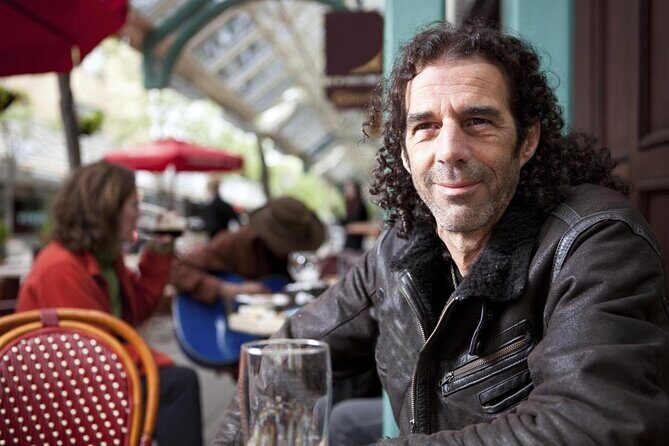
Plateau Mont-Royal is where you start to feel the “outdoor art gallery” vibe fast. This first stretch is about the smaller scale works and the tucked-away locations that are easy to miss if you’re just wandering with no plan.
Here’s what makes this part of the tour practical: your guide points things out that you’d probably scroll past or walk by without noticing. You’ll get clues on technique—how artists build layers, how street pieces fit into the surrounding neighborhood, and how some works communicate more than one message.
It’s also where the tour’s broader point becomes clear. Montreal has a reputation as a street-art hub, but this neighborhood-level walk shows why. Art doesn’t just appear on one wall. It shows up across an area, then evolves as new artists join the conversation.
If you’re the type who likes “find the signs” walking—spotting symbols, text styles, and small details—you’ll enjoy this first block most. It’s the part that turns your phone camera from a record button into a tool for noticing.
Stop 2: the Leonard Cohen mural stop that anchors the whole tour
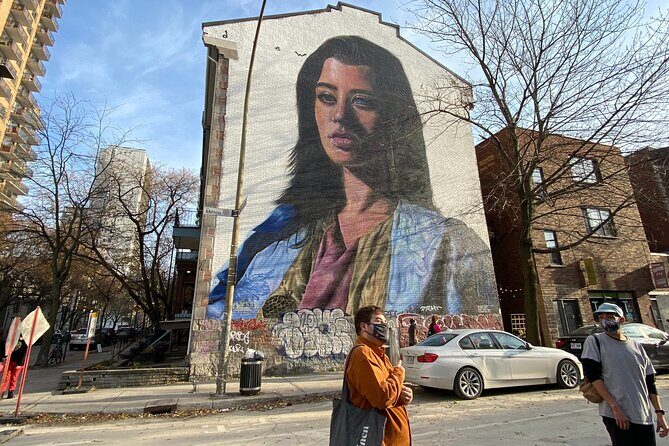
The tour’s second stop is the Leonard Cohen mural, and it’s treated like a featured moment. It’s only about 10 minutes, but that short time is used for meaning, not just looking.
Leonard Cohen is a cultural anchor for Montreal, so this mural works like a bridge between local identity and the wider world of street art. You learn how the mural’s size and presence shape how people read it from the street. And because street art often carries social or political undertones, this stop helps you understand how a cultural icon can be framed in a street-art language.
Even if you already know Cohen’s name, this stop is still useful because you’re not just appreciating the figure—you’re learning the mural’s place in the surrounding art scene and why it fits the tour’s main theme: public art as civic storytelling.
Stop 3: Saint-Laurent Boulevard and why it’s Montreal’s street-art spine
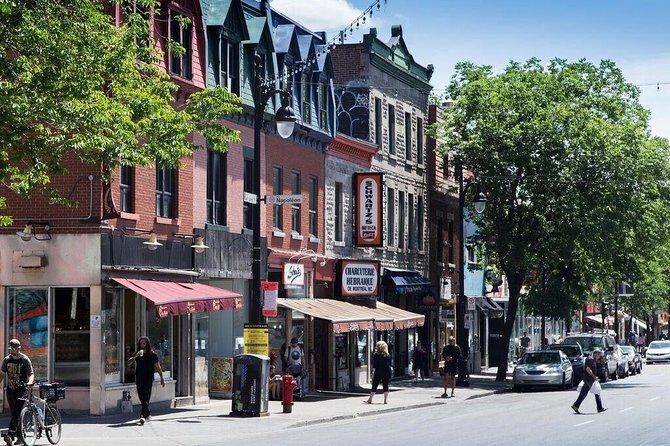
Then you shift to the big corridor: Saint-Laurent Boulevard, the long artery that connects the city’s east and west sides. The tour explains why this matters. Saint-Laurent became a gathering line early on, and over time it turned into a place where immigrant communities helped shape daily life. That matters for street art because artists often respond to neighborhoods the way journalists respond to current events.
On this stretch, you’ll see murals created by both local and international artists. The corridor is famous for scale too. The tour can include everything from modest pieces you’ll only notice once your eyes are tuned to street styles, to massive murals with the kind of height that makes you stop walking for a second.
The tour also references the long-running mural festival energy that helped Saint-Laurent become the country’s premier street-art corridor. That festival context isn’t just trivia. It helps you understand why some pieces feel like permanent public statements while others look like chapters in a changing story.
If you want to take your own walk after the tour ends, Saint-Laurent is a smart place to start. It’s also where your “what am I looking at?” skills improve quickest, because the density of murals keeps feeding your attention.



What you learn: techniques, meaning, and local vs. international artists
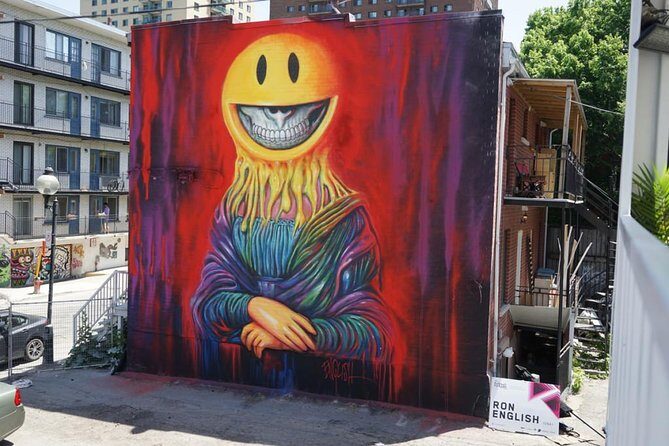
This tour’s education portion is one of its biggest strengths. You’re not just hearing facts. You’re learning a way to read a mural.
The guide helps you connect:
- Techniques (examples include wheat-paste styles and other street approaches)
- Meaning (cultural and political messages, and how they show up visually)
- Artist background (how local and international creators can share space in Montreal’s street-art conversation)
- Scale (how small installations and enormous works communicate differently)
You’ll also hear stories about how the scene works as a living gallery. Montreal’s mural culture changes—new pieces go up, old ones get layered over time, and the neighborhood context shifts. Guides such as Marie, Chris, Gabriela, Mel, Rod, and Rodrigo show up in the reviews as people who keep those stories lively, with real enthusiasm for how street art functions here.
One more thing I appreciate: the tour doesn’t pretend street art is one category. It treats graffiti and murals as separate languages that still belong to the same public conversation.
Group size, pace, and what to wear (so you enjoy every stop)
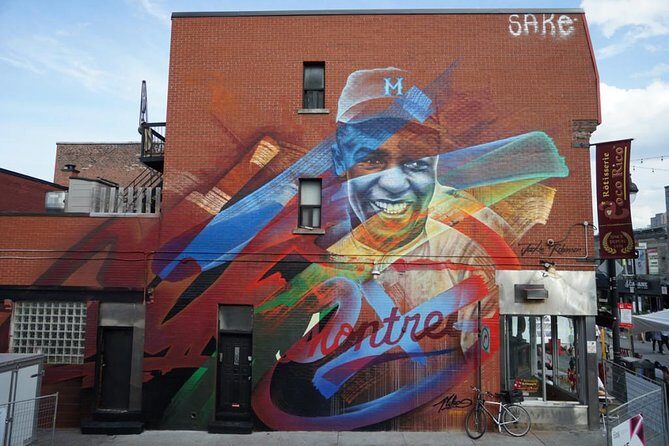
The tour limits the group to 10 people, which is a big deal on a walking tour. With a smaller group, you get better sightlines, and you don’t feel rushed at each wall.
Pace is described as easy-to-moderate, but it’s still a walk. You’ll be on your feet for the full two hours with stops along the way. Plan for sidewalks, alley turns, and stairs you might encounter in neighborhood streets.
Practical suggestions:
- Wear comfortable shoes with grip.
- Bring a light layer even in warmer months; neighborhoods can change temperature fast.
- If you rely on your phone for directions, keep your map ready after the tour—your guide will give a recommendations list, and you’ll want to act on it.
And if you travel with a service animal, the tour allows them. The meeting point is also near public transit, so you don’t have to worry about parking or transfers.
Price and value: what $30.10 gets you in real terms
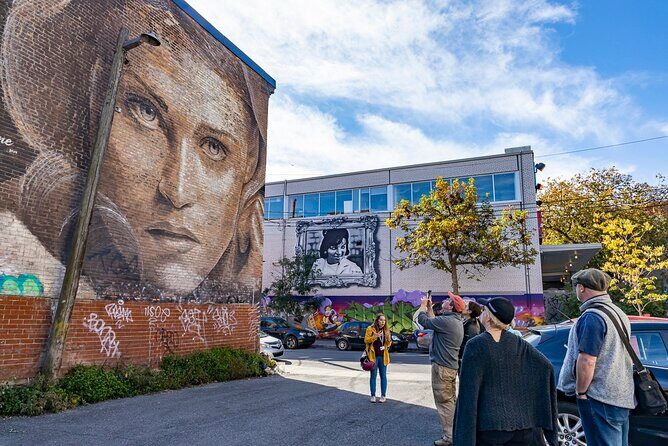
At $30.10, this tour isn’t priced like a “museum ticket.” It’s priced like a guided neighborhood experience. For that money, you get:
- A local guide and professional guide
- A walking route planned around three major zones
- A list of personal recommendations afterward
- Context about techniques and why murals show up where they do
The value comes from interpretation. If you walk Saint-Laurent on your own, you can absolutely see murals. But you’ll miss a lot of the “why this, why here” part—especially when you’re dealing with political themes, artist references, and street-level styles.
This also helps with decision-making later. Once you learn how to read what you’re seeing, you can spot the next mural without needing someone to point it out.
Where to go after: using the recommendations list the right way
The tour includes a list of personal recommendations for restaurants and bars. I like that because it turns your mural visit into a full neighborhood outing rather than a standalone two-hour stop.
You’ll finish near Park of Portugal, which is a smart area to explore on foot while the day still feels active. It’s also a great moment to switch from art mode to food mode.
One of the guide tips that pops up in the reviews includes a recommendation for the ice-cream shop Ripples. Even if you pick a different place, the point is the same: your guide’s suggestions help you avoid eating on autopilot in tourist traps.
If you’re also the type who likes adding another similar experience the same day, it pairs well with food walks in the same general vibe—short stops, local flavor, and more street-level sightseeing.
Booking this original Montreal mural tour: should you choose it?
I’d book this tour if:
- You want a guided route on Saint-Laurent Boulevard that helps you read murals instead of just snapping photos.
- You like walking neighborhoods where street art is dense and varied.
- You appreciate a small-group format (max 10) and real conversation with your guide.
- You’re visiting for a short time and want to see both small street installations and big mural-scale works in about two hours.
I’d think twice if:
- You hate walking or you need lots of sitting time. This one keeps you moving.
- You’re going during bad-weather odds. The tour requires good weather, so plan to check conditions.
If you want the original, classic version of a Montreal mural walk—focused on the Saint-Laurent corridor—it’s a strong choice.
FAQ
How long is the Montreal Mural Arts Tour?
The tour lasts about 2 hours.
What does the tour cost?
It costs $30.10 per person.
Is the tour offered in English?
Yes, it is offered in English.
How big is the group?
The tour is limited to a maximum of 10 travelers.
Where does the tour start and end?
It starts at 3526 Boul. Saint-Laurent, Montréal, QC H2X 2V1, Canada, and ends at Park of Portugal, Rue Marie-Anne, Montréal, QC H2W 1Z8, Canada.
Is it a walking tour?
Yes, it involves a moderate amount of walking, and you’ll be on your feet the whole time.
What’s included in the price?
Included are a local guide and professional guide, access to the original street art tour in Montreal, and a list of personal recommendations.
What happens if the weather is bad?
The experience requires good weather. If it’s canceled due to poor weather, you’ll be offered a different date or a full refund.
Can I get a refund if I cancel?
Yes. You can cancel for free up to 24 hours in advance for a full refund. Canceling less than 24 hours before the start time is not refundable.
If you want, tell me your travel dates and where you’re staying, and I’ll suggest the best way to build this mural walk into a realistic one-day or two-day Montreal plan.