REVIEW · VANCOUVER
Vancouver Science World Ticket
Book on Viator →Operated by Science World · Bookable on Viator
Science that you can touch. At Vancouver’s Science World, BodyWorks and hourly Live Science at Centre Stage turn big ideas into hands-on moments, and I like how you can move at your own pace. My main caution: this place is strongly aimed at kids, so adults and older teens may need a longer attention plan.
I also like the practical feel of the visit. Your mobile ticket gets you in, the site is close to public transit, and the building is kept clean and easy to navigate. One more heads-up: the OMNIMAX Theatre is currently closed for renovation, so plan your “big screen” expectations accordingly.
If you’re traveling with younger kids, this is where Science World really shines. The Wonder Gallery for kids under 5, plus kid-favorite interactive corners like hands-on play and even wheelchair racing, make it easier to keep everyone engaged without turning your day into a constant search for snacks.
In This Review
- Key things to know before you go
- Science World in 2 to 3 hours: what the day feels like
- Entry, mobile tickets, and the reality of the main line
- Centre Stage live demos: the easiest way to structure your visit
- BodyWorks and the “try-it” galleries that kids love
- Creative Technology, Eureka, and puzzles: where older kids can get traction
- Sara Stern Gallery and connecting with nature
- Tinkering Space at the WorkSafeBC Gallery: learning by building
- The kid-under-5 win: Wonder Gallery
- Ken Spencer Science Park: seasonal reality check
- Feature Gallery Earth Matters and the moving-target exhibits
- OMNIMAX Theatre closure: plan for a screen-free visit
- Price and value: is $26.70 worth it?
- Who this is best for (and who should think twice)
- Smart tips so your day goes smoother
- Should you book the Vancouver Science World Ticket?
- FAQ
- How long is the Vancouver Science World ticket experience?
- What is included with the ticket?
- Is the OMNIMAX Theatre included?
- Is the ticket available on mobile?
- Are service animals allowed?
- Is Science World near public transportation?
- What is the price and is GST included?
- Can I cancel for free?
Key things to know before you go

Hands-on galleries across body, tech, nature, and puzzles
Hourly Live Science demos at Centre Stage to anchor your visit
Younger-kid areas (especially under 5) get the best results
OMNIMAX Theatre is closed for renovation so don’t build your schedule around it
Expect some downtime and occasional crowding and plan around energy levels
Science World in 2 to 3 hours: what the day feels like
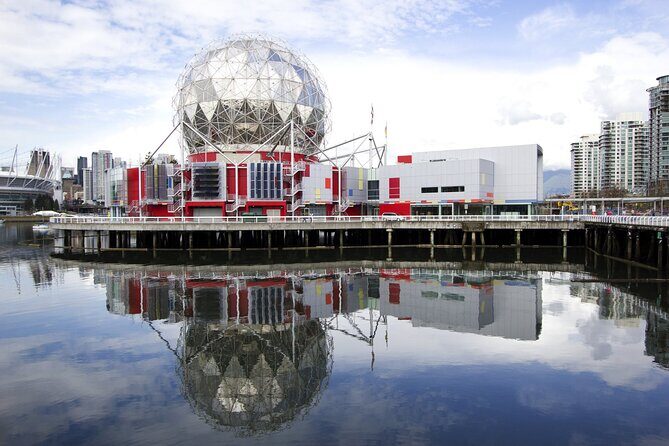
Science World is not a quiet museum. It’s an action-filled science center where you learn by trying, pressing buttons, building, testing, and playing with ideas in a physical way. If you have kids, you’ll feel that instantly: there are lots of interactive zones, and even adults tend to get pulled into the activities once they see how hands-on everything is.
A visit usually fits into a 2 to 3 hour window if you’re moving with intention. With younger kids (especially preschool through early elementary), it can stretch longer because there’s always one more thing they want to repeat. If you’re going with a child who’s older, you’ll want to skim the layout first, then pick a few galleries to go deep on instead of trying to do everything.
The value question is simple: you’re paying for general admission, and the payoff is the chance to touch science rather than just read about it. At $26.70 per person plus about 5% GST (roughly CAD $1.79), the ticket works best when you arrive ready to spend time in multiple galleries.
A few more Vancouver tours and experiences worth a look



Entry, mobile tickets, and the reality of the main line

Your ticket is a mobile pass, and in practice that matters because it reduces friction at the door. When everything is working as intended, you just scan your pass on entry and go straight to exploring.
That said, I’d plan for human error the way you would for any busy attraction. One common headache is ticket matching if staff can’t locate a reservation or if your phone is glitchy. The good news: the team can still help you get in, even when there’s a mix-up. Bring your reservation info and keep your phone charged, and you’ll save time and stress.
Also keep expectations realistic about lines. Even when you have the right pass, entry areas can take longer during peak family hours. If you want a smoother start, aim for earlier in the day and keep a little buffer in your schedule.
Centre Stage live demos: the easiest way to structure your visit
Centre Stage is your natural “anchor.” The setup is built around hourly Live Science demonstrations, which give your day a rhythm. Rather than bouncing randomly from gallery to gallery, you can time your explorations so you’re not always waiting for the next show.
This is a smart move for families because it creates a shared moment with a clear payoff. For kids, it turns science into something that happens right in front of them. For adults, it’s a break from the constant decision-making of where to go next.
Practical tip: treat the live demo as a central meeting point. If your group tends to split up, agree on where you’ll reunite right before the next show starts.
BodyWorks and the “try-it” galleries that kids love

BodyWorks Gallery is one of the clearest examples of why Science World works. Instead of only explaining how the body works, it encourages you to interact with the concept. This is especially effective for families because it’s both educational and instantly understandable.
You’ll also find a pattern across the other hands-on areas: the science is wrapped in activities that keep kids busy. That’s a big part of the value here. You’re paying for a built-in engagement system, not just exhibits on walls.
If you’re traveling with an older child, you might want to balance BodyWorks with other galleries that lean more toward building and problem solving, like Creative Technology and Tinkering Space (more on those below). That way, the day doesn’t skew too heavily toward the very young end of the spectrum.
Creative Technology, Eureka, and puzzles: where older kids can get traction

Creative Technology Gallery is tied to video game development, and it’s the kind of exhibit that grabs teens and older children who like tech or interactive design. Even if your child doesn’t think of themselves as a gamer, the “how it’s made” angle often lands well because it turns curiosity into something you can test.
Eureka! is designed as a high-energy play-to-learn area. If your child prefers motion and challenge over reading, this is likely a strong stop. The best part is that it supports different learning styles: some kids want to figure out how to beat a challenge, while others just want to keep trying until it clicks.
Puzzles and Illusions is another useful counterweight. It gives you a chance to slow down and test your own brain. It’s also a good “reset” when kids need a break from physical play without losing the science theme.





Sara Stern Gallery and connecting with nature

Search: Sara Stern Gallery takes a nature-and-biology approach, from big ideas down to the small details. If you’re looking for something a bit calmer than the most frantic kid zones, this gallery often helps you do that without losing the interactive spirit.
This is also a nice option for families who want science that feels grounded in the real world. It’s not just abstract facts. It’s curiosity you can point at: how living things work, how the natural world reveals itself, and why scale matters.
Tinkering Space at the WorkSafeBC Gallery: learning by building

Tinkering Space is where the day gets practical in a different way. The idea is experimental construction, with a big emphasis on learning through trying. That problem-solving mindset is useful for kids and honestly for adults too, because building experiments helps you see that mistakes are part of the process.
If your group includes a child who gets restless in strictly “watch and listen” settings, Tinkering Space is a strong choice. It rewards persistence. It also gives families something to do together without the constant need for supervision over something fragile.
The kid-under-5 win: Wonder Gallery

Wonder Gallery is set up for kids under 5, and that age range matters. This area includes soft crawling spaces, a water table, a mess pit, and rope climbing designed for younger energy levels. If you have toddlers or preschoolers, this is often the stop that makes the whole outing feel worth it.
It’s also a good place to avoid power struggles. When young kids have a dedicated space that matches their physical needs, parents tend to get more breathing room, and the child’s curiosity stays satisfied.
If your group includes older kids too, you may want to create a plan for rotations. Otherwise the younger sibling can steal the full attention of everyone, and the older child may drift into the “not enough for me” zone.
Ken Spencer Science Park: seasonal reality check
Ken Spencer Science Park is all about connecting with the living world, but it has a seasonal closure window: it’s closed from October through March. If you’re visiting during those months, you’ll want to mentally shift your day toward the indoor galleries.
This is one of those details that can change your experience without warning if you only glance at a broad description. In shoulder seasons, it’s worth checking ahead so you don’t show up expecting a specific outdoor component.
Feature Gallery Earth Matters and the moving-target exhibits
The Feature Gallery listing includes Earth Matters, scheduled until Jan 9, 2025. Since exhibits can change, treat that as a clue about the type of content you might find rather than a guarantee of what will be there on your exact date.
Even with shifting galleries, Science World’s permanent sections are a strong backbone. So you’re rarely stuck if a feature gallery isn’t exactly what you expected. The bigger picture is still hands-on science across multiple themes.
OMNIMAX Theatre closure: plan for a screen-free visit
One disappointment worth calling out: OMNIMAX Theatre is currently closed for renovation. If you were counting on a film as part of your timing, your best move is to treat the rest of the galleries as the main event.
This matters most if you’re visiting with a younger child who might burn energy quickly. With the theatre unavailable, you’ll want to lean into the most interactive parts of the indoor space and schedule your breaks around the demo times and gallery transitions.
Price and value: is $26.70 worth it?
At $26.70 per person for general admission, the ticket cost feels reasonable when you use the space the way it’s meant to be used. Science World isn’t trying to be a quiet collection of information; it’s offering a day of hands-on activities across multiple themes.
Where value goes up:
- You travel with kids who enjoy interactive stations and live demonstrations
- You plan to spend the full 2 to 3 hours, not just pass through
- You mix high-energy areas with calmer ones like puzzles and nature-focused galleries
Where value can feel weaker:
- Your group is mostly adults or older kids who prefer traditional museums
- You were hoping for OMNIMAX as a main attraction
- You arrive late in the day and you end up skipping the best exhibits
Also, if you’re budget watching, remember the GST is additional. It’s a small add-on, but it matters when you’re comparing tickets.
Who this is best for (and who should think twice)
Science World is at its strongest with families, especially with kids from preschool through early teens. The interactive galleries, the live demos, and the under-5 Wonder Gallery combine into a day that keeps energy moving in the right direction.
For a younger child, it’s easy to justify spending time because the exhibits are made to be used, not just looked at. For older children, you can still have a great visit, especially if you target the tech and build/problem-solving areas and time the live science.
For couples without kids, or for older teens who already have strong science interests and want more depth, it can feel like a lot of activity with less that’s specifically tailored to adult-style learning. You might still enjoy it, but you’ll want to treat it more like a playful science day than a museum-style experience.
Smart tips so your day goes smoother
First, decide what success looks like before you enter: is the goal interactive play for younger kids, or do you want a few targeted galleries for older ones? That one choice prevents the usual “we did everything but nothing fully” feeling.
Second, plan around Centre Stage. If you build your day around the hourly live demos, you get structure without feeling rushed.
Third, expect some maintenance hiccups. A few exhibits may not be running at 100% all the time, so keep a flexible mindset. If one station is down, move on to the next theme and come back later if you have time.
Fourth, manage crowds with pacing. Family centers can get lively, especially when kids are running around. You don’t need to avoid busy times entirely, but if you’re there during peak hours, give yourself extra space and don’t schedule anything too tight afterward.
Finally, don’t forget the practical side. One nice detail is that the food court is set up for real family needs, and it’s described as having a good assortment of food. Use it as your energy reset and keep your visit moving.
Should you book the Vancouver Science World Ticket?
Book it if you want a straightforward, family-friendly science day with hands-on galleries, live science demos, and a dedicated space for younger kids. The ticket is a good value when you’re ready to spend time inside and let your child lead the exploration.
Consider skipping or adjusting expectations if your group is mostly adults or older kids who want a more traditional museum experience, or if OMNIMAX was a key reason for visiting. Also, if you’re traveling in the Oct–Mar window, remember the outdoor Ken Spencer Science Park is closed.
If your plan includes preschool or early elementary kids, I’d say this is an easy yes. It’s the kind of place where “learning” feels like play, and everyone leaves with stories that sound like experiments, not worksheets.
FAQ
How long is the Vancouver Science World ticket experience?
It runs about 2 to 3 hours, approximately.
What is included with the ticket?
The ticket includes general admission.
Is the OMNIMAX Theatre included?
No. The OMNIMAX Theatre is currently closed for renovation.
Is the ticket available on mobile?
Yes, you receive a mobile ticket.
Are service animals allowed?
Yes, service animals are allowed.
Is Science World near public transportation?
Yes, it’s near public transportation.
What is the price and is GST included?
The price is listed as $26.70 per person, and GST is not included (about 5%, around CAD $1.79).
Can I cancel for free?
Yes. Free cancellation is available up to 24 hours in advance for a full refund.