REVIEW · VANCOUVER
Vancouver: Extended Scenic Panorama Seaplane Tour
Book on GetYourGuide →Operated by Harbour Air · Bookable on GetYourGuide
Flying over Vancouver feels like a postcard. This extended panorama seaplane gives you 45 minutes total with about 35 minutes in the air, so you don’t just skim the city. Instead, you get a broad view of British Columbia’s city + coast mix in one tight outing.
I especially like that you launch from Coal Harbour and see the skyline in context, then keep going over water and islands that are hard to reach any other way. You also loop past major landmarks tied to the city’s big moments, with BC Place on the route for sports-fan views.
The main trade-off is that this isn’t a heavily narrated tour. Seating is also snug and the plane is loud, so plan for comfort and photos, not sightseeing comfort like a bus tour.
In This Review
- Key things to know before you go
- Extended Panorama Seaplane Tour: What you’re really buying with $198
- Where the experience starts: Vancouver Harbour Flight Centre at 1055 Canada Place
- The first flight arc over Vancouver Downtown: getting your bearings fast
- Stanley Park from above: forests meet shoreline
- Horseshoe Bay, Bowen Island, and Gambier Island: the roadless view
- North Shore to the Coast Mountains: what “remote inlets unreachable by road” looks like
- The loop back over Sunshine Coast: a final sweep before landing
- BC Place and Science World: sports-fan and family-friendly downtown angles
- Seaplane reality check: noise, snug seating, and how to make it easier
- The narration question: what you’ll miss if you want a full guide voice
- Where this tour fits best: cruise day, short stay, and bucket-list seekers
- Weather, routes, and why timing still matters in Vancouver
- Tips to get the best photos and the most comfortable flight
- Value check: is the extended time worth it?
- Who should book this and who might skip it
- Should you book the Vancouver Extended Scenic Panorama Seaplane Tour?
- FAQ
- How long is the Vancouver extended scenic panorama seaplane tour?
- Where does the tour start?
- How early should I arrive for check-in?
- What ID do I need to fly?
- Is this tour narrated with headset commentary?
- What sights are included in the route?
- Does the flight include the mountains and islands outside the city?
- Is parking included at the terminal?
- Is this a good option for cruise passengers?
Key things to know before you go
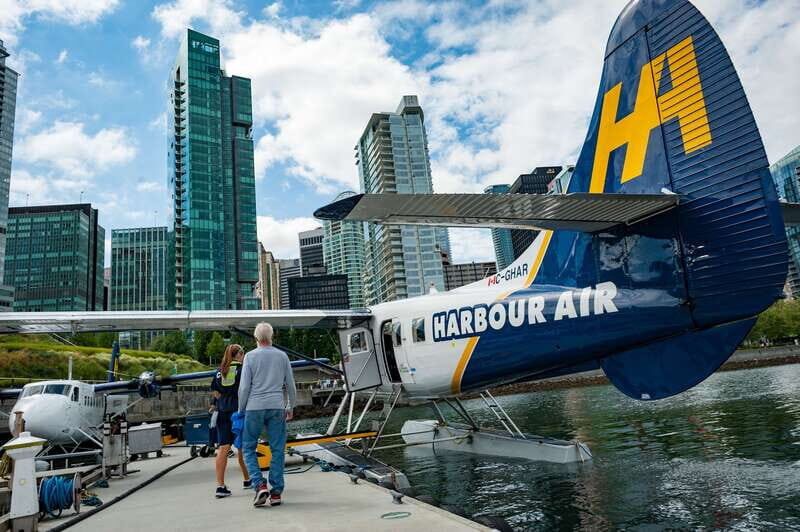
- Coal Harbour departure: You start right at the water, with an easy city location near the action.
- More airborne time than similar tours: About 35 minutes flying inside a 45-minute overall experience.
- Big variety in one loop: City, ocean, forested islands, mountain peaks, and remote inlets.
- Landmarks plus sports views: You’ll fly past BC Place and other downtown highlights from above.
- Not a commentary tour: Expect a lot of scenery, less guided narration.
- Vintage seaplane feel: Some aircraft are old-school (which also means noise and compact seating).
Extended Panorama Seaplane Tour: What you’re really buying with $198
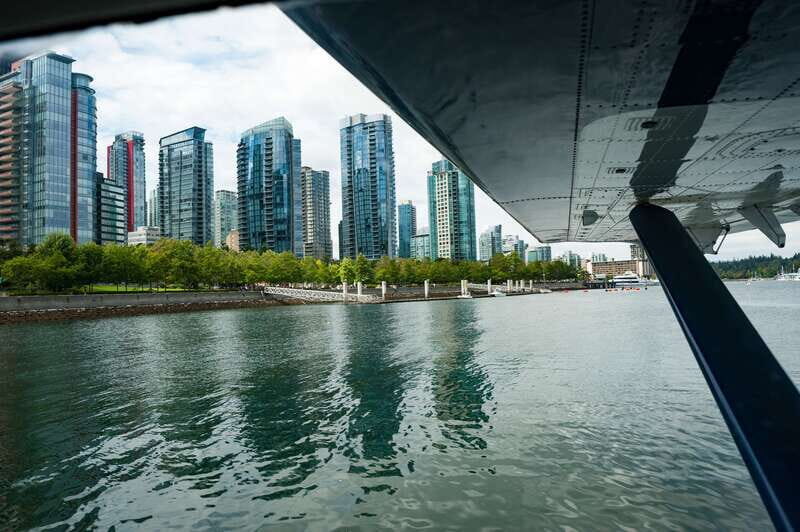
At $198 per person, this isn’t the cheapest way to see Vancouver. You’re paying for two things: the view from the sky and the fact that a seaplane can go where roads don’t. A long sightseeing day can still feel limited if you’re stuck on land. Here, you’re flying over ocean, forests, and remote inlets that you simply can’t reach by road (and often can’t reach by boat fast enough for a day stop).
The “extended” part matters for value. Many short air tours give you only a taste of the region. This one stretches the experience to 45 minutes total, with about 35 minutes in the air, and that extra time adds up when you’re trying to photograph the city skyline, the shoreline, and the mountain backdrop in a single flight.
You can also read our reviews of more tours and experiences in Vancouver.


Where the experience starts: Vancouver Harbour Flight Centre at 1055 Canada Place
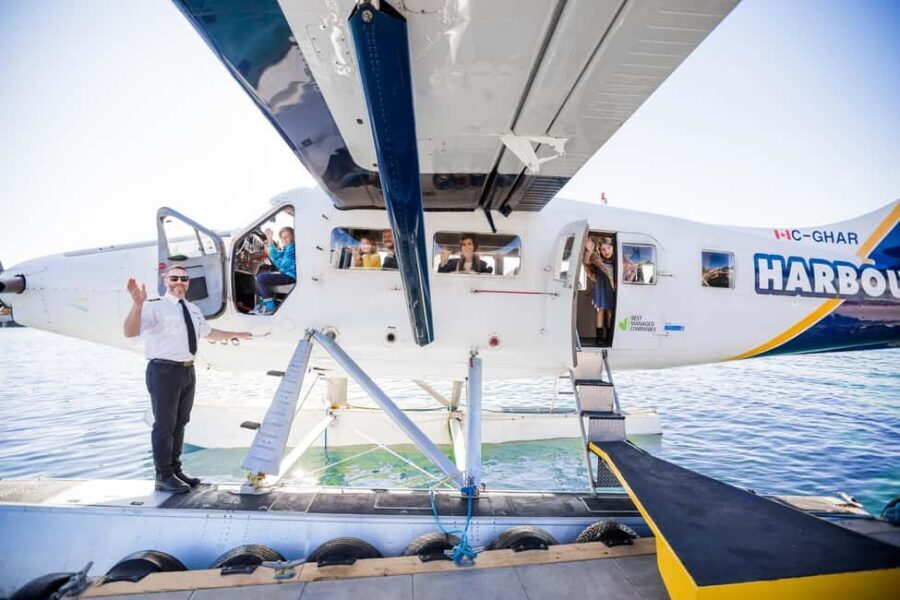
Your meeting point is the Harbour Air terminal at 1055 Canada Place, located at the water level by the sea wall, below the Olympic Cauldron. In practice, it’s a lot easier than it sounds because it’s built into the downtown waterfront.
Check in timing is important. Plan to arrive at the terminal at least 40 minutes before the scheduled departure. You also need to be fully checked-in 20 minutes before the cutoff, or you may not be able to board and you won’t get your fare back.
If you’re also doing a cruise day, this location is a big part of why the tour works. You’re close to downtown, so it can feel like a premium local “connector” between shore time and getting back aboard.
The first flight arc over Vancouver Downtown: getting your bearings fast
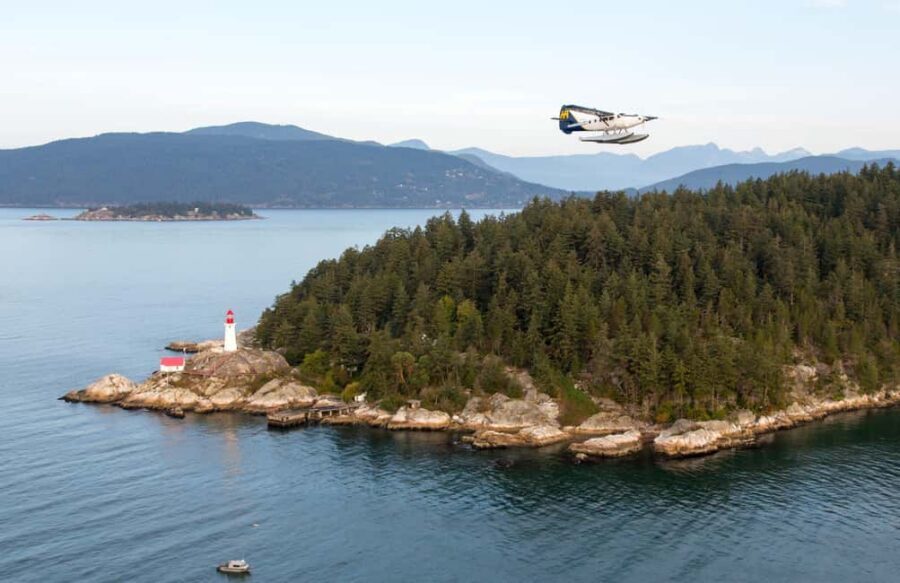
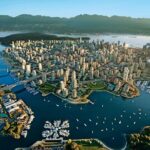
After you depart from Coal Harbour, the route focuses on downtown first. You’ll get a guided, high-window look at the city from above, including a pass over the waterfront and core skyline areas.
You’ll also fly past what matters for first-time orientation. Think: the kind of angles that help you understand where everything sits. From the air, you can see how the downtown grid meets the water, then where the neighborhoods spill toward the North Shore.
This early part is where the photos usually happen quickest. If the sky is clear, downtown + waterfront looks sharp and layered. Even if clouds roll in, the contrast between glass towers and the dark blue water still gives you something worth keeping.
Stanley Park from above: forests meet shoreline
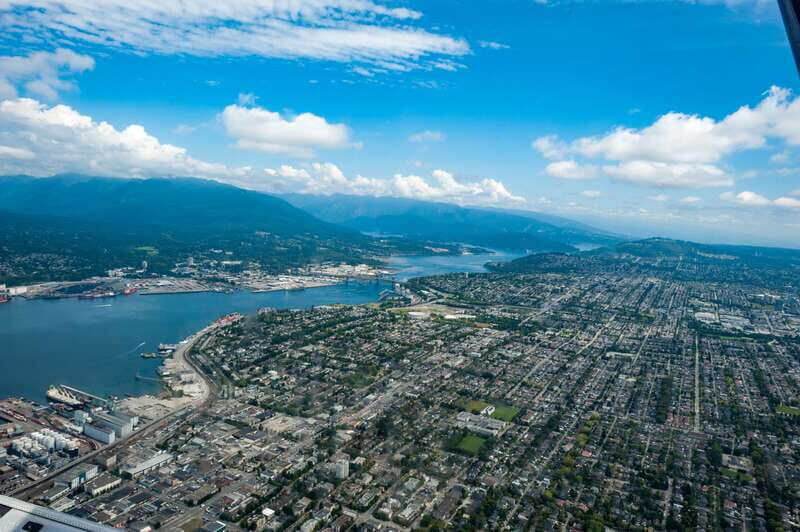
Next up is Stanley Park, which is one of those places that’s beautiful from the ground but turns into something else from a seaplane window. You get a bird’s-eye view of how the park forms a green barrier between the city and open water.
What makes this stop special is the shape. From above, you can track the coastline contours and see how the park’s forested areas relate to the harbors and inlets. It’s also a nice reminder that Vancouver’s “big city” feeling is paired with real wilderness right next to it.
A practical note: the plane is small, so seats and window angles matter. If you care about photography, aim for the window side when boarding. If you have the option, front seats tend to be easier for framing.
Horseshoe Bay, Bowen Island, and Gambier Island: the roadless view
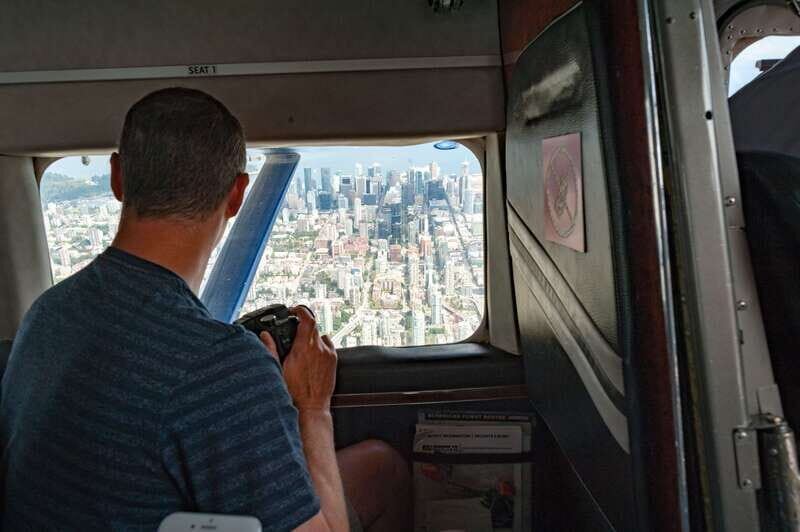
After the downtown-to-park portion, the tour starts swinging you toward the water-side neighborhoods and offshore islands, including Horseshoe Bay, Bowen Island, and Gambier Island.
This is where the seaplane really justifies itself. Ferries and boats exist, but from the sky you get the full “system” in one sweep: island edges, channel colors, shoreline curves, and the way the coastline changes texture as you move away from the city.
You can also start spotting the geography that explains why Vancouver feels so different from other coastal cities. The water isn’t uniform, and the islands break it into smaller scenes. It’s visual variety without changing time zones or taking multiple day trips.
If you’re hoping to tick off the classic scenery checklist (city first, then wilderness), this is the section that makes it feel real instead of staged.


North Shore to the Coast Mountains: what “remote inlets unreachable by road” looks like

The longer route pushes north along rugged coastline and toward mountain scenery. The description highlights a seasonal route that may include parts of Howe Sound, dramatic Coast Mountains peaks, and remote inlets unreachable by road or boat.
Even without a lot of narration, you’ll recognize why people love these stretches. From above, inlets look like fingers of water reaching into the land. Forests appear darker and denser, while mountain tops show up as bright caps against the valleys.
This is also the part that depends most on weather. Vancouver’s conditions can change quickly, and clouds can soften the view of the mountain ridges. When the air is clear, though, you’ll often get the kind of crisp layering that makes a single photo feel like a whole day of sightseeing.
The loop back over Sunshine Coast: a final sweep before landing
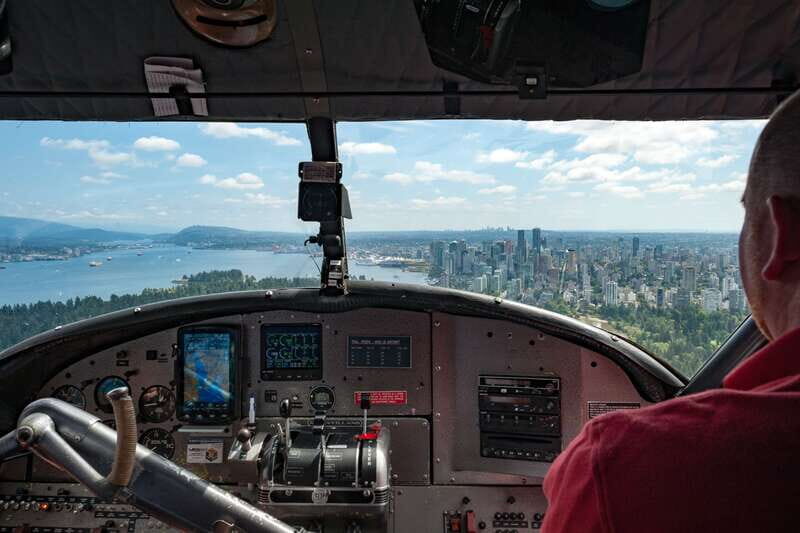
You return with one more pass toward the Sunshine Coast area, looping back over water, mountains, and coastline patterns. The route is designed so you get multiple “types” of scenery instead of repeating the exact same line.
From a planning standpoint, this final sweep is a relief. It’s the segment where you can compare what you saw earlier: city vs. islands vs. mountain mass vs. ocean texture. By the time you’re approaching landing again, the trip feels complete rather than rushed.
BC Place and Science World: sports-fan and family-friendly downtown angles
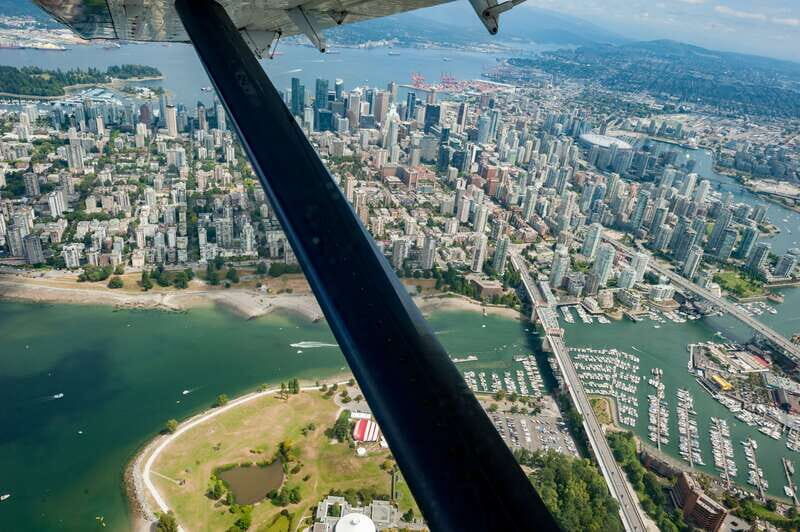
One of the best “why this one” details is that you don’t just fly over downtown generically. BC Place is part of the itinerary, along with Science World at TELUS World of Science.
That matters if you’re timing your trip around the 2026 big soccer games. Even if you’re not a hardcore soccer fan, it’s still a smart way to spot an important Vancouver landmark from a perspective most people never see.
If you’re visiting with family, the Science World pass can also be a nice “that’s the place” moment. It turns the flight into more than scenery—it becomes a memory of specific downtown touchpoints.
Seaplane reality check: noise, snug seating, and how to make it easier
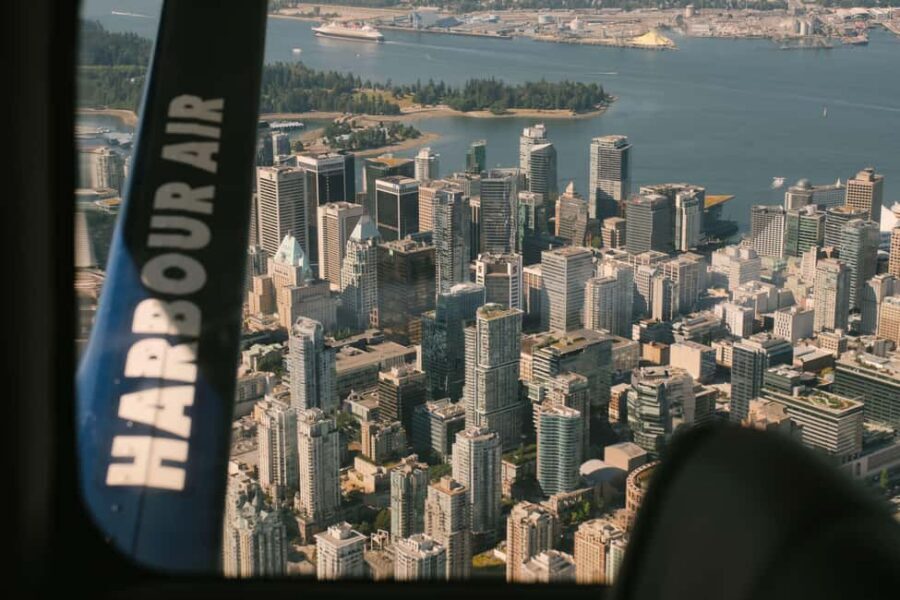
A seaplane sounds magical, and it is. But you should go in knowing the practical side.
First, it’s loud. Multiple experiences note that the aircraft noise is noticeable, and some passengers used earplugs or headphones. If you’re sensitive to noise, pack ear protection. The cost of small comfort items is way lower than trying to enjoy a flight while your ears ring.
Second, seating can feel tight. One common theme is compact seating, including a cramped feel near the front. If you’re tall or broad, consider choosing seats early if the operator offers any selection, or at least brace for a snug fit and shorter reaching space.
Third, window time is part of the game. People often get the best photos when they’re quick at positioning themselves. Bring your phone/camera strap so you don’t fumble with gear while the plane banks.
The narration question: what you’ll miss if you want a full guide voice
Here’s the honest trade-off. This experience is very heavy on visuals and lighter on narration.
You might hear the pilot talk, and you may get some help with what you’re passing. But the overall setup doesn’t seem built as a continuous commentary experience. Many people are surprised by the lack of onboard storytelling for every sight.
So if you want a running explanation like a walking tour, you may find yourself wishing for more. If that matters, treat it as a “pilot-led flight” where you focus on watching, photographing, and asking the pilot questions when you can.
Where this tour fits best: cruise day, short stay, and bucket-list seekers
This works especially well when your Vancouver time is tight. It’s short enough that you can pair it with downtown strolling, markets, or a harbor walk afterward. It’s also a smart add-on for cruise travelers who want a premium local view without losing half a day to ground transfers.
If you’re a first-time visitor, this flight is a fast way to understand the geography. If you’ve been before, it still refreshes your sense of place because the skyline and coastline look different when you’re above the waterline.
And if you’ve had seaplane flights on your bucket list, this is the version that gives you enough time to feel like you actually went somewhere, not just around the block.
Weather, routes, and why timing still matters in Vancouver
Vancouver weather can be moody, and this type of flight can respond to conditions. The route is described as seasonal and follow-a-pilot style, which means you should expect some variation.
If you’re scheduling multiple activities in one day, keep your plans flexible. You’ll have a better experience if the sky is clear enough to show mountain shape and coastline contrast.
When the weather is good, the views can be stunning enough that you’ll wish you had packed more photo batteries. When the weather is iffy, you’ll still get the seaplane novelty and a strong aerial look at the downtown-to-coast geography.
Tips to get the best photos and the most comfortable flight
I’d plan around comfort first, photos second, because the flight is short.
- Bring ear protection since the plane can be loud for the duration.
- Choose a seat with the clearest view if you can; window angles matter on banks.
- Keep your phone/camera ready when you transition from downtown to islands, since those changes often happen quickly.
- If the pilot offers to point out what you’re seeing, ask early so you’re not distracted later.
Also, if you can, be ready to move quickly for boarding. People who get positioned fast usually end up with better angles.
Value check: is the extended time worth it?
In plain terms: you’re paying for more flight time and more variety.
You get a 45-minute total experience with about 35 minutes of actual flying. That extra 15 minutes of flight time compared with shorter versions is exactly what you want when you’re trying to see both the city landmarks and the out-in-the-water scenery. At this price, cutting time would make the tour feel like a blur.
The other value angle is what’s included. The experience lists airfare, all fees, and taxes, and you’re not adding a bunch of extra costs besides what you need for personal items. Parking at the terminal is not included, so if you’re driving, factor that in.
Who should book this and who might skip it
This is a great match if you:
- Want an aerial view of Vancouver plus coastline and islands in one shot
- Have limited time (especially cruise travelers)
- Prefer seeing geography from above instead of only on foot
You might consider skipping or adjusting expectations if you:
- Want a fully narrated tour for every landmark
- Are very sensitive to noise or need lots of personal space during transportation
- Are going on a day when you can’t afford weather uncertainty
Should you book the Vancouver Extended Scenic Panorama Seaplane Tour?
If your main goal is to see Vancouver from the sky with real reach beyond downtown, I think this is an easy yes. The extra flight time is what turns it from a quick thrill into a complete “city to coast to mountains” experience. You also get a rare combination of big-city landmarks and roadless scenery, with BC Place in the mix if you’re in town for the 2026 soccer games.
Just go in expecting what it is: a short, tight, photo-friendly seaplane flight with limited narration, not a detailed guided lecture. If that fits your style, you’ll walk away with images and a sense of Vancouver’s geography that you can’t get from land tours.
FAQ
How long is the Vancouver extended scenic panorama seaplane tour?
The experience is 45 minutes total, with an approximately 35-minute flight.
Where does the tour start?
You meet at 1055 Canada Place at the Vancouver Harbour Flight Centre (Unit #1 Burrard Landing), below the Olympic Cauldron.
How early should I arrive for check-in?
Check in at least 40 minutes before flight time, and be fully checked-in 20 minutes before the scheduled departure.
What ID do I need to fly?
You need a passport or ID card. For passengers 18 and above, you must show either one piece of valid government-issued photo identification or two pieces of government-issued identification without a photograph.
Is this tour narrated with headset commentary?
The tour is not presented as a fully narrated experience. Some passengers find the lack of ongoing commentary a downside, while others note that the pilot may explain the route during the flight.
What sights are included in the route?
The route includes downtown Vancouver and passes over Stanley Park, Horseshoe Bay, Bowen Island, Gambier Island, BC Place, and Science World at TELUS World of Science.
Does the flight include the mountains and islands outside the city?
The flight is described as taking you north over coastline and potentially including Howe Sound islands, Coast Mountains peaks, and remote inlets that are unreachable by road or boat.
Is parking included at the terminal?
No. Parking is not included.
Is this a good option for cruise passengers?
Yes. It’s specifically described as an excellent add-on for cruise travelers to maximize time in Vancouver, whether you’re starting or ending a voyage.