REVIEW · VANCOUVER
Caribou – Discover the Best of the Rockies (8-Days)
Book on Viator →Operated by Moose Travel Network · Bookable on Viator
Eight days of Rockies icons, on one route. You’ll sweep from the Sea-to-Sky corridor into the big-name national parks, with lots of short walks and photo stops along the way. A professional driver-guide keeps the schedule moving and helps you connect with other adventure-minded travelers in a small group.
What I like most is the Indigenous-focused moments built into the trip, from lunch at Kekuli Café to the Squamish Lil’wat Cultural Centre in Whistler. I also like the way the parks time stays active: Lake Louise and Moraine Lake are quick stops, while Icefields Parkway pullouts and glacier and waterfall walks give you something to do. One possible drawback: you’ll spend a lot of time on the bus, and the overnight stays are in hostel dorm-style rooms.
In This Review
- Key highlights you will actually feel
- A Vancouver-to-Rockies loop with a real driver-guide
- Price and what you’re really paying for at $2,042.80
- Hostel dorms, early mornings, and long bus days: the trade-off
- Day 1: Bridal Veil Falls rainforest walk to Revelstoke
- Day 2: Golden Skybridge plus the Banff gateway
- Day 3 on the Icefields Parkway: Lake Louise to Peyto
- Day 4: Jasper National Park with Athabasca Glacier and two falls
- Day 5 is yours in Banff: hike, eat, or add an adventure
- Day 6: Yoho National Park waterfalls and Revelstoke’s obstacle playground
- Day 7 to Whistler: Shuswap water, Lillooet history vibes, Nairn Falls
- Day 8: Squamish Lil’wat Cultural Centre and the Sea-to-Sky farewell
- Practical tips: make this road trip feel smooth, not stressful
- Should you book this Rockies and Whistler tour?
- FAQ
- How long is the Caribou Discover the Best of the Rockies tour?
- Where does the tour start and where does it end?
- What is the maximum group size?
- What is included in the tour price?
- Are there optional activities that cost extra?
- Which Indigenous culture experiences are included?
- Is Revelstoke Mountain Resort included?
- What should I know about luggage?
- Is there a minimum age requirement?
Key highlights you will actually feel
- A guide-led rhythm: quick transitions, plus enough walking time to make each big stop worth it
- Indigenous culture on the itinerary: Kekuli Café lunch and the Squamish Lil’wat Cultural Centre
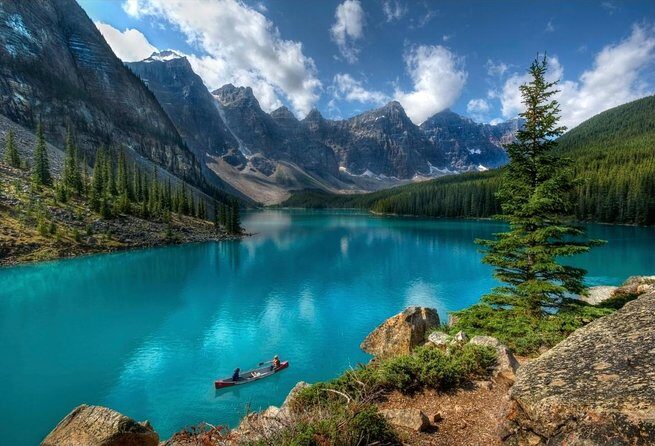
- Icefields Parkway hits: Lake Louise, Moraine Lake, Crowfoot Glacier, Peyto Lake, and Mistaya Canyon
- Big waterfalls, short hikes: Athabasca Glacier toe walk plus Sunwapta and Athabasca Falls
- Whistler on the calendar: arrive with time for nightlife and a final day of coastal-mountain stops
- A real adventure break: the Revelstoke Mountain Resort Aerial Adventure Park is included
A Vancouver-to-Rockies loop with a real driver-guide
This tour is built for people who want the classic Rocky Mountain highlights without planning around them all day. You start in Vancouver, then the route pushes you into inland mountain country. Along the way, you get a mix of rainforest, waterfalls, glacial scenery, and mountain towns.
The big practical advantage is the driver-guide. The itinerary is action-packed, but it’s not chaotic. Your guide helps manage timing and tells you what to prioritize when you only have minutes at a viewpoint or trailhead. One detail worth calling out: the tour has maximum 24 people, so you don’t feel like you’re swallowed by a huge crowd.
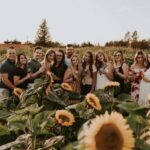
I also like the social setup. This is a hostel-dorm style tour, and that naturally turns strangers into conversation. In one well-reviewed trip, the guide named Mike was described as energetic, cheerful, and genuinely helpful with nature and logistics. That kind of tone matters on long travel days.
You can also read our reviews of more tours and experiences in Vancouver.
Price and what you’re really paying for at $2,042.80
The price is listed at $2,042.80 per person for roughly 8 days. That’s not cheap, but you’re also buying a lot that usually costs extra on your own: transportation (Moose Bus), guide service, 7 nights in hostel dorm-style accommodation, and multiple included meals.
You’re also paying for admissions and access in the right places. Golden Skybridge is included, national park fees are included, and the Squamish Lil’wat Cultural Centre stop is included. Plus there’s an included paddleboarding item (listed as paddleboarding on Skaha Lake), and the itinerary includes an included Revelstoke Mountain Resort activity.
What you don’t fully control: if you decide you want every optional add-on (whitewater rafting, canoeing, mountain biking, or the on-site water activities that are labeled not included), your final budget will grow. The good news is that the core experience is structured so you still get plenty of outdoors even without paying for extras.
Hostel dorms, early mornings, and long bus days: the trade-off
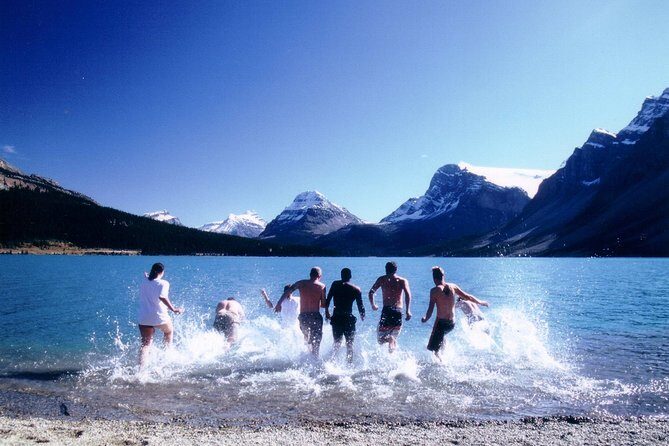
This is an active touring style, not a slow luxury retreat. You should expect a steady pace: wake up, eat (breakfast included), load onto the bus, stop for a handful of key sights, then repeat.
The accommodation is hostel dorm-style rooms, mixed gender. That’s often a dealbreaker for some people and a plus for others. If you’re comfortable sharing space and you like meeting people, you’ll probably find the group energy helps you power through the travel time.
The other consideration is how weather affects timing. The tour operates in all weather conditions, so you’ll still be out walking when conditions aren’t perfect. Dress appropriately.
Finally, watch the seasonal items. Takakkaw Falls is seasonal, listed as late June to October. If your travel dates fall outside that window, the experience may be less focused on that specific waterfall.
Day 1: Bridal Veil Falls rainforest walk to Revelstoke
Day 1 sets a gentle but scenic tone before the bigger Rockies days. You start with Bridal Veil Falls Provincial Park, where you take a short walk through a west coast rainforest. It’s a quick nature immersion rather than a long hike, which is perfect for a first day when everyone’s still getting their footing.
Next, you stop in Hope, known as the Chainsaw Carving Capital of Canada. It’s a quick pause to pick up lunch supplies, not a big sightseeing day. But these small towns are part of what makes the trip feel like a route, not just a list of landmarks.
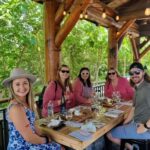
Then you head for Kekuli Café for an Indigenous lunch. This matters because it’s not just a photo stop. You get food and a cultural tie-in early in the journey.
You also pass the Last Spike Gift Shoppe, connected to the Last railroad spike on the Canadian Pacific Railway, driven in November 1885 to connect Canada from West to East. It’s a short stop, but it adds context for why the rest of the country is reachable by road in the first place.
Finally, you overnight in Revelstoke, a mountain town that works well as a launch point for both valley scenery and mountain views.
Day 2: Golden Skybridge plus the Banff gateway
Revelstoke makes a strong second-day start. The tour offers kayaking, canoeing, and SUP as an option (not included) for a couple hours on the water with mountain scenery around you. If you like doing one hands-on activity early in the trip, this can be a great way to burn energy before the bus part ramps up.
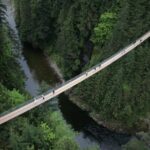
Then you hit one of the easiest “wow” moments: Golden Skybridge. You walk along Canada’s tall suspension bridge for epic views. This stop is included, and it’s timed in a way that gives you big payoff without requiring a long hike.
From there, you continue toward the Rockies, cross Kicking Horse Pass, and enter Banff National Park. You end the day in the historic town of Banff. Even if you don’t plan an activity that night, having your base in Banff makes it easier to enjoy a free afternoon on later days.
Practical note: this is a big driving day. Build in time for legs to feel a bit stiff, and bring layers so you’re comfortable when you’re switching between bus, sun, and shaded pullouts.

Day 3 on the Icefields Parkway: Lake Louise to Peyto
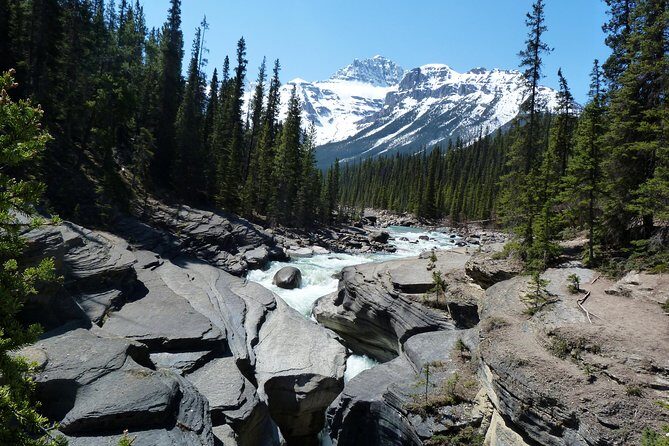
This is the day a lot of people imagine when they think of the Canadian Rockies. You travel Icefields Parkway, with repeated stops where you can get out, walk a short distance, and take pictures.
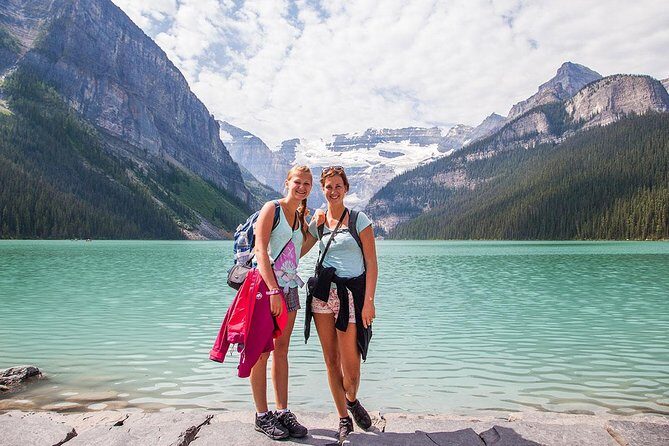
First up is Lake Louise for about an hour. It’s one of those places that can feel crowded in peak times, but the key is that you’re there with structure: you know how much time you have and where to focus.
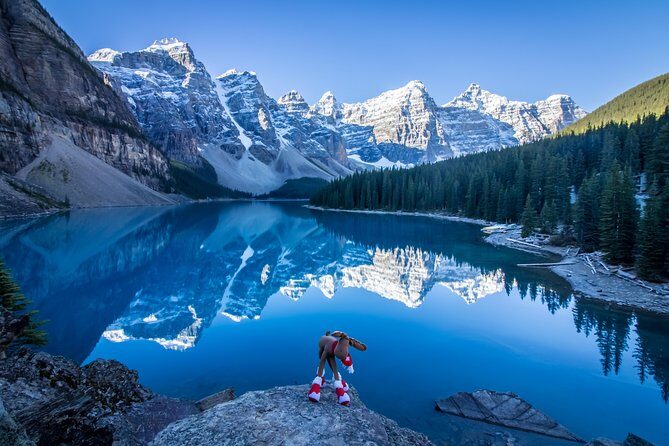
Then you’re at Moraine Lake for a shorter stop (about 30 minutes), surrounded by the Valley of the Ten Peaks. Even with limited time, the payoff is the iconic color and sharp mountain framing.
You follow with Crowfoot Glacier for around 15 minutes. It’s brief, but it’s a real glacial feature, and you get a sense of scale without the effort of a long trek.
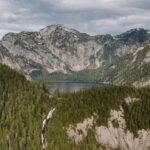
Next is Peyto Lake, which the itinerary calls a favorite in the Rockies. You get about 30 minutes. Peyto’s “wolf-shaped” outline and vivid turquoise color are the kind of sight that makes your camera roll instantly fill up.
The last stop is Mistaya Canyon for about 30 minutes. This is a short walk area where you can see how the river has carved the rock over time. It’s less about the postcard view and more about getting a feel for the terrain.
If you’re the type who needs time to wander, you may feel a little rushed on this day. But if you like intensity and you’re happy to maximize key views in a single day, this works well.
Day 4: Jasper National Park with Athabasca Glacier and two falls
Day 4 shifts from Banff-based highlights into Jasper National Park, and it leans harder into waterfalls and ice.
You start at the Columbia Icefield area and visit the Athabasca Glacier. You take a short hike to the toe of the glacier for about an hour. This is a rare chance to get close to the ice in a controlled, guided setup without needing technical gear.
Then you move to Sunwapta Falls and Canyon for about 30 minutes. Expect a strong cascade and dramatic gorge walls. Even on a quick stop, you get the sense of power.
After that comes Athabasca Falls, around 15 minutes. It’s short, but it’s memorable and easy to photograph. The combination of Athabasca Falls and Sunwapta in the same day gives you variety: wide force, then tighter gorge energy.
You end the day back in Banff, spending the night there again. That makes Day 5 easier, since you can wake up and choose your own pace without a long transfer right away.
Day 5 is yours in Banff: hike, eat, or add an adventure
This is your decompression day. You’re in Banff and the day is yours to do as you please for about a full day.
The itinerary’s options are simple and practical. You can hike and explore Banff on foot. You can also spend time in town and sample local restaurants or breweries. If you want to push your adrenaline, your guide can help you pick optional activities like whitewater rafting, canoeing, or mountain biking (these are listed as optional extra cost).
This is also your best chance to do something that doesn’t fit a schedule. If you got a little rushed on Icefields Parkway, this day can fix that. If you came for scenery and not for planning, you can still enjoy Banff without booking anything complicated.
One tip: plan a main hike and keep a second option in your back pocket. Weather can shift fast in mountain country, and your flexibility will pay off.
Day 6: Yoho National Park waterfalls and Revelstoke’s obstacle playground
Day 6 shifts you into Yoho National Park, and it’s a nice change of pace from Jasper and Banff. You start with Takakkaw Falls, about 30 minutes. This one is explicitly seasonal (late June to October), so if your dates line up, it’s a classic tall-water moment, and if not, you may not get the same emphasis.
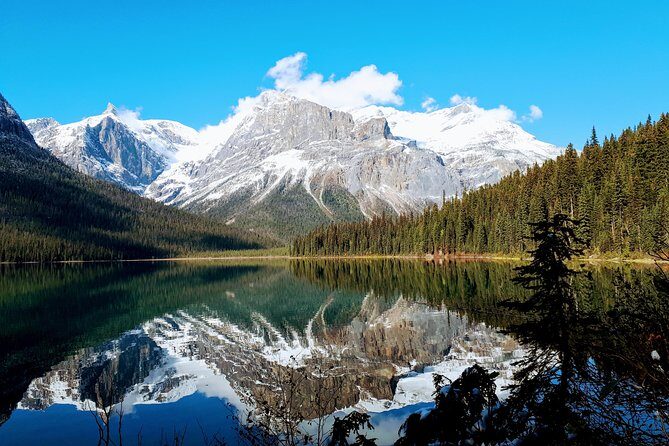
Then you visit Emerald Lake for about an hour. It’s known for its jade-colored water, framed by peaks and forest. It’s calmer than the glacier day, and it gives you a chance to slow down and actually look.
Next you stop at Natural Bridge. You’ll explore a short area around a natural arch made by the Kicking Horse River. This stop is quick (about 15 minutes), but it’s a good reminder that the rocks and water systems are doing the real storytelling in this region.
Then comes a fun break that’s more action than sightseeing: Revelstoke Mountain Resort Aerial Adventure Park is included. The itinerary lists swings, climbs, jumps, and free-fall elements through a four-story obstacle course with over 50 challenges. It’s self-paced, so you can do a beginner-friendly circuit or push harder if you’re comfortable.
You end the day back in Revelstoke, with time to relax, including access to pool or hot tub if you choose.
Day 7 to Whistler: Shuswap water, Lillooet history vibes, Nairn Falls
Day 7 is a transition day toward the Sea-to-Sky region. You pass Shuswap Lake for about 30 minutes, known for crystal-clear water and scenic shoreline. It’s a good “eyes out the window” moment that also gives you a short stretch stop.
Then you pass Lillooet, a historic town between the Fraser River and tall mountains. This is another pass-through stop, around 30 minutes, but it keeps the trip from feeling like one long drive with no variety.
Next you visit Nairn Falls Provincial Park for about 15 minutes. It’s short, surrounded by forests and dramatic cliffs, so it’s a quick photo and walk stop.
Finally you arrive in Whistler and get a final-night focus on the town. The itinerary points you toward Whistler’s nightlife options like bars and clubs, with time to make the last evening social. If that’s your style, this is a fun way to end after days of outdoors.
Day 8: Squamish Lil’wat Cultural Centre and the Sea-to-Sky farewell
Your final day keeps a Canada-wide story going, moving from mountain stops into cultural learning and coastal views.
First is the Squamish Lil’wat Cultural Centre, included and about two hours. This is where you can learn about Squamish and Lil’wat Nations through exhibits, art, storytelling, and interactive displays. This is one of the most valuable stops on the whole itinerary because it gives the region a human context, not just a set of viewpoints.
Then you make a quick series of waterfall and viewpoint stops:
- Brandywine Falls Provincial Park (about 15 minutes)
- Stawamus Chief Park (about 30 minutes), an iconic granite face and a must-see for outdoor lovers
- Shannon Falls Provincial Park (about 15 minutes), a tall cascade with an easy access feel
After these, you travel back to Vancouver via the Sea-to-Sky Highway along Burrard Inlet, with big mountain-and-coast views turning into a city skyline. You finish at Vancouver with the tour ending back at the meeting point.
Practical tips: make this road trip feel smooth, not stressful
A tour like this works best when you prepare for its style. Here’s how to make it easier on yourself.
Pack for strict luggage rules
You’re allowed one main backpack, bag, or suitcase with a maximum of 23 kg (50 lb) and max linear dimensions of 158 cm (62 in), plus one small daypack. If your bag is overweight or oversize and they accept it at departure, there’s a $50 fee per bag. This is the kind of cost you avoid by weighing your luggage before you leave.
Dress like you’re going to walk often
Many stops are short. That’s great, but it means you’ll do repeated quick walks and photo stops. Bring layers and a rain shell. The tour operates in all weather conditions.
Expect a rhythm: get in, get out, repeat
On Icefields Parkway days, you’ll see a lot, but you won’t linger long at each place. If you like long hikes, plan for quick bursts and then spend your longest time on Day 5 in Banff.
Use your guide as a resource
The guide is not just a driver. You’ll get help deciding optional activities on the free day, plus practical on-the-ground advice so you spend less time guessing.
Choose your pace
If you’re high-energy, you’ll love the packed days and activities like the Revelstoke obstacle park. If you prefer calm travel, be realistic about the bus time and the hostel dorm setting.
Should you book this Rockies and Whistler tour?
Book it if you want a well-paced best-of route from Vancouver with major Rockies stops and you like meeting people along the way. The guide-led format helps a lot, and the combination of national parks (Yoho, Jasper, Banff) plus Whistler makes the itinerary feel complete instead of repetitive.
Skip it or think twice if you need lots of free time every day, hate bus travel, or strongly dislike hostel dorm-style accommodation. Also check your dates for seasonal stops like Takakkaw Falls.
If you’re on the fence, I’d make the decision based on one question: do you want a structured route that hits the highlights fast, with just enough wandering to make photos and short walks feel satisfying? If yes, this tour is a strong value way to experience Western Canada.
FAQ
How long is the Caribou Discover the Best of the Rockies tour?
It runs for 8 days approximately, starting in Vancouver with a start time of 8:00 am.
Where does the tour start and where does it end?
The tour starts in Vancouver and ends back at the meeting point (in Vancouver).
What is the maximum group size?
The tour has a maximum of 24 travelers.
What is included in the tour price?
Included items are breakfast, lunch, dinner, 7 nights accommodation in mixed gender hostel dorm-style rooms, Moose Bus transportation, services of a professional and fun tour guide/driver, entrance to Golden Skybridge, national park fees, paddleboarding on Skaha Lake, and the listed admissions/activities marked included.
Are there optional activities that cost extra?
Yes. Optional activities include kayaking, canoeing, or SUP in Revelstoke, and optional add-ons on the Banff free day such as whitewater rafting, canoeing, or mountain biking.
Which Indigenous culture experiences are included?
You have an Indigenous lunch stop at Kekuli Café, and you visit the Squamish Lil’wat Cultural Centre with admission included.
Is Revelstoke Mountain Resort included?
Yes. The Revelstoke Mountain Resort Aerial Adventure Park is listed as admission included.
What should I know about luggage?
You can bring one reasonably sized main backpack, bag, or suitcase up to 23 kg (50 lb) and 158 cm total linear dimensions, plus one small daypack. Overweight or oversize bags can be refused, or accepted with a $50 fee per bag if accepted at departure.
Is there a minimum age requirement?
Yes, the minimum age is 18 years.