REVIEW · TORONTO
Toronto Essentials Tour: Old Town & Downtown Highlights (PWYC)
Book on Viator →Operated by Tour Guys · Bookable on Viator
Toronto works best when you get your bearings fast. This fast 2-hour walk gives you the key sights in downtown and helps you understand the city’s layers without getting worn out. You’ll cover major landmarks and a small slice of the underground PATH so you learn how Toronto moves.
I like the CN Tower vantage points and how the guide explains what makes Toronto’s skyline feel so recognizable. I also like the balance of big landmarks (Union Station, City Hall) and “Toronto oddities,” like the dog fountain at Berczy Park and the way downtown banks feel like cathedrals.
One thing to consider: this tour is timed, so you have to be at the meeting spot and stay with the group. If you’re the type who hates tight pacing or likes long stops for photos, you may feel a bit rushed.
In This Review
- Key highlights worth your time
- A PWYC-style bargain for a fast Toronto orientation
- Finding the guide at Union Station’s Great Hall (not the crowd outside)
- Union Station, the CN Tower skyline, and the Royal York’s rise
- PATH under your feet: getting around downtown without stress
- Brookfield Place and Calatrava’s glassy public space
- Berczy Park dog fountain and St. James Cathedral: old Toronto’s heart
- Financial District walk: banks, the Great Fire of 1904, and commuter vibes
- Hockey stop and market pointers: what to do next without slowing the tour
- City Hall finish at Nathan Philips Square (easy photos, public life)
- Who this tour fits best (and who might want something slower)
- Should you book this Toronto essentials walk?
- FAQ
- How much does the Toronto Essentials Tour cost?
- How long is the tour?
- Where does the tour start?
- Where does the tour end?
- What time does the tour start?
- Is the tour in English?
- Will I have a guide with me the whole time?
- Is a mobile ticket used?
- What if I’m late?
- Is there a limit on group size?
- Is free cancellation available?
Key highlights worth your time
- CN Tower views from prime spots, with context on why it mattered for TV and radio reception
- Union Station’s Great Hall as the meeting point, which makes the start less chaotic than meeting outside
- A guided walk through the PATH, so you understand the downtown underground without getting lost
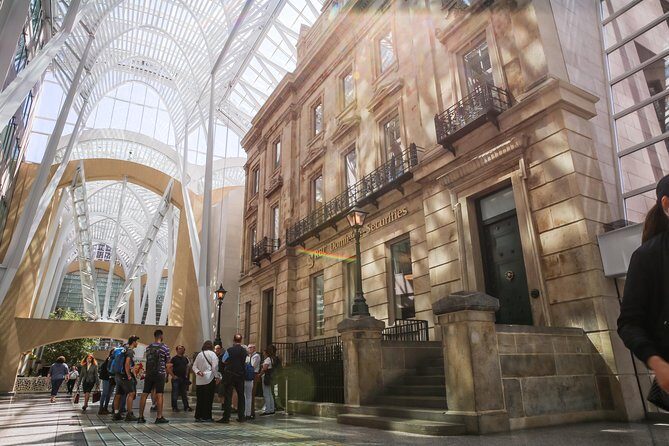
- Brookfield Place by Santiago Calatrava, with glass-and-steel architecture that looks even better in person
- Old Toronto anchors like St. James Cathedral and Berczy Park’s famous dog fountain
- A smart downtown finish at Nathan Philips Square, with City Hall and the Toronto sign for easy photos
A PWYC-style bargain for a fast Toronto orientation
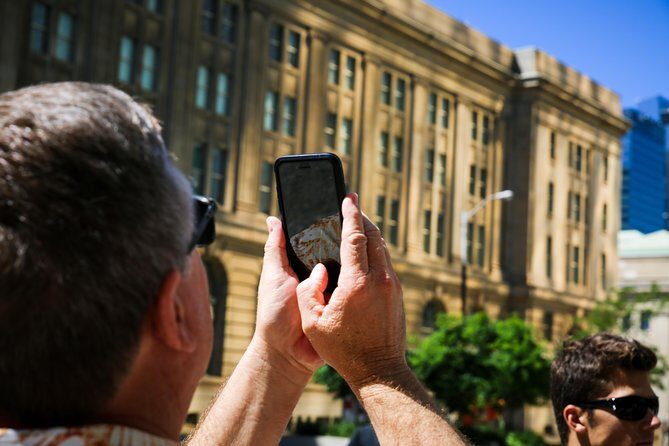
At $4.50 per person for about 2 hours, this tour is the kind of deal that works even when your trip is short. The big value here is not just seeing places—it’s learning the “why” behind them in a way that makes future wandering easier.
Toronto can feel confusing fast: wide streets, condo towers, pockets of old buildings, and a downtown that’s partly above ground and partly underground. This tour gives you a guided map in your head. You’ll understand what to look for next time, instead of just collecting photos.
You can also read our reviews of more tours and experiences in Toronto.



Finding the guide at Union Station’s Great Hall (not the crowd outside)
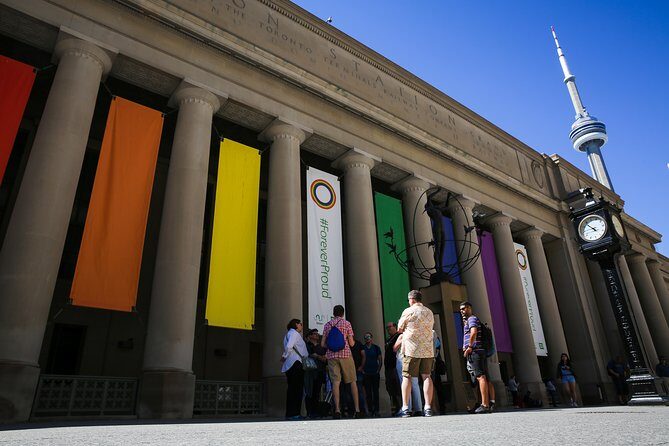
Your start is at Union Station, inside the Great Hall, off Front Street. That detail matters. Union Station has multiple touristy zones—the information desk elsewhere, a food court, and even a clock outside that draws people in the wrong direction.
Inside the Great Hall, you’re looking for the high-ceiling room with huge windows and the info booth under a central clock. The tour description is very specific for a reason: getting lost here wastes your first 10 minutes, and the tour runs on time.
You’ll see why this is a smart setup as soon as you arrive. Meeting inside means you’re not guessing in the elements, and you’re already in the “Toronto transport” story before the walk even starts.
Union Station, the CN Tower skyline, and the Royal York’s rise
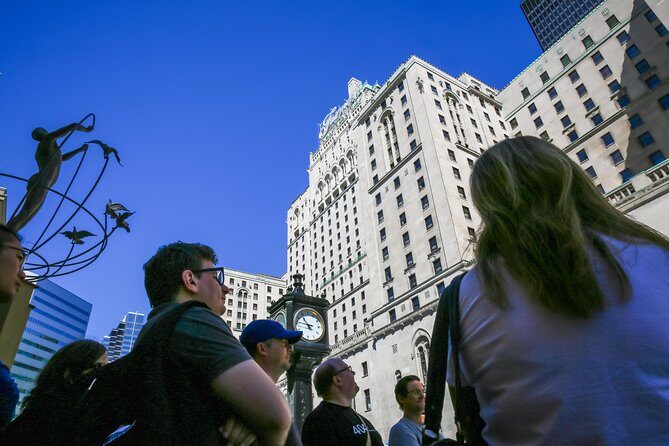
The first big visual hit is the CN Tower. You’ll look at it from spots chosen for views—because “the tall tower everyone has heard of” is only part of the fun. You also learn how it became a landmark through its height, including how it improved TV and radio reception in the area back in the 1970s.
Then the story shifts from telecom to rail travel and wealth. The guide connects the dots between building the railroad across Canada and the way major stations sparked luxury hotels. Toronto’s answer was the Fairmont Royal York Hotel, opened in 1929, right as the global economy crashed.
Here’s what I’d take away if I were planning your next steps: the downtown you see today didn’t just grow organically. It was shaped by transport routes and the incentives that came with them. Even if you don’t stop for photos at the Royal York lobby (the tour doesn’t focus on interiors), the outside alone helps you “read” the city.
PATH under your feet: getting around downtown without stress
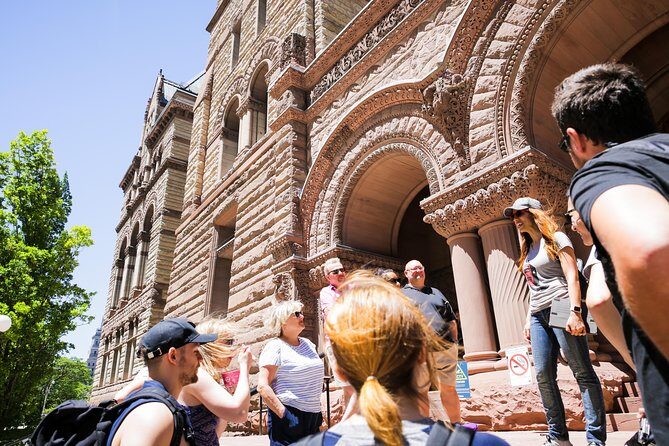
One of the best practical parts is the short walk through part of the PATH, Toronto’s underground network of corridors and food-court-style spaces. The guide doesn’t just point you to “the underground.” They explain the purpose: it links basements of downtown buildings to nearby subway stations.
Toronto’s PATH can be confusing even when you think you’re being careful. The tour’s tone is basically: stay close, keep moving with the group, and don’t wander off into food courts like you’re trying to live there. That humor lands because it’s true—PATH signage isn’t designed for first-timers.
If your goal is to tour comfortably—especially in winter, or on a rainy day—this stop makes your future self’s life easier. You’ll know what’s going on when you spot an entrance later.
Brookfield Place and Calatrava’s glassy public space
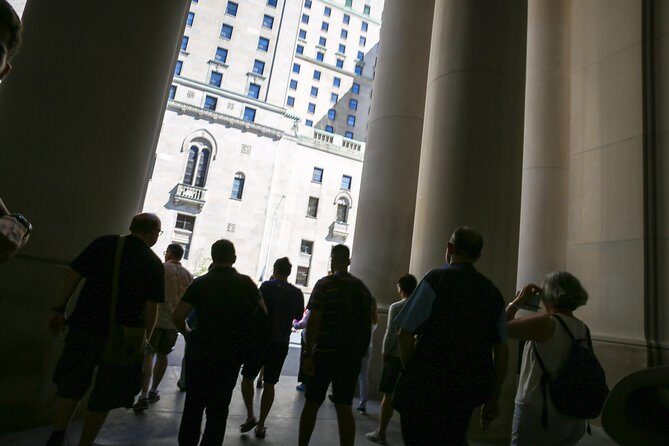
After that underground primer, the tour moves to Brookfield Place, designed by Santiago Calatrava. This is one of those buildings that makes people instinctively take out phones. High vaulted ceilings, white steel, and glass create a bright, airy public space that feels like it belongs to the city’s future.
The guide also uses this stop to explain the idea of private public space in Toronto, plus how PATH fits into the downtown pattern. It’s not a lecture; it’s framed for walking. You’ll leave this segment understanding why certain plazas feel open while still being attached to office buildings and controlled spaces.
If you like architecture (even casually), this is the moment you’ll most likely remember on your own. It’s visual, and it’s functional.



Berczy Park dog fountain and St. James Cathedral: old Toronto’s heart
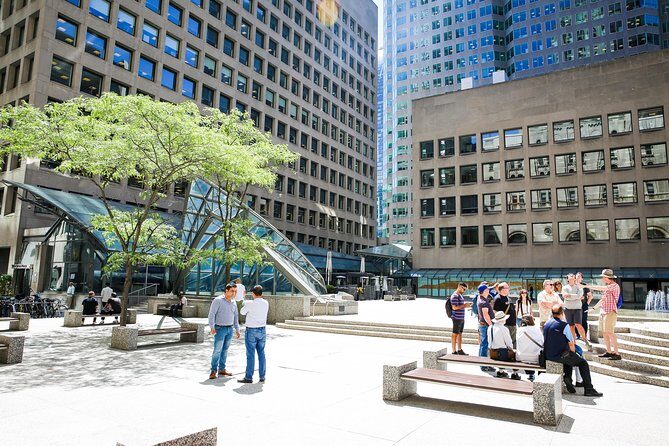
Then you shift into older, more human-scale Toronto with two classic stops.
First: Berczy Park and its famous “dog fountain.” It’s playful street-level history—why Toronto does weird and charming things in public spaces. Even if you don’t care about fountains, this stop helps break the density of downtown towers with something you can actually stand next to for a minute or two.
Second: The Cathedral Church of St. James. This is described as the spiritual centre of Old Toronto and a seat of power in the 19th century. The guide connects religion and politics in an era when Toronto was still building its identity, often called Muddy York in local storytelling. The cathedral is Gothic-Revival, and the point of the stop is to show how faith and civic power lived side by side.
If you’re the type who wants one “serious” landmark that still feels approachable, this cathedral works well. It gives weight to the day without dragging you through a long museum visit.
Financial District walk: banks, the Great Fire of 1904, and commuter vibes
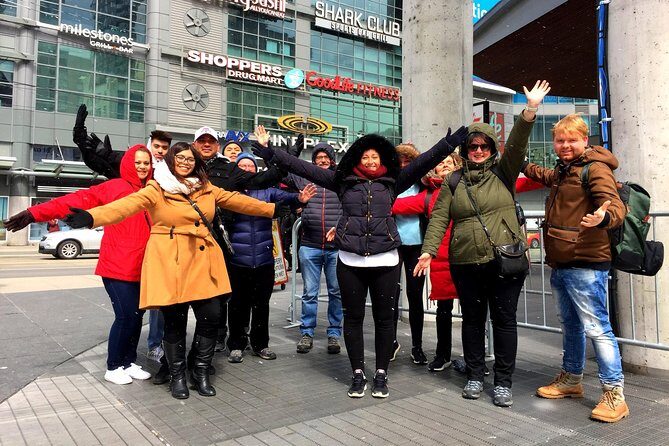
The next stretch is downtown’s core: the Financial District walk between some of the biggest skyscrapers in Canada. The guide focuses on what’s behind the skyline—especially the banks and how their buildings feel like cathedrals.
You’ll also get the story of the Great Fire of 1904, including the detail that it wasn’t great if your name was John Croft. That kind of name-drop isn’t random. It makes a big event feel like it belonged to real people, not just a headline.
Then the guide brings it down to daily life with the commuter mindset: buying low and selling high. You get a sense of what it might feel like to head to an office where money is the main language.
This part is also a good reality check. You see how “downtown Toronto” can look like a business district during the day, even though the city has neighborhoods of character just off the main corridors.
Hockey stop and market pointers: what to do next without slowing the tour
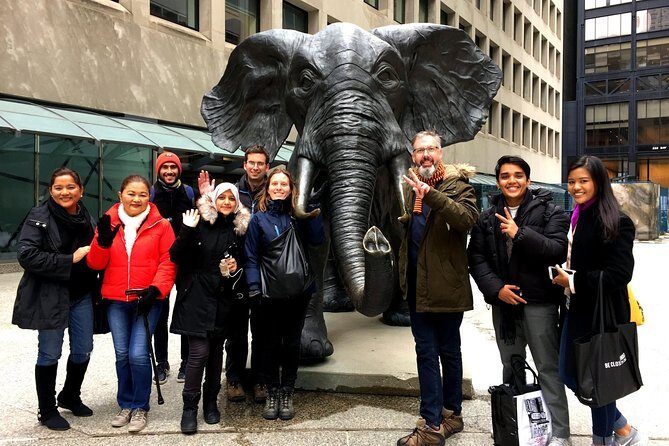
Near the downtown walk, the guide touches the city’s national winter sport and gives tips for what to do next. There’s also a note that this tour doesn’t fully visit the hockey-related attraction—because the walking schedule is tight—but the guide will point you toward the right entrance if you want to return on your own.
In the same spirit, the guide offers pointers for the market after the tour and explains its role in Toronto’s development. This is useful because Toronto markets can be busy and confusing without a plan. Even a quick “go here, start there” can save you time later.
And if you care about sports history, the tour includes a moment tied to the Stanley Cup that helps the hockey context feel real rather than generic.
City Hall finish at Nathan Philips Square (easy photos, public life)
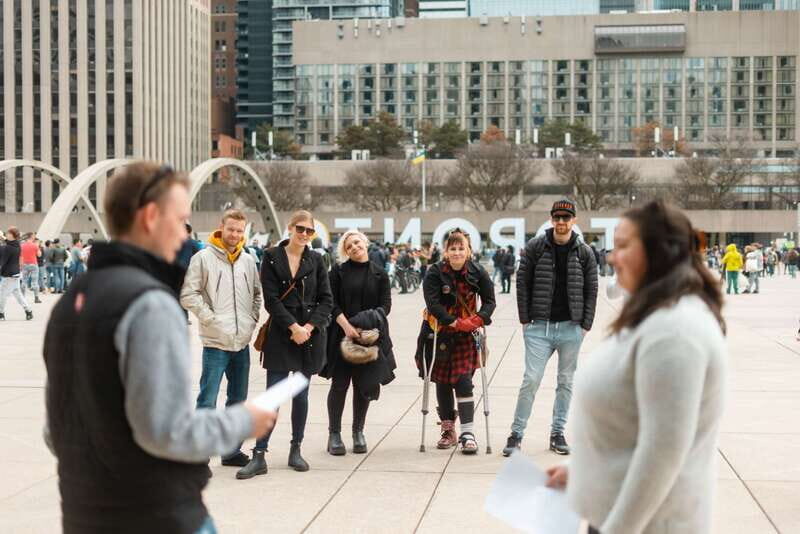
The tour ends in the perfect place for post-walk photos: Nathan Philips Square, in front of Toronto City Hall, near the famous TORONTO sign. The building is completed in 1965, and it’s described as futuristic—made from concrete in a way that reflects Toronto’s aspirations and its role as a provincial capital and national hub.
The City Hall finish is also practical. The guide calls out the space in front of City Hall as a place where the city gathers for public holidays, New Year’s Eve, farmers markets, and protests. That “public life” angle matters because it tells you this isn’t just a monument. It’s a stage the city uses all year.
Public washrooms are nearby too, which sounds small until you’re standing in downtown for 90-120 minutes and you’re suddenly grateful for a restroom option.
Who this tour fits best (and who might want something slower)
This is a good match if you:
- want a tight, clear overview of downtown Toronto in a short window
- like city context as much as sightseeing (history + architecture + how things work)
- appreciate guided navigation, especially around Union Station and the PATH
It might not be your best choice if you:
- need long stops for photos and reading every plaque
- hate timed pacing and prefer fully self-guided walks
The group size is capped at 30 travelers, which usually keeps the experience from feeling like cattle herding. The guide’s job is to keep you moving, but the smaller cap helps with flow.
Also, the tour is offered in English with an English-speaking tour guide, and it notes that service animals are allowed.
Should you book this Toronto essentials walk?
If you’re trying to cover “Old Town and downtown highlights” without turning your day into a marathon, I think this tour is a smart buy. The price—$4.50—makes it low-stakes even if you only get the CN Tower views, the Union Station start that’s easy to find, and the PATH orientation.
Book it if you want a guided shortcut to understanding Toronto’s layout, not just checking off landmarks. If you already know the city well and want deep neighborhood exploring, you might find it a bit too quick.
One last tip: start on time and stay with the guide. This tour clearly runs on schedule, and they can’t wait for late arrivals. If you do that, you’ll finish with a clearer mental map of Toronto—and a downtown you feel comfortable returning to on your own.
FAQ
How much does the Toronto Essentials Tour cost?
The price is $4.50 per person.
How long is the tour?
It’s about 2 hours.
Where does the tour start?
The tour starts inside Union Station, in the Great Hall at 55 Front St W, Toronto, ON M5J 1E6.
Where does the tour end?
The tour ends at Nathan Philips Square at 100 Queen St W, Toronto, ON M5H 2N3, near the Toronto sign.
What time does the tour start?
The start time listed is 10:00 am.
Is the tour in English?
Yes, the tour is offered in English.
Will I have a guide with me the whole time?
Yes. The experience includes an English-speaking tour guide.
Is a mobile ticket used?
Yes, it uses a mobile ticket.
What if I’m late?
The tour leaves on time. If you’re late, the guide cannot wait, but if you’re on time you’re on tour.
Is there a limit on group size?
Yes. There’s a maximum of 30 travelers.
Is free cancellation available?
Yes. You can cancel for a full refund up to 24 hours before the experience start time.