REVIEW · TORONTO
Toronto: Hollywood North Experience Film & TV Tour
Book on GetYourGuide →Operated by Storyboard Experiences (Toronto) · Bookable on GetYourGuide
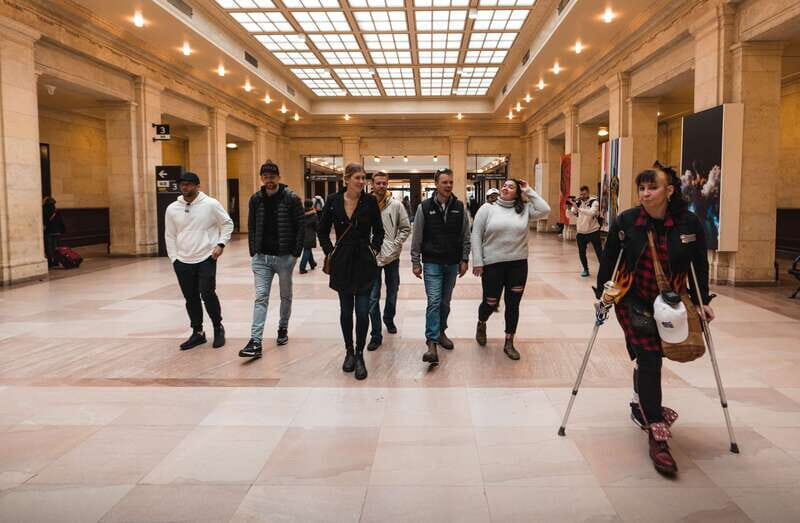
Toronto turns into movie magic in 2.5 hours. This downtown walking tour lights up real TV and movie filming spots with tablet clips where the action happened, and I also like that your guide is a working local film industry actor who can explain the behind-the-scenes choices. One thing to consider up front: it’s about a 3.5 km walk over 2.5 hours, rain or shine, so comfortable shoes matter.
You’ll see major landmarks tied to productions such as Suits, The Boys, The Handmaid’s Tale, Degrassi, Rookie Blue, American Psycho, Star Trek, and Suicide Squad. Some displayed clips include violence and are rated PG-13, so if that’s a concern for you or your group, plan around it. Meeting a guide like Winnie, Jacqueline, or Michael (names you could run into on this tour) also helps, because the storytelling angle comes from people who work in entertainment, not just people who read about it.
In This Review
- Key Things I’d Put at the Top
- Meeting at David Pecaut Square and Getting the Walk Rhythm Right
- Union Station to the Financial District: Architecture That Actually Plays Its Role
- Secret Photo Stops and a Local Café Break: How the Tour Builds Momentum
- Elgin & Winter Garden Theatres and Old City Hall: When Public Buildings Become Sets
- City Hall to Nathan Phillips Square: The Best Places to Watch Toronto as a World-City Set
- Eaton Centre to Yonge-Dundas Square: Finishing With a Real-Life “On Screen” Feeling
- Price and Value: Is $35 for 150 Minutes Worth It?
- Practical Tips So the Tablet Clips and Photos Actually Land
- Who This Tour Suits Best (and Who Might Want Another Option)
- Should You Book the Hollywood North Experience Film & TV Tour?
- FAQ
- How long is the Toronto Hollywood North Experience Film & TV Tour?
- Where do I meet the guide, and how do I recognize them?
- What’s included in the ticket price, and what’s not?
- What should I bring with me?
- Is it a lot of walking?
- Can I cancel and get a full refund?
Key Things I’d Put at the Top
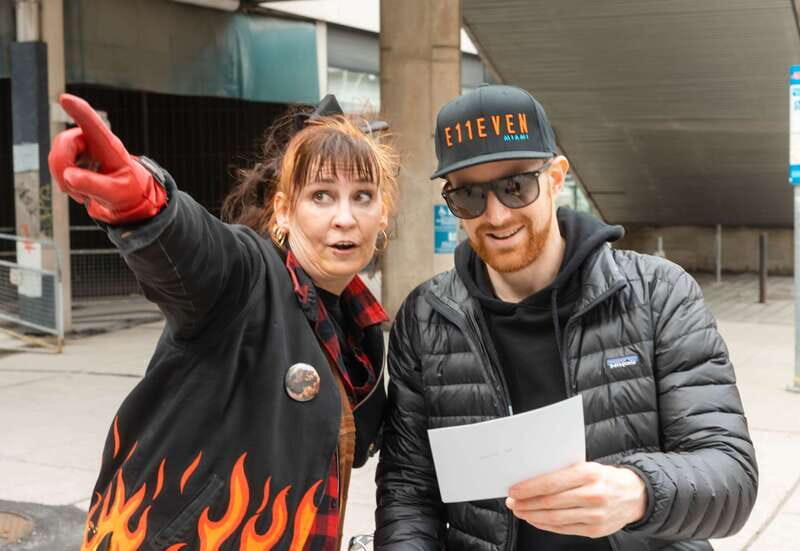
- Tablet clips on-location: You watch scenes where they were shot, not in a classroom.
- Local actor guides with production context: You get practical filming-process details from someone in the industry.
- Iconic Toronto landmarks, movie-style: Union Station, Old City Hall, City Hall, and more become part of the story.
- Scene reenactments at famous spots: You get to stand in the same frame and try a rendition.
- Short indoor breaks when needed: Stops at major venues can help if weather is hot or cold.
- Mostly downtown, easy to stack with other plans: 2.5 hours fits well into a typical city day.
Meeting at David Pecaut Square and Getting the Walk Rhythm Right
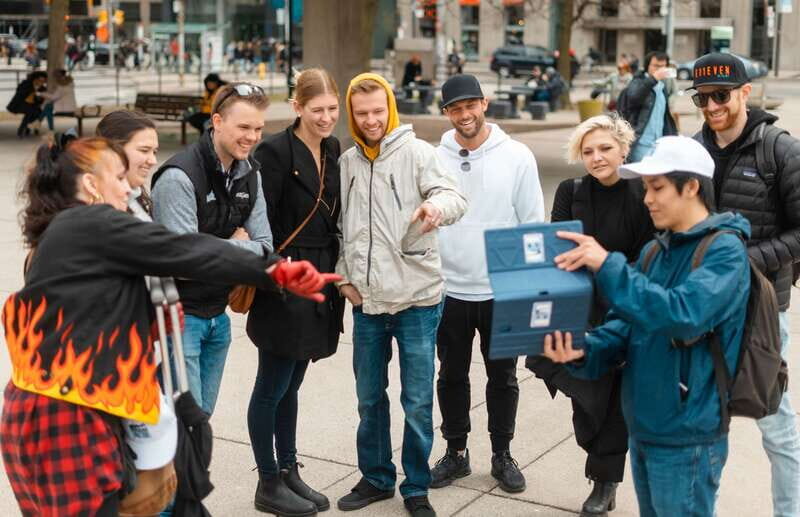
Most film tours make you stare at plaques. This one starts with your feet moving, because downtown Toronto is the set. You’ll meet at David Pecaut Square, in the courtyard across the street from the Royal Alexandra Theatre on King Street. Look for your guide at the scheduled time with a blue umbrella so you can spot them fast.
From there, the pacing is built for filming locations: photo stop, short guided segments, and frequent “look right here” moments. Expect a walk of about 3.5 km total, which is a reasonable distance for 150 minutes, but it still adds up. If you’re the type who likes to take your time at each corner (and you will, because the clip shows what you’re looking at), wear shoes you trust.
A key practical point: this tour runs rain, snow, or shine. You’re not getting a “we’ll reschedule” vibe unless something major happens. So bring a rain layer if the forecast looks moody, and keep your tablet phone ready for photos at the photo-stop moments.
Also note one simple requirement that can catch people: bring a passport or ID card. And it’s not suitable for people with mobility impairments, since it’s a continuous walking route.
You can also read our reviews of more tours and experiences in Toronto.


Union Station to the Financial District: Architecture That Actually Plays Its Role
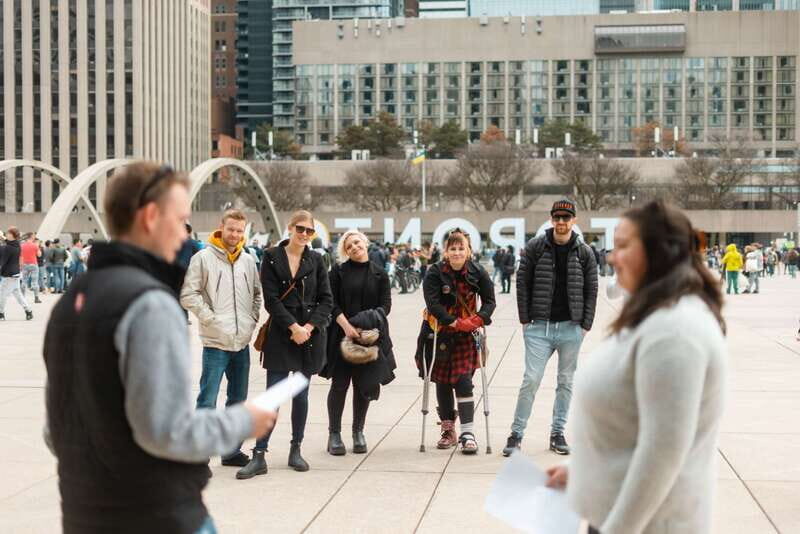
Union Station is where the tour gets your attention. You’ll have a photo stop and guided sightseeing here, with time to look around and get oriented before you move into the story mode. This matters because Union Station doesn’t just look good on camera; it’s the kind of dramatic interior that directors love for atmosphere and scale.
From there, the tour shifts into downtown areas tied to film and TV production. The format is straightforward: you’re walking real corridors and streets, and your guide lines up what the camera was trying to do—where characters are positioned, why certain angles work, and how Toronto stands in for other cities. That last part is the secret sauce. Toronto can be dressed up into many places, and once you start noticing the “why,” the city becomes easier to read.
If you’re an architecture fan, this portion is strong because you’re not only getting show titles. You’re learning how set design and camera placement transform a familiar space into something else. That’s why the guide’s film background helps. People like Jacqueline and Winnie (based on names you might meet on this tour) tend to connect the visuals to real production decisions, instead of just listing locations.
And yes, if you’re more of a casual fan, that’s fine. You don’t need to memorize every show. The clips give you the “match” between what you see on the street and what you recognize on-screen.
Secret Photo Stops and a Local Café Break: How the Tour Builds Momentum
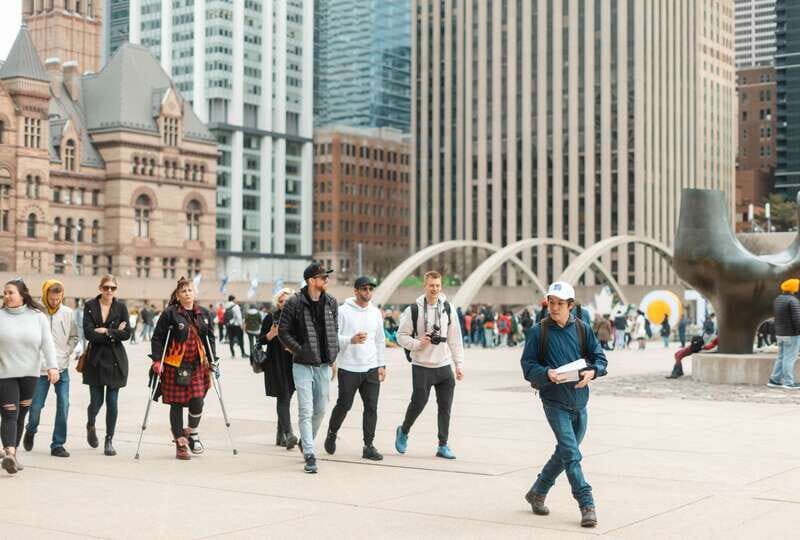
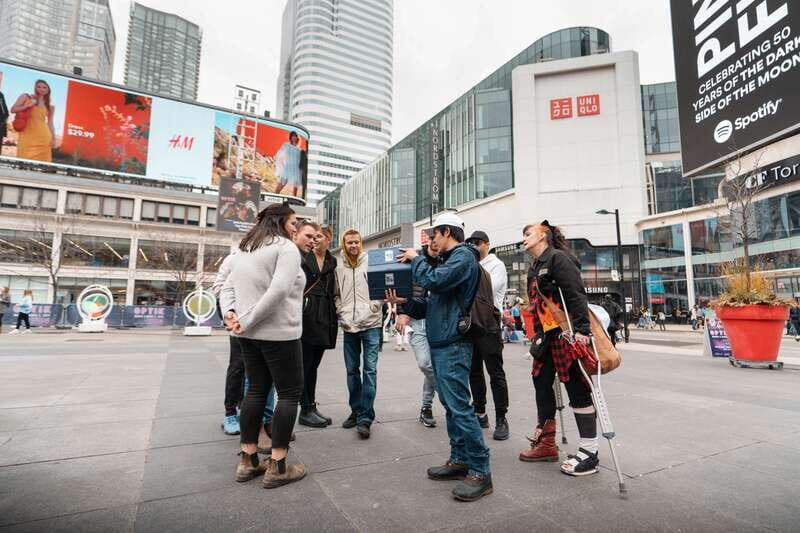
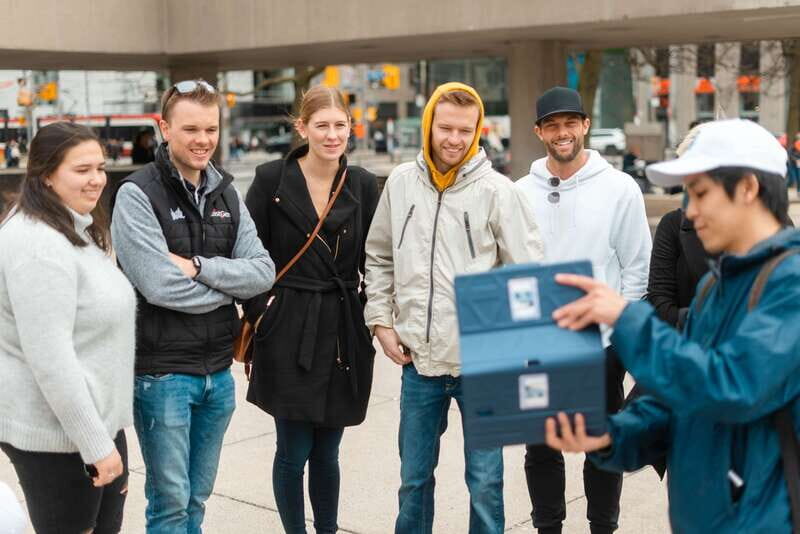
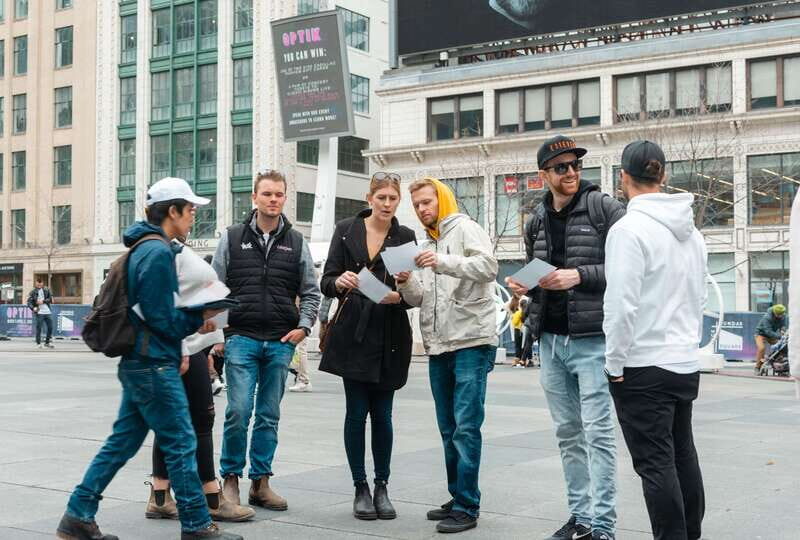
After the early landmarks, the tour leans into a more playful rhythm. You’ll make several secret stops—each with a photo moment and a guided explanation. These are the spots where the tour’s format really clicks: you stop, you look, and then the guide brings the screen to the sidewalk by showing clips on a tablet.
Those secret stops are also where scene reenactments tend to happen. The tour includes the chance to stand where celebrities shot iconic scenes and do your own scene rendition. It’s not a formal acting class, so you won’t feel pushed. It’s more like a fun “try it in the same spot” prompt that makes the whole thing stick in your memory.
Between the photo moments, you’ll also pass by a local café. It’s not a long meal break, but it’s a useful breath point while you keep moving. Think of it as part of the tour’s pacing: you’re walking, photographing, and watching clips, so the schedule builds small recovery windows to keep the experience enjoyable.
If you end up in a smaller group, the energy can shift toward more conversation. One of the advantages of fewer people is you can ask follow-up questions about how scenes are blocked, why certain camera angles were chosen, or how Toronto’s streets get transformed. That’s especially helpful if you’re curious but not sure what to ask.
Elgin & Winter Garden Theatres and Old City Hall: When Public Buildings Become Sets
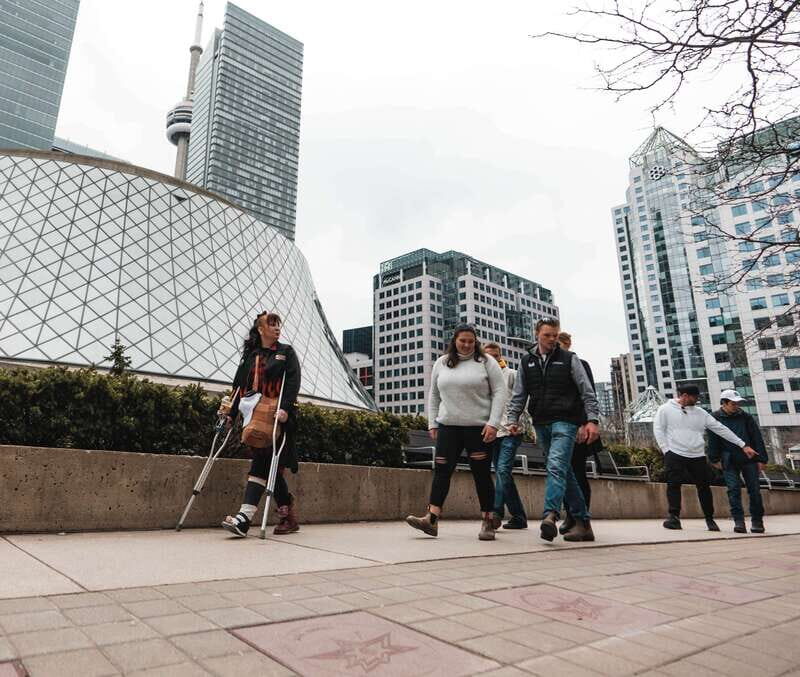
Next up are the theatrical and civic-looking stops, where the tour’s “film grammar” becomes visible. You’ll have a photo stop at the Elgin & Winter Garden Theatres, with guided sightseeing afterward. The value here isn’t just that it looks dramatic. It’s that theatre architecture is built for sightlines, staging, and storytelling—exactly what directors want when they’re designing a scene’s mood.
After that, you move to Toronto Old City Hall for a photo stop and guided tour. Civic buildings are popular film targets because they look authoritative and timeless on camera. But the tour doesn’t treat them like backdrops. It frames them as pieces of narrative space—how wide shots communicate power or institutions, and how street-level details help define a scene’s tone.
A practical bonus on these parts of the route: some segments can include indoor stops. Based on what people commonly describe, it can be a welcome break if it’s hot outside. It also helps in bad weather because you get shelter while still keeping the tour momentum.
One more thing I appreciate about this section is the way the guide connects the city’s real identity to the film identity. You’re seeing famous architecture, yes, but you’re also learning what makes Toronto such a workable stand-in—how crews find adaptable spaces fast and how production design uses what’s already there.
City Hall to Nathan Phillips Square: The Best Places to Watch Toronto as a World-City Set
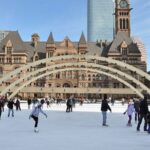
After Old City Hall and Toronto City Hall, the tour reaches Nathan Phillips Square. This is one of those Toronto landmarks that photographs well, and the tour gives it time to work. You’ll get a break period plus a photo stop and visit with guided tour elements.
This break is useful because it’s where you pause the “film attention” mode for a minute. Then you jump back in with fresh energy for the next exterior set pieces. In practical terms, it also helps if you’re taking lots of pictures while the guide is showing clips on a tablet—your brain gets a reset, and the next stop feels clearer.
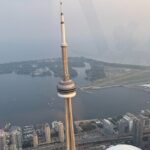
From Nathan Phillips Square, you get the shot-based wow factor next: the CN Tower exterior for a quick photo moment. Even if you’re not obsessed with one specific franchise, the tower acts like a visual punctuation mark. It signals to directors and audiences that this is Toronto—while also being broad enough to fit into many story worlds.
As you walk, you may also pass by or see parts of Canada’s Walk of Fame, plus other downtown touchpoints. The tour keeps mentioning Toronto landmarks because the city is the lead actor here. You’re learning how filmmakers pick places that already have scale, identity, and visual recognition.



Eaton Centre to Yonge-Dundas Square: Finishing With a Real-Life “On Screen” Feeling
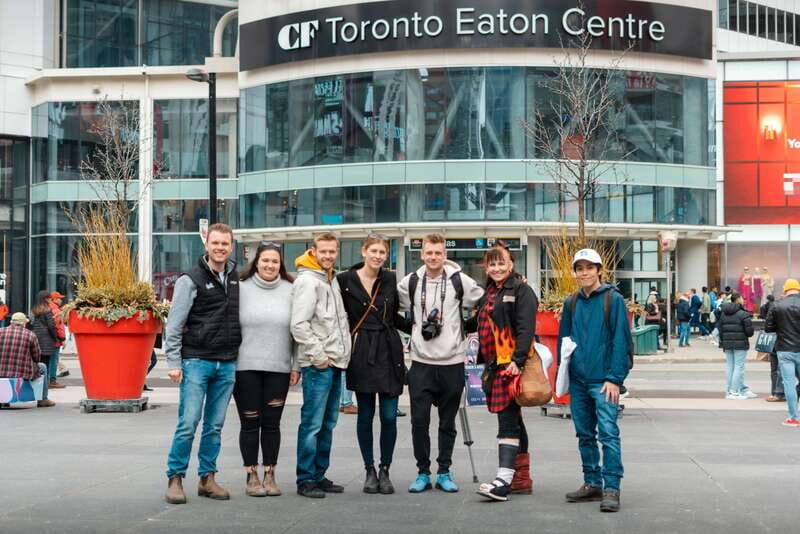
The tour keeps rolling into Toronto Eaton Centre, where you’ll have time for a visit plus guided sightseeing. This is a smart choice for a film tour because malls and shopping corridors show up in tons of TV scenes: fast-moving crowds, recognizable storefront vibes, and a natural flow for blocking characters.
After Eaton Centre, the tour finishes at Yonge-Dundas Square. It’s a fitting end point because it’s a high-visibility, downtown “everyone knows this” type of location—exactly the kind of place cameras love when they want energy and instant setting clarity.
By the time you reach the finale, you’ve usually developed a new habit: you stop looking at buildings as buildings and start seeing them as camera-friendly spaces. That’s the main payoff of the format—seeing Toronto and movies in the same mental frame.
If you’re a fan of the kinds of productions listed (from The Handmaid’s Tale to Star Trek and American Psycho), this final stretch often feels like a montage. If you’re not a superfan, it still works because the tour is also city-first: you’re getting downtown orientation while learning how filming turns everyday spaces into memorable moments.
Price and Value: Is $35 for 150 Minutes Worth It?
At $35 per person for about 150 minutes, you’re paying for three things: a local film-industry guide, the guided walking route through major downtown spots, and the on-location clip format using a tablet.
Is it cheap? No. But it’s also not a big-bus tour price, and you’re getting a higher “density” of meaningful stops. You’re not spending time on long travel segments; you’re spending time at places you’d otherwise walk past. That’s why the value lands well.
Here’s the honest trade-off: you’re paying for access to production context. If you don’t care about filming methods or you’re not interested in matching screen scenes to real streets, your enjoyment may drop. But if you’re even casually curious about how shows are made, the price feels reasonable because you’re getting a guided explanation at multiple landmarks, not just a single highlight.
Also, food and drinks aren’t included, and transportation is on you. That’s normal for a walking tour, but it affects the total day cost. Plan on either grabbing a snack before or after, not during.
Practical Tips So the Tablet Clips and Photos Actually Land
This is a walking tour, so your best “gear” is comfort. Bring shoes that can handle uneven sidewalk edges and quick photo stops. If weather is messy, a compact umbrella or rain jacket can help, especially since you’ll be outdoors for many segments.
For maximizing the film part:
- Pay attention to the guide’s framing: when a clip plays, try to visualize where the camera would be standing relative to you.
- Take a couple of reference photos: one wide shot of the location and one tighter shot of any distinctive feature can help you remember the match later.
- Don’t worry if you don’t catch every show reference: the clips do the heavy lifting, and the landmarks carry the story even if you’re not a hardcore fan of that exact title.
If violence in clips is a concern, remember the tour notes some content can be rated PG-13 due to violence. If that matters, you’ll have a heads-up that certain scenes may appear while clips run.
Finally, if you want the best experience, be on time. The tour starts at David Pecaut Square with the guide holding the blue umbrella. Late arrivals are treated as a no-show, which is pretty standard for timed walking tours.
Who This Tour Suits Best (and Who Might Want Another Option)
This fits well if you’re:
- a film and TV fan who likes seeing the match between screens and real streets
- interested in how productions turn Toronto into different cities
- drawn to downtown landmarks and architecture
- okay with a 2.5-hour, 3.5 km walking plan
It’s also a nice pick for groups that include mixed tastes. Even if not everyone cares about the shows, everyone can enjoy the city landmarks, the photo stops, and the fun of reenacting a scene frame.
You might want to skip it if you:
- need mobility support, since it’s not suitable for people with mobility impairments
- want a fully seated tour, because this is built around walking and quick pauses
- expect food, since nothing is included
Should You Book the Hollywood North Experience Film & TV Tour?
I’d book this if your idea of a good Toronto day is smart storytelling plus real-world landmarks. For $35, you get a film-industry local guide, a dense downtown route, and the standout feature: watching tablet clips right where scenes were filmed.
Skip it if you’re looking for a classic museum-style experience or you can’t handle a rainy-weather walking format. But if you’re ready to move through Toronto like a movie location hunter, this one is a strong choice.
FAQ
How long is the Toronto Hollywood North Experience Film & TV Tour?
The tour lasts about 150 minutes (2.5 hours).
Where do I meet the guide, and how do I recognize them?
Meet at David Pecaut Square in downtown Toronto, in the courtyard across the street from the Royal Alexandra Theatre on King Street. Your guide will be there at the start time and will have a blue umbrella.
What’s included in the ticket price, and what’s not?
Included is a guided 2.5-hour downtown Toronto tour with a personal guide who is a local film industry professional. Not included are food and drinks, and transportation.
What should I bring with me?
Bring a passport or ID card.
Is it a lot of walking?
Yes. It’s a walking tour with about 3.5 km (2 miles) total over 2.5 hours, and it runs rain or shine.
Can I cancel and get a full refund?
Yes. You can cancel up to 24 hours in advance for a full refund.