REVIEW · SAINT JOHN
Pete’s Historic Walking Tour
Book on Viator →Operated by Historic Walking Tour by Peter Ferguson · Bookable on Viator
Saint John’s past is walking distance here. What makes this tour fun is the way it turns street corners into stories, with visuals and name-by-name local context led by Peter Ferguson. I especially love the small-group pace and the rare-photo style visuals that make 1780s events feel close, not museum-distant. One thing to consider: it’s a 2.5-hour walk with lots of standing-and-listening, so bring comfortable shoes and plan on being on your feet more than you’d expect.
This is a classic uptown Saint John history walk, covering key sites from 1783 to today without trying to cram in every single stop across the city. Morning and afternoon times help you match it to your day, and the total price feels fair for what you get: a guided storyline plus frequent, short photo- and building-focused stops. With a max group size of 20 and Pete projecting clearly, the experience stays easy to follow in English.
If you’re hoping for a “see and go” sightseeing loop with minimal talk, this may feel like more storytelling than you want. If you like facts delivered like local tales—fun, practical, and specific—you’ll probably leave with a much clearer mental map of Saint John’s geography and its biggest turning points.
In This Review
- Key things I’d circle before you go
- Why Saint John feels better on foot with Peter Ferguson
- Price and what $33.80 really buys you
- Meeting at Duke Street and building your day around two time options
- Water Street and Market Square: Loyalists, the Great Fire start, and the Marco Polo connection
- City Hall and City Market: Pete’s Pub stories and Canada’s oldest continuously operating market
- Charlotte Street murals and King’s Square: art in an alley and fire-scarred symbolism
- Irving Oil headquarters, the Imperial Theatre, and the Admiral Beatty hotel era
- Trinity Church and Germain Street: Loyalist faith, named streets, and a business-club timeline
- Princess Street to Prince William Street: preservation, Chubb’s Corner, and the Wall Street of Canada feel
- Three Sisters Lamp and the walk down to the cruise terminal era
- How long the walk feels and who it suits best
- Should you book Pete’s Historic Walking Tour?
- FAQ
- How long is Pete’s Historic Walking Tour in Saint John?
- How much does the tour cost?
- Where do I meet, and where does the tour end?
- Is the tour offered in English?
- Are there admission fees at the stops?
- What happens if the weather is poor?
Key things I’d circle before you go
- Pete Ferguson runs the show with personal stories, including long-running links to Pete’s Pub and local entertainment/sports lore.
- Market Square + Marco Polo details connect major 18th-century events with the cruise-era story.
- King’s Square landmarks include Great Fire artifacts, including molten metal tied to the 1785 park area.
- Partridge Island gets explained through immigration and quarantine, with special attention to the Irish during the Potato famine.
- It avoids the toughest hills using walkways/pedways, keeping the walk “easy” for most people with moderate fitness.
- Every stop is built for short attention spans—you’re moving through the core, not stuck for long stretches in one place.
Why Saint John feels better on foot with Peter Ferguson
Saint John is one of those places where the biggest moments hide in plain sight. Instead of racing between major monuments, this walk teaches you how to read the city: what happened here, why it mattered, and what you’re standing near right now.
Peter Ferguson’s style is a big part of why the tour lands. He mixes humor with real detail, and you’re not stuck listening to a monotone lecture. In practice, the tour feels like you’re being shown around by a local who cares—especially when he connects buildings to people and events rather than listing dates like a homework assignment.
The other reason this works is the format: short stops, visual references, and a route that keeps you oriented. You’ll cover a lot of ground along Saint John’s important uptown corridor—Water Street, Market Square, City Market, King’s Square, Trinity Church, and down to Prince William Street—then finish near the cruise terminal area.
And yes, you’ll likely appreciate the pacing if you don’t love steep climbs. One of the best practical perks is that the walk can use walkway systems/pedways to keep it from turning into a hill workout.
You can also read our reviews of more walking tours in Saint John



Price and what $33.80 really buys you
At $33.80 per person for about 2 hours 30 minutes, the value comes from two places.
First, each stop is quick and structured. You’re not paying to “wander and guess.” You’re paying for someone to point out the why behind the what: the Great Fire beginnings, Loyalist Landing references, theatre origins, and the immigration/quarantine storyline.
Second, there’s no extra admission fee piled onto the tour route. The stops themselves are listed as Admission Ticket Free, so your spending stays predictable.
That said, this is still a walking tour. If you’re the type who wants long sit-down breaks or prefers a strictly bus/indoor experience, you might feel more fatigue than you planned. But for most people with moderate fitness and a willingness to listen at street level, the price feels right for the amount of context you get.
Meeting at Duke Street and building your day around two time options
You start at Duke Street & Water Street in Saint John, and the tour ends back at the meeting point. Having that loop matters: you’re not left stranded in a different part of town, which makes planning dinner and the rest of your itinerary simpler.
You’ll also have morning and afternoon departure times, which is useful if you’re in town for one day or if you want to schedule around ship arrivals. The tour is in English, uses a mobile ticket, and is set up for groups of up to 20.
A small timing tip: this experience is often booked fairly far ahead (on average, around 44 days). If your travel dates are fixed, I’d grab your preferred time early so you’re not juggling backups.
Water Street and Market Square: Loyalists, the Great Fire start, and the Marco Polo connection
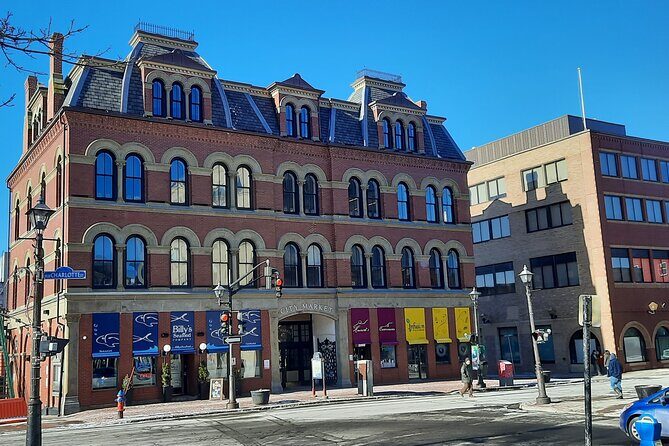
The tour opens at Water Street, with a short stop near Furlongs liquor store on the way to Market Square. It’s not a long pause, but these early street-corner moments matter because you start learning how Pete ties the city’s layout to its history.
Then you hit Market Square, which is where the tour starts feeling like a real narrative. Pete will point out where the Loyalist Landing in 1783 took place and where the Great Fire of Saint John began. Those are big turning points, and the way they’re anchored to exact locations helps you understand why the city grew the way it did.
Market Square also includes a fun, specific detail: Pete points you to the Prince Charles and Lady Diana walkabout location and shares context for why that event is remembered. It’s the kind of detail that makes a walk feel current, not trapped in the 1700s.
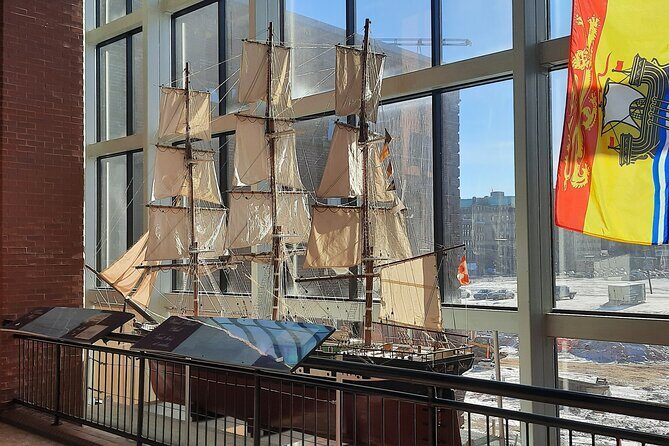
Inside Market Square, you’ll get time with the Marco Polo sailing ship model, plus the history behind that famous vessel. If you’re curious how Saint John moved from early settlement to seafaring connections and then into cruise-era prominence, this stop sets up the rest of the story in a smart way.
Potential drawback here: you’ll spend time at multiple spots with storytelling. If you get restless standing and listening for long stretches, plan to pace yourself and wear shoes that handle sidewalk time comfortably.
City Hall and City Market: Pete’s Pub stories and Canada’s oldest continuously operating market

From Market Square, the tour moves to Saint John City Hall. This is one of the stops that goes beyond generic civic history because Pete brings in personal local knowledge: the history of Pete’s Pub, including that he owned it, plus stories covering sports and entertainment and 35 years at the pub.
That personal angle is a big reason people rate this tour so highly. It doesn’t just ask you to believe facts; it shows how community life and downtown buildings connected over decades.
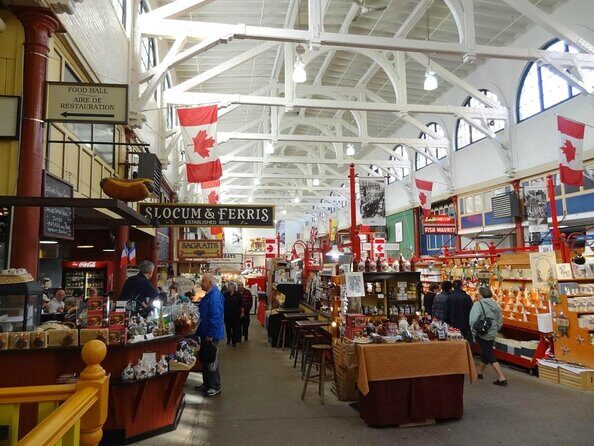
Next comes Saint John City Market. You’ll hear about the market’s architectural features and its history, including a standout claim: it’s the oldest continuously operating market in Canada. Even if you’re not a shopper, this is one of those stops where you learn what kind of city Saint John became—one where trade and daily life have deep roots.
Pete also gives a little extra time to shop here. If you like browsing local food products, crafts, or gifts tied to the region, this is your chance.
You can also read our reviews of more historical tours in Saint John

Charlotte Street murals and King’s Square: art in an alley and fire-scarred symbolism

After the market, the tour turns to Charlotte Street, where you’re guided toward murals of famous Saint John people. The way it’s described—lined up along a route that’s less obvious than the main streets—makes it one of those “you’d miss it without help” moments, even though it’s only a short walk.
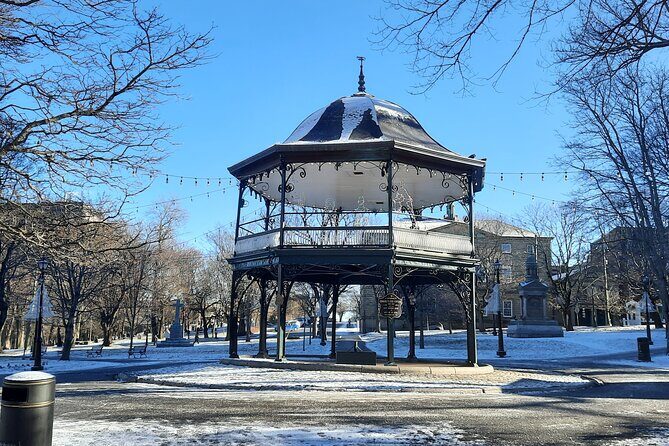
Then you land in King’s Square, created in the late 1700s context (the park is tied to 1785). Pete points out a set of major anchors here, including:
- a mass of molten metal from the Great Fire connected to the square
- the William Young statue
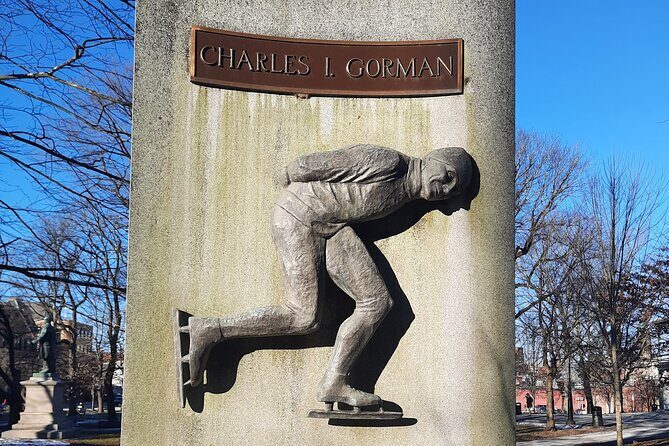
- the Charles Gorman statue
- the King Edward VII Bandstand
This stop is especially valuable if you like symbols—how a city remembers its disasters and its leaders. You’ll see physical reminders of the Great Fire’s impact and connect them to the people who shaped the downtown that followed.
If you’re the type who enjoys stopping for photos, King’s Square is a good place to slow down. If you’re not into photos, you can still get a lot out of Pete’s explanation of what these monuments mean.
Irving Oil headquarters, the Imperial Theatre, and the Admiral Beatty hotel era
Heading onward, you cross toward King Square South, where you’ll see the Irving Oil home office/headquarters. Pete explains the history of the Irving family in New Brunswick, starting with K.C. Irving in 1899.
From there, the route brings you to the Imperial Theatre. You’ll learn how it began as a vaudeville theatre in 1913, and Pete talks you through theatre features like the chandeliers and other details you might otherwise walk past.
Then you move to the Admiral Beatty building next to the Imperial Theatre. Pete shares how it began as a luxury hotel in 1925 and highlights famous visitors, including Amelia Earhart before her transatlantic flight. Even if you only know Earhart through headlines, it’s striking to hear how her story intersects with Saint John’s downtown presence.
Practical consideration: this section is more “buildings + background” than “big open-air views.” If you’re expecting nonstop waterfront views, manage your expectations. You’ll get strong value if you like architecture storytelling and the way downtown business and culture connect.
Trinity Church and Germain Street: Loyalist faith, named streets, and a business-club timeline
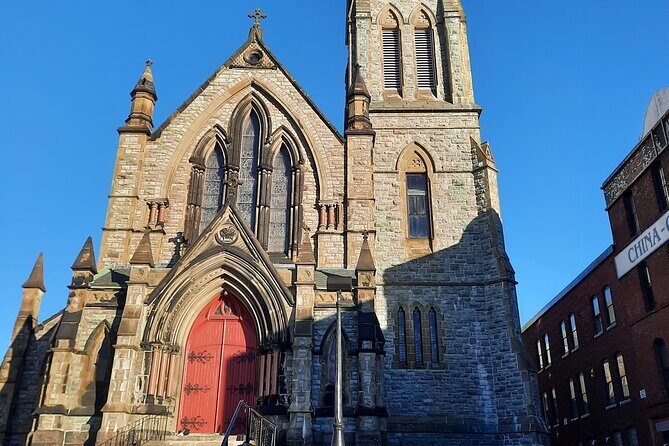
One of the most historically focused moments comes at Trinity Church. Pete describes it as a Loyalist church and explains its features and history, including four main artifacts held there.
Then the walk continues on Germain Street, named after Lord George Germain. Across from Trinity Church, you’ll also look toward the Union Club, a business club dating to 1884, and Pete examines what that kind of institution meant in the downtown social and economic life.
This part of the tour works well because it links street naming to real people, rather than treating names like trivia. You’ll finish this segment with a clearer sense of how British-era influence still shows up in Saint John’s identity.
Princess Street to Prince William Street: preservation, Chubb’s Corner, and the Wall Street of Canada feel
After Trinity and Germain, the tour turns through the streets toward Princess Street, near the intersection with Germain and Princess. Pete points out a modern building example built to match preservation standards, then moves you alongside the historic Ritchie building and its features.
Then you head onto Prince William Street, a street Pete frames as once known as the Wall Street of Canada. You’ll get a guided look at multiple important sites along the way, including:
- Chubb’s Corner with its carved stone heads
- an old City Hall
- the old post office
- the Jarvis building
- the Bank of New Brunswick Palatine building
- the Seamen’s Mission
The big storyline payoff comes with the Partridge Island mural near the Seamen’s Mission. Pete explains the island’s history tied to immigration and quarantine, with special emphasis on the Irish during the Potato famine. If you want one stop that gives you emotional context to the city’s growth—this is a top contender.
Three Sisters Lamp and the walk down to the cruise terminal era
Near the bottom of Prince William Street, you reach the Three Sisters Lamp in St. Patrick Park. Pete explains why it has that name and how the lamps helped save lives. It’s a small stop, but it connects street technology to real safety and daily movement.
The tour finishes at the Marco Polo Cruise Terminal, near Area 506 Waterfront Container Village. Pete tells the cruise industry story in Saint John—how it started and how the waterfront became tied to global travel.
This ending is a good fit for modern travelers who want today’s Saint John to make sense. You’re not only learning about the 1700s; you’re seeing the bridge to the present shipping and cruise-era identity.
How long the walk feels and who it suits best
The tour is listed at around 2 hours 30 minutes, and that timing can feel like a true “morning walk” or “active afternoon.” The good news is that the route is designed to keep it from turning into an extreme hill climb, using walkway systems/pedways.
It also stays manageable because the group is capped at 20. With a small group and Pete projecting his voice well, you’re less likely to feel lost at the back.
This is a strong choice if:
- you want a guided storyline more than just photos
- you enjoy local details about culture, architecture, and key events
- you like tours that teach you how to understand a city on foot
You might skip it if:
- you want a mostly seated experience
- you get tired standing and listening for a long stretch
- you’re only interested in a short list of famous monuments, not the in-between fabric of downtown
Should you book Pete’s Historic Walking Tour?
I’d book it if you want a smart, street-level history walk that explains why Saint John looks the way it does now. For $33.80, you’re getting a tight route, no extra admission at stops, and Pete Ferguson’s personal storytelling—especially the parts that connect Saint John’s early Loyalist era, the Great Fire, and the immigration/quarantine story to the modern downtown and cruise waterfront.
If your ideal tour is mostly sightseeing with minimal narrative, you may find the pace heavy on talking. But if you’re curious and you like learning while you walk, this one is built for you.
FAQ
How long is Pete’s Historic Walking Tour in Saint John?
It runs for about 2 hours 30 minutes.
How much does the tour cost?
The price is $33.80 per person.
Where do I meet, and where does the tour end?
You meet at Duke Street & Water Street in Saint John, NB, and the activity ends back at the meeting point.
Is the tour offered in English?
Yes, it is offered in English.
Are there admission fees at the stops?
The tour stops are listed as Admission Ticket Free.
What happens if the weather is poor?
The experience requires good weather. If it’s canceled due to poor weather, you’ll be offered a different date or a full refund.