REVIEW · CALGARY
Lake View Tour-Lake Moraine, Louise, Emerald, Peyto, Vermillion
Book on Viator →Operated by Banff2Go · Bookable on Viator
A great day in the Rockies is mostly about timing. This Lake View loop is a smart way to hit Moraine Lake and the Icefields area without renting a car, with air-conditioned comfort and a guide who keeps the day moving. I also like how they balance the must-sees (Lake Louise, Peyto) with smaller stops like Natural Bridge and Vermilion Lakes. The only real catch is the 10 to 12 hour pace—fast in a good way, but it’s still a long day outdoors.
What I liked most was how the guides handle the in-between parts—getting you to the right viewpoints and answering questions on the spot. I’ve seen names like Jasha, Robin, Alex, Jesh, Hovin, Caroline, and Jerome mentioned in the way they run the trip, and that attention shows in the smooth drive and the clear explanations. The possible drawback to watch for: your plan may shift by season, since Johnston Canyon can be replaced by Moraine Lake after June 1.
In This Review
- Key highlights you’ll feel right away
- The value of a Calgary-to-Lakes day that doesn’t waste your time
- Johnston Canyon or Moraine Lake: the June 1 seasonal swap that matters
- Johnston Canyon: limestone gorge views, waterfalls, tunnels, and pools (when included)
- Moraine Lake: the Valley of the Ten Peaks classic (after June 1)
- Lake Louise + the visitor center break: turquoise lake time and a lunch reset
- Crowfoot Glacier and Bow Lake on the Icefields Parkway: quick hits with payoff
- Peyto Lake at its best: bright color and a Bow Summit viewpoint
- Emerald Lake + Natural Bridge in Yoho: a change of scenery with less crowd pressure
- Vermilion Lakes near Banff: the easy ending with wildlife potential
- Guides make the day: what I’d watch for on your trip
- Price and value: what $115.76 gets you (and what to budget for)
- Should you book Lake View Tour-Lake Moraine, Louise, Emerald, Peyto, Vermillion?
- FAQ
- How long is the Lake View Tour?
- What is included in the price?
- Are meals included?
- Do I get charged gratuities?
- What happens if I’m visiting before or after June 1?
- What if the weather is poor?
Key highlights you’ll feel right away
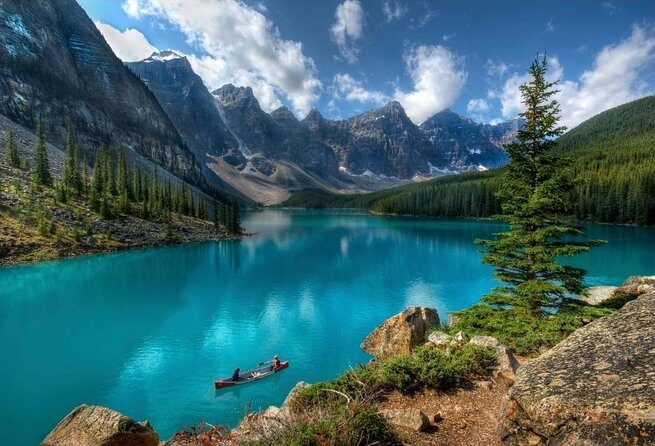
- Moraine Lake in the Valley of the Ten Peaks: a high-priority stop timed for great lake light after June 1
- Peyto Lake from Bow Summit area: the bright turquoise look comes from glacial rock flour in the water
- Icefields Parkway classics: Crowfoot Glacier viewpoints plus a real stretch-your-legs break at Bow Lake
- Yoho National Park contrast: Emerald Lake and Natural Bridge add variety beyond Banff’s lakes
- Short Vermilion Lakes detour near Banff: easy wildlife-and-sunset potential without overcommitting
- Max 50 travelers: small enough to feel personal, large enough that the schedule stays efficient
The value of a Calgary-to-Lakes day that doesn’t waste your time
This tour is built for people who want the big Rocky Mountain hits in one shot. You’re leaving from Calgary and spending roughly 10 to 12 hours on the road and at stops, in an air-conditioned vehicle with bottle water provided. With a maximum of 50 travelers, the day tends to feel organized rather than chaotic.
The big value for me is practical: driving yourself to Lake Louise and Moraine Lake can eat up time and energy, especially if you’re not used to mountain roads and parking. This kind of guided loop lets you spend your energy on looking out the window (and getting out at the best photo points). Also, it’s sold as English and uses a mobile ticket, so you’re not juggling paper.
Yes, it’s a full day. If your idea of vacation is slow lunches and long walks, you might prefer a multi-day plan. If you want a focused “see it all” day with smart breaks, this is the style that fits.
You can also read our reviews of more tours and experiences in Calgary.

Johnston Canyon or Moraine Lake: the June 1 seasonal swap that matters
One detail you should plan around: Johnston Canyon is listed as the first stop, but after June 1 it’s replaced by Moraine Lake. Moraine Lake is specifically noted as available after June 1, which is a hint that your exact itinerary depends on your travel date.
So if you’re traveling in early summer after June 1, you should expect Moraine Lake to be part of the core experience. If you’re earlier than that, you’re more likely to get Johnston Canyon as your early highlight.
Either way, your mental checklist should be flexible. You’re doing a lakes-and-views day, but the “signature” lake may change based on what’s available.
Johnston Canyon: limestone gorge views, waterfalls, tunnels, and pools (when included)
When Johnston Canyon is on the route, it’s a very different vibe from the glacier lakes. This is a gorge carved by Johnston Creek through limestone, shaped over thousands of years. The result is dramatic canyon walls plus the fun extras: waterfalls, tunnels, and pools.
It’s also the kind of stop that works even if you’re not a “hike all day” person. With about 1 hour 30 minutes listed for Johnston Canyon, you’ll have time to walk the main areas, take photos, and still get back on the bus without feeling rushed later.
One practical note: canyon viewpoints can involve steps and uneven surfaces. If you’ve got a walking stick, bring it. One traveler specifically wished they’d had one, and that’s exactly the kind of comfort item that can turn a good stop into a great one.
Moraine Lake: the Valley of the Ten Peaks classic (after June 1)
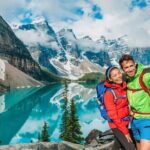
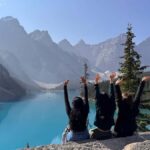
After June 1, Moraine Lake becomes the star early in the day. This glacially-fed lake is set in the heart of Banff National Park and framed by the towering Valley of the Ten Peaks—the kind of backdrop that makes you pause even when you’re not trying to.
You get about 1 hour 20 minutes here, which is enough time to find a good viewpoint, enjoy the lake color, and take photos without the day feeling like it’s sprinting only through the biggest names. Also, Moraine Lake’s admission is included, which is nice because it keeps your budget predictable.
If you care about photos, this stop is the one to treat like a priority. Even if the rest of the day is strong, Moraine tends to be the moment you’ll remember when you’re back home.
Lake Louise + the visitor center break: turquoise lake time and a lunch reset
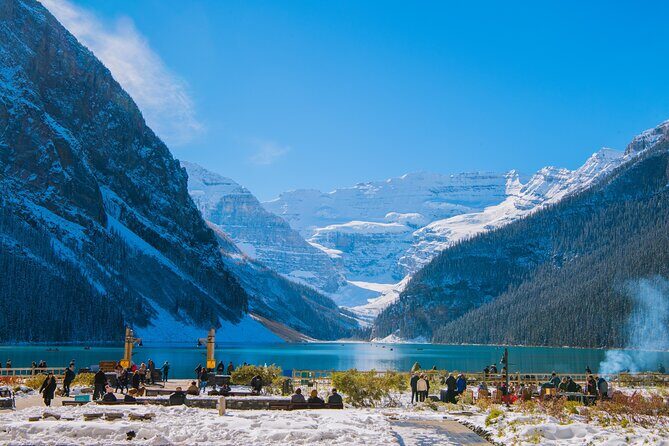
Lake Louise follows next, with about 1 hour allocated at the glacial lake itself. This is the turquoise water people chase, and it makes sense: rock flour carried by meltwater from glaciers gives the lake its distinctive color. The tour time is short enough to keep things moving, but long enough to enjoy the main views.
Then you get a 45-minute break at the Lake Louise Visitor Information Centre. I like this part because it’s not just sitting in town—it’s a proper pause. You’re at the highest mini town stop on the route (elevation is listed as 1,661 m), so it helps to have a centralized place for lunch, quick shopping, and bathroom breaks.
Admission at the Lake Louise stop is listed as free, and you can use that visitor center time to manage your day. If you’re hungry, this is where you reset before the Icefields stretch.

Crowfoot Glacier and Bow Lake on the Icefields Parkway: quick hits with payoff
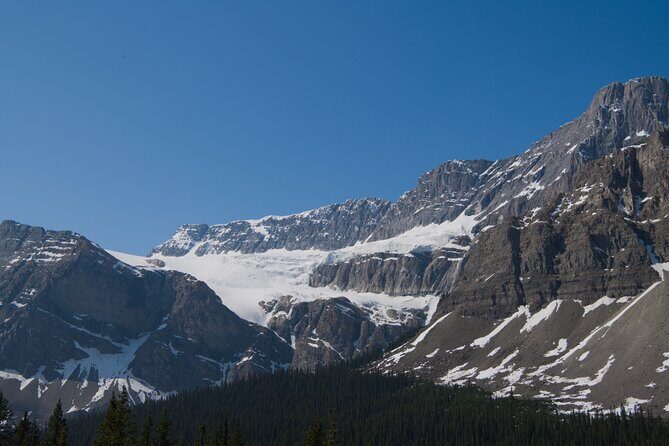
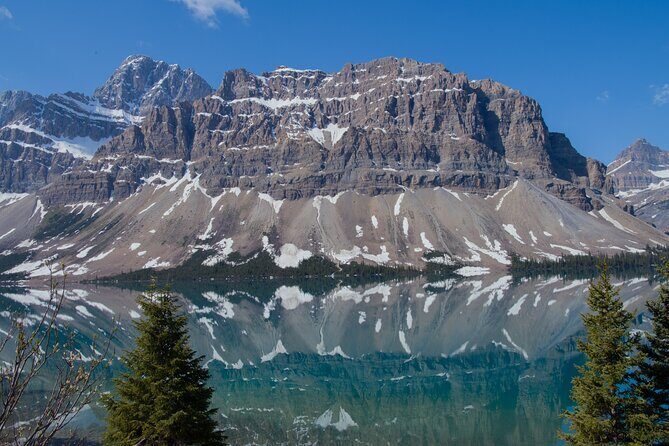
After Lake Louise, the tour leans into the Icefields Parkway highlights. Crowfoot Glacier is a short viewpoint stop—only 10 minutes—but it’s one of those places where the time is about getting the right angle. The name comes from how the glacier’s three sections once looked like a crow’s foot, even though one part has receded over time. From the lookout, you’re also looking above Bow Lake, which adds depth to the photos.
Then you move to Bow Lake, with about 30 minutes. This one is a better “stretch your legs” stop. There’s mention of a lakeshore trail that can be family-friendly, but even if you keep it short, the break is valuable because you’re about to keep going.
These two stops work as a rhythm: quick glacier wonder, then a calm lake break. That pacing is part of why the day feels full without feeling like nonstop strain.
Peyto Lake at its best: bright color and a Bow Summit viewpoint
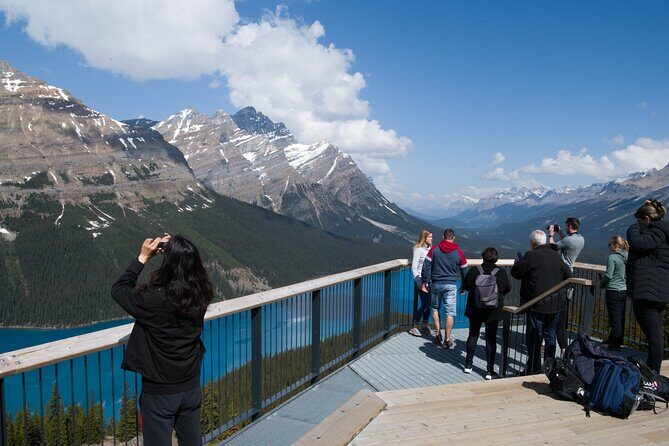
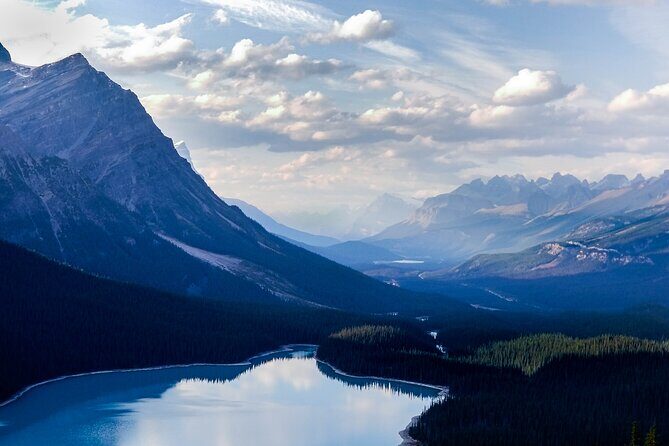
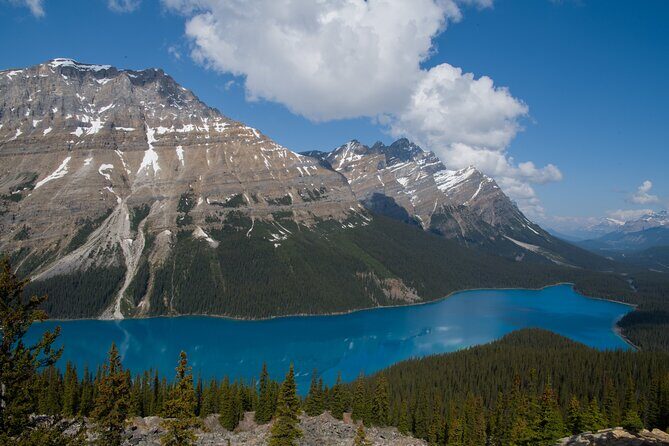
Peyto Lake is one of the most photogenic stops on the route, and the tour gives it about 45 minutes. The turquoise color comes from suspended glacial rock flour flowing into the lake during summer. In other words: it’s not just a pretty color—it’s a specific process tied to how the glaciers feed the water.
Peyto Lake is best seen from the highest point on the Icefields Parkway area, listed as Bow Summit. That matters because Peyto isn’t just “any roadside lake.” You want the view angle that shows the shape and the color together.
This is also the kind of stop where a good guide makes a difference. The tour description ties Peyto to the larger flow of the area (Peyto Creek, Mistaya River), and that’s the sort of context that can turn a photo stop into a learning moment without slowing you down.
Emerald Lake + Natural Bridge in Yoho: a change of scenery with less crowd pressure
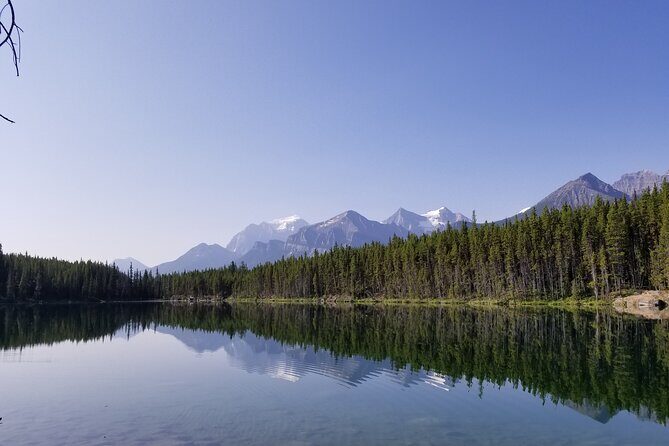
After the Banff-area lake circuit, the route heads into Yoho National Park for Emerald Lake. You get about 1 hour here. Emerald Lake is described as freshwater and enclosed by mountains of the President Range, giving it a distinctly different feel than the Banff lakes you’ve just seen. It’s a good way to break up the day’s main theme of turquoise glacial lakes.
Then you hit Natural Bridge, about 20 minutes. This is a rock formation where the Kicking Horse River flows over a hard limestone band, leaving a powerful span shaped by erosion. The description notes how softer rock below eroded more quickly and how fissures widened so the water eventually diverted below.
This stop is short, which is exactly right for Natural Bridge. It lets you see the feature, understand why it looks the way it does, and keep energy for the final driving stretch.
Vermilion Lakes near Banff: the easy ending with wildlife potential
The last stop on the route is Vermilion Lakes Drive, with about 15 minutes. These lakes are west of Banff, formed in the Bow River valley at the foot of Mount Norquay. The area is known for wildlife viewing opportunities and scenic views of Mount Rundle and Sulphur Mountain.
I like a short closing stop like this because it gives you options. You can stay on the move, take a quick loop for photos, or just soak in the view before heading back. It’s also one of the easiest stops on the schedule to keep expectations realistic—short time, good payoff, and a chance to end on something more gentle than a long viewpoint climb.
Guides make the day: what I’d watch for on your trip
This is where the tour earns its high marks. Guides like Jasha, Robin, Alex, Jesh, Hovin, Caroline, and Jerome are specifically called out for being informative, caring, and helpful with questions. I’d take that as a sign that you’re not just buying transportation—you’re buying explanations and on-the-spot help.
One detail that matters: careful driving. A traveler noted that Alex was a careful driver, which is a big deal when you’re spending hours on mountain roads. Another point that came up is how guides help you get oriented fast—so you’re not standing around wondering where to look.
One practical lesson from the experience: consider bringing a walking stick if you use one. It’s not a dramatic feature of the itinerary, but it can make early stops feel easier, especially on terrain that involves stairs and uneven paths.
Price and value: what $115.76 gets you (and what to budget for)
At $115.76 per person, you’re paying for a guided, full-day circuit across some of the most famous Rocky Mountain lake areas. For that price, the tour includes bottle water, an air-conditioned vehicle, and GST. Moraine Lake admission is included, which is one less item to worry about.
What’s not included is just as important: meals are not included, and gratuities are listed as CA$10.00 per person. You’ll have lunch access time around the Lake Louise Visitor Information Centre, so you can plan to eat there or buy snacks during the day. If you don’t want to pay restaurant prices all day, stock up before you head out from Calgary or plan on a simple meal at that visitor center stop.
Is it worth it? For many people, yes—especially if you don’t want to drive yourself to Lake Louise and Moraine Lake. This tour saves time and stress, and it puts multiple top stops in one day. If you’d rather control every minute, you can DIY by car, but you’ll spend more time coordinating parking and timing. This tour is the “I want to see the highlights without the logistics” option.
Should you book Lake View Tour-Lake Moraine, Louise, Emerald, Peyto, Vermillion?
Book it if you want one full day that hits the headline lakes—Moraine Lake (after June 1), Lake Louise, Peyto Lake, plus the Icefields Parkway viewpoints and a couple of Yoho National Park surprises. It’s also a good fit if you value guided context, want a careful driver, and like the idea of a structured plan with realistic breaks.
Skip it if you hate long days or you want unhurried wandering with lots of downtime. This route is designed for efficiency, not for hanging around one spot for half a day.
If you’re going in summer, and you can handle a packed schedule, you’ll likely come away with a strong set of lake photos and a better sense of how the glaciers, rivers, and rock formations connect across the region.
FAQ
How long is the Lake View Tour?
It runs about 10 to 12 hours.
What is included in the price?
The tour includes bottle water, an air-conditioned vehicle, and GST. Moraine Lake admission is included; many other stops list admission as ticket-free.
Are meals included?
No. Meals are not included, and there is a lunch break at the Lake Louise Visitor Information Centre.
Do I get charged gratuities?
Yes. Gratuities CA$10.00 per person are not included.
What happens if I’m visiting before or after June 1?
The tour notes a seasonal change: Johnston Canyon is replaced by Moraine Lake after June 1. Moraine Lake is available after June 1.
What if the weather is poor?
This experience requires good weather. If it’s canceled due to poor weather, you’ll be offered a different date or receive a full refund. You can also cancel up to 24 hours in advance for a full refund.