REVIEW · CANADIAN MUSEUM OF HISTORY
Gatineau: Canadian Museum of History Admission
Book on GetYourGuide →Operated by Canadian Museum of History & War Museum · Bookable on GetYourGuide
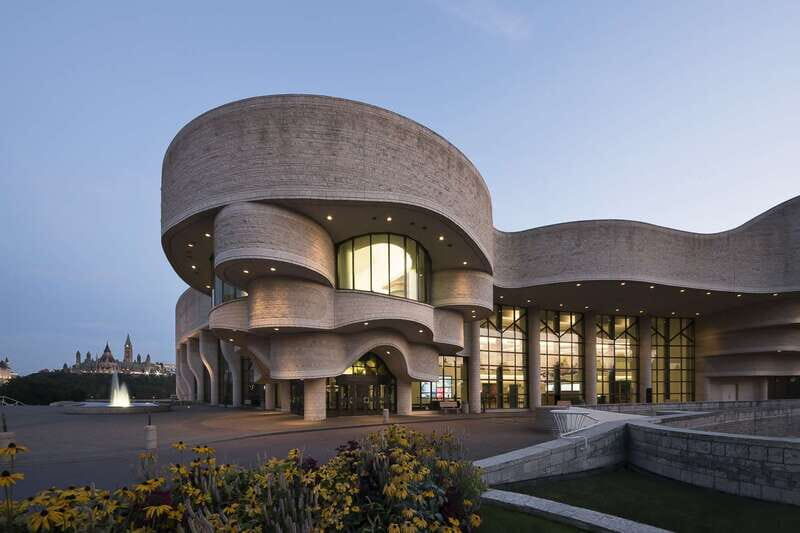
Four floors of Canadian stories, no hard sell. The Canadian Museum of History in Gatineau is set up for both big-picture learning and close-up details, including the world’s largest indoor collection of totem poles. I also like that the museum’s design and storytelling connect you to Indigenous histories through a building by Indigenous architect Douglas Cardinal and exhibitions shaped in collaboration with Indigenous Peoples.
You’ll likely love the Canadian History Hall most if you want a guided-feeling path through time, with personal stories and 1,500 authentic artifacts that cover 15,000 years. One drawback to plan for: it’s a large museum spread over four floors, so if you don’t choose priorities, you can feel worn out and still miss key sections.
In This Review
- Key highlights to plan around
- Gatineau museum pass: a smart Ottawa-area day
- Ticket value: why $20 makes sense here
- Douglas Cardinal’s building: more than a backdrop
- Canadian History Hall: your fastest path through 15,000 years
- Totem poles inside: the giant-scale wow moment
- Exhibitions with multiple voices (and some hard history)
- Family-friendly add-on: Canadian Children’s Museum
- Cinematic break: Ciné+ documentary films
- How to pace a four-floor museum day without missing the point
- Who should book this admission pass?
- Should you book this Canadian Museum of History admission?
- FAQ
- Where is the Canadian Museum of History?
- How much is admission?
- How long is this experience?
- What’s included with the admission ticket?
- Is parking included?
- Are food and drinks included or allowed?
- Are pets allowed?
- What about cancellations and booking flexibility?
- Is the museum wheelchair accessible?
Key highlights to plan around
- World’s largest indoor totem pole collection plus a Northwest Coast village-style presentation
- Canadian History Hall with 15,000 years of social history and 1,500 authentic artifacts
- Indigenous Peoples’ achievements and traditions shown across multiple galleries and perspectives
- Four floors of permanent and special exhibitions covering both achievements and darker chapters
- Canadian Children’s Museum for hands-on play
- Ciné+ larger-than-life documentary films for a natural midday break
Gatineau museum pass: a smart Ottawa-area day

If you’re staying in Ottawa, this museum day feels like the easiest kind of “big cultural stop.” The Canadian Museum of History is in Gatineau, Quebec, right on the riverfront across from Parliament Hill, so the location alone makes it worth weaving into a one-day plan.
The address is 100 Rue Laurier, Gatineau. You can get there on foot or by bicycle, and public transit works well too. In summer, Aqua-Taxi is an option, and you can drive and park on site if you prefer.
Plan for a full museum day because admission isn’t just one gallery—it’s a big indoor campus of exhibits. Even with a tight schedule, you’ll want to move with purpose (more on that below).
Ticket value: why $20 makes sense here

Price is about $20 per person, and the value comes from what that ticket actually covers. Admission includes:
- Permanent galleries and special exhibitions
- Canadian Children’s Museum
- Ciné+ documentary films
- A multilingual Museum Guide app
- Complimentary coat check
What’s not included is also important: food and drinks aren’t included, and parking costs extra. Food isn’t just a budget issue—it matters because food and drinks aren’t allowed inside, so you’ll want to time your meals around your museum visit.
If your trip overlaps with summer youth discounts, it can get even better. The Canada Strong Pass initiative offers discounted general admission to national museums from June 20 to September 2, 2025 for young people. Also: children and youth aged 17 and under get free general admission, and young adults aged 18 to 24 get 50% off with proof of age possibly required.
If you don’t fall into those groups, you’re still paying for a lot: history exhibits, family play space, and film programming all under one ticket.
Douglas Cardinal’s building: more than a backdrop
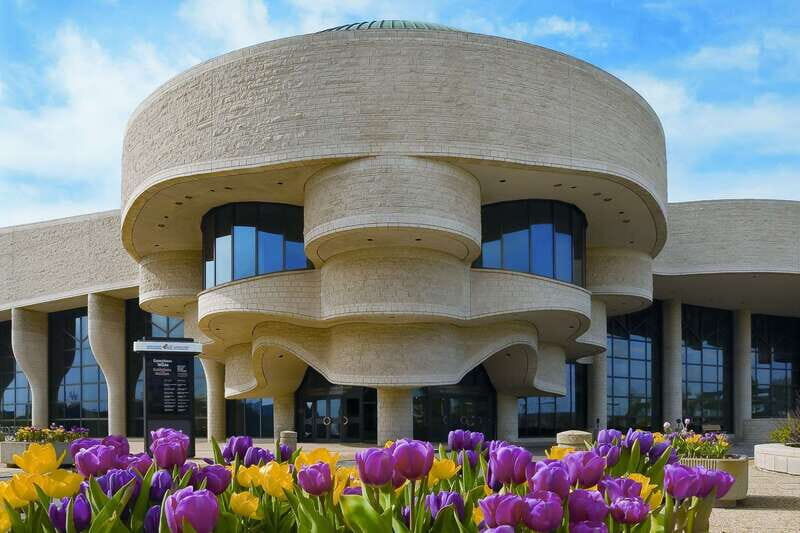
This museum sits in an iconic building designed by Indigenous architect Douglas Cardinal. That architectural choice isn’t just design trivia. It sets a tone: the space feels intentional about presence, perspective, and the role of Indigenous storytelling in Canada’s national narrative.
You’ll also notice how the building supports exploration. Exhibits are spread across four floors, and the museum uses the space to separate themes while still keeping the overall story cohesive. That’s ideal for a one-day visit, because you can focus on one or two big areas without feeling like you’re stuck in a single long corridor.
Canadian History Hall: your fastest path through 15,000 years
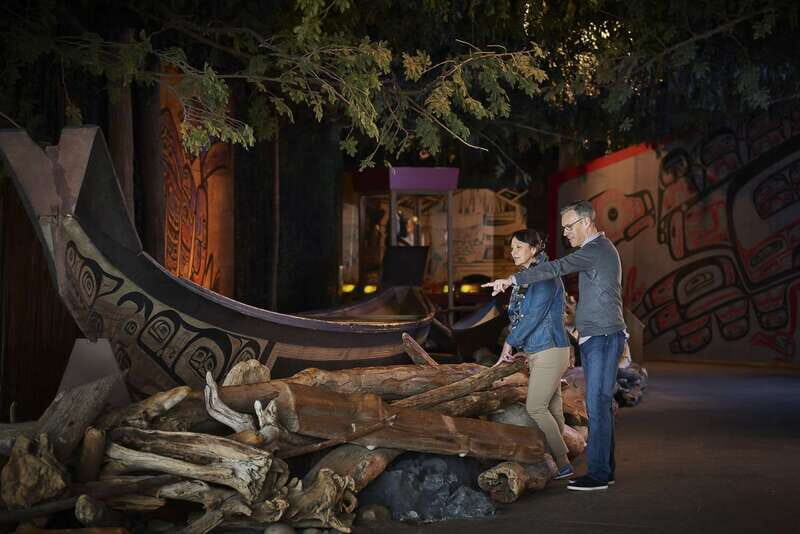
If you want one area that functions like the museum’s anchor, make it Canadian History Hall. It’s built to give access to 15,000 years of social history using:
- Personal stories
- 1,500 authentic artifacts
- Many items described as national treasures
What I like about this setup is that it doesn’t treat history like a timeline you memorize. You get narratives connected to objects—so even if your knowledge starts from zero, you can still follow along.
The hall also reflects how the museum approaches Canadian history overall: multiple perspectives, and a willingness to cover both achievements and difficult chapters. That matters because it helps you avoid the “only the proud parts” version of national history.
Practical tip: if you’re trying to fit everything into one day, start here, then branch out. It gives your brain a framework so the rest of the galleries make more sense.
Totem poles inside: the giant-scale wow moment
The museum’s headline attraction is the world’s largest indoor display of monumental totem poles. This isn’t a small display you pass on the way to something else. It’s big, indoor, and built to be seen as an immersive presentation.
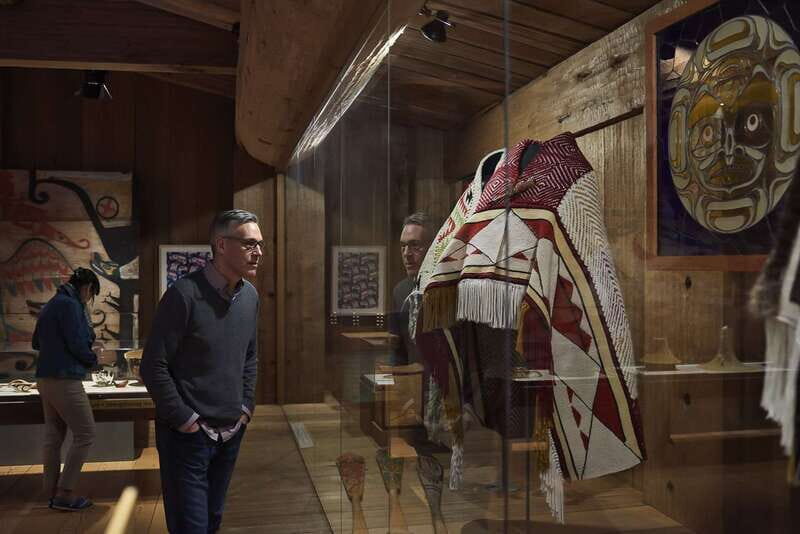
You also get a Northwest Coast village-style element: six traditional Native house fronts arranged in the shape of a 19th-century Northwest Coast village. That kind of arrangement changes how you experience the poles. Instead of a row of objects, you get a sense of how the structures and forms relate to community life and regional traditions.
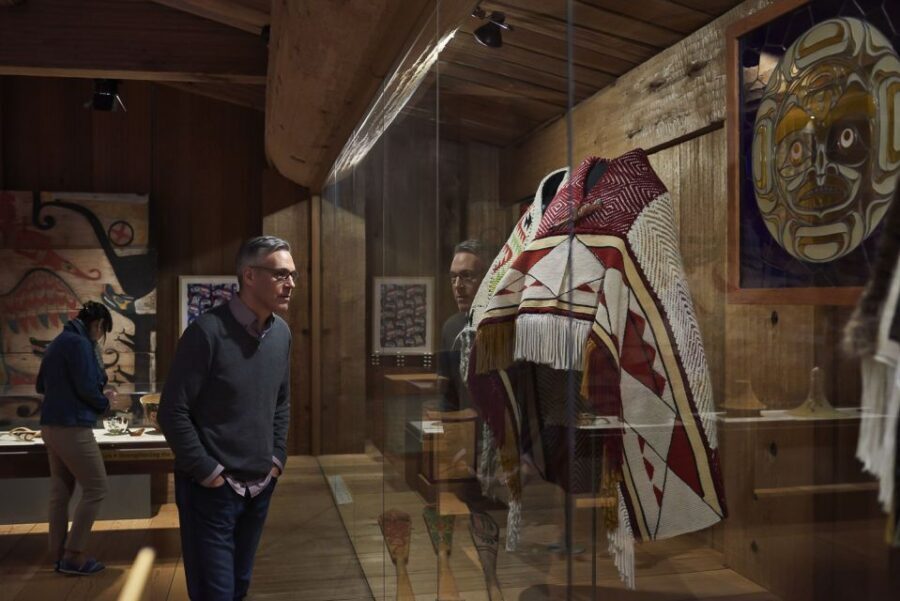
There’s also a dedicated space for Indigenous Peoples’ achievements and traditions, so the museum doesn’t keep Indigenous history stuck in the past. It connects heritage to cultural continuity and modern expression.
How to enjoy it: slow down at the scale. Indoor monumental poles can feel overwhelming if you rush. Take a minute to look at details and placement, then circle back if you want a second pass with a calmer eye.
Exhibitions with multiple voices (and some hard history)
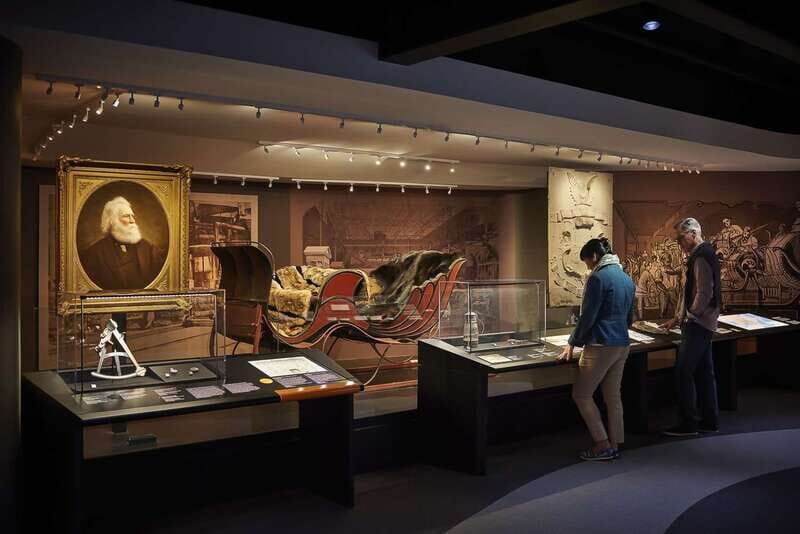
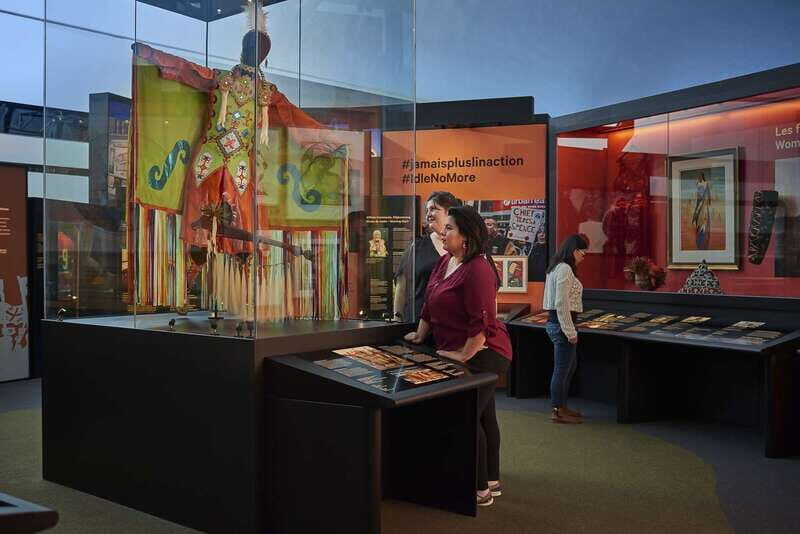
Across the museum, exhibitions examine the events, personalities, and cultures that shaped Canada. The museum’s approach is notably reflective: it shares stories in collaboration with Indigenous Peoples and covers resilience and diversity across Canada.
At the same time, the museum doesn’t avoid darker chapters of Canadian history. If you prefer museums that stick to only celebratory narratives, this may feel heavier than expected. If you want the fuller picture, it’s one of the reasons this museum is so popular.
Special exhibitions can also add a fresh perspective. The museum is a destination for major international exhibitions, often produced in partnership with well-known institutions. Translation: you’re not only limited to permanent galleries—you can catch changing content too.
Family-friendly add-on: Canadian Children’s Museum
The ticket includes the Canadian Children’s Museum, and that’s a big deal if you’re traveling with kids. Instead of spending the whole day trying to find activities that work for different ages, you get a built-in place for hands-on play.
The museum’s description emphasizes learning through play, which is usually a win for families because kids aren’t just listening to exhibits—they’re interacting with the museum’s ideas in a more age-friendly way.
If you’re going with children, I’d treat the Children’s Museum as part of the day plan, not a last-minute hope. Put it on your route early enough that you’re not scrambling when energy drops.
Cinematic break: Ciné+ documentary films

Ciné+ is another inclusion that helps your day feel less like nonstop walking. You can watch larger-than-life documentary films, which gives you a “sit-down” reset between exhibit sections.
This is especially useful in a one-day format. Museums are physical, even indoors. A film break helps you recharge your attention so you can return to galleries with better focus.
How to pace a four-floor museum day without missing the point
You’re visiting a museum built for deep time and big themes—so pacing matters. Here’s how I’d set up your day so you don’t burn out.
1) Start with your anchor
- Begin with Canadian History Hall so your brain has context.
2) Pick one major visual highlight
- Then head for the totem poles and the Northwest Coast village-style presentation.
3) Use the app to move faster
- The multilingual Museum Guide app can help you choose what’s worth your attention instead of zigzagging across all floors with no plan.
4) Plan a mid-day reset
- Slot in Ciné+ as your break.
5) Handle family needs intentionally
- If you have kids, place the Canadian Children’s Museum when everyone is still reasonably patient.
What to bring is simple and practical: comfortable shoes. This is one of those days where your feet will write the itinerary for you, so don’t fight your own body.
Also remember two behavioral rules that affect planning:
- No smoking
- No food or drinks inside
If you’re used to grabbing snacks inside attractions, adjust your expectations. Bring your meal plans outside the museum experience.
Who should book this admission pass?
This pass fits best if you want one national-level museum day that covers both human history and Indigenous perspectives without needing extra tickets.
I especially think it’s a good match for:
- People who want 15,000 years of Canadian social history in one place
- Families who need both learning and play (Children’s Museum is included)
- Visitors who want the museum’s Indigenous storytelling front and center, including the totem pole presentation and related galleries
- Anyone who likes museums that handle both achievements and difficult chapters
It’s also wheelchair accessible. Kids can visit by themselves only when they’re older: children 12 and above can visit the museum by themselves, while children under 12 need an adult escort.
Should you book this Canadian Museum of History admission?
I’d book this if you want a high-impact day without extra add-ons. For $20, you’re getting more than exhibits: you get the Canadian History Hall, the indoor totem pole wow factor, Indigenous-focused galleries, plus Children’s Museum and Ciné+ under the same admission.
Skip it or reconsider if you hate large spaces and would rather do smaller, more focused museums. This one rewards people who pick priorities and move with a plan across four floors.
Also, take note of the timing and discounts. If you’re eligible for free admission under 17 or 50% off for ages 18–24, the value jumps fast. And if your dates fall inside the Canada Strong Pass window, it can be a smart savings play.
FAQ
Where is the Canadian Museum of History?
It’s located in Gatineau, Quebec at 100 Rue Laurier, Gatineau, Quebec, Canada.
How much is admission?
Admission is listed at $20 per person.
How long is this experience?
The duration is 1 day.
What’s included with the admission ticket?
The ticket includes admission to the Canadian Museum of History, access to the Canadian Children’s Museum, access to Ciné+, access to permanent galleries, access to special exhibitions, a multilingual Museum Guide app, and complimentary coat check.
Is parking included?
No. Parking is available on site, but it costs extra.
Are food and drinks included or allowed?
Food and drinks aren’t included, and food and drinks are not allowed in the museum.
Are pets allowed?
Pets aren’t allowed. Assistance dogs are allowed.
What about cancellations and booking flexibility?
You can cancel up to 24 hours in advance for a full refund. You can also reserve now and pay later.
Is the museum wheelchair accessible?
Yes, the museum is wheelchair accessible.