REVIEW · BANFF
From Banff: Snowshoeing Tour in Kootenay National Park
Book on GetYourGuide →Operated by Discover Banff Tours · Bookable on GetYourGuide
Snowshoeing here feels like play in powder. I love the beginner-friendly pace with a guide showing you exactly how to move in deep snow, and I also love the Paint Pots mineral story—both nature and culture in one easy loop. One heads-up: even though the outing runs about 4 hours, the actual walking time can feel shorter than you expect once you factor in setup and the drive.
This is a small-group tour (max 12) with pickup at the Mount Royal Hotel, so you spend more time outside and less time herding people. You finish with hot chocolate and a hands-on Canadian treat—hot maple taffy poured into snow—plus a crazy carpet slide that can be as fun as the snowshoeing itself.
In This Review
- Key points before you go
- From Banff pickup to Kootenay’s Paint Pots
- Getting your snowshoes on (and actually enjoying it)
- The easy 3-kilometer walk to Paint Pots
- Stories about the Rockies: indigenous life, explorers, fur trade
- Hot chocolate and maple taffy in the snow
- How much effort is this really?
- Price and value for a 4-hour Banff winter outing
- What to wear and pack for Paint Pots snowshoeing
- Small-group vibe and guide attention
- Who should book this snowshoe tour?
- Should you book the From Banff: Snowshoeing Tour in Kootenay National Park?
- FAQ
- How long is the tour from Banff to Kootenay National Park?
- Is this snowshoeing route suitable for beginners?
- What’s included in the price?
- Where do I meet for pickup in Banff?
- What should I wear or bring for winter?
- What is the minimum age to join?
Key points before you go
- 3-kilometer Paint Pots route: mainly flat, made for easy-going winter walking
- Snowshoe fitting + poles: you get gear and coaching, not just a handoff
- Frozen Vermilion River crossing: a quick scenic moment on the way in
- Paint Pots meaning: mineral deposits once used by First Nations people for rock painting
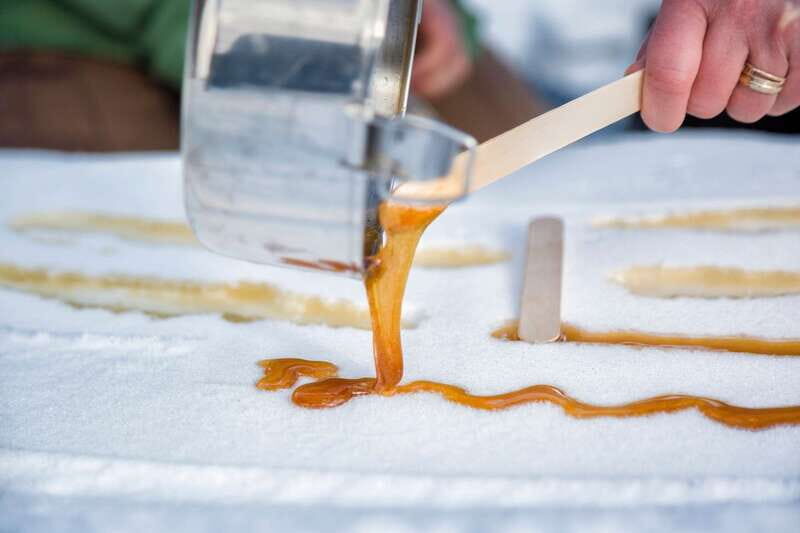
- Hot maple taffy in snow: a real winter dessert ritual, not a vague snack
- Small group of 12: you get time and attention from the guide
From Banff pickup to Kootenay’s Paint Pots
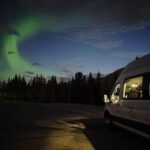
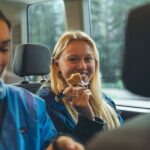
The day starts right in Banff at the Mount Royal Hotel area. You meet at the public bus parking spot behind the hotel on Banff Ave, then hop into a modern minibus for the drive south into Kootenay National Park. If you’ve only seen these Rockies from roads and pullouts, this transfer is a nice reset: you’re already heading toward the quieter valleys and forests, and you’re not doing the logistics on your own.
The drive matters more than you might think. It puts you in the right winter mindset—slow down, dress properly, and get ready for an outdoor rhythm. By the time you reach the trailhead, you’re not just cold and rushed. You’re ready.
You can also read our reviews of more tours and experiences in Banff.
Getting your snowshoes on (and actually enjoying it)
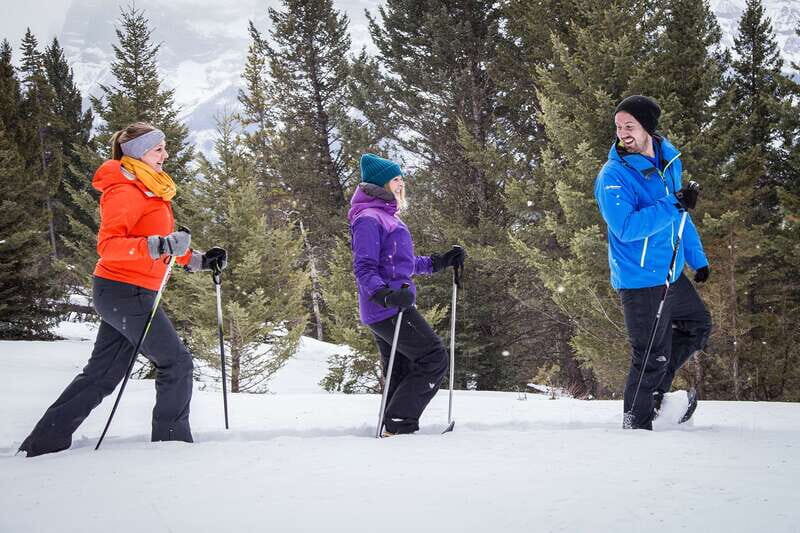
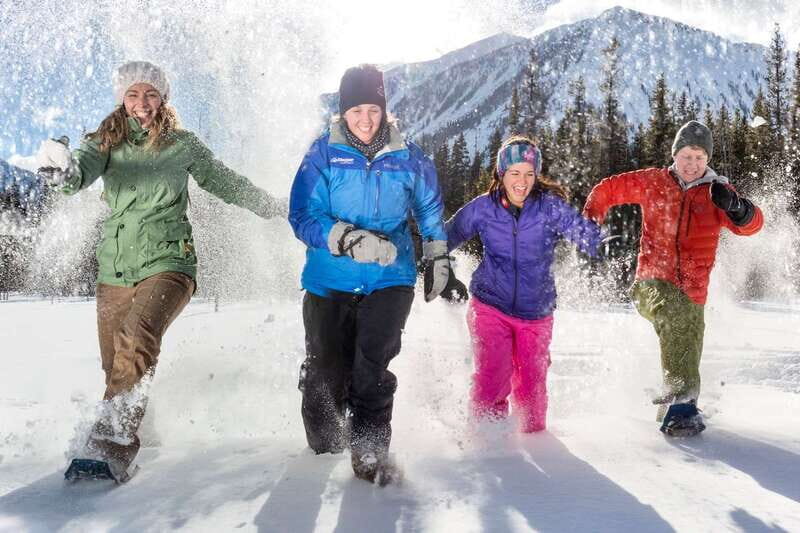
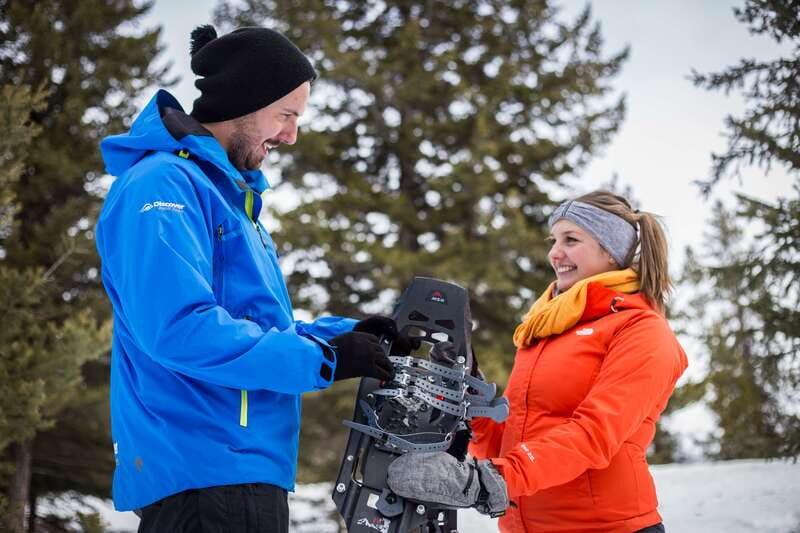
At the trailhead, the guide helps you get snowshoes over your winter boots and gives a quick introduction to how to walk in them. This isn’t complicated stuff. The goal is simple: keep you balanced, moving smoothly, and confident on a trail that winds through the forest.
They also provide hiking poles, which is a big deal on snowshoe tours. Poles help you keep stable in soft snow and reduce strain in your knees and hips—especially if you’re new to this. You’ll likely hear a few practical tips right away, like how to distribute your weight and how to take each step without fighting the snow.
And because the group stays small (up to 12), the guide can adjust for different walking speeds. That’s the difference between feeling like you’re just following someone and feeling like you’re learning as a group.
The easy 3-kilometer walk to Paint Pots
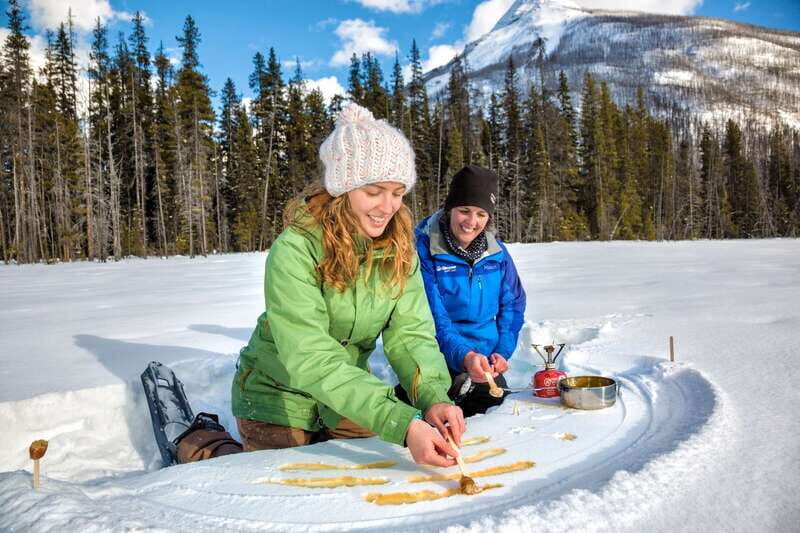
The main walk is about 3 kilometers (roughly 1.86 miles). It’s described as an easy, winding forest trail with mainly flat terrain and minimal elevation gain. Translation: you should feel like you can keep a steady pace without feeling wrecked. This is the kind of route that lets you look around—trees, snow textures, and those bright winter shadows that make the woods feel extra clean.
Along the way, you cross a bridge over the frozen Vermilion River. That moment gives you a real sense of where you are—water locked in winter, forest packed with snow. It’s a short segment, but it’s the kind of scene you’ll remember later.
Then you reach the Paint Pots area, where the story shifts from “nature walk” to “meaningful place.” The mineral deposits here were used by First Nations people for rock painting. Seeing this after learning what it was used for changes the vibe of the whole trail. You’re not just looking at a hillside with color. You’re learning how people interpreted the land—and how that land helped them make art.
Stories about the Rockies: indigenous life, explorers, fur trade
Once you start moving, you don’t just get facts read at you. You get stories connected to what you’re walking through. The guide shares history tied to the region—Banff’s Indigenous people, explorers, and fur traders who lived in or traveled through the Rockies.
That matters for two reasons:
- It helps you place the area beyond the postcard view.
- It gives your walk a sense of direction, like you’re tracing a trail people once traveled for survival, trade, and connection.
In the past, guides on this kind of outing have been described as friendly, talkative, and good at keeping everyone involved. Names that show up in past bookings include Jeff, Ben, Eli, Neil, Chloe, Gina, Bastian, and others. You won’t know exactly which guide you’ll get, but it’s a good sign that the experience tends to be guided with energy—not a silent shuffle.
Hot chocolate and maple taffy in the snow
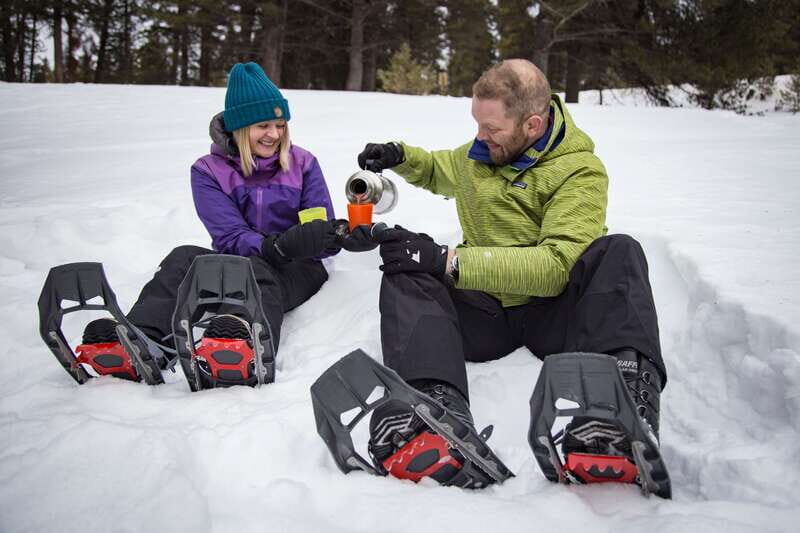
After the winter walk, you warm up with hot chocolate. That’s simple, but it works. In cold weather, you don’t want your treat to be after a long delay. You want it right when your hands and cheeks are starting to feel the chill. This timing helps you bounce back and enjoy the next part of the experience.
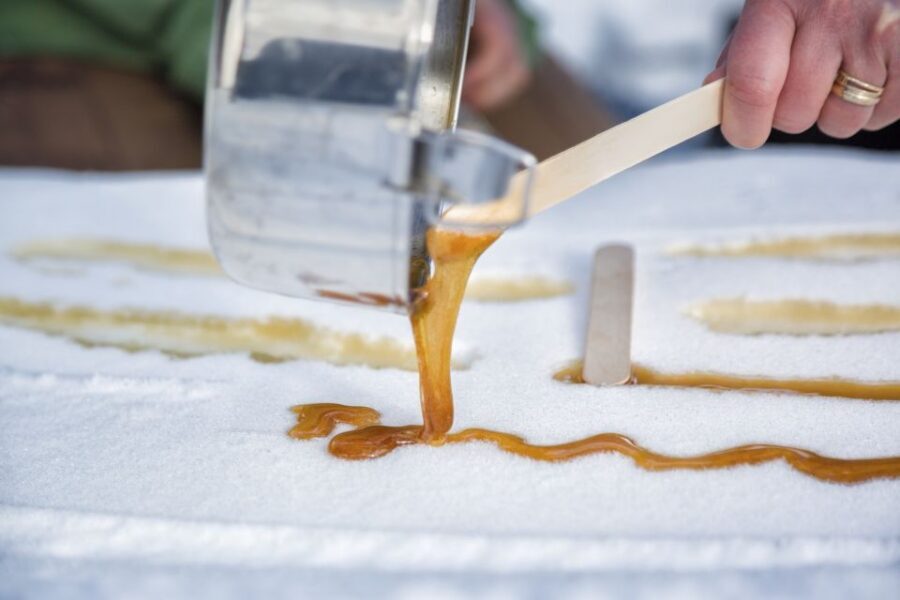
Then comes the Canadian treat: hot maple taffy poured into snow, made into a sweet frozen dessert. It’s playful and hands-on, and it’s the kind of food tradition that feels very local. If you’ve never had maple taffy like this, you’ll likely taste something chewy and sweet, and the texture is part of the fun since it sets quickly in the cold.
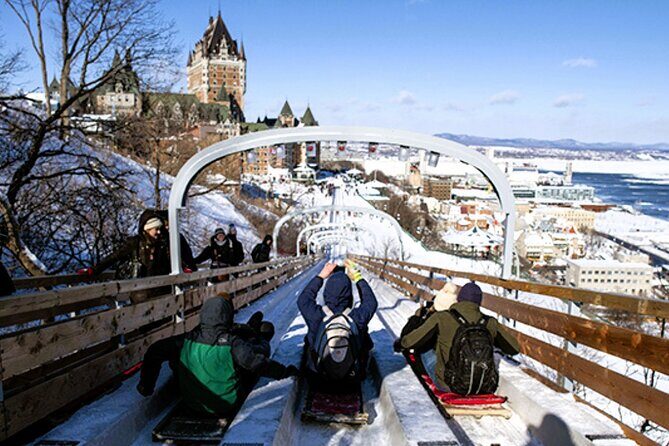
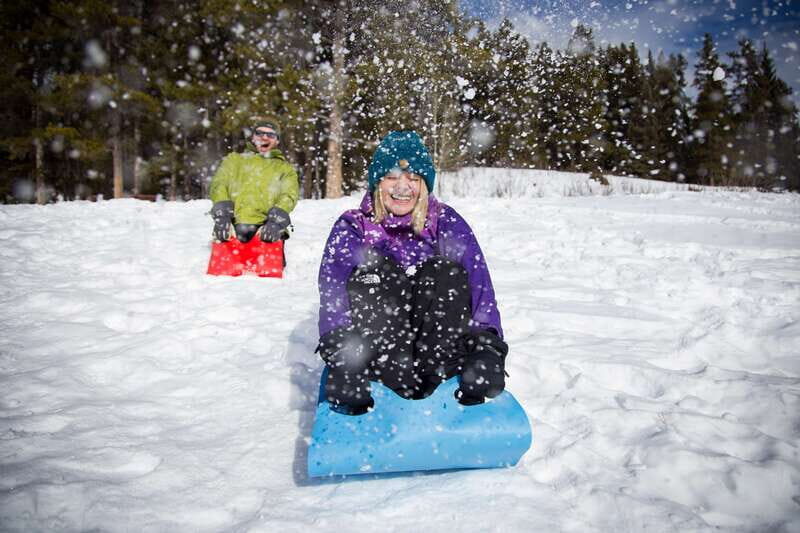
And yes, there’s a little chaos thrown in: you can slide down a hill on a carpet while the taffy is being made. Kids love it. Adults usually love it too, even if they pretend they’re too grown up for a snow slide. It’s short, but it adds that extra spark that turns a good tour into a memorable one.
How much effort is this really?
This tour is built for beginners. The trail is mainly flat, the route is relatively short, and the guide teaches you how to walk in snowshoes. If you can handle a winter walk and dress properly, you’re in the right zone.
That said, winter still counts. Snowshoeing uses more leg effort than a normal hike, and deep powder can slow you down. Plan to take it easy. You’re here to enjoy the pace and the scenery, not set a fitness record.
One practical consideration: the total time is about 4 hours, but the snowshoeing portion may feel less than a full 4 hours of active walking. If you’re the type who wants constant motion, it’s worth mentally budgeting time for pickup, driving, fitting gear, and warming up afterward. You can still have a great time—but go in with the right expectations.
Price and value for a 4-hour Banff winter outing
At $79 per person for a roughly 4-hour experience, the value comes from what’s included:
- A professional certified guide
- Small-group setting (maximum 12)
- Snowshoes and hiking poles
- Hot chocolate and maple taffy
For this region, that package is the point. You’re paying for convenience and coaching—especially snowshoe fitting and technique. If you tried to do this on your own, you’d spend time arranging gear, finding a matching route, and handling winter logistics. Here, the day is organized so you spend more energy on the trail and less on figuring things out.
Is it a bargain because it’s cheap? Not exactly. It’s a good value because you’re getting the full guided experience plus winter treats, with time that still feels fun rather than rushed.
What to wear and pack for Paint Pots snowshoeing
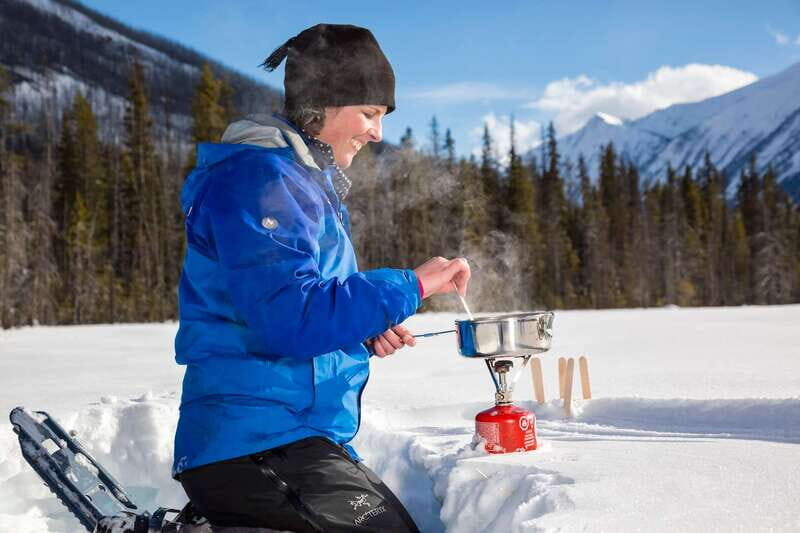
This is a winter outing, so clothing is not optional. The tour expects thermal clothing and warm layers, plus a proper winter setup: winter jacket, snow pants, hats, mittens, and waterproof winter boots. Bring a scarf too, since that face-framing cold wind can be real even on a short walk.
A few other important points:
- Safety comes first. If your footwear or clothing isn’t suitable, you might not be able to participate.
- Don’t bring luggage or large bags. Plan to travel light.
If you’re unsure about your boots, go waterproof and grippy. Snowshoes can shift your footing, and you want stable traction more than anything else.
Small-group vibe and guide attention
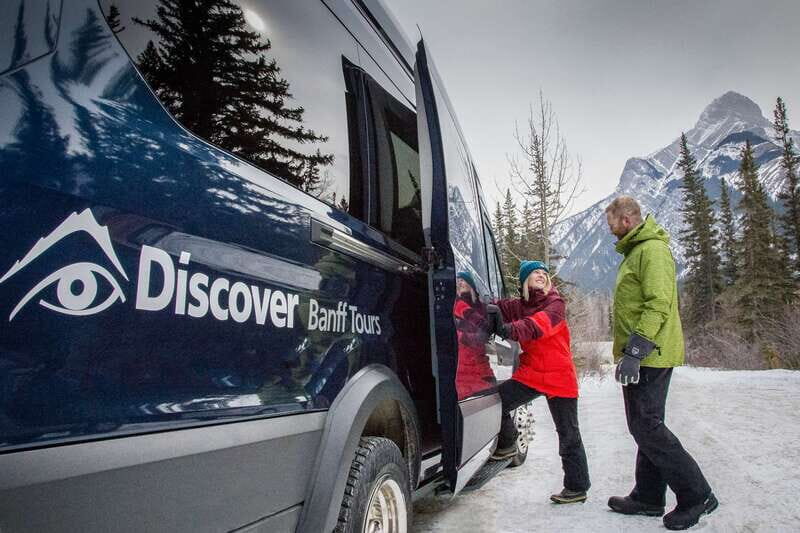
Maximum 12 participants per guide is a big part of why this tour tends to work. It makes it easier for the guide to:
- check whether everyone is comfortable with snowshoe technique
- adjust pace when someone needs a breather
- keep the group engaged with history and trail context
Past experiences have highlighted guides who are interactive and make an effort to connect with the whole group. Some have even helped people lead their own path at times, which adds a “learn and then explore” feeling instead of a strictly line-following walk.
Who should book this snowshoe tour?
Book it if you want:
- a beginner-friendly winter activity without planning headaches
- a trail that’s short enough to feel doable, but still scenic
- a meaningful stop at Paint Pots tied to First Nations rock painting history
- an actual winter treat moment (maple taffy in snow)
This also suits families with older kids. The minimum age is 8, and children aged 15 and under must have someone 18 or older with them. If you’re traveling as a couple, it’s also a fun shared activity because you’re not stuck in a crowd; you’ve got time for the guide and time for the experience.
Should you book the From Banff: Snowshoeing Tour in Kootenay National Park?
Yes, if you’re looking for a guided, well-paced winter outing that mixes snow fun with a real cultural stop. The combination of snowshoe instruction, the Paint Pots mineral story, and the maple taffy tradition is exactly the kind of “worth it” tour formula that doesn’t feel generic.
I’d say you might reconsider only if you’re expecting nonstop snow time for the entire 4 hours. Build your expectations around a full winter experience: drive, gear up, walk a mostly flat route, warm up, then enjoy the fun finish.
If you show up dressed right, keep your pace easy, and go for the stories as much as the scenery, you’ll leave feeling like you did something genuinely local in the Rockies.
FAQ
How long is the tour from Banff to Kootenay National Park?
The tour runs about 4 hours total.
Is this snowshoeing route suitable for beginners?
Yes. The walking route is described as an easy 3-kilometer trail with mainly flat terrain and minimal elevation gain, and the guide provides an introduction to snowshoeing.
What’s included in the price?
It includes a professional certified guide, small-group tour (max 12), hot chocolate and a maple taffy treat, snowshoe use, and hiking pole use.
Where do I meet for pickup in Banff?
Meet behind the Mount Royal Hotel at the public bus parking spot on 138 Banff Ave. You should be ready about 5 minutes before the 1:12pm pick-up time.
What should I wear or bring for winter?
Bring thermal clothing, warm clothing, snow clothing, and a scarf. Plan for a winter jacket, snow pants, hats, mittens, and waterproof winter boots.
What is the minimum age to join?
The minimum age is 8 years. Children aged 15 and under must be with someone 18 years and older.