REVIEW · SYDNEY
Fortress of Louisbourg Tour: Explore 18th Century History
Book on Viator →Operated by Shuttle Tours · Bookable on Viator
The Fortress of Louisbourg really does feel like a time machine. This 4-hour Sydney day trip pairs skip-the-line access with a guided walk through a rebuilt French fortress and 18th-century streets. You also get short coastal and rail stops, plus an easy transport setup that saves you from parking and routing stress.
What I like most is the balance: you get a real guided experience at Louisbourg for context, then time to wander and take photos on your own. I also appreciate the small max group size—up to 12 people—so the day doesn’t feel like a cattle-car lesson. One thing to plan around: there are no meals included, so you’ll want to budget for snacks or lunch timing after your fortress visit.
In This Review
- Key points to know before you go
- A Quick, Practical Ride from Sydney (and Cruise Terminals)
- Entering the Fortress: Rebuilt 18th-Century French Town in Two Hours
- What makes the fortress time work
- A realistic drawback
- Lighthouse Stop: Short Walk, Strong Maritime Stories
- Railway Museum Add-On: A Quick Look at Regional Rail Power
- Extra Stops Around Sydney: Cossit House and St. George’s Church
- Timing and Group Size: How to Make the 4 Hours Feel Like More
- What’s Included (and What You’ll Need to Plan for)
- Value: Is the Price Fair for What You Get?
- Service Quality: The Driver and Guide Matter
- Who This Tour Fits Best
- Should You Book It?
- FAQ
- How long is the Fortress of Louisbourg tour from Sydney?
- What is included in the ticket price?
- Are meals included?
- Is pickup offered from Sydney or the cruise terminal?
- Do I need to pay for the lighthouse and railway museum stops?
- How many people are on the tour?
Key points to know before you go
- Skip-the-line entry at the Fortress of Louisbourg saves meaningful time
- A guided walking tour plus independent exploring gives you control of your pace
- Louisbourg Lighthouse is brief but photo-friendly, with Canadian maritime history built in
- The Sydney & Louisbourg Railway Museum stop is short, making it a good add-on rather than a full diversion
- The vehicle is air-conditioned, and pickup reduces parking headaches in peak season
- The day runs in about 4 hours, so timing matters if you’re connecting to a cruise
A Quick, Practical Ride from Sydney (and Cruise Terminals)

This is one of those trips that feels “easy on purpose.” You’re picked up either from central Sydney locations or from the cruise terminal area, and the goal is to get you to Louisbourg with minimal friction. If you’re coming by ship, you’ll exit the vessel, pass through the dock security gate, then head left where the guide holds a sign with your name. I like that the instructions are clear, and the operator notes your schedule will adjust if the ship’s arrival time changes.
The vehicle is air-conditioned, which matters on warm Cape Breton days. It also keeps the morning legs from turning into a long, sweaty puzzle—especially if you’re aiming to spend your energy on the fortress rather than figuring out how to get there.
A small but important detail: the tour is capped at 12 travelers. That means you’re more likely to get real interaction with the guide during the fortress walk, and less likely to feel stuck waiting on a big moving crowd. The price is also set as a per-person day trip rate, so for couples or families it can add up fast—but it’s often easier to justify when you factor out the cost of driving, parking, and your time.
You can also read our reviews of more tours and experiences in Sydney.



Entering the Fortress: Rebuilt 18th-Century French Town in Two Hours
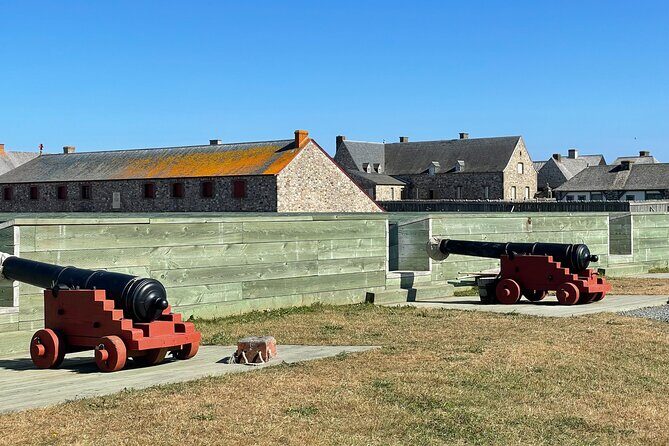
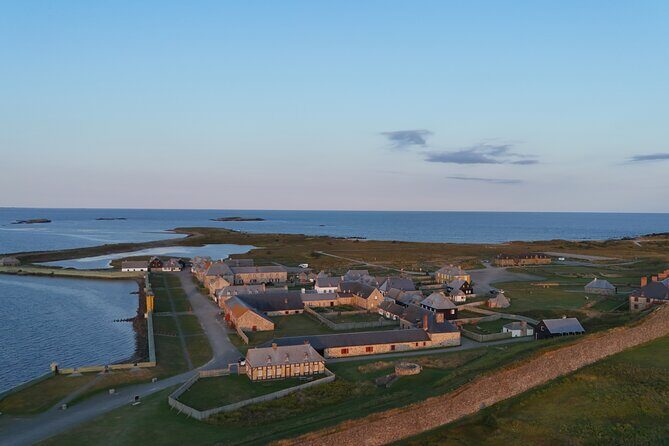
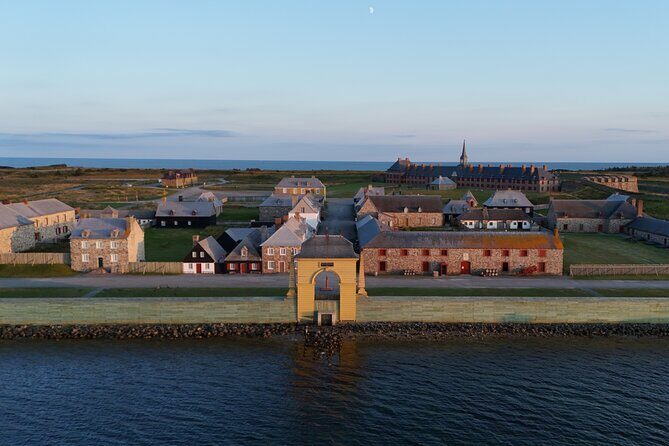
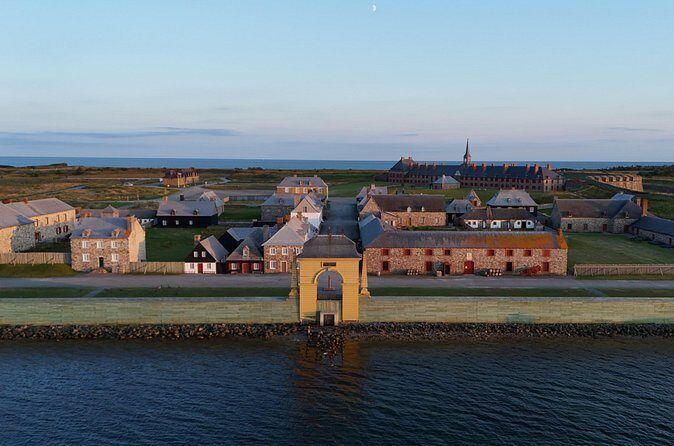
The heart of the day is the Fortress of Louisbourg National Historic Site. This is the largest rebuilt 18th-century French fortified town in North America, and the site is designed to help you grasp what a military-civilian community looked like in that era.
You’ll start with guided time—about two hours—moving through reconstructed streets and structures like cobblestone lanes, soldier barracks, guard towers, and merchant homes. Actors in period costume add energy to the storytelling. Even if you’re not a hardcore history person, this kind of interpretation helps the buildings “click” in your head. You’re not just looking at stone and wood; you’re seeing how the spaces functioned for daily life and defense.
Then you get the freedom to keep going on your own. That independent time is key. A guided tour is great for context, but photos, pacing, and the bits that catch your eye work better when you can linger. I’d use your self-guided portion to slow down around viewpoints from the ramparts and pick a few buildings to revisit for the details you didn’t catch the first time.
What makes the fortress time work
- Guided context first, so the site doesn’t feel like random old buildings
- Independent wandering second, so you control where you spend your attention
- A skipping-the-line benefit that makes the schedule feel less squeezed
A realistic drawback
Two hours is a solid chunk of time, but it’s not a full-day immersion. If you’re the type who likes to read every placard and take dozens of photos, plan to prioritize. Pick the parts that match your interest—military structures, merchant life, or waterfront views—and let the rest be a reason to return another day.
Lighthouse Stop: Short Walk, Strong Maritime Stories
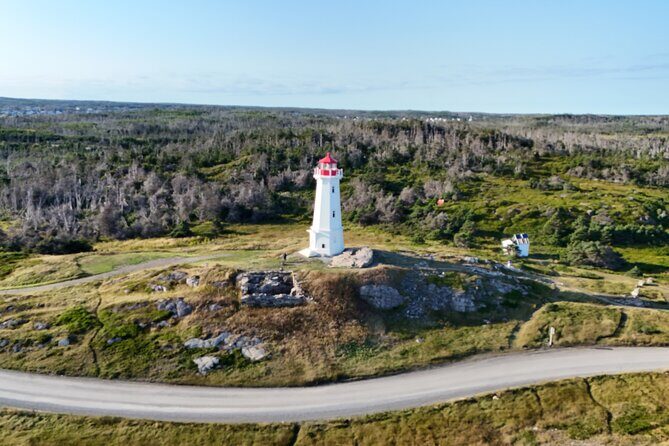
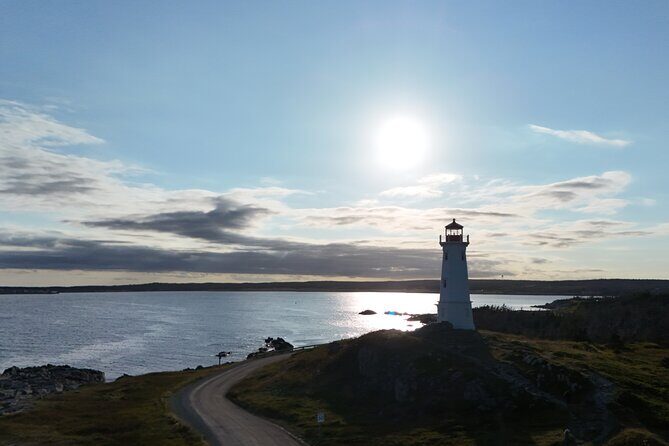
After Louisbourg, you head to the Louisbourg Lighthouse on the Atlantic shoreline. This stop is brief—about 15 minutes—but it’s built for one thing: getting you to a memorable coastal moment without derailing the day’s timing.
You’ll enjoy ocean views and hear stories connected to shipwrecks and sea battles, plus the work of lighthouse keepers. Even in a short window, the lighthouse usually delivers because the setting does part of the storytelling for you. If the weather is clear, photos tend to look great fast. If the wind is strong, you’ll still get the drama, but you’ll want a layer.
This is the stop I recommend most for people who want a history day that also breaks into scenery. You’re not stuck indoors with walls and exhibits. You step outside and get a reminder that this place mattered because of the sea.




Railway Museum Add-On: A Quick Look at Regional Rail Power
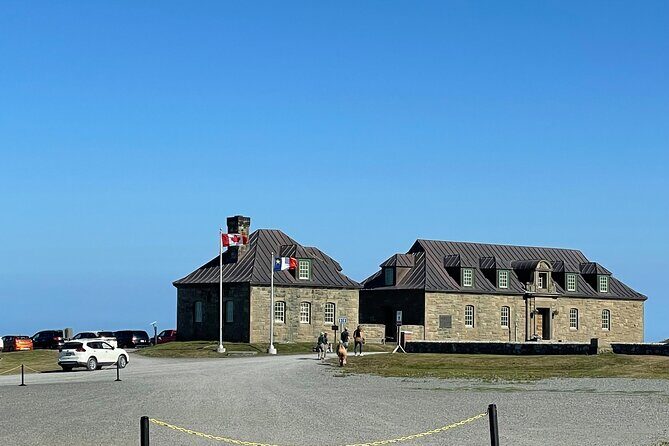
Next is the Sydney & Louisbourg Railway Museum. Like the lighthouse, it’s a short visit—around 15 minutes—but it gives you a different angle on Cape Breton’s story. The focus here is the role of rail in regional development, with restored train cars and exhibits.
If you love transportation history, this is a nice value add. If you’re on a tighter schedule, it still works because it doesn’t eat the day. It’s more like a curated taste than a deep trip, but those “tastes” can be great when you’re combining multiple stops.
A practical note: with time-limited stops, I suggest you skim first, then choose one or two things to focus on. Otherwise you can end up trying to see everything and absorbing nothing.
Extra Stops Around Sydney: Cossit House and St. George’s Church
One of the more interesting aspects of this day trip is that it’s not only out-of-town scenery. You also get passes and short looks connected to Sydney’s heritage.
A notable stop is Cossit House, built in 1787. It’s one of Nova Scotia’s earliest examples of neo-classical Georgian architecture, and the home is wood-framed with a rubble-stone foundation. The description notes the timbers originally came from New England and were assembled on-site in Sydney. You’ll also find features like a central hallway plan and paneled walls in the front hall, and the house has been restored to match Rev. Cossit’s residence appearance from 1787–1800. If you enjoy architecture, this is the kind of detail you can “see” even on a short look.
You’ll also find St. George’s Anglican Church in downtown Sydney. Built between 1785 and 1791, it’s a stone Gothic Revival-style church. Both the church and its graveyard are part of a provincial heritage designation, and the simple, dignified design is worth noting if you like early-Atlantic-era building styles.
There’s also mention of the Nova Scotia Community College (NSCC) Sydney Waterfront Campus, a modern education facility with scenic waterfront views of cruise ships, the boardwalk, and the Big Fiddle. That stop feels like a “here’s what the harbor looks like today” moment—useful if you’re curious how the cruise scene and working waterfront fit into the wider story of the city.
And before the day’s driving and history: the tour narrative starts in Albert Bridge along the Mira River. Even if you’re mainly focused on Louisbourg, that kind of starting point helps set the mood—quiet water, small-town calm, and a sense you’re going from modern life toward an older one.
Timing and Group Size: How to Make the 4 Hours Feel Like More
The tour runs about 4 hours total. That’s short enough to feel efficient, but long enough to give you a real experience beyond a quick photo stop. The key is to treat the fortress as your main event and treat everything else as “supporting chapters.”
To get the most out of it:
- Use the guided fortress portion to understand what you’re seeing
- Save your slower walking and photography for the independent time
- At shorter stops like the lighthouse and railway museum, commit to a quick scan first, then slow down for one or two “targets” (a viewpoint, a specific exhibit, a photo angle)
Also, note that the operator indicates the experience requires good weather. That’s a normal reality for coastal history stops and outdoor walking. If weather isn’t ideal, you might be offered a different date or a full refund.
What’s Included (and What You’ll Need to Plan for)
Included:
- Fortress of Louisbourg admission
- Air-conditioned vehicle
Not included:
- Meals
That meals gap is the biggest practical planning point. The fortress itself may have food options on-site (the tour description mentions a period-style bakery or café), but since meals aren’t included in the ticket price, you should decide whether you’ll:
- grab something after the fortress,
- bring a snack for the ride, or
- plan to eat back in Sydney later.
If you’re traveling with kids, or if you know you get hungry quickly, this is worth thinking about before you go.
Value: Is the Price Fair for What You Get?
At $118.78 per person for a roughly four-hour day, this doesn’t read as a bargain price. But value isn’t just the sticker number—it’s what you’re buying.
You’re paying for:
- transportation with pickup (including cruise-terminal coordination),
- skip-the-line entry at a major national historic site,
- a guided experience that helps the fortress make sense,
- plus additional short cultural stops that broaden the day without turning it into a full-day commitment.
For people who don’t want to drive themselves or fight parking, the value is often clearer. One review highlights exactly that kind of relief: getting picked up, riding comfortably in a clean, comfortable van, and being dropped right at the entrance. When transport is handled well, the day feels smoother—and the fortress ends up being the star, not the logistics.
Service Quality: The Driver and Guide Matter
The strongest praise in the feedback centers on the people. I like the theme here: the service is professional, and the staff doesn’t treat transit time like dead space.
One review calls out how the guide and driver shared local stories and history on the ride down, so you arrive feeling oriented. Another emphasizes reliability and customer service, and a separate comment highlights punctuality and a spotless, comfortable vehicle. The same general vibe shows up with the fortress visit too: the guide is described as passionate and full of interesting stories, and the experience is described as unforgettable with a fortress that looks beautifully preserved.
For you, that means the day is likely to feel guided even before you reach the site. And that matters because Louisbourg can be visually impressive, but guidance helps you connect the details.
Who This Tour Fits Best
This trip works especially well if you:
- want a high-impact Louisbourg visit without planning a full self-drive day,
- like history but don’t want to spend hours deciphering it alone,
- are traveling with a limited time window (like cruise passengers),
- appreciate small-group pacing (up to 12 people),
- want a mix of fortress, lighthouse views, and local heritage stops.
If you’re the kind of traveler who wants a slow, deep, multi-hour museum-style experience, you might find the schedule a touch tight. But if you want a smart, guided hit of Cape Breton heritage, this is a strong match.
Should You Book It?
I’d book this if your main priority is seeing Fortress of Louisbourg with guided help and not turning your day into a parking-and-navigation project. The skip-the-line benefit plus pickup coordination is exactly the kind of practical value that makes a short day feel worth it.
I’d hesitate only if you’re very meal-sensitive (since nothing is included) or if you’re the type who needs much longer than two hours to fully absorb a historic site. If the weather looks good and you’re comfortable treating the day as a timed “best of,” this tour is a solid, efficient way to experience Louisbourg and Cape Breton without wasting your limited vacation time.
FAQ
How long is the Fortress of Louisbourg tour from Sydney?
The tour is about 4 hours (approximately).
What is included in the ticket price?
Admission to the Fortress of Louisbourg is included, and you also get an air-conditioned vehicle.
Are meals included?
No, meals are not included.
Is pickup offered from Sydney or the cruise terminal?
Yes. Pickup is offered, including clear meeting instructions for cruise ship passengers after exiting the vessel and passing through the dock security gate.
Do I need to pay for the lighthouse and railway museum stops?
The Louisbourg Lighthouse and the Sydney & Louisbourg Railway Museum are listed as admission ticket free.
How many people are on the tour?
The maximum group size is 12 travelers.