REVIEW · CANMORE
Explore Banff + Wildlife
Book on Viator →Operated by Explore Banff Tours & Transfers · Bookable on Viator
Wildlife hunts, with big Banff views, in 3 hours. This Banff National Park tour strings together classic lookouts and quick photo breaks so you get your bearings fast, from the Banff Springs area to the water and ridgelines around town. If you’re chasing sightings, it’s built to help you do that with stops chosen for what animals tend to use—plus views that don’t require a hike.
I especially like the smart mix of scenic wins and wildlife-focused guidance. Stops are timed to stay efficient, with free admission at each listed viewpoint, and the licensed guides (including Josh and Austin/Austyn, based on past groups) work hard to point out what’s worth watching for. I also appreciate that it runs as a small group experience, so the driver-guide can adjust when the day’s conditions shift.
One possible drawback: you can’t control wildlife turnout, and weather can change visibility. Also, if you end up in strong midday sun, photos can look a little washed out—one of those things the tour can’t fully fix, since you’ll be at outdoor viewpoints with the sky doing its thing.
In This Review
- Key highlights at a glance
- A short Banff wildlife loop that helps you orient fast
- Price and what you actually get for about $71
- Pickup, mobile ticket, and why the group size matters
- Your first viewpoint: Surprise Corner and the Banff Springs vibe
- Bow Falls: where the Bow River steals the show
- Hoodoos Viewpoint: geology lessons with a wide Banff panorama
- Two Jack Lake and Mount Norquay: classic views with wildlife odds
- Lake Minnewanka: the biggest lake stop plus a human story
- Wildlife reality check: what to expect and how to play it smart
- Photos in Banff: why midday glare can ruin your shots
- Who should book this tour, and who might choose differently
- Should you book Explore Banff + Wildlife?
- FAQ
- How long is the Explore Banff + Wildlife tour?
- Is pickup available, and is the ticket digital?
- What’s included in the price?
- Are there admission fees for the stops?
- Do I need lunch during the tour?
- What wildlife might you look for at Mount Norquay?
- How many people are in the group?
- What happens if weather is poor?
Key highlights at a glance
- Small group feel with a maximum of 13 people, so you’re not lost in a crowd
- Free admission at each of the listed stops, plus national park entry fees included
- Wildlife scanning on the drive, especially near Mount Norquay (weather permitting, not in winter for bears)
- A tight route that covers Banff Springs, Bow Falls, Hoodoos viewpoints, Two Jack Lake, and Minnewanka
- A licensed guide who helps you spot and understand what you’re seeing (Josh and Austin/Austyn are known for this)
A short Banff wildlife loop that helps you orient fast
This is the kind of tour that fits when you don’t want to spend a half-day driving yourself. In about 3 to 4 hours, the day is basically chopped into bite-size stops: quick windows for photos, short stretches to look around, and enough time on the road to get between viewpoints without feeling rushed.
That rhythm matters in Banff. Many visitors arrive with two big goals: see iconic places and (maybe) spot wildlife. A loop like this keeps you from overthinking logistics. You’re not choosing parking, rerouting, or timing hikes; you just show up, ride in an air-conditioned vehicle, and let the guide guide.
It also works well if you’re new to the area. The stops are the “get your bearings fast” version of Banff, so by the time you’re done, you’ll know where Bow Falls sits, what Two Jack Lake looks like in person, and why Mount Norquay is a go-to viewpoint.
A few more Canmore tours and experiences worth a look
Price and what you actually get for about $71
At $71.09 per person, you’re not just paying for a vehicle ride and a couple of parking-lot viewpoints. The tour includes national park entry fees, GST, and a licensed tour guide, plus the air-conditioned transportation.
Even better for value: each listed stop has admission ticket access listed as free in the itinerary. That means you’re not stacking extra costs while you’re already paying for a guided experience. The only major “missing” item is lunch, so if you’re doing this mid-day, plan on grabbing food afterward on your own.
For a short, guided loop, this is the kind of pricing that makes sense when you want efficient sightseeing without turning your day into a spreadsheet of tickets, fees, and transport.
Pickup, mobile ticket, and why the group size matters
This tour offers pickup, and you’ll get a mobile ticket. That reduces one of the classic Banff stressors: figuring out where to be and when.
The vehicle ride also matters. You’ll be in an air-conditioned vehicle, which is a big plus if the weather is warm or if you’re going out in shoulder seasons and don’t want to sit in a hot car waiting for the group.
And the group size cap—13 travelers maximum—isn’t just a number. It tends to make it easier for the guide to manage stop timing, get everyone into a good viewing position, and respond when someone spots an animal in the distance. In past groups, guides like Josh and Austin/Austyn have gone the extra mile with photo-taking and adjusting plans when the group needed flexibility.
Your first viewpoint: Surprise Corner and the Banff Springs vibe
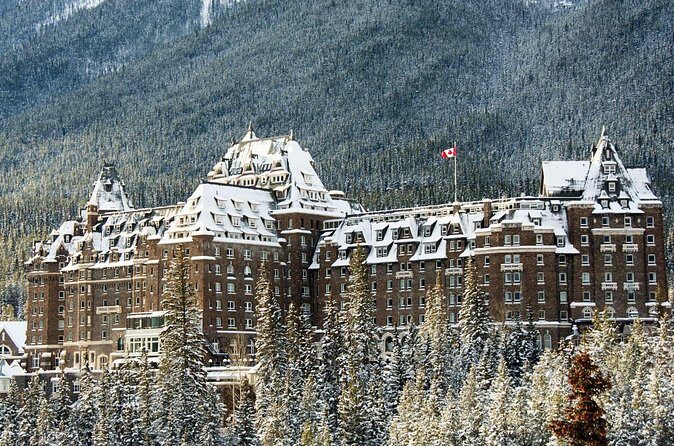
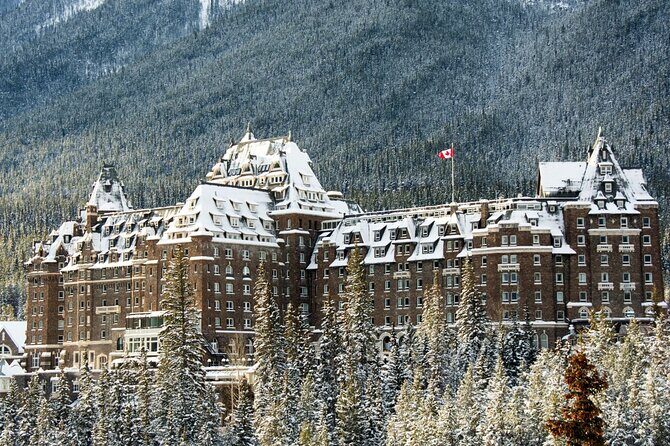
Stop 1 is Surprise Corner, an easy introduction to two Banff icons at once: the Banff Gondola view area and the Fairmont Banff Springs. You get a sense of the “story” of this town quickly—tourism, mountain access, and the big hotel landmark that shows up in a lot of classic Banff photos.
This is also a low-effort stop. It’s only around 10 minutes, which makes it ideal as a warm-up. You’ll have just enough time to take in the view, snap a few photos, and get ready for the river-and-hills portion of the day.
The tradeoff: since it’s short, don’t expect time to linger for golden-hour light if the tour runs at midday. Use it as orientation and basic photos, then save your longer photo attention for later stops.
Bow Falls: where the Bow River steals the show
Next up is Bow Falls. The focus here is the sound and power of the Bow River plunging over the falls. This is one of those places where photos help, but the real impact is how “alive” water feels in motion.
Stop 2 is also about 10 minutes, so you’re not stuck waiting for hours. You’re getting in, looking, and getting out—then moving on while the route still keeps the day efficient.
If you care about wildlife, this stop is still useful even though it’s not a dedicated “animal spotting” station. Water areas often draw animals that drink or travel near river corridors. The guide’s job is to connect what you’re seeing with what might be moving nearby.
Hoodoos Viewpoint: geology lessons with a wide Banff panorama
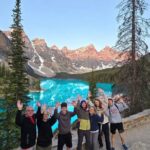
Stop 3 is Hoodoo’s Viewpoint, and this is where you get the “why Banff looks the way it does” moment. You’ll learn about Banff’s hoodoos—those unusual rock formations—and then get incredible views over the Bow River, the Banff Springs Golf Course, and Mount Rundle.
It’s still a 10-minute stop, but it can feel like more because the view pulls your eyes in multiple directions at once. The terrain around Banff is layered—river, town landmarks, and mountains—which is why a viewpoint like this becomes a natural photo anchor for the day.
Possible drawback: like many scenic pull-offs, it depends on weather and lighting. If it’s hazy or bright, you might find the mountains look a bit lighter in contrast than you expected. Still, it’s a great place to re-check your photos and see how the day’s geography fits together.
Two Jack Lake and Mount Norquay: classic views with wildlife odds
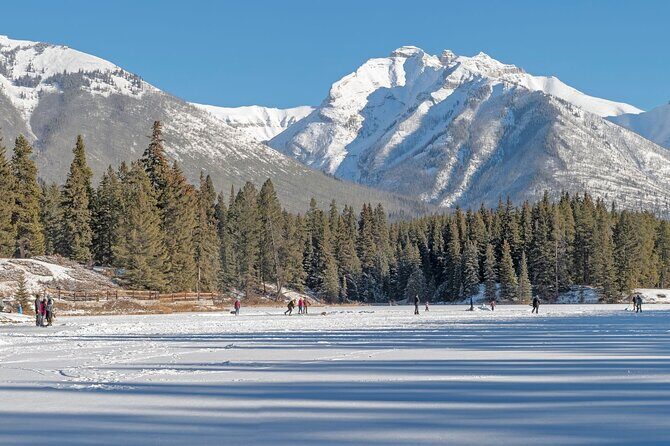
Stop 4 is Two Jack Lake, a quick 5-minute stop that’s all about getting you in front of a postcard view. You’ll see the lake with Rundle Mountain in the background, and it’s a clean, easy contrast to the earlier river-focused views.
Then comes Stop 5: Mount Norquay Lookout. This is the one with the wildlife call-out. Weather permitting, you’ll take an elevated viewpoint above Banff, and along the drive you’re encouraged to keep an eye out for bears (not in winter), deer, and big horn sheep.
This stop is 20 minutes, which is a decent chunk of time compared to the other viewpoints. More time helps because wildlife spotting often isn’t instant. Animals may move slowly, pause to graze, or appear briefly in a pocket of roadside visibility.
Two practical notes:
- If you’re traveling in winter, the bear guidance changes, so manage expectations around that.
- If you’re set on spotting wildlife, binoculars can make a big difference—but the guide’s scanning is the real advantage since they’re watching the roadside patterns, not just waiting for luck.
Lake Minnewanka: the biggest lake stop plus a human story
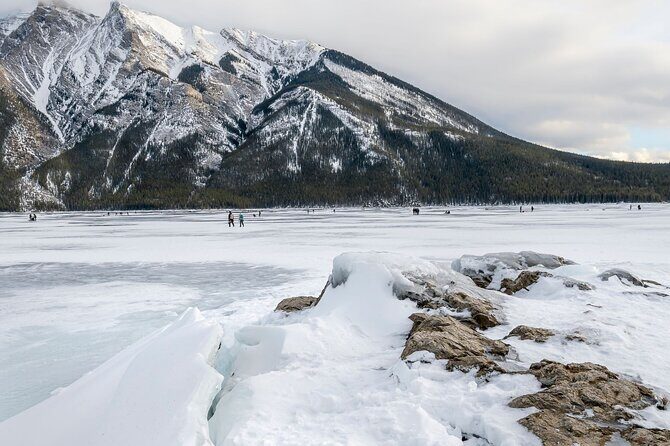
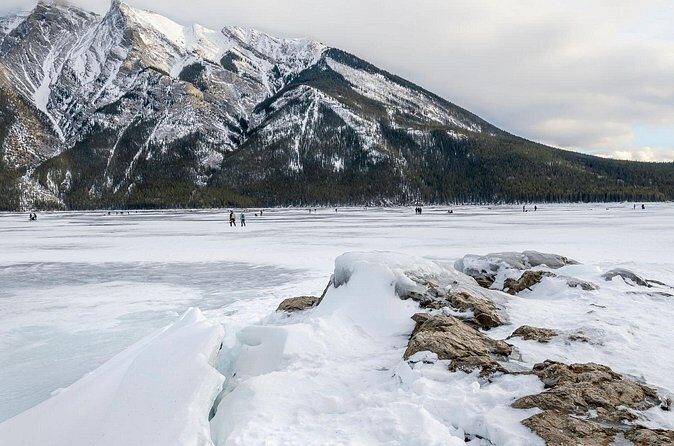
Stop 6 is Lake Minnewanka, around 20 minutes, and it’s a strong finish. The focus is on the views of Banff National Park’s largest lake and what makes Minnewanka historically interesting.
You’ll learn about Minnewanka Landing, described as a former village that later became known as a popular scuba diving spot at the bottom of the lake. That kind of context changes how you look at water. Instead of just seeing a scenic body of blue/gray, you’re reminded that the area has had people and activity tied to it.
Why this last stop works: it’s a payoff. Earlier stops help you orient and chase smaller highlights; Minnewanka gives you a bigger, slower-feeling view where your brain can settle.
If you’re hoping for wildlife, this stop can still be worth your attention because lakes attract animals too, even if sightings aren’t guaranteed. The guide’s job is to direct your eyes, not promise a guaranteed sighting.
Wildlife reality check: what to expect and how to play it smart
Wildlife in Banff is exciting, but it’s also unpredictable. The best way to approach this tour is with a “high attention, flexible mindset” plan.
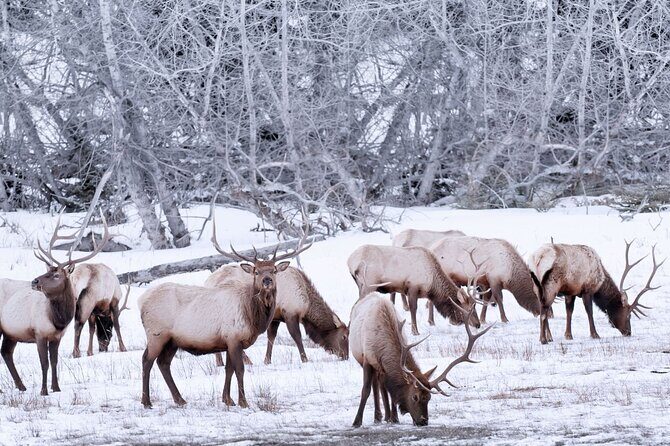
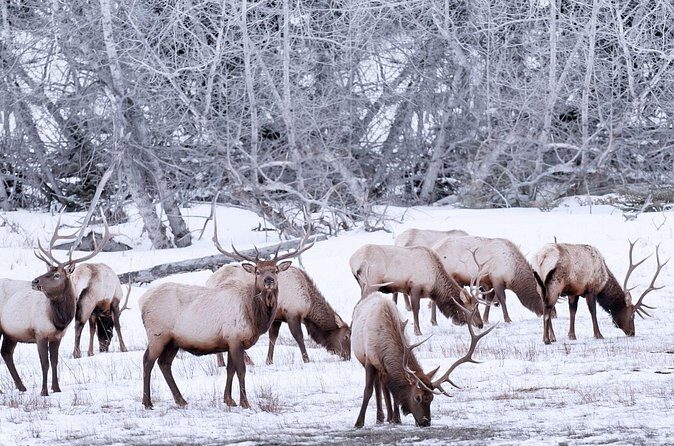
Based on guide-style patterns from previous groups, the guides tend to make a genuine effort to scan for movement and point out signs. For example, one group credited Austin/Austyn with explaining the fauna and seeing animals such as deer, elk, horned sheep, and plenty of birdlike sightings. Another highlighted Josh as friendly and knowledgeable and as useful for getting solid reconnaissance of the area, even when animals were scarce.
Here’s the takeaway for you: you’ll likely see something if conditions cooperate, but the tour is built to be enjoyable even on a lighter wildlife day. The scenic stops still land, and the guide’s interpretation is part of the value.
If you want the best odds:
- Bring a warm layer even on nice days; animals can show up when you least expect it, and cooler air helps people pay attention.
- Have your phone ready, but don’t stare at your screen the whole time. Wildlife often appears during a pause in conversation.
- Use your stop timing. With short windows at certain points, look first, then shoot.
Photos in Banff: why midday glare can ruin your shots
A heads-up based on common experience: if the tour hits during the brightest part of the day, you can get a lot of washed-out photos. One group specifically noted that the sun was up and everything looked a bit bleached, and it wasn’t anyone’s fault—it’s just Banff lighting in the middle of the day.
How to reduce disappointment:
- Stand slightly to the side of the main viewing angle for better contrast.
- Take a quick burst of photos, then take in the view with your eyes. Your memory will be better than any one shot when glare is heavy.
- Don’t obsess over one perfect image. This route gives you multiple angles across the day, so even if one set is hit by glare, you’ll still get keepers.
Who should book this tour, and who might choose differently
Book Explore Banff + Wildlife if you want:
- A guided route that covers major Banff highlights without complicated planning
- A short day you can fit around other activities
- Wildlife scanning paired with viewpoints (not a long hike for wildlife)
It’s also a nice option if you’re traveling with mixed ages, since the stops are short and the pace is manageable. One past group noted the guides were considerate when the group included a 12-year-old and a 90-year-old.
You might think twice if:
- You’re only interested in guaranteed wildlife sightings. No tour can promise that.
- You’re the type who wants long time at one spot. This tour moves, by design.
Should you book Explore Banff + Wildlife?
If you’re in Banff for a short stretch and want a guided “best hits” route with wildlife odds, this is an easy yes. The value is strong because park entry fees and guide time are built in, and the itinerary keeps you moving through viewpoints like Bow Falls, Hoodoos Viewpoint, Two Jack Lake, and Lake Minnewanka without making you plan each stop.
My only caution: keep your expectations realistic. You’ll have scenic payoff even if wildlife is quiet, but sightings depend on season, weather, and timing. If you can handle that, you’ll get a satisfying, well-organized loop that helps you understand Banff faster than driving around on your own.
FAQ
How long is the Explore Banff + Wildlife tour?
It runs about 3 to 4 hours total, including travel time between locations.
Is pickup available, and is the ticket digital?
Pickup is offered, and you’ll have a mobile ticket.
What’s included in the price?
The tour includes an air-conditioned vehicle, GST, national park entry fees, and a licensed tour guide.
Are there admission fees for the stops?
The itinerary lists admission tickets as free for each stop.
Do I need lunch during the tour?
Lunch is not included.
What wildlife might you look for at Mount Norquay?
Along the drive to Mount Norquay Lookout, you’ll be encouraged to watch for bears (not in winter), deer, and big horn sheep. Weather permitting, you’ll also enjoy the elevated viewpoint.
How many people are in the group?
The tour has a maximum of 13 travelers.
What happens if weather is poor?
This experience requires good weather. If it’s canceled due to poor weather, you’ll be offered a different date or a full refund.