REVIEW · CANMORE
Deep Day Tour to Emerald, Moraine, Louise Lake, J. Canyon…
Book on GetYourGuide →Operated by Banff Tours Inc. · Bookable on GetYourGuide
Banff country is stunning, but this route gives you variety. You’ll pair Johnston Canyon drama with the iconic turquoise lakes and a few smart roadside stops—without the frantic sprint from photo spot to photo spot.
Two parts I like a lot: the canyon walk at Johnston Canyon (Upper Falls), and the big color show at Lake Louise and Emerald Lake. The tour also includes a live English guide who explains what you’re seeing as you go, and that makes the scenery feel way more meaningful.
One thing to consider: meals aren’t included, so you’ll want to plan around a short lunch break in Lake Louise village and be ready for a long day (the total time can stretch well beyond the core 8–10 hours).
In This Review
- Key highlights worth your attention
- Entering The Canyon at Johnston Creek
- The Drive That Connects Big Icons: Castle Mountain and Rogers Pass
- Lake Louise Village: the lunch break that puts you in the right place
- Emerald Lake: why this water turns green
- Yoho National Park Stop: Natural Bridge over the Kicking Horse
- Moraine Lake: when it fits the day
- How the guide experience changes everything
- Price and timing: what $78 buys you on a long day
- Who this tour fits best (and who should think twice)
- Should you book this full-day Johnston Canyon to Emerald Lake tour?
- FAQ
- How long is the tour?
- What does the tour include?
- Are meals included?
- Which lakes are included, and can Moraine Lake be added?
- Does the tour offer pickup?
- Is the tour wheelchair accessible or are pets allowed?
Key highlights worth your attention
- Johnston Canyon Upper Falls: a gorge cut by erosion over thousands of years, with waterfalls, tunnels, and pools
- Lake Louise turquoise water: rock flour from glaciers gives the lake its famous color
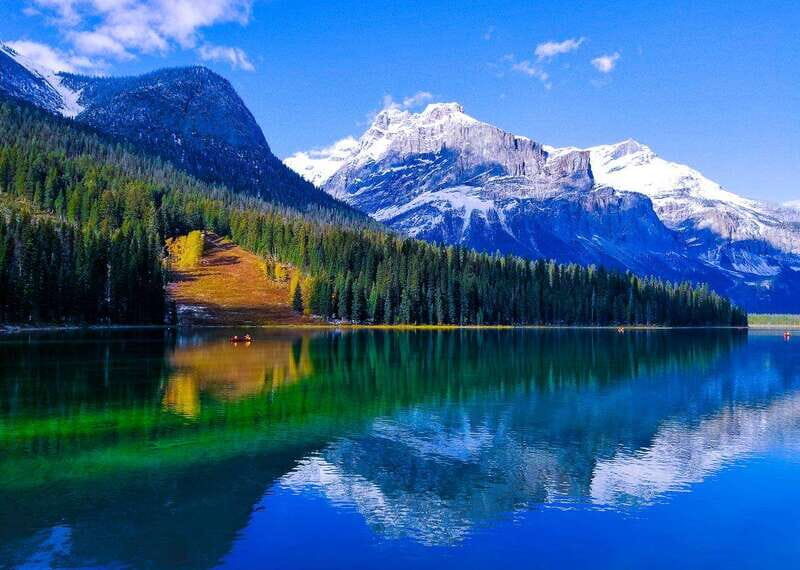
- Emerald Lake color shifts: the President Range glaciers add powdered rock, changing the shade month to month
- No-rush timing: enough time for viewpoints so you can actually enjoy the scenes
- Photo-minded guidance: guides like Hovin, Carolyn, and Alex are praised for paying attention and spotting great viewpoints
- Yoho National Park add-on: a quick stop at Natural Bridge over the Kicking Horse River
Entering The Canyon at Johnston Creek
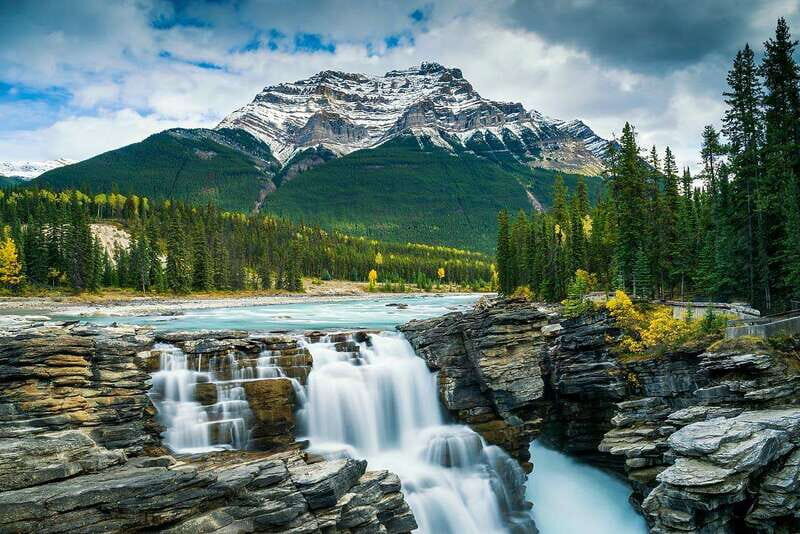
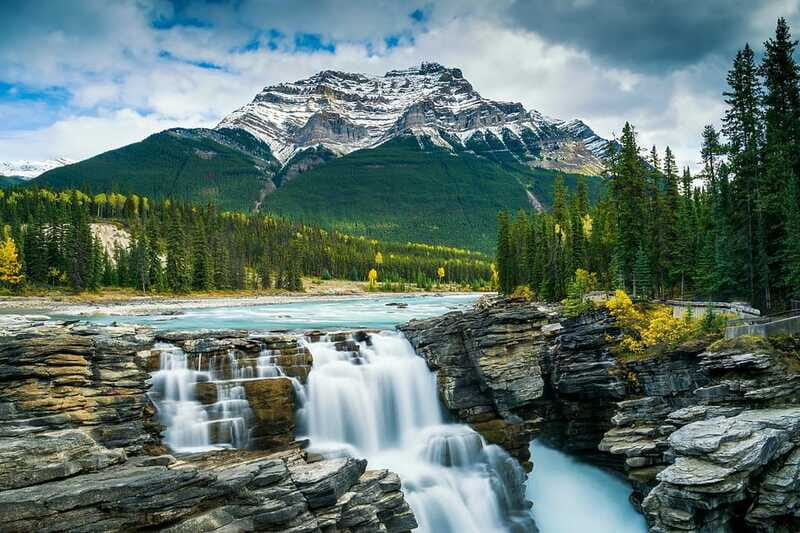
Johnston Canyon is one of those places where you feel water doing the heavy lifting. Johnston Creek starts north of Castle Mountain in a glacial valley, then flows into Banff’s Bow River. Along the way, it carves a gorge through limestone, creating steep canyon walls and a chain of sights—tunnels, pools, and waterfalls.
What I like about doing Johnston Canyon with a guide is the context. You don’t just walk through a pretty canyon. You learn why it looks the way it does: erosion acting over thousands of years, shaping the limestone and leaving you with those dramatic views framed by rock.
The Upper Falls area (the stop you’re aiming for on this kind of tour) tends to be the emotional payoff. It’s the section where the canyon feels most “set” for photos—standing in one place and watching the water and stone do their thing. Even if you’re not the type who chases waterfalls for fun, the scale here can surprise you.
Practical tip: wear shoes you trust. This is a walking experience inside a gorge. The footing is usually manageable, but canyon areas can be slick, and you don’t want to spend the day babying your feet.
You can also read our reviews of more tours and experiences in Canmore.
The Drive That Connects Big Icons: Castle Mountain and Rogers Pass
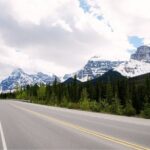
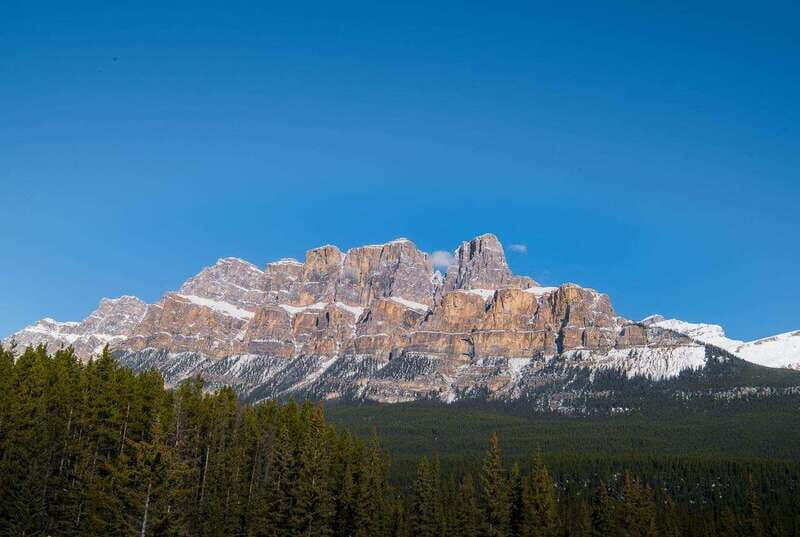
After Johnston Canyon, the route turns into a scenic “how did they build this” road trip. One highlight on the way is Castle Mountain, which you pass by instead of stopping. It’s around halfway between Banff and Lake Louise, and it has that castle-like silhouette that helped it earn its name back in 1858 from James Hector.
Even though you’re not meant to get out there, passing it is still useful. When you see Castle Mountain from the road, the scale clicks. It gives you a mental anchor before you reach the lakes where everything looks brighter and bluer.
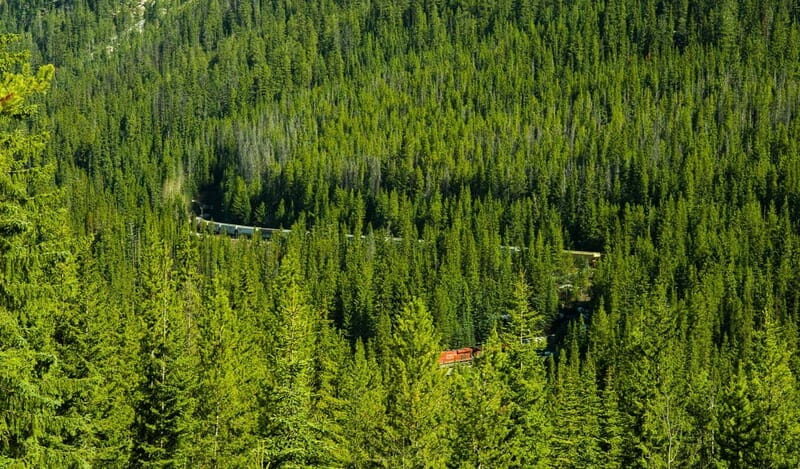
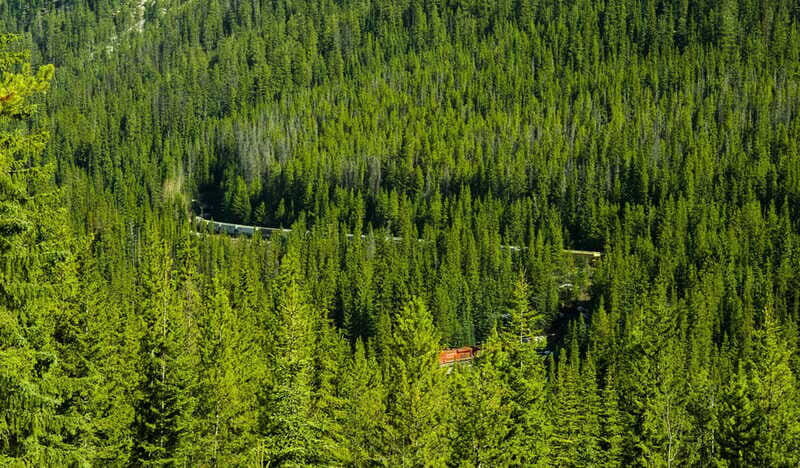
Next comes Rogers Pass and the Spiral Tunnels. A brutal avalanche in 1899 destroyed a station at Rogers Pass. The rail engineers had to solve a problem that was literally in the landscape: how do you move through steep mountain terrain safely and efficiently? The solution was a more ambitious design, including the spiral tunnel system that helps trains gain elevation in a tight area.
You don’t need to be a rail fan to appreciate this stop. It’s one of the rare tourism moments where the science of mountain travel shows up in plain sight. It also breaks up the day so you’re not just sitting in the vehicle until you hit the next landmark.
Lake Louise Village: the lunch break that puts you in the right place
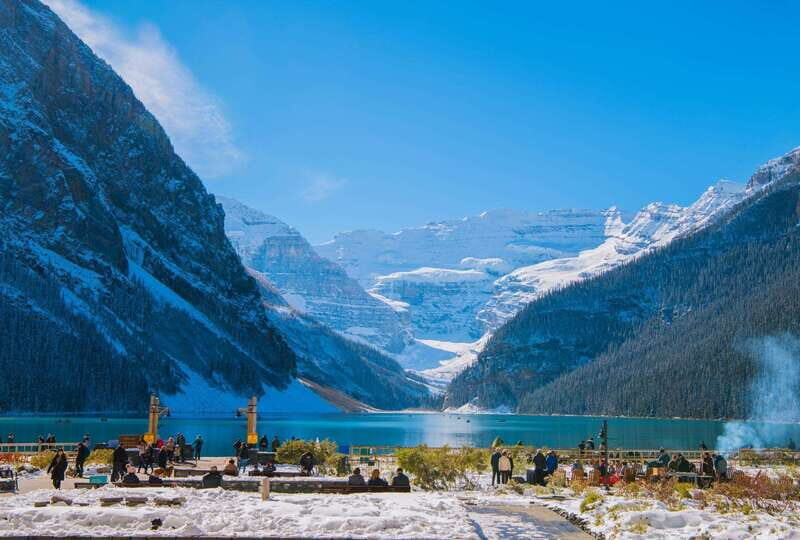
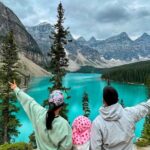
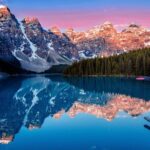
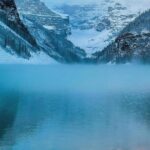
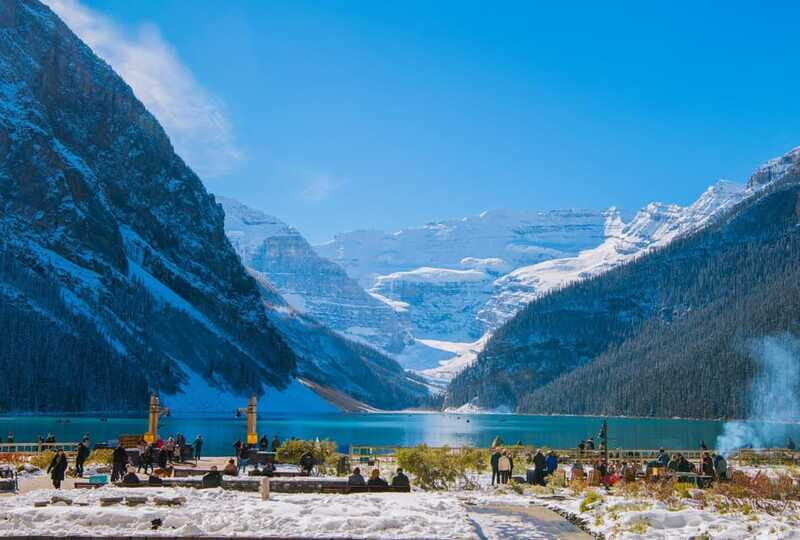
Lake Louise is the headline for a reason. It sits inside Banff National Park, and its famous turquoise color isn’t just a lucky shade. The color comes from rock flour carried by melt-water from glaciers above the lake. That powder scatters light in a way that makes the water look that intense.
When you reach Lake Louise village, you get free time—about 45 minutes for lunch and a bit of wandering around the mini town area. The village is at a high elevation (1,661 m), so it can feel cooler and brisk even when the valley town feels mild. It’s also a good moment to reset before you move on to the next two lake stops.
Here’s the part that matters for your day: if you want photos without panic, this is when you should use your time wisely. Plan one main viewpoint for water shots, then step back and take a second look from a slightly different angle. Lake Louise changes depending on your vantage point and the cloud cover. Even small shifts can make the water look lighter or darker.
Because meals aren’t included, treat the village lunch time as your main chance to eat. Grab something you can handle quickly (and that won’t make you regret it during more walking later). If you’re picky about timing, arrive early in that lunch window so you’re not stuck eating after the best light has moved on.
Emerald Lake: why this water turns green
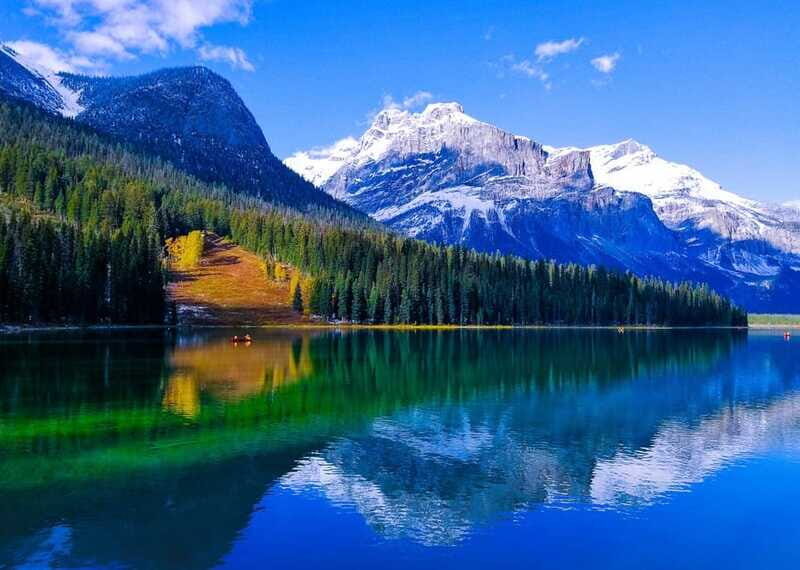
Emerald Lake is another glacial-fed lake, and it’s a different kind of stunning. It’s surrounded by mountains of the President Range, and its vivid green color comes from powdered rock in the water. Like Lake Louise, it’s the interaction between sunlight and that glacier-derived material.
One detail I appreciate in this itinerary: you’re not only meant to arrive and stare. You should have time for a short surrounding-lake walk. That small stretch is what helps Emerald Lake stick in your memory. It gives you quiet, close-up observation, where the color feels less like a postcard and more like something you can watch shift as you move.
Another cool thing—because it’s stated right in the way the stop is described—is that the lake’s color can vary from month to month. That matters because it means you’re not seeing the same “fixed image.” You’re seeing that month’s version of the water chemistry and sunlight conditions. If you’ve already visited Banff in a different season, Emerald Lake can still feel fresh.
Practical tip: bring a layer. Even if the day starts warm, lakes and open mountain air can cool off quickly. A light jacket is usually enough, but you’ll be glad you packed it.
Yoho National Park Stop: Natural Bridge over the Kicking Horse
This tour sneaks in a taste of Yoho National Park with a quick stop at Natural Bridge. It’s a rock formation spanning the flow of the Kicking Horse River near Field. The river slows after leaving the Field Valley flats, then begins its descent through a canyon. That slow-to-fast change is part of what powers the erosion that shaped the bridge.
Natural Bridge is often one of those “short stop, big effect” moments. You can’t spend hours there because the day has multiple targets, but it still delivers a strong reminder that water isn’t just scenery—it’s a sculptor.
If you’re the type who likes a mental checklist of why places form, this stop plays well. It gives you a clear example of erosion carving a dramatic structure, showing how rivers create the shapes you later take for granted.
Moraine Lake: when it fits the day
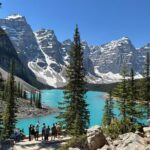
Moraine Lake is included as something you can combine, and that’s a big deal for planning. The lake itself is famous enough that many people build their whole Banff trip around reaching it. If your schedule allows a Moraine Lake visit on this tour, it’s a serious bonus.
The key thing to know is that combining Moraine Lake depends on timing. Since the full day already covers multiple lakes plus Johnston Canyon, the Moraine option is best for people who are flexible and okay with a bit of uncertainty—because the upside is high.
If Moraine Lake is your must-see, plan your expectations for this tour accordingly. Treat it like a strong possibility, not a guarantee you can lock into your calendar mindset.
How the guide experience changes everything
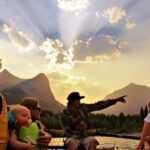
This is a guided day, and the guide role isn’t just reading facts from a card. In the feedback for this operator, guides like Hovin, Carolyn, and Alex get praised for being attentive and going beyond the basics.
That shows up in practical ways. You learn the “why” behind the views: how Johnston Canyon was carved, why lake color is tied to rock flour, and why places like Spiral Tunnels exist. Guides also help with timing and photo angles—like pointing you toward the best places to stand so you’re not fighting the crowd or shooting through awkward distractions.
If you’re the kind of person who enjoys learning while you travel, this kind of guide support can turn a list of stops into a connected story. And if you prefer your sightseeing structured, the guide also takes the pressure off you: you follow the plan, and you still get room to breathe at each viewpoint.
Price and timing: what $78 buys you on a long day
The price is $78 per person, and that’s how the value question should be judged: not just “is it cheap,” but “does it replace hassle?” You’re paying for an air-conditioned vehicle, guided interpretation, and transportation between major landmarks that are spread across the region.
The tour’s listed duration can look different depending on how you measure it—8–10 hours on the core schedule, with a total day time that can run 11–14 hours. That doesn’t mean anything went wrong. It means this is a real full-day loop, including multiple stops and time at each place so you’re not constantly sprinting.
So here’s the honest math: you’re buying time and convenience, plus a guide. If you tried to do this combo solo, you’d likely spend extra effort coordinating driving, parking, and figuring out viewpoints—especially if you want to hit Johnston Canyon and then move on to lakes with good timing.
What could feel like less value is the “meals aren’t included” part. That’s not a dealbreaker, but it’s a cost you’ll need to account for. If you’re traveling with a tight food budget, plan a lunch strategy early, and consider bringing a snack for the gaps between stops.
Who this tour fits best (and who should think twice)
This experience is a strong match if you want the Canadian Rockies greatest-hits feeling without spending your entire day behind the wheel. You’ll get a guided tour of Banff National Park highlights plus a bonus stop into Yoho, with multiple lake-and-water moments.
It also works well for people who enjoy walking but still want the schedule supported. Johnston Canyon and the short Emerald Lake walk are manageable segments, and the pace is described as less rushed—designed to give you time at viewpoints.
Two cautions:
- It’s not suitable for wheelchair users, so if mobility is a concern, you’ll want to look for a different format.
- Pets aren’t allowed, so traveling with an animal means you’ll need another plan.
If you’re someone who gets restless sitting in a vehicle for long periods, this might test your patience—though the scenic stops help break it up. If you’re okay with a long day and you like variety, you’ll probably find it satisfying.
Should you book this full-day Johnston Canyon to Emerald Lake tour?
I think it’s worth booking if you want a guided, efficient way to see multiple “wow” moments in one day: Johnston Canyon’s carved rock drama, Lake Louise’s glacier-fed color, Emerald Lake’s green-gold shift, and a quick Natural Bridge stop in Yoho.
I’d book it with extra confidence if:
- You value a guide who explains the geology and history behind what you see (guides like Hovin, Carolyn, and Alex are specifically praised for attentive storytelling and photo guidance).
- You’d rather relax at viewpoints than rush between them.
- You can handle a long day and plan meals on your own, since food isn’t included.
I’d reconsider if your top priority is a single lake only and you’re trying to keep the day short. In that case, you might prefer a more focused itinerary.
FAQ
How long is the tour?
The experience is listed as 8–10 hours, with a total day time that can run about 11–14 hours.
What does the tour include?
It includes a live English guide, transportation in an air-conditioned vehicle, and a bottle of water (plus GST).
Are meals included?
No. Meals aren’t included, so you’ll use the free time in Lake Louise village for lunch.
Which lakes are included, and can Moraine Lake be added?
The route includes Lake Louise and Emerald Lake, and Moraine Lake can be combined (when timing allows).
Does the tour offer pickup?
Pickup is optional. For pickup from the Canmore area, the guide contacts you with details.
Is the tour wheelchair accessible or are pets allowed?
Pets aren’t allowed, and the tour isn’t suitable for wheelchair users.