REVIEW · BANFF
Banff National Park: Virtual Tour
Book on GetYourGuide →Operated by Horizon Touring · Bookable on GetYourGuide
Banff, but in your living room. This live guided virtual tour brings Banff National Park’s most famous spots to your screen, with a local guide walking you through what you’re seeing and why it matters. You’re not just watching scenery—you’re getting the stories, geology, and wildlife context that help it make sense.
I really like the route that hits big-name viewpoints like Bow Falls and the glacier-and-peak setting of Lake Louise and Moraine Lake. I also like the way guide Ivan explains the Rockies through history and how the land formed, so the places feel connected instead of random. The main trade-off is simple: you’ll need a stable internet connection, and if your connection is shaky, the visuals and audio quality can suffer.
In This Review
- Key Things I’d Watch For in This Virtual Banff Tour
- A Six-Hour Banff From Your Screen: What This Virtual Tour Actually Delivers
- Getting Your Bearings in Banff: Town History and Surprise Corner Views
- Bow River to Bow Falls: Glacial Water and Why the Park Looks the Way It Does
- Two Jack Lake, Lake Minnewanka, and Vermilion Lakes: Calm Water With Big Mountain Backdrops
- Lake Louise Village to Lake Louise: Turquoise Water and Glacier-Surrounded Peaks
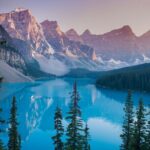
- Moraine Lake and the Valley of the Ten Peaks Finale
- What Makes Guide Ivan’s Style Worth Your Time
- Price and Value: Is $2.92 Per Person Actually a Deal?
- Practical Tips So the Tour Feels Smooth (Not Choppy)
- Who Should Book This Banff Virtual Tour?
- Should You Book This Virtual Banff Tour?
- FAQ
- How do I join if there is no physical meeting point?
- How long is the virtual tour?
- Is the tour live and in English?
- Which places and viewpoints are included?
- Is the experience wheelchair accessible?
- Can I cancel for a full refund?
Key Things I’d Watch For in This Virtual Banff Tour
- A full 6-hour guided run instead of short clips, so you can settle in and learn the bigger picture
- Iconic stops like Surprise Corner, Bow Falls, Lake Minnewanka, Vermilion Lakes, Lake Louise, and Moraine Lake
- Guide Ivan’s history + geology approach, tying the mountains to early Banff development and the Canadian Rockies’ story
- Wildlife and photography insights, so you know what to look for even when you’re not on-site
- Season/visibility variations, meaning what you see can shift depending on conditions
A Six-Hour Banff From Your Screen: What This Virtual Tour Actually Delivers
A virtual tour can easily become “pretty pictures with no point.” This one tries to avoid that. In 6 hours, you’re guided through the Canadian Rockies’ best-known areas—Banff, Lake Louise Village, and Moraine Lake—with narration built to help you understand both the scenery and the logic behind where things are.
The vibe is practical and story-forward. Your guide uses the sights to explain how mountains and water shape the area, and how Banff grew from something small into a destination. If you’re planning a real trip later, that’s a huge help: you’ll come with names, geography, and expectations already in your head. If you can’t travel right now, you still get an organized way to experience the park from wherever you are.
Also, this is live and in English with a tour guide. It’s not pre-recorded. You join online with a link provided after booking, and you can do it on a phone, tablet, or computer—so long as your connection holds up.
You can also read our reviews of more tours and experiences in Banff.

Getting Your Bearings in Banff: Town History and Surprise Corner Views
The tour starts in Banff, where the goal is to help you understand the “why” behind the place. You’ll hear how Banff grew from a small railway stop into one of Canada’s most celebrated destinations. That matters because so much of what you see in Banff is tied to access—people arriving, exploring, and then building a visitor-friendly town around the mountains.
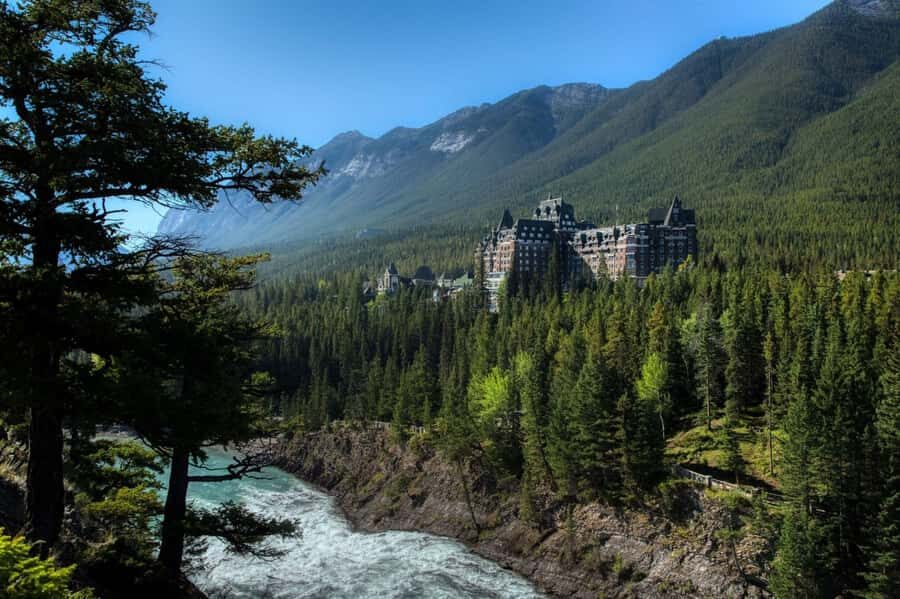
From there, you head to Surprise Corner, a classic viewpoint that gives sweeping views down the Bow Valley and toward the Fairmont Banff Springs Hotel area. This is a smart early stop. It gives you a sense of scale: you can understand how the town sits against towering peaks, and you start to see how the river system and valley shape movement through the region.
A realistic expectation: you won’t be physically standing at the viewpoint. But the way the guide frames it—what you’re looking at and how it fits into the valley—helps your brain build the map. For trip planning, that’s gold.
Bow River to Bow Falls: Glacial Water and Why the Park Looks the Way It Does
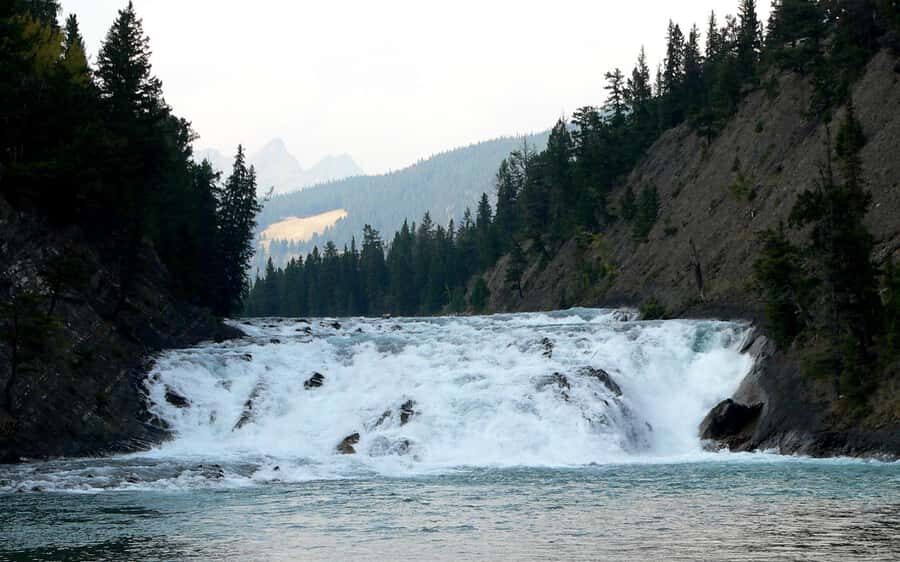
If you want one “aha” stop, it’s Bow Falls and the Bow River section. You’ll follow the Bow River as glacial-fed waters carve through the landscape before plunging over the cascades of Bow Falls. That’s not just a pretty moment. It’s a geology lesson tied to something you can visually track.
The guide also explains how these waters shaped both the land and Banff’s early development. That pairing is useful because it connects the natural force (moving water and erosion) to human history (why early arrivals found the area attractive and how the town formed alongside these natural features).
Bow Falls is also a good point in the tour to pay attention to how the guide points out perspective. Even on a screen, you’ll get better at spotting what’s foreground, what’s valley depth, and where the river’s path leads. It’s the kind of visual thinking that pays off later when you’re actually there.
Two Jack Lake, Lake Minnewanka, and Vermilion Lakes: Calm Water With Big Mountain Backdrops
From Bow Falls, the tour shifts toward quieter water scenes—exactly the kind of change that keeps a long virtual session from feeling monotonous.
Two Jack Lake is described as a place known for calm reflections and sweeping views. That’s important: reflective water can hide and reveal details. The guide’s role here is to help you notice what you might otherwise miss on a screen—like how the mountains and sky interact, and how the stillness makes the scenery feel more dimensional.
Then comes Lake Minnewanka, the park’s largest lake stretching deep into the Rocky Mountains. This stop helps you grasp that the park isn’t only about dramatic peaks and rushing cascades. It also has scale in its water systems—long sightlines, deep valleys, and a sense of distance.
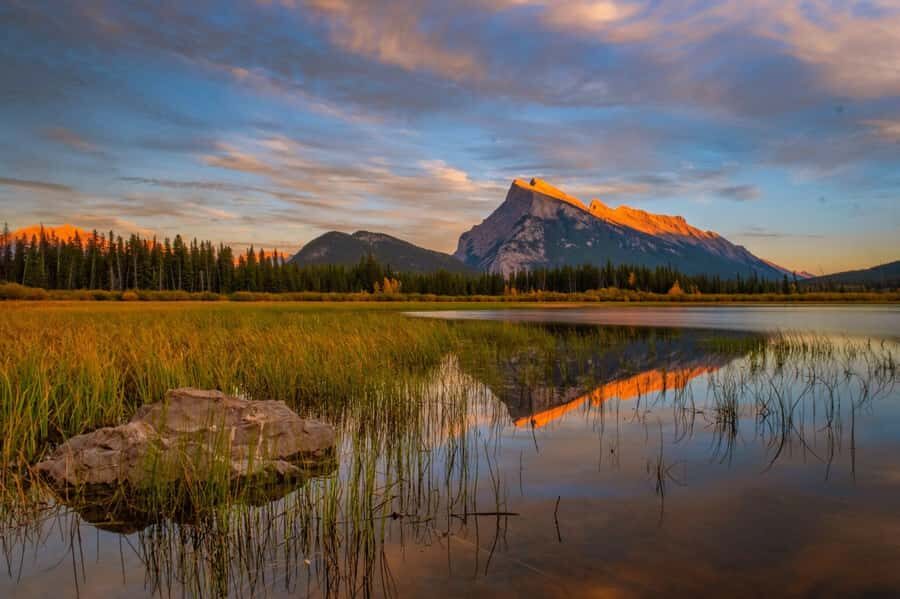
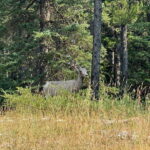
Vermilion Lakes follows with mirror-like reflections and a good chance for wildlife sightings, plus dramatic mountain backdrops. Even if wildlife isn’t always visible at a given time, the guide’s framing helps you understand why this area is watched so closely. The “reflections + wildlife + mountains” combo is why photographers and nature lovers keep returning to it.
Practical note: because the tour is tied to seasonal conditions and visibility, what you see may vary. So use this as a chance to learn the places, not a guarantee of one specific visual moment.
Lake Louise Village to Lake Louise: Turquoise Water and Glacier-Surrounded Peaks
Lake Louise Village is the gateway shift in the tour. The guide transitions from broader Banff-area river and lake systems into the iconic setting many people associate with the Canadian Rockies.
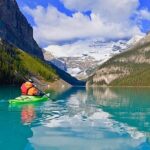
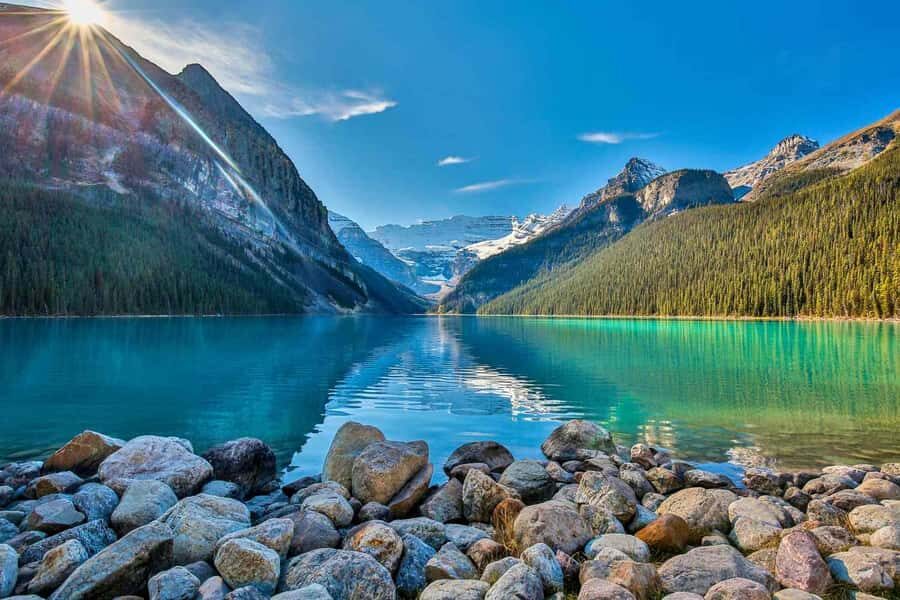
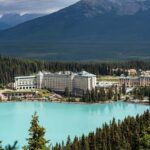
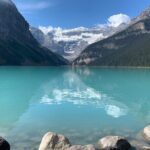
At Lake Louise, you’re shown the famous turquoise waters framed by glaciers and towering peaks. The guide’s narration is key here. Without context, the color can feel like a postcard effect. With explanation—why the scene looks the way it does, how the mountains and ice relate to the water—you start to see the place as a system, not just a view.
This part of the tour is also great for leveling up your “eyes.” As you watch, you’ll learn what to look for: the relationship between water color, the surrounding elevations, and the shape of the terrain. That makes a future in-person visit more satisfying because you’ll notice details faster.
Moraine Lake and the Valley of the Ten Peaks Finale
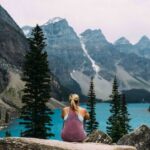
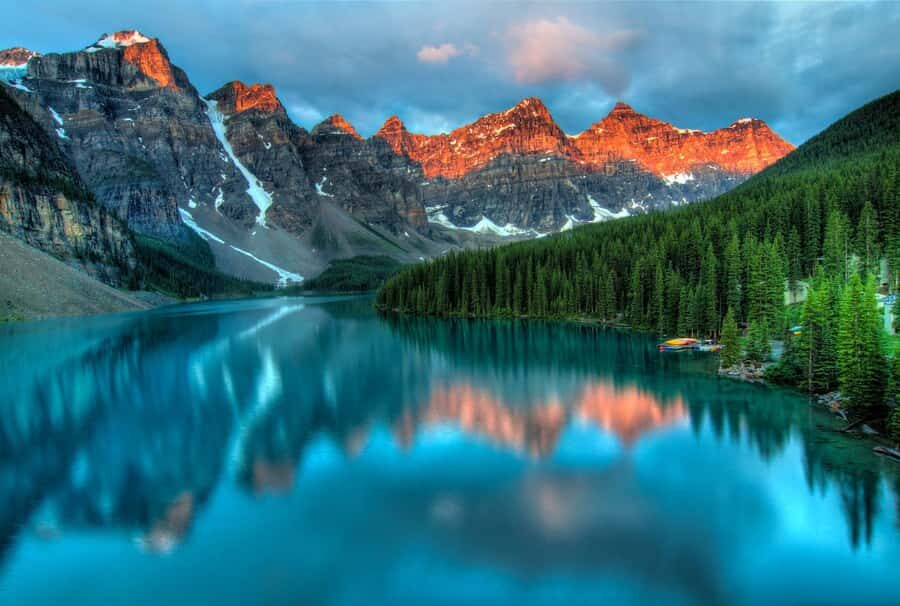
The tour ends at Moraine Lake, under the Valley of the Ten Peaks. This finale matters for two reasons.
First, it’s a payoff moment. You’ve built context through Banff’s rivers, lakes, and valley views, and then you get an alpine scene that’s visually dramatic and instantly recognizable. Second, you get the “destination feeling” you’d want from a real trip. Even though it’s virtual, the guided framing helps the ending land.
Moraine Lake’s setting—beneath steep peaks—also reinforces a theme the guide has been working on throughout: mountains and water don’t sit side-by-side by luck. They shape each other over time. By the end, the tour doesn’t just list famous places. It explains how the Canadian Rockies create a particular look and feel.
What Makes Guide Ivan’s Style Worth Your Time
In a guided experience, the guide can make the difference between “nice viewing” and “I learned something.” Here, Ivan’s strength shows in the way he connects landforms to story.
Across the stops, you’ll hear explanation on Rockies history and geology, plus wildlife stories that help you understand why certain areas earn attention. You’ll also get photography insights, which is a practical addition. It means you’re not only learning the names; you’re learning how to watch.
A recurring theme in Ivan’s narration is connection: how the mountains link to the past, and how Banff’s development is tied to routes like the Canadian Pacific Railway. If you’re the type who likes to understand why places look the way they do—and why people cared enough to build towns and visitor pathways—you’ll likely get more value out of this than a “sit and watch” format.
Price and Value: Is $2.92 Per Person Actually a Deal?
At $2.92 per person for a 6-hour live guided experience, the value is hard to ignore—especially compared with typical guided activities that are often shorter and more expensive. The obvious trade-off is that you’re on a screen, not in the park.
But this is exactly where the pricing makes sense for the audience it serves. For people who want trip planning groundwork—names, geography, and what to prioritize—this price can feel like free practice. You’ll come away with a mental map: where Surprise Corner fits, what the Bow River system does, why Vermilion Lakes are watched, and how Lake Louise and Moraine Lake differ in setting and vibe.
It can also be a smart buy if you’re not sure you want to commit to travel right away. Instead of guessing what you’ll enjoy, you can experience the most famous pieces with a guide and decide what kind of itinerary you’d build later.
If you’re already an expert on Banff and you only want weather-proof photo spots, you might find it less essential. Still, the history-and-geology angle gives it a different purpose than “just views.”
Practical Tips So the Tour Feels Smooth (Not Choppy)
This is simple, but it’s worth planning for. Since you join online from anywhere using the link sent after booking, your setup affects the experience.
- Use headphones or external speakers if you can. The guide’s narration is part of the value, and audio clarity helps you keep up.
- Use a stable connection before the start time. If your Wi-Fi is unreliable, test it. This isn’t about being “perfect,” just about not fighting buffering.
- Watch for seasonal differences. The tour may vary depending on conditions and visibility, so let the guide’s framing do the heavy lifting even if visuals look slightly different than you expected.
- Plan to give it uninterrupted time. Six hours is long enough that you’ll enjoy it more when you can stay seated and attentive.
Also, there’s no physical meeting point since it’s virtual. That’s a real win for people who hate rushing across town.
Who Should Book This Banff Virtual Tour?
This one fits best if you want structure and context more than you want physical adventure.
I think it’s a great match for:
- You if you’re planning a future Banff trip and want names, geography, and priorities locked in.
- You if you want a wildlife and geology story, not just a slideshow.
- You if you’re traveling with older family members, kids, or anyone who doesn’t want a physically demanding outing.
- You if you can’t get to Alberta right now but still want a guided way to connect with Banff, Lake Louise, and Moraine Lake.
It’s also wheelchair accessible, which matters for anyone filtering activities by comfort and mobility.
Should You Book This Virtual Banff Tour?
I’d book it if you want a guided route through Banff’s biggest hits with a guide who explains what you’re seeing. The combination of iconic viewpoints—Bow Falls, Lake Minnewanka, Vermilion Lakes, Lake Louise, and Moraine Lake—and the guide’s history and geology approach is the reason this feels worth it.
I’d pause and reassess only if you have an unreliable internet setup, or if you’re looking for the specific physical experience of standing at each location. Virtual can’t replace weather, fresh air, or the feeling of scale up close. But for learning, planning, and getting inspired, it’s a very smart use of time.
If you want Banff to make sense before you ever buy plane tickets or book hotels, this is an easy yes.
FAQ
How do I join if there is no physical meeting point?
You join online using a link provided after booking confirmation. There’s no in-person meeting or specific landmark to go to.
How long is the virtual tour?
The experience runs for 6 hours. Starting times depend on availability.
Is the tour live and in English?
Yes. It’s a live, guided virtual tour with a tour guide in English.
Which places and viewpoints are included?
The tour covers Banff, Lake Louise, and Moraine Lake, including famous viewpoints such as Surprise Corner, Bow Falls, and Lake Minnewanka. It also includes stops like Two Jack Lake and Vermilion Lakes.
Is the experience wheelchair accessible?
Yes, the tour is listed as wheelchair accessible.
Can I cancel for a full refund?
Yes. Free cancellation is available up to 24 hours in advance for a full refund.