REVIEW · BANFF
Banff: Morning or Afternoon Johnston Canyon Icewalk
Book on GetYourGuide →Operated by Discover Banff Tours · Bookable on GetYourGuide
Banff’s Johnston Canyon icewalk turns winter walks into real sightseeing. I love the practical touch of ice cleats and poles, because they make icy footing feel controlled instead of stressful. I also love that you get to hike to the frozen falls and learn the canyon’s geology from your guide, not just pose for photos and rush on.
Here’s the main thing to consider: this is a winter hike on uneven, sometimes very slick ground. You’ll cover about 5.4 kilometers total with 135 meters of elevation gain, and it’s not designed for kids under 8 or anyone who hates the cold.
In This Review
- Key Points That Make This Icewalk Worth Your Time
- The Bow Valley Parkway Ride: Part of the Experience
- Getting Your Ice Cleats Over Winter Boots
- The Hike to Upper Falls: The “Big” Views Come Early
- Lower Falls and the Cave-Like Feature
- Hot Chocolate and Maple Cookies: Why That Break Works
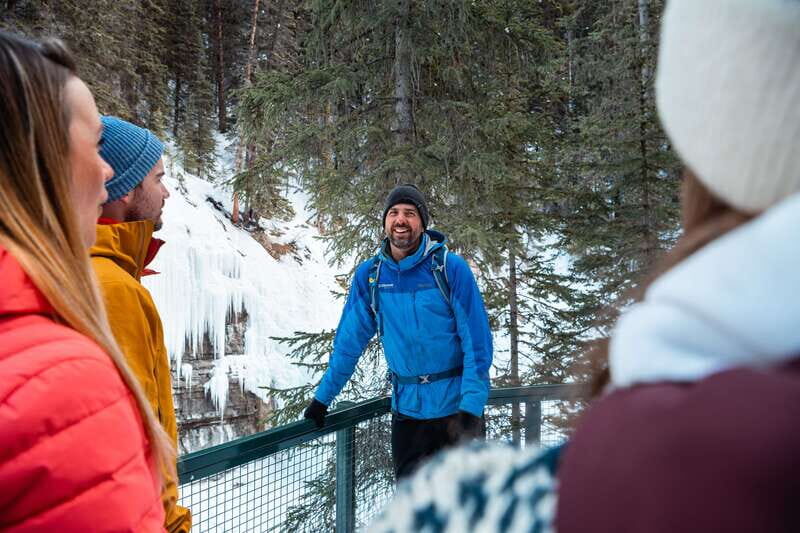
- The Guide’s Role: More Than Trivia Stops
- Pace, Distance, and What “Moderate” Really Means Here
- Morning vs Afternoon: Pick the Style You Want
- Price and Value: What You Pay For at $79
- What to Bring (So You Don’t Feel Miserable)
- Who This Tour Suits Best in Winter Banff
- Should You Book the Johnston Canyon Icewalk?
- FAQ
- Where does the tour pick up in Banff?
- How long is the Banff morning or afternoon Johnston Canyon Icewalk?
- What does the icewalk include?
- How far do you hike and how hard is it?
- What should I wear and bring?
- Are luggage or large bags allowed?
- What’s the minimum age for this tour?
- Do I need to sign a waiver?
- Is there free cancellation?
Key Points That Make This Icewalk Worth Your Time
- Ice cleats + hiking poles mean you can focus on footing and views, not slipping
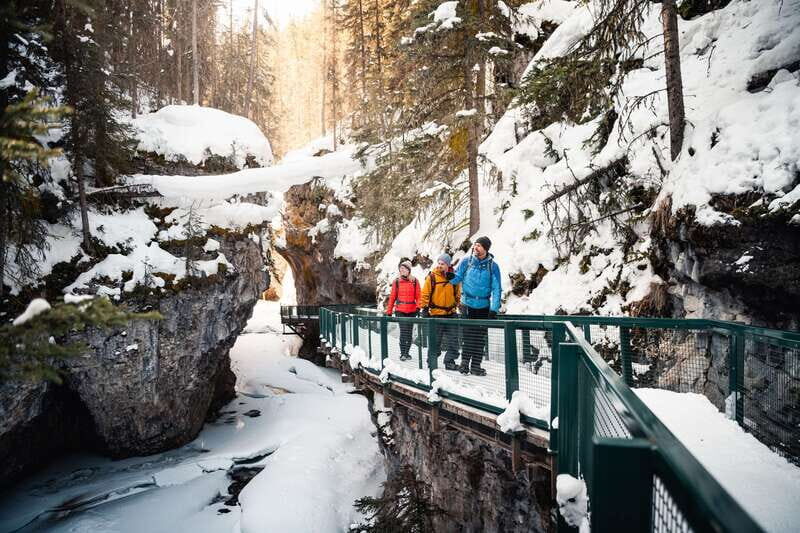
- Steel catwalks along the canyon walls give bold looks down to the icy river
- Upper Falls is the highlight, with frozen columns that ice climbers often tackle
- Lower Falls has a cave-like viewing option for a different perspective
- Small-group size (max 12) helps your guide manage pace and safety
- Hot chocolate and maple cookies feel like a reward, not an afterthought
The Bow Valley Parkway Ride: Part of the Experience
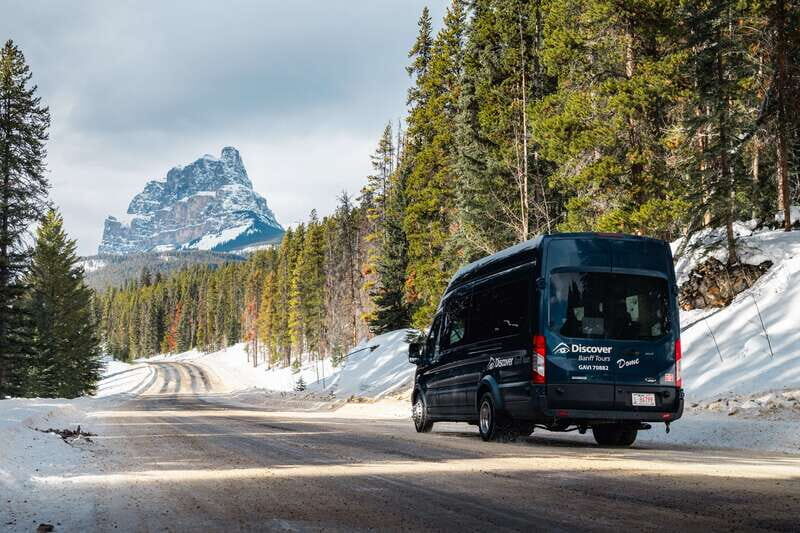
This isn’t just a drop-off and go. You start with pickup in Banff and a minibus ride to Johnston Canyon via the Bow Valley Parkway. The route is known for wildlife, and the drive is your warm-up—literally and mentally.
On a clear day, the views add up. You’re moving through a wildlife-rich habitat, and you may catch animals along the way. In past outings, guides have even pulled over for sightings like elk, which you’ll appreciate because it’s the kind of moment you can’t reliably manufacture on your own schedule.
Timing can matter here. The morning slot tends to feel calmer, while the afternoon slot can give you more breathing room at the lookouts. If you’re sensitive to crowds, I’d lean morning. If you like lingering, I’d lean afternoon.
A few more Banff tours and experiences worth a look
Getting Your Ice Cleats Over Winter Boots
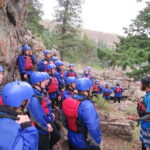
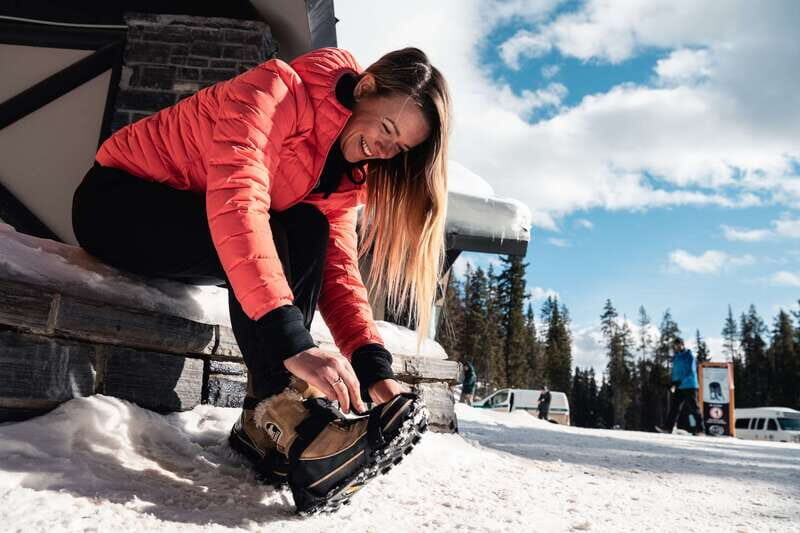
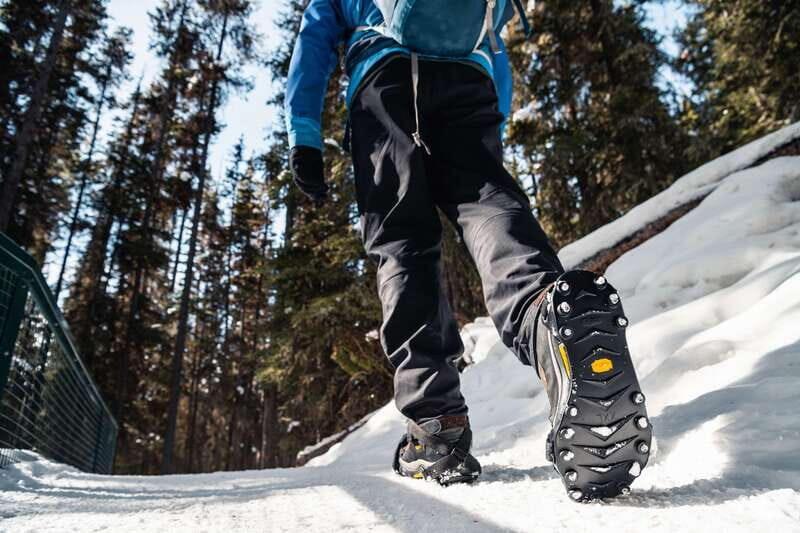
At the trailhead, the guide shows you how to put on ice cleats over your winter boots. This part sounds basic, but it changes the whole feel of the hike. When the snow turns glossy or the ice is thin, cleats help you keep traction where regular boots can skid.
You’ll also get tips for winter hiking, which matters because Johnston Canyon is not a flat walk. Reviews mention guides checking in and assisting at the top when conditions get very icy, which tells me they don’t treat safety as optional.
And yes, the change is immediate. People often realize how much anxiety they were carrying about slipping—then the cleats take over. Even if you’re an experienced winter hiker, this is still a smart way to prevent a minor stumble from becoming a bad day.
The Hike to Upper Falls: The “Big” Views Come Early
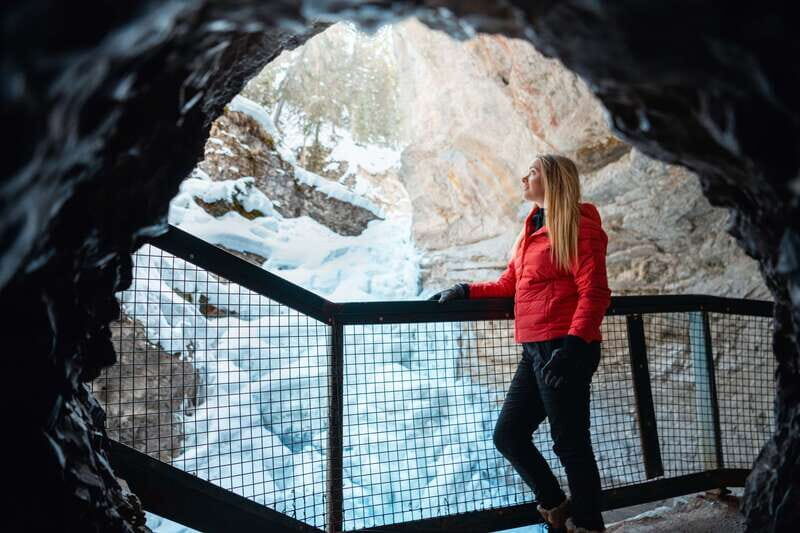
Once you start, you’ll hike a moderate route up to the Upper Falls. The one-way climb is about 2.7 kilometers with roughly 135 meters of elevation gain, and you’ll head out along the canyon’s winter features.
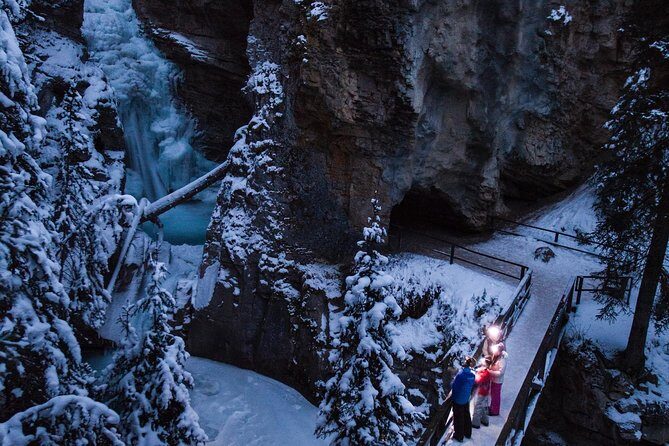
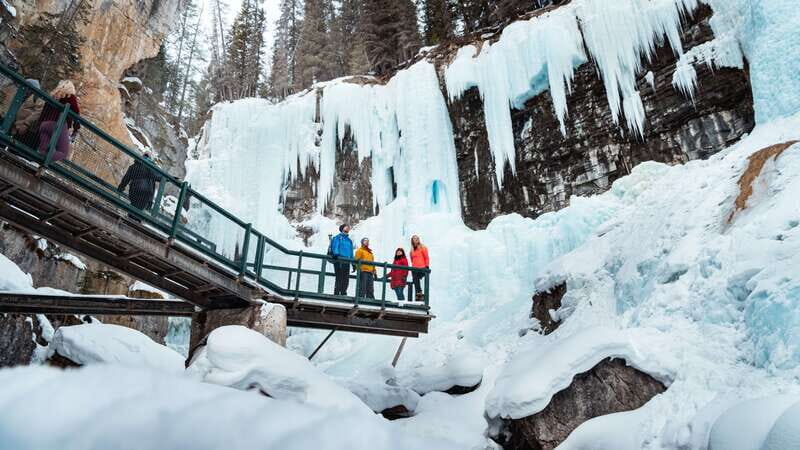
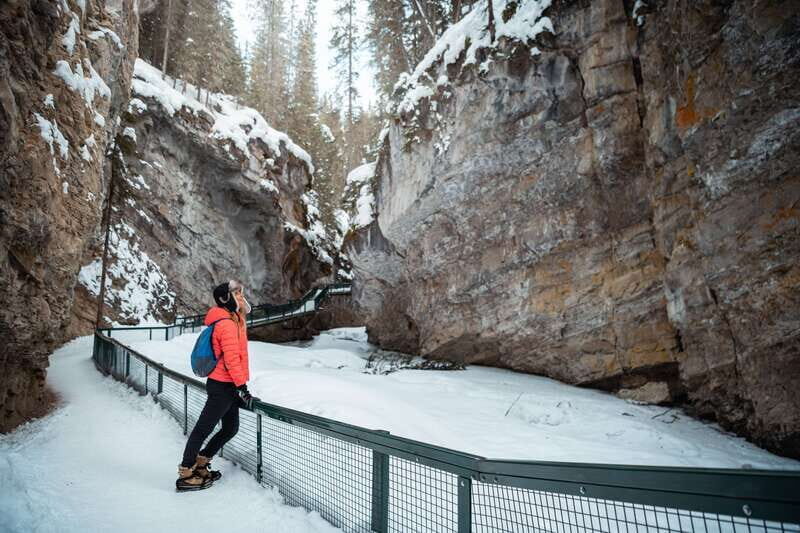
The big payoff is the catwalk system. You’ll walk along steel catwalks built into the canyon walls, giving you a direct line of sight down into the frozen channel. It’s the kind of view that feels dramatic even before you spot the thick ice pillars.
The Upper Falls stop is also where the canyon starts to feel like a winter world of its own. These frozen columns can look like scaffolding or frozen organ pipes, and ice climbers are often seen scaling the formations. You won’t climb them, of course, but you’ll be close enough to understand why people travel specifically for this.
Short refreshment time is part of this stretch too. You’ll get hot chocolate and a snack, and it’s timed so you warm up while you’re still in prime viewing territory.
Lower Falls and the Cave-Like Feature
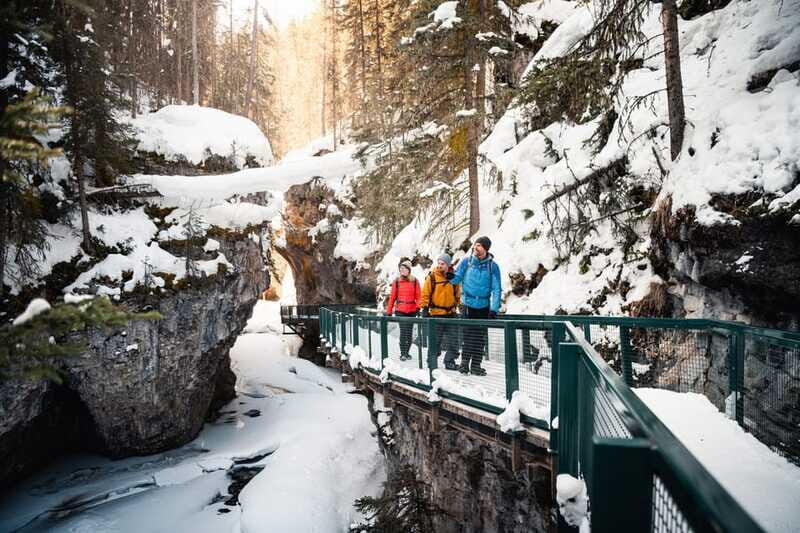
After Upper Falls, you head back down and stop at the Lower Falls. This is where the canyon shifts from towering ice to more varied textures—ice mixed with flowing water, depending on the season and freeze level.
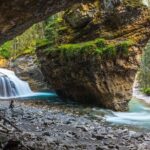
You’ll also have the option to walk through a natural cave-like feature for a unique viewpoint. That’s a fun contrast to the open catwalks. It also means you’ll get at least one photo angle that doesn’t look like the standard postcard shot.
One practical note: winter conditions can make crowded spots a little trickier to navigate. This trail can be popular, so keep your pace steady and follow your guide’s spacing advice on the icy sections.
If you’re worried about flexibility or knees, the pacing helps. Several hikers with knee issues have found the route manageable because it’s not a steep grind the whole way. Still, you’re walking on winter footing, so supportive boots and a calm rhythm matter more than speed.
Hot Chocolate and Maple Cookies: Why That Break Works
Mid-walk, you’ll warm up with hot chocolate and maple cookies. This is included for a reason. In real winter hiking, the cold doesn’t just sit on your skin—it affects your energy and your willingness to take breaks.
Here, that break is placed when you’ll actually use it. You get to sip something warm while you still have views around you, not after you’re already freezing on the way back. It’s a small detail, but it makes the 4-hour experience feel complete.
It also gives you time to regroup. Winter trails can make everyone hurry without meaning to. A planned pause helps your group reset, and it’s where you’ll usually hear the guide connect the day’s scenery to the canyon’s formation.
The Guide’s Role: More Than Trivia Stops
The guide isn’t there just to keep you on the right path. The canyon’s geology and history are part of the experience, and it’s spoken in an approachable way as you walk.
You’ll pick up clues about how Johnston Canyon was formed—what shaped the rock, how water and ice interact, and why the canyon cuts look the way they do. Guides have also shared local Canadian stories while en route, and different guides bring different personalities. Names that have shown up across past small groups include Jeff, Neill, Rob, Tim, Emma, Georgia, Roz, Eli, Ethan, Tina, Buck, Chris, and Heidi.
What matters for you: you’re getting someone to interpret what you’re seeing. When you know what to look for, your photos improve and your hike stops feeling like an out-and-back chore.
Pace, Distance, and What “Moderate” Really Means Here
This tour is built around about 4 hours total, including the drive. Expect a hike that feels moderate but still active. The total walking distance is 5.4 kilometers with 135 meters of elevation gain, and you’ll be on winter surfaces throughout.
That “moderate” rating is important. It’s not an easy stroll, but it’s also not a steep endurance test. The trail is designed with built-in viewpoints and catwalk sections, so you get frequent chances to pause and reset.
If you can handle winter walking, you’ll probably be fine. If you’re unsteady on ice or get winded easily, consider going slower than your instincts. The cleats help, but they don’t replace careful foot placement.
Also, remember your winter gear load matters. You’re not allowed luggage or large bags, so plan to travel light. Bring only what you need so you can keep your hands free for balance and comfort.
Morning vs Afternoon: Pick the Style You Want
Both departures run as a half-day, but your experience can feel a bit different.
The morning slot is often a good choice if you want fewer people around at viewpoints. One guide-led trip has even been recommended specifically for that reason, because it helps you photograph the ice without shoulder-to-shoulder delays.
The afternoon slot can be better if you like more time at lookout spots. More than one person has suggested the afternoon option for slower sightseeing and more relaxed pauses, which fits the vibe of a winter canyon where you’ll want to keep stopping for different angles.
So choose like this:
- Morning if you want a faster, calmer start
- Afternoon if you want extra time to linger and shoot photos
Price and Value: What You Pay For at $79
At $79 per person, this isn’t a bargain bargain—but it can be strong value for what you get.
You’re paying for:
- Round-trip transport from Banff
- A professional certified guide
- A small group capped at 12 guests
- Safety gear: ice cleats and hiking poles
- Included warm-up: hot chocolate and maple cookies
- Built-in interpretation: geology and canyon formation explanations
If you tried to replicate this yourself, you’d spend money on gear rentals (or risk going without), plus you’d need to handle winter driving, parking logistics, and route clarity on icy trailheads. For many people, the guide is the difference between simply surviving the conditions and actually enjoying the canyon.
You might still feel it’s pricey if you’re comparing it to a free self-guided walk. But if you care about safety, comfort, and learning while you’re out there, the cost starts making sense quickly.
What to Bring (So You Don’t Feel Miserable)
You’ll want proper winter layers. The essentials are thermal clothing, warm clothing, snow clothing, a scarf, and warm shoes. The tour also specifically calls for a winter jacket, snow pants, hats, mittens, and waterproof winter boots.
A couple practical tips:
- Bring gloves or mittens you actually like wearing for 2+ hours
- Wear waterproof boots that fit with cleats over top
- Use a scarf or neck warmer so cold air doesn’t steal your heat
And don’t bring large luggage or bags. Keep it simple.
If you forget key items, you’ll feel it faster than you expect. Winter walking is not the time to gamble.
Who This Tour Suits Best in Winter Banff
This icewalk works well if you want a guided winter hike without planning headaches. It’s especially good for people who:
- Want the Upper Falls ice columns without dealing with navigation
- Like learning geology and local stories along the way
- Care about safety and traction on icy terrain
- Prefer a group size small enough that your guide can manage pace
It’s less ideal for you if you’re looking for a long, high-stamina trek. This one is short and focused. It’s also not suitable for children under 8.
Ages matter here, too. The tour notes a minimum age of 8, and children aged 15 and under must be with someone 18 years and older.
Should You Book the Johnston Canyon Icewalk?
Book it if you want a structured winter experience with real viewpoints, traction gear, and a guide who helps you understand what you’re seeing. I think it’s a great match for first-timers to Banff winter hiking, because the plan is clear and the included equipment reduces risk.
Skip it (or at least rethink) if you hate cold walking, can’t manage icy conditions, or you’re shopping purely on price and don’t value the guide + winter gear combo.
If you’re deciding between morning and afternoon, let your style choose. Go morning for a calmer feel. Go afternoon if you want more time at the lookouts and you’re okay with a slightly busier trail.
In winter, Johnston Canyon hits hardest when you slow down and look. This tour is built to help you do exactly that.
FAQ
Where does the tour pick up in Banff?
Pickup is at the public bus parking spot behind the Mount Royal Hotel at 138 Banff Ave. You should be ready about 5 minutes before the 8:12 AM or 1:12 PM pickup time.
How long is the Banff morning or afternoon Johnston Canyon Icewalk?
The tour lasts about 4 hours.
What does the icewalk include?
It includes pickup and drop-off in Banff, a professional certified guide, a small-group tour (maximum 12 guests), hot chocolate and maple cookie snack, ice cleats, and hiking poles.
How far do you hike and how hard is it?
The total hike is about 5.4 kilometers with 135 meters of elevation gain. The route to the Upper Falls is described as a moderate 2.7-kilometer hike with 135 meters elevation.
What should I wear and bring?
Bring thermal clothing, warm clothing, snow clothing, a scarf, and warm shoes. The tour also recommends a winter jacket, snow pants, hats, mittens, and waterproof winter boots.
Are luggage or large bags allowed?
No. The tour does not allow luggage or large bags.
What’s the minimum age for this tour?
The minimum age is 8 years. Children aged 15 and under must have someone 18 years and older with them.
Do I need to sign a waiver?
Yes. All adults must sign a waiver before the tour, and a parent or guardian must complete a waiver for any child under 18.
Is there free cancellation?
Yes. You can cancel up to 24 hours in advance for a full refund.