REVIEW · BANFF
Banff: Introduction to Ice Climbing for Beginners
Book on GetYourGuide →Operated by Alpine Air Adventures Inc · Bookable on GetYourGuide
Ice climbing has a way of making winter feel personal. You’ll learn the basics of climbing frozen waterfalls in the Banff, Lake Louise, or Field BC area, with ACMG-certified coaching and the kind of safety-first instruction that helps first-timers actually enjoy themselves. I especially liked the hands-on skills you pick up fast, and how your guide adapts the day when it’s brutal cold. One thing to consider: you’ll need your own car to get to the meeting place and the climbing site, and you’ll be outside for hours.
You’ll likely be stepping into a new world of movement and balance, with a focus on crampons and body positioning, then finishing with top-rope climbing practice. The best part is that this is built for beginners, not for confident climbers looking for a challenge. The only real drawback is that ice climbing is physically demanding, and the program is not suitable for kids under 14, pregnant women, or guests with mobility impairments.
In This Review
- Quick highlights I’d plan around
- Where you meet and how the day flows in the Banff area
- What makes this beginner course work: safety first, but you climb
- Gear is included, so your time goes to learning
- Learning crampons: the skill that makes or breaks your day
- Top-rope belay basics: learning safety while staying active
- A real frozen-waterfall climbing day, with smart pacing
- What to bring (and what to skip) for a cold, active session
- Price and value: what you’re paying for at $179
- Who this ice climbing intro is best for
- Booking confidence: small-group reality and what to watch
- Should you book this Banff beginner ice climbing day?
- FAQ
- How long is the ice climbing introduction course?
- What’s included in the $179 price?
- Do I need to bring my own food and drinks?
- Where do I meet the guide?
- Do I need transportation to the climbing site?
- Is the course suitable for children?
Quick highlights I’d plan around
- Frozen waterfall focus: You’re there to climb ice, not just watch it from the trail.
- Two difficulty rope setups (when conditions allow): You can get more attempts while staying comfortable.
- Certified guiding and safety coaching: You’ll learn with proper systems and real instruction.
- Skills you can reuse later: Crampon walking and top-rope belay basics are taught early.
- Warmth matters here: A day can run in extreme cold, and your guide will actively manage comfort.
Where you meet and how the day flows in the Banff area
You’ll meet your guide at the Alpine Air Adventures office at 229 Bear St on the lower level, under the movie theatre. Plan to show up ready for winter: the schedule is built around getting you to the ice site quickly and safely.
Expect a start time around 8 or 9am and a finish around 3 or 4pm. That timeline is long enough to teach real fundamentals, not just hand you gear and send you off. It also means you’ll be outside most of the day, so dressing for cold isn’t optional.
The climbing field day happens in the Banff, Lake Louise, or Field BC regions. If conditions require a change, you’ll be told in advance through the final logistics email. In other words, the day is flexible to match the ice and weather.
You can also read our reviews of more tours and experiences in Banff.
What makes this beginner course work: safety first, but you climb
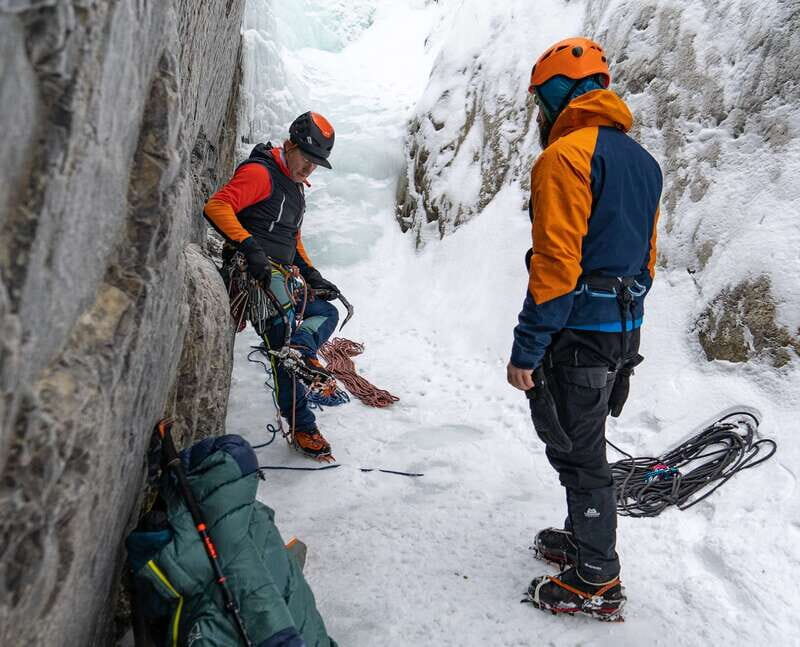
This intro program is designed specifically for beginners. That matters because ice climbing has a learning curve: footwork, friction, movement patterns, and safety systems all show up at the same time. The training keeps it structured so you can build confidence step-by-step instead of getting overwhelmed.
You’ll start with a safety briefing and core instructions before you put everything into practice. Then the day shifts into actual climbing and skill repetitions, including learning how to walk on crampons and how to belay top rope as part of staying safe on the ice.
I like that it’s not purely theoretical. You’re there to use the gear, understand what it does, and build muscle memory with guidance. The guides are ACMG and/or IFMGA plus Canadian Avalanche Association certified, which gives you extra confidence that the safety side isn’t an afterthought.
Gear is included, so your time goes to learning
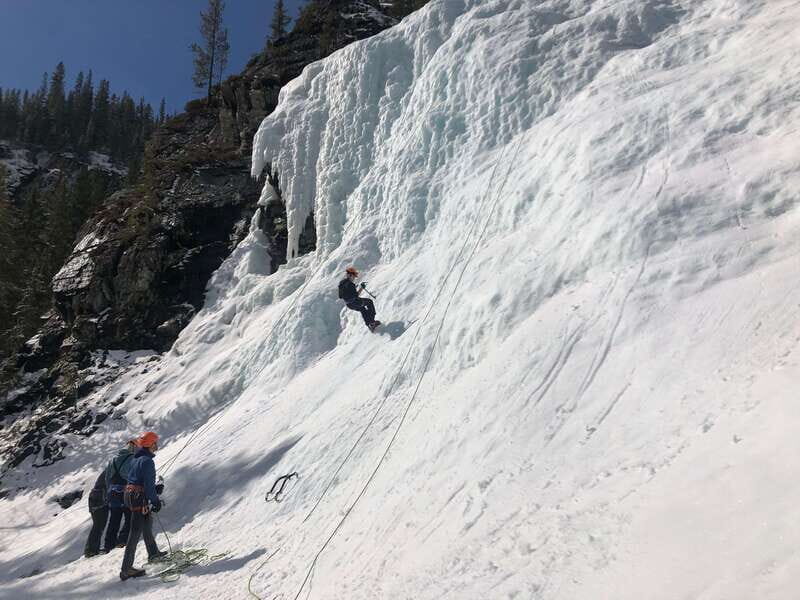
At $179 per person, the value isn’t just the guiding. The technical gear is included, including:
- helmet
- harness
- boots
- crampons
- ice axe
That list is a big deal for first-timers. If you had to rent or buy everything separately, the total cost and hassle would climb fast. Here, your money goes directly toward instructor time and a guided learning day, not toward assembling gear first.
You’ll still want to bring clothing that can handle cold exposure and repeated movement: a proper winter jacket, gloves, and snow clothing. Your guide will work with you to make sure you’re set up correctly, because the right fit and setup is part of safety.
Learning crampons: the skill that makes or breaks your day
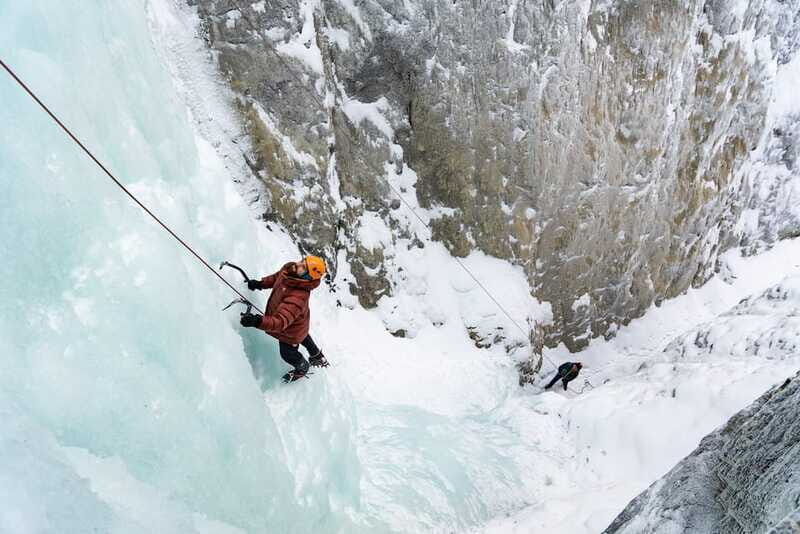
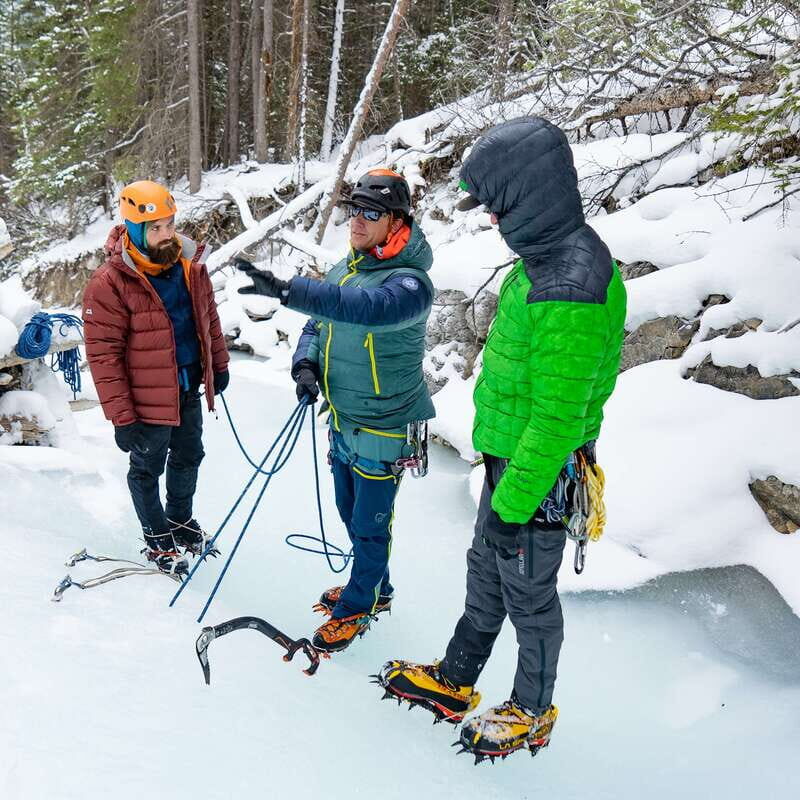
Crampons can feel intimidating at first. They’re sharp, they change how your feet move, and they force you to pay attention to angles and weight placement. This course targets that right away.
What you’ll practice is the basic art of walking on crampons—how to step without wobbling, how to keep your balance, and how to trust your feet on ice. You’ll also learn how to become aware of body positioning, which is a fancy way of saying you’ll figure out what your hips, knees, and stance should do to stay stable.
The goal isn’t to make you a pro. It’s to give you a repeatable feel for movement so you can focus on climbing instead of panicking about your footing.
Top-rope belay basics: learning safety while staying active
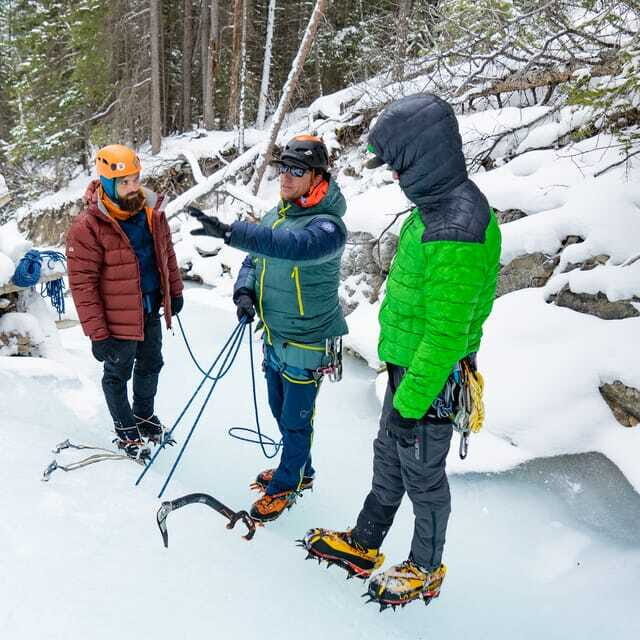
Ice climbing is more than brute strength. It’s also a game of systems and controlled motion. This experience includes training in top-rope belay basics so you understand how climbers are protected and how control works during climbing.
Even if you’re not the person doing every job on the rope, learning the basics helps you climb with better awareness. You’ll understand what the setup is doing, why it matters, and what safe movement looks like when you’re attached to the system.
This is also where having a certified guide shows up. You learn the technique, but you also learn what can go wrong, and what the guide is watching for.

A real frozen-waterfall climbing day, with smart pacing
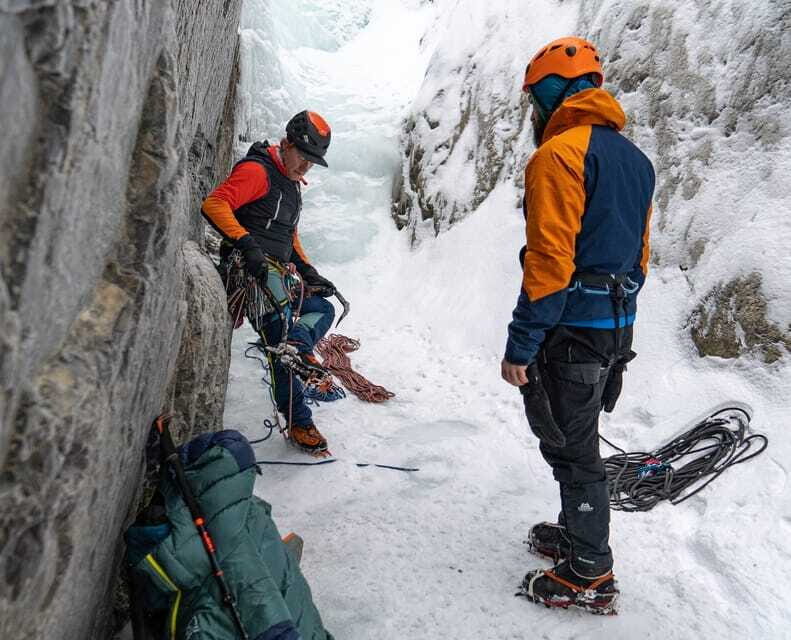
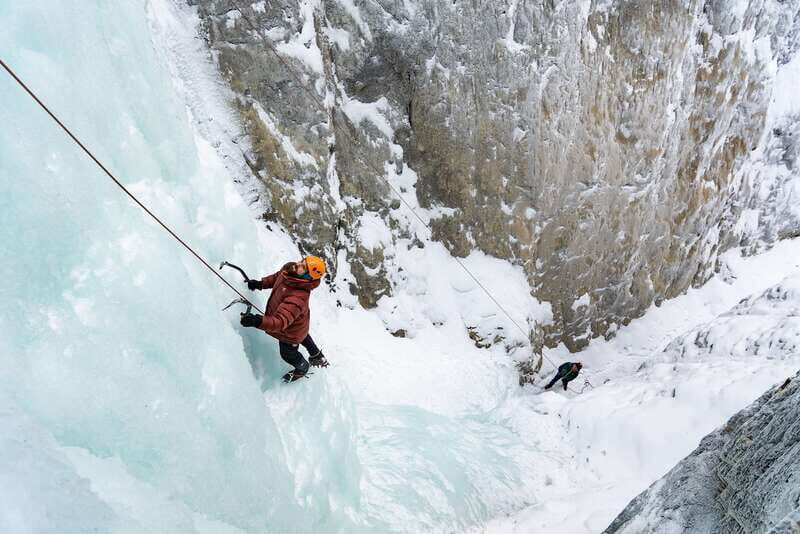
The day is built to get you climbing, not just learning. You’ll spend time on techniques, then transition into climbing practice. One detail I love in the way the day is run: when conditions and setup allow, your guide may set up two different level ropes.
That kind of variation is practical. It helps you progress without feeling like you’re trapped in one difficulty level all day. It also supports warmth and comfort because you can choose the harder or easier circuit depending on how you’re feeling.
A sharp example comes from one verified experience in extreme cold, where the guide used a strategy to keep everyone comfortable and moving. The guide, Shea, was noted for being very helpful and for actively trying to keep guests warm when temperatures were around -20°C. He provided great tips throughout the day and adjusted the rope setup so climbers could take more tries on a route that fit their level.
Even if your day isn’t that cold, the takeaway is the same: your guide isn’t just there for safety paperwork. They coach movement, adjust learning routes, and keep the day working for beginners.
What to bring (and what to skip) for a cold, active session
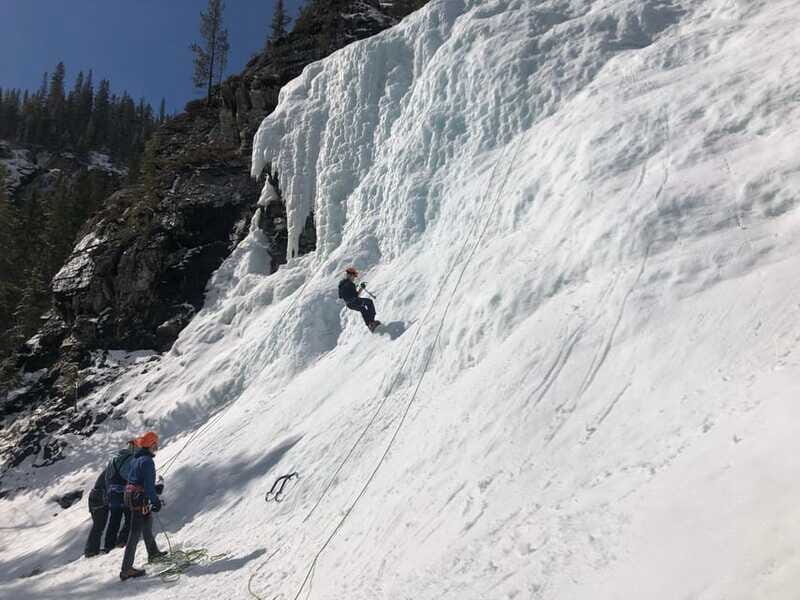
You’ll be outside for hours. That’s the whole point. So pack like you’re expecting wind, cold, and lots of time standing around while others climb.
Bring:
- warm clothing
- gloves
- a jacket
- snow clothing
- food and drinks
The course doesn’t include meals or beverages, so plan to bring enough for the full session. If you burn calories climbing, you’ll want fuel on board, not a mad scramble for snacks.
A practical tip: you’ll likely get cold faster when you’re stationary between attempts. Dress in layers you can manage, and keep spare warmth options available.
Price and value: what you’re paying for at $179
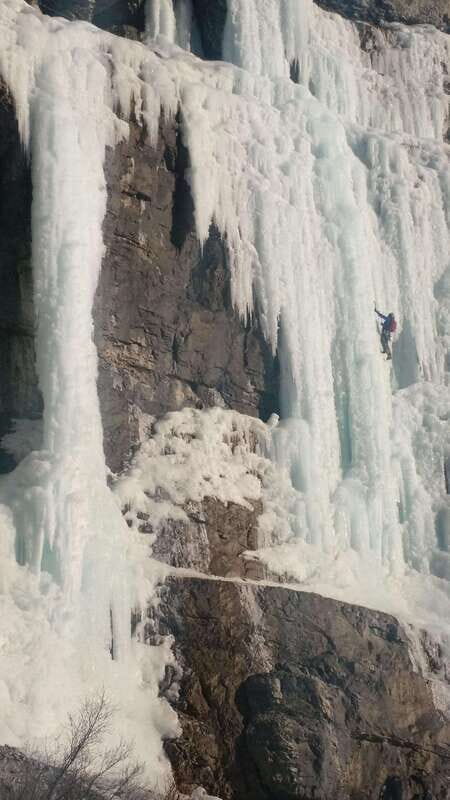
At $179 per person for about 7 hours, this is a pretty straightforward deal if you’re starting from scratch. You’re paying for:
- an ACMG-certified guide teaching real beginner skills
- all technical gear (helmet, harness, crampons, boots, axe)
- safety briefing and guided climbing time
The big value is that the gear is included. For beginners, gear rental or purchase can easily erase the savings of cheaper tours. Here, your day is structured around instruction and practice, which is exactly what you want on your first try.
If you already own everything needed and you’re comfortable with cold outings, the value shifts slightly. But even then, the coaching and safety systems are the part you can’t easily DIY.
Who this ice climbing intro is best for
This program is a great fit if you want to try a new winter hobby and learn actual fundamentals. It also makes sense if you’re traveling with friends who want a shared activity that feels different from standard sightseeing.
It’s especially well-suited to:
- teens and adults 14+ who want structured instruction
- people who like hands-on learning
- anyone curious about climbing but wants a safety-oriented start
It’s not suitable if you’re pregnant, have mobility impairments, or use a wheelchair.
Booking confidence: small-group reality and what to watch
This group booking requires at least 4 bookings to move forward. That means you should book with enough flexibility to handle the possibility of rescheduling if the minimum isn’t met. You can ask AAA team by email to verify tour status.
You’ll also receive a detailed course package by email about 3 days prior to the course. That’s useful for dialing in what to expect and how to prepare.
If you’re the type who likes to plan around weather, remember that the climbing zone can change based on conditions. Build in some flexibility, because ice doesn’t follow your calendar.
Should you book this Banff beginner ice climbing day?
If you want a first taste of ice climbing with real instruction, I think you should book this. The big reasons are simple: you’ll learn foundational skills like crampon walking and top-rope belay basics, you’ll have gear included, and you’ll be guided by certified professionals focused on keeping beginners safe and actually enjoying the day.
Skip it only if you’re not comfortable dressing for prolonged cold exposure or if you need an activity with easy logistics. You’ll drive yourself to the climbing site, and this is outdoors work in real winter temperatures.
If you’re ready to trade a warm museum for a hands-on winter challenge, this is a smart, beginner-friendly way to do it.
FAQ
How long is the ice climbing introduction course?
The experience runs for about 7 hours, with a meeting time around 8 or 9am and an expected finish around 3 or 4pm.
What’s included in the $179 price?
Your price includes the climbing experience, a safety briefing and instructions, an ACMG-certified mountain guide, and all technical gear such as helmet, harness, boots, crampons, and an ice axe.
Do I need to bring my own food and drinks?
Yes. Food and drinks are not included, so you’ll want to bring your own.
Where do I meet the guide?
Meet at the Alpine Air Adventures office at 229 Bear St on the lower level, under the movie theatre.
Do I need transportation to the climbing site?
Yes. Transportation to the climbing site is not included, and you’ll be required to drive to the meeting location and to the climbing site.
Is the course suitable for children?
No. The program isn’t suitable for children under 14 years old.