REVIEW · NEW BRUNSWICK
Admission 1 person – Visit of the Acadian Historic Village
Book on Viator →Operated by Village historique acadien · Bookable on Viator
Old Acadia comes alive on a 2.2 km walk.
What makes the Village Historique Acadien such a good stop is that you’re not stuck in a lecture. You follow a self-guided route lined with historic buildings, animated by bilingual (English and French) interpreters, and you can book in advance to skip the ticket line. The only real catch: it’s built for walking, and the visit is aimed at people with moderate physical fitness.
I especially like the time span it covers, from 1770 all the way to 1949. It changes the feel as you go, since you’re seeing daily life through different eras rather than one quick snapshot.
You’ll also notice staff energy right away. The strongest comments I’ve seen keep pointing to kind, detailed explanations and staff who treat each house like it’s really in use.
In This Review
- Key highlights you’ll care about
- Village Historique Acadien: What you’re walking into
- The 2.2 km circuit: how the self-guided pace really works
- Bilingual interpreters: why English and French matters
- What the 1770–1949 timeline feels like on foot
- Each historic building: what to expect when you stop
- Duration and timing: planning your 4–6 hours
- Parking and on-site comfort (small details that matter)
- Price and value: is $18.63 worth your time?
- Who should book this admission?
- Should you book the Acadian Historic Village admission?
- FAQ
- How long does the Acadian Historic Village visit take?
- Is the tour self-guided?
- How far is the route through the village?
- What languages are offered during the visit?
- What is the admission ticket for?
- When is it open?
- Is parking available, and is it free?
- Are service animals and pets allowed?
- What’s the cancellation policy?
Key highlights you’ll care about
- Skip-the-ticket-line with advance admission so you can start your walk faster
- Bilingual interpreters (English and French) at historic buildings along the route
- 2.2 km self-guided circuit that you can pace yourself on
- A wide timeline (1770–1949) focused on early settlers’ daily life
- Helpful, welcoming staff who make the reconstructions feel personal
Village Historique Acadien: What you’re walking into

This admission is for the Acadian Historic Village experience at Village Historique Acadien in New Brunswick. Instead of waiting around, you get access to a self-guided visit where the site’s buildings and stories do most of the work.
The big idea is simple: you walk a 2.2 km route through a series of historic buildings, and at different points you meet bilingual interpretive guides. They share how people lived in Acadia during a long stretch of time, from 1770 to 1949. That range is one reason this doesn’t feel like a one-note museum stop.
A practical perk: you’re offered a mobile ticket, and booking ahead typically helps you avoid the ticket line. For a place that’s spread out and meant for walking, shaving off that early friction makes the day feel smoother.
You can also read our reviews of more historical tours in New Brunswick



The 2.2 km circuit: how the self-guided pace really works

You’ll be following a loop route, roughly 2.2 km, with historic buildings along the way. “Self-guided” here doesn’t mean you’re on your own. It means you control when you pause, when you move on, and how long you linger at each stop.
If you tend to read every sign and actually talk to the interpreters, plan closer to the top end of the time window. The experience is listed at about 4 to 6 hours, and that feels accurate when you stop for conversations and take your time between houses.
If you’re more “quick pass” style, you can still enjoy it. Just know that this kind of village works best when you slow down enough to notice what changes from building to building. The reconstructions are designed to be looked at, not just walked past.
Bilingual interpreters: why English and French matters

A standout feature is that the interpreters are fully bilingual—English and French—so you’re not limited to one language lane. That matters in practice because you can follow explanations in the language you’re most comfortable with, and you’ll still catch the context even if your French or English is rusty.
What I like about this setup is that you’re getting story in “real time,” not just static information. At different historic buildings along the route, interpretive guides share what you’re looking at and what daily life might have meant. It’s also the part that visitors consistently praise, especially the clarity of the explanations and the feeling that staff act like they’re part of the era being shown.
You’ll likely find yourself doing two things as you go: listening closely, then asking questions when something clicks. This is a great choice if you like learning by conversation.
What the 1770–1949 timeline feels like on foot

The village experience is built around a long timeline: from 1770 to 1949. That means your day won’t feel like one scene. You’re moving through different periods of daily life, and the site is organized so you keep encountering changes that match the era.
From a visitor perspective, that range helps in two ways:
- You don’t burn out early. A single, short exhibit can get repetitive. A long timeline keeps your curiosity active.
- You get better context for how daily life can shift over generations, even within a shared community story.
It also helps you appreciate why interpreters are so important here. When someone explains what you’re seeing in a specific era, you’re less likely to think of it as a collection of old buildings. You start to see a living pattern across time.
Each historic building: what to expect when you stop

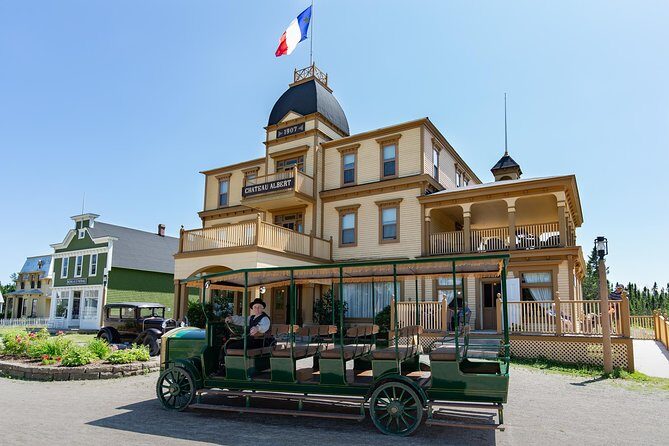
You’ll be passing through a series of historic buildings, each animated by interpretive staff. The experience is described as lined with historic buildings, and the interpreters share daily life details connected to the era being represented.
So what does that look like during your visit?
- You’ll approach a building and hear an explanation tied to what the structure represents.
- You’ll have a chance to ask questions or engage with the interpreter.
- Then you move on along the route, gradually stacking understanding as the timeline progresses.
A key benefit, based on the positive feedback you’ll find about this site, is how staff can make the reconstructions feel inhabited. People specifically praise the way employees explain history and the way each house has its own charm. Translation: you’re not just sightseeing; you’re meeting the story where it lives.





Duration and timing: planning your 4–6 hours
The visit is listed at 4 to 6 hours (approx.). That gives you a lot of flexibility, which is helpful because everyone interacts differently with interpretive sites.
A good rule of thumb:
- If you want lots of conversations and you stop often, aim for closer to 6 hours.
- If you’re more efficient with reading and you move steadily, you can make it work in 4 to 5 hours.
Opening hours run daily during the listed 2026 season window, from 10:00 AM to 5:30 PM (Monday–Sunday). If you show up earlier, you’ll usually have an easier time pacing yourself before fatigue sets in.
Parking and on-site comfort (small details that matter)
If you’re driving, you’ll be glad to know parking is free of charge for cars and RVs. Free parking reduces the mental load—less worry about timing and where to park, more energy for the actual visit.
The experience also notes service animals are allowed, but dogs, cats, and other animals are not allowed. That’s worth flagging if you’re traveling with pets and planning your route around them.
Also, it’s designed for visitors with moderate physical fitness. Since the village is laid out for a walk along a 2.2 km route, it’s not a “sit and watch” outing.
Price and value: is $18.63 worth your time?
The admission price is $18.63 per person. On paper, that might look like a straightforward ticket. In practice, value comes down to how you like to travel.
This one is good value if you enjoy:
- self-guided wandering with structured stops,
- asking questions instead of just reading signs,
- and experiencing history through people, not just objects.
What makes it feel like more than a simple gate entry is the bilingual interpretive element and the fact that you’re walking a meaningful circuit. You’re not just collecting stamps; you’re spending hours on-site. The experience length (4–6 hours) and route size (2.2 km) support that idea of real time spent, not a quick hit.
And because it’s commonly booked ahead (on average, about 21 days in advance), you’ll likely find that reserving admission helps you start smoothly rather than spending your energy in a line.
Who should book this admission?
This is a strong match if you want an authentic, conversation-friendly way to learn about Acadian life over a broad timeline. It also suits you if you like bilingual experiences and don’t mind doing a fair amount of walking.
It might be less ideal if:
- you have mobility limits that make a 2.2 km route hard,
- you’re looking for a short, fast-moving activity under two hours,
- or you need to travel with pets (since animals besides service animals aren’t allowed).
If you’re traveling as a couple, with friends, or as a solo traveler who likes to learn by stopping and chatting, you’ll likely feel at home.
Should you book the Acadian Historic Village admission?
If you want a meaningful day out in New Brunswick that mixes historic buildings, bilingual interpretation, and a self-paced walk, I’d book it. The timeline from 1770 to 1949 and the chance to talk with interpreters make it feel more human than many “historic village” stops.
The decision comes down to one thing: can you comfortably handle a moderate walking day? If yes, this is a smart buy at $18.63, especially when you book ahead to reduce ticket-line hassle.
FAQ
How long does the Acadian Historic Village visit take?
Plan on about 4 to 6 hours (approx.) for the visit.
Is the tour self-guided?
Yes. It’s a self-guided experience, so you explore at your own pace along the route.
How far is the route through the village?
The route is a 2.2 km circuit through the historic buildings.
What languages are offered during the visit?
Interpretation is offered in English and French.
What is the admission ticket for?
The ticket is for a visit to the Village Historique Acadien.
When is it open?
For 2026, opening hours run from 10:00 AM to 5:30 PM, Monday through Sunday, during the listed season dates (06/04/2026 – 09/12/2026).
Is parking available, and is it free?
Yes. Parking is free of charge for car and RV, etc.
Are service animals and pets allowed?
Service animals are allowed, but animals (dogs, cats, etc.) are not allowed.
What’s the cancellation policy?
You can cancel for a full refund up to 24 hours before the experience start time.