REVIEW · VANCOUVER
Vancouver: Half-Day City Highlights E-Bike Tour Age 16+
Book on GetYourGuide →Operated by Cycle City Tours and Rentals · Bookable on GetYourGuide
Few cities feel more scenic on two wheels. This half-day Vancouver e-bike highlights loop mixes rainforest views, downtown skyline angles, and neighborhood storytelling in just four hours.
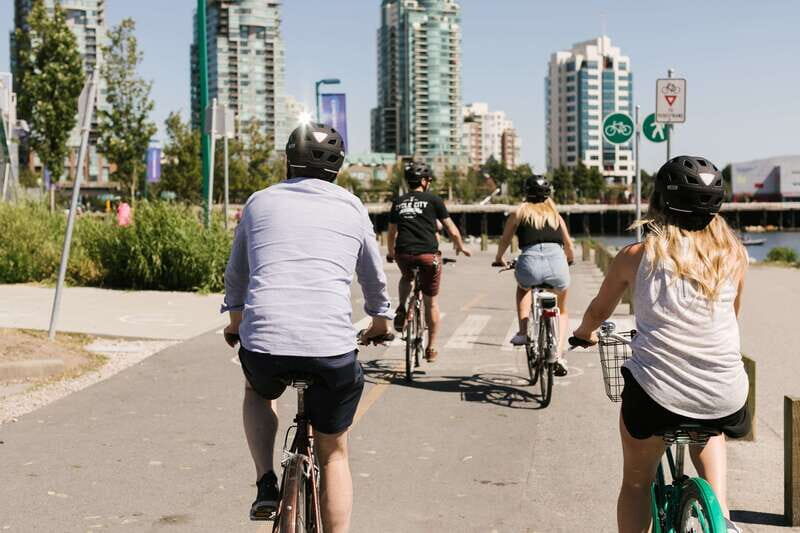
I really like how smooth this tour feels because the ride leans on Vancouver’s separated bike trails (95% of the route avoids cars). I also love the way Stanley Park is the star: Seawall views, classic totem poles, and a climb to Prospect Point with big panorama payoffs.
One consideration: it’s rain or shine, and you’ll still be riding. The tour provides rain ponchos, but if you hate wet weather or prefer fully indoor plans, plan accordingly.
In This Review
- Key things I’d make sure you notice
- Why this tour works so well for first-timers
- The e-bike: fun, efficient, and not just for hills
- Stanley Park Seawall: the views come in layers
- Totem Poles and Beaver Lake: classic icons with a natural feel
- Prospect Point climb: the payoff is worth the effort
- Yaletown and Olympic Village on False Creek: modern Vancouver with style
- Chinatown and Gastown: older streets, deeper roots
- How much you cover (and why the time feels right)
- Price and value: what $105 buys you in the real world
- Weather reality in Vancouver: rain ponchos are part of the deal
- Who this tour suits best (and who should skip it)
- A quick planning tip: pair it with Granville Island
- Should you book this Vancouver e-bike highlights tour?
- FAQ
- How long is the Vancouver Half-Day City Highlights E-Bike Tour?
- What’s the minimum age to join?
- Is hotel pickup included?
- How early should I arrive for the tour?
- What do I need to bring?
- Does the tour run in bad weather?
- What’s included with the tour price?
- How big is the group?
- Does the tour include Granville Island Market?
Key things I’d make sure you notice
- Seawall skyline views: downtown and the mountains show up in multiple directions, not just one stop.
- Real park variety: totem poles, Beaver Lake wildlife area, and a high viewpoint at Prospect Point.
- E-bike help on the climbs: you’ll still pedal, but the assist makes the “park hills” manageable.
- Small group pacing: max 10 riders means you stay together without feeling herded.
- Car-light route: 95% on routes without cars keeps the experience calmer and easier.
- Old + new Vancouver mix: Yaletown/Olympic Village contrast nicely with Chinatown and Gastown.
Why this tour works so well for first-timers
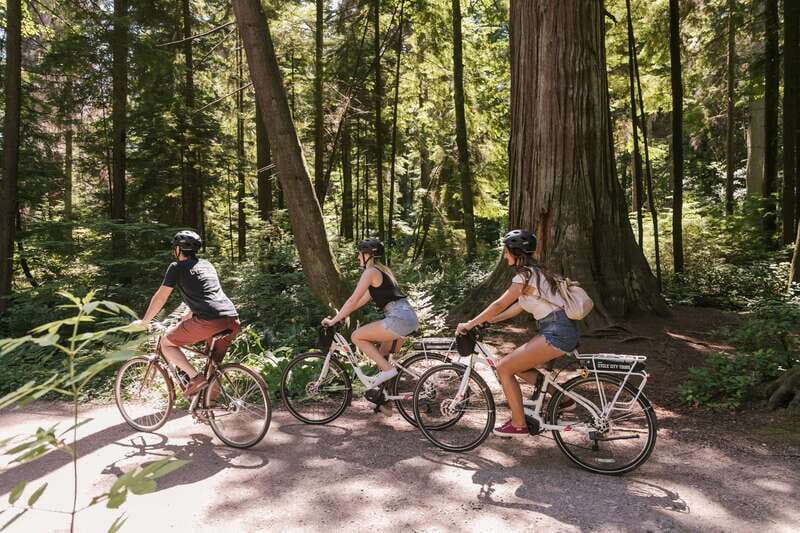
Vancouver can be a tough city to “get” quickly. It’s spread out, surrounded by water and hills, and it’s easy to waste half a day figuring out routes and timing. This tour solves that with one simple formula: use an e-bike to cover ground, then use a local guide to connect the dots.
The big win is that your effort matches the scenery. You get high-impact views over the water, plus the feeling of entering a living coastal rainforest in Stanley Park. And then, instead of stopping at “just the highlights,” you also roll through neighborhoods that show how the city evolved—modern development on False Creek, then older streets in Chinatown and Gastown.
I also like the practicality of the format. You ride for about 4 hours (not all day), the group stays small (10 max), and you’re on bike lanes and trails designed for cyclists. That means you spend your time moving and looking, not waiting in traffic or doing constant route research.
You can also read our reviews of more cycling tours in Vancouver
The e-bike: fun, efficient, and not just for hills
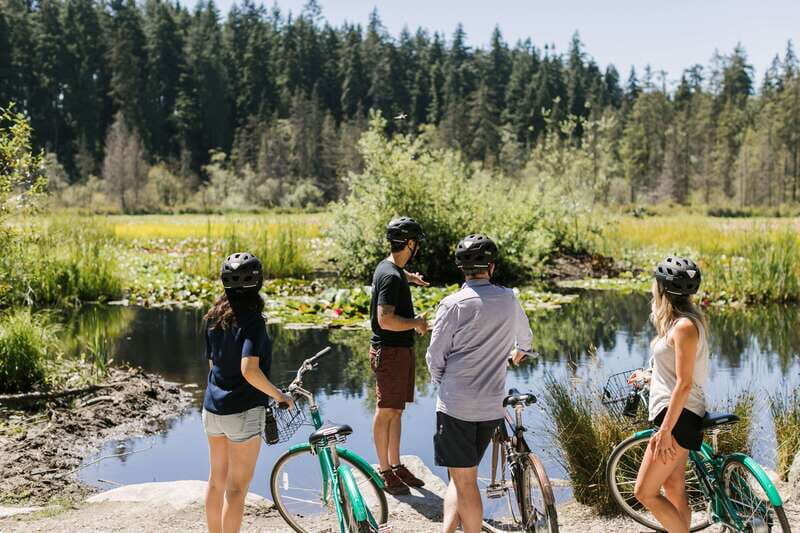
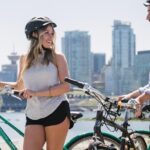
The bikes are electric, with a design built for comfort and control—plus you get a helmet and a handlebar bag. The e-assist matters because Vancouver isn’t flat, especially once you’re in Stanley Park and aiming for viewpoints like Prospect Point.
Here’s the important part for your expectations: you don’t get to coast the entire time. You still pedal, and the tour also expects light exercise from riders. The assist just makes the ride feel like “steady travel” instead of “survival mode,” even if you’re not used to cycling.
From what I’ve seen people say, the guides’ style also plays into how enjoyable it feels. Guides including Zack, German, Frank, Greg, and JT are repeatedly praised for keeping the ride friendly and the stops meaningful—so the tour doesn’t feel like a checklist run.
One last practical note: bikes are rated for a max total weight of 300 lbs / 136 kg. If you’re close to that, it’s worth checking with the operator when you book.
Stanley Park Seawall: the views come in layers
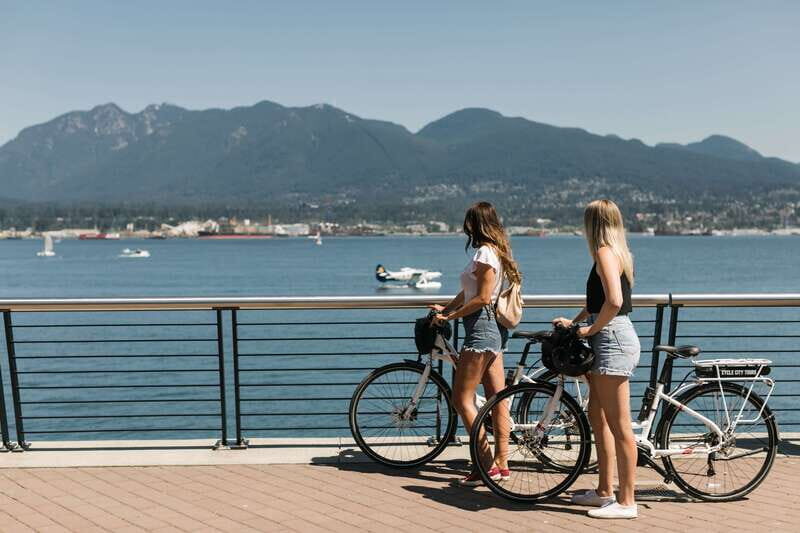
Stanley Park is where this tour earns its reputation. You’ll bike along the Seawall, and the experience is more than one postcard angle. The Downtown skyline and the North Shore Mountains show up repeatedly as you move—so the scenery feels earned rather than staged.
As you ride, your guide ties the scenery to stories: how the park fits into the city, how Vancouver’s identity grew around its waterfronts, and why certain areas became icons. That storytelling is one reason this tour is often recommended as a great first morning or afternoon orientation.
You also get the fun “park identity” moments that make Vancouver feel different from other coastal cities: sea air, wide viewpoints, and the sense that you’re inside something big even while you’re near downtown.
Totem Poles and Beaver Lake: classic icons with a natural feel
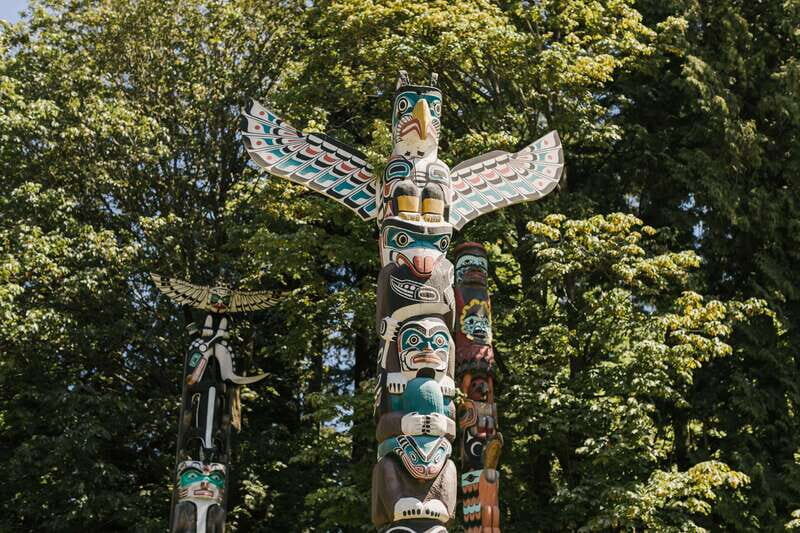
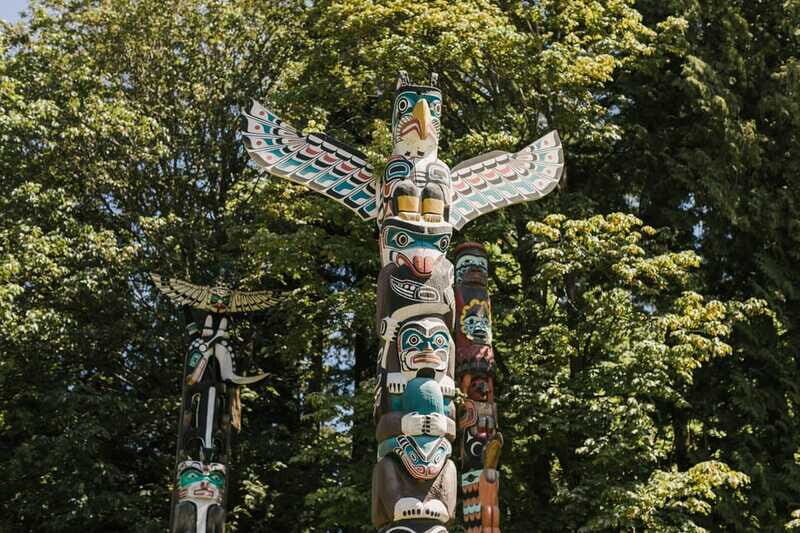
After the Seawall, you’ll hit the iconic Totem Poles area. It’s the kind of stop that’s easy to glance at on your own, but it’s much more rewarding when someone gives context while you’re standing there.
Then you roll toward Beaver Lake, where wildlife is often around. Even if you don’t see a bunch of animals in your visit window, the payoff is the mood shift. The ride transitions from big city views to a quieter, more forested feeling—exactly the “coastal temperate rainforest” vibe British Columbia is known for.
This is a great place to slow down mentally. You’re still on an e-bike, but the whole point of stops like these is to reset your senses. You’re not just traveling; you’re learning how the park works as a living system and as a cultural landmark.
Prospect Point climb: the payoff is worth the effort
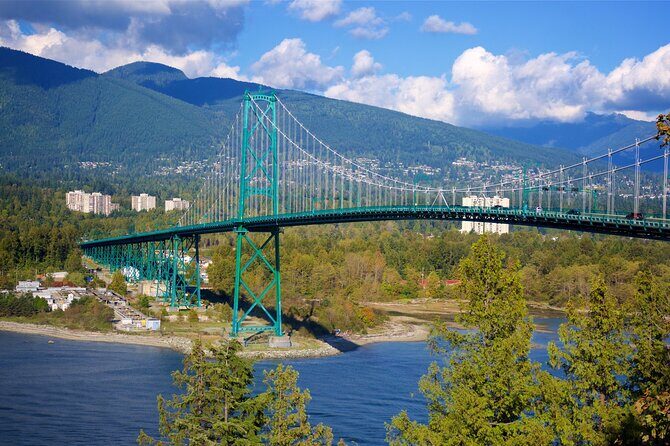
One of the most memorable parts is the ride up to Prospect Point, described as the highest point in the 1000-acre park. From here, you look out over Lion’s Gate Bridge, and on clear days the view can stretch all the way to Vancouver Island.
This is where the e-bike genuinely earns its keep. You’ll feel the climb, but the electric boost helps you keep your breathing and rhythm under control. For riders who are comfortable on bicycles but not excited about hill workouts, it’s a huge difference.
I also like that this stop feels like a “reward moment” in the tour flow. Instead of simply cycling from one attraction to another, the itinerary builds toward a perspective shift. You’re getting higher, looking farther, and seeing how all the parts of Vancouver connect—bridge, ocean, island, and city grid.
You can also read our reviews of more city tours in Vancouver
- Vancouver City Sightseeing Tour: Capilano Suspension Bridge & Vancouver Lookout
★ 5.0 · 1,556 reviews


Yaletown and Olympic Village on False Creek: modern Vancouver with style
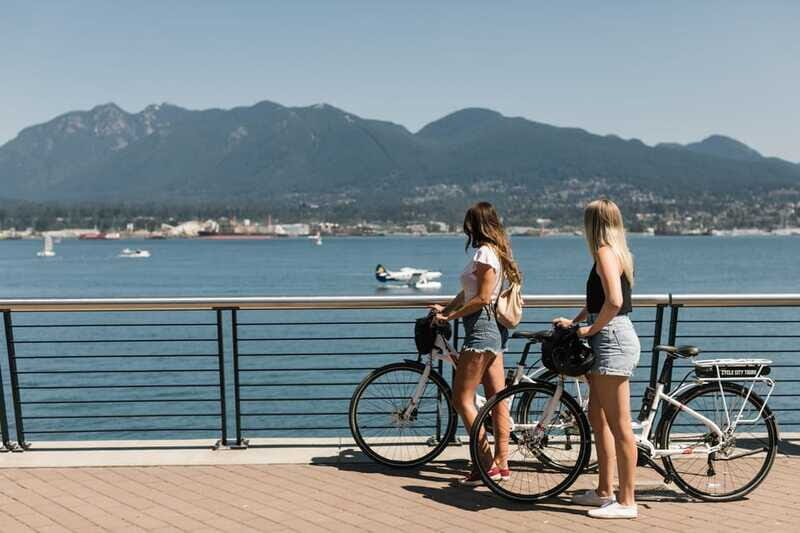
Once you’re leaving Stanley Park, the vibe changes. You’ll cruise along the False Creek waterfront, with stops in (and around) Yaletown and Olympic Village.
These are award-winning, modern neighborhoods known for eco-friendly design and sleek, newer architecture. The practical value for you is simple: you see how Vancouver developed its inner-city waterfronts, and you get a sense of where the city’s present-day identity lives.
The ride here also helps break up the park intensity. It’s great contrast: open views of the water, a more urban street rhythm, and less of the “trail immersion” feeling. If you like architecture and city planning even a little, this part makes the tour feel more complete.
Chinatown and Gastown: older streets, deeper roots
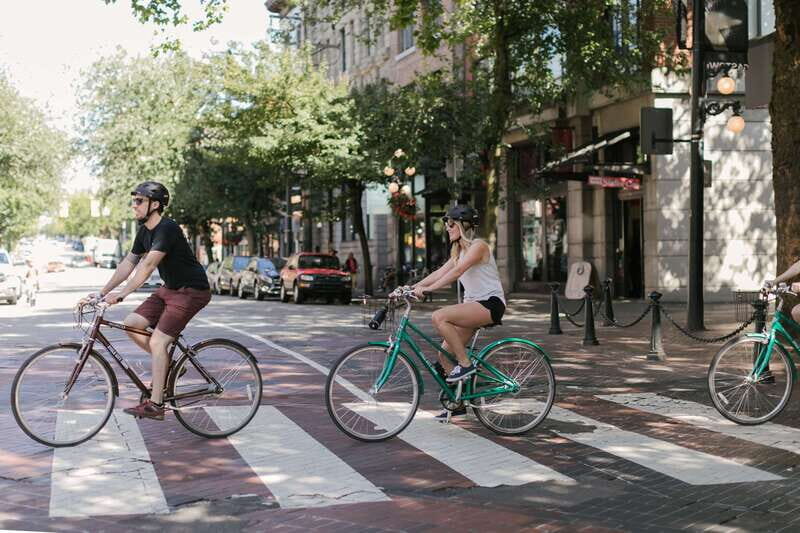
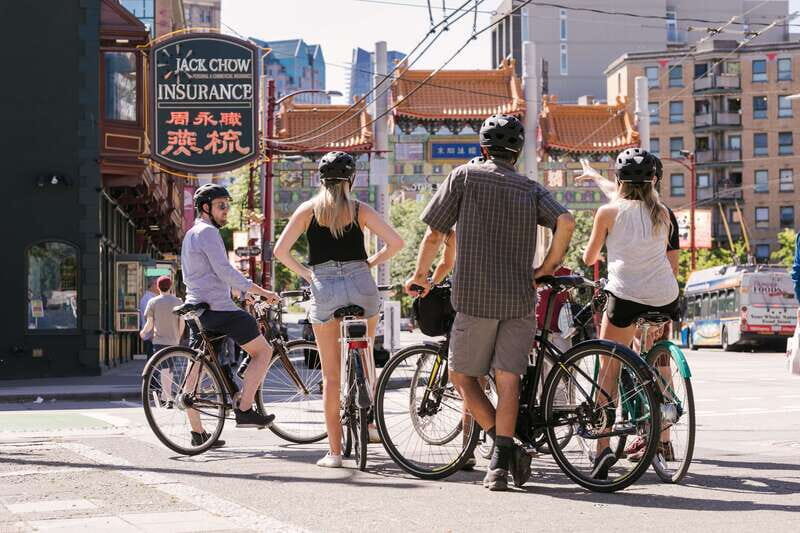
Then you head toward Chinatown and Gastown—two of Vancouver’s oldest neighborhoods. This is where the tour adds texture. You’re no longer just cycling through scenery; you’re moving through layers of the city’s roots, guided by your local story-telling.
The route gives you a chance to see how older neighborhoods sit beside modern downtown life. That contrast is one of the reasons bike tours work so well in cities like Vancouver: you travel at a human speed, so you can notice what changed and what didn’t.
A practical tip if you’re sensitive to what you might see in certain corners of Chinatown: one rider suggestion was to avoid East Hastings Street if you don’t want to remember that area as part of your visit. If that’s your concern, you can ask your guide about where the group can comfortably focus during the neighborhood segment so the experience stays aligned with what you want to see.
How much you cover (and why the time feels right)
You’ll ride over 20 km during the 4-hour tour. That’s a meaningful distance without turning into an all-day endurance event. The combination of e-bike assist and a car-light route makes the mileage feel less intimidating than it would on a regular bike.
This is also why the tour works well for visitors with limited time. You get major anchors—Stanley Park, Seawall, Prospect Point, plus downtown-adjacent neighborhoods—without needing separate planning days. It’s a strong “first taste” if you’re about to explore on your own afterward.
And because it’s a small group (up to 10), you can actually enjoy the tempo. Larger group tours can feel like you’re stuck waiting for stragglers. Here, the pacing seems designed to keep everyone together.
Price and value: what $105 buys you in the real world
At $105 per person for about 4 hours, you’re paying for more than bike time. You’re getting:
- a professional local guide
- an electric bike, plus helmet
- a snack bar during the tour
- a handlebar bag for practical carrying
Value-wise, the smart part is that you’re not just renting equipment. You’re also buying context—history, culture, and neighborhood explanations delivered while you’re actively seeing the city. In a place like Vancouver, that “while moving” format can be the difference between taking photos and actually understanding what you’re looking at.
If you’re comparing to DIY biking, the guide is a big part of the equation. Vancouver has great cycling infrastructure, but the city also has a lot of nuance—where to look, what to notice, and how to connect park views with urban development. You’re effectively outsourcing that interpretation to someone who does it for a living.
For families: this is age 16+ only, and the tour requires riders who can comfortably ride a bicycle. If you fit the criteria, the price feels more like paying for a guided experience than buying a rental.
Weather reality in Vancouver: rain ponchos are part of the deal
This tour runs rain or shine, and rain ponchos are provided. That matters because Vancouver weather can change quickly, and it’s common to get mist, drizzle, or wind even when skies look mostly okay.
If rain is light, the tour usually stays enjoyable because you’re on packed-in trails and protected routes more than you’d be on open roads. If it’s heavy rain or stormy conditions, your guide may adjust pacing to keep the group together and safe. Either way, you should dress for moisture and bring a plan for dry comfort afterward.
My suggestion: pack light layers and something quick-dry. Since you’ll be riding, damp clothes can feel colder than you expect.
Who this tour suits best (and who should skip it)
You’ll likely love this tour if you want:
- a first-time-friendly overview of Vancouver
- a mix of nature and city neighborhoods in one ride
- a guided story to connect what you see
- an e-bike experience that handles hills without making it a workout grind
It’s also a solid option if you’re traveling with friends or partners who might not all have the same cycling stamina. The e-bike helps level the playing field, and the small group size keeps attention on safety and cohesion.
Skip it if you can’t ride a bike confidently or if you’re under 16. The tour expects riders capable of safe, comfortable cycling plus light exercise, even with the electric boost.
A quick planning tip: pair it with Granville Island
This tour does not stop at Granville Island Market. If you want to add it to your day, go in the morning and then do this afternoon-style highlights ride after. That way you avoid cramming too much into the same time window and keep each activity from turning into a rushed compromise.
Should you book this Vancouver e-bike highlights tour?
If you want an efficient, scenic, guided way to see Vancouver without spending your day on logistics, I’d book it. Stanley Park’s Seawall and Prospect Point give you the big visual wow, and Chinatown/Gastown plus Yaletown/Olympic Village keep the experience from feeling like only nature tourism.
It’s especially worth it if you’re the type who likes learning as you go—because the guides (from Zack to German to Frank to Greg and JT) are repeatedly credited with making history and culture easy to follow and fun to listen to while you ride.
The only real reason not to book is if you strongly dislike riding in wet weather or you’re not comfortable on a bicycle. If that’s not you, this is a high-value way to get your bearings fast—then use the rest of your trip to explore at your own pace.
FAQ
How long is the Vancouver Half-Day City Highlights E-Bike Tour?
The tour runs for 4 hours.
What’s the minimum age to join?
You must be 16 years or older.
Is hotel pickup included?
No. There is no hotel pickup or drop-off included.
How early should I arrive for the tour?
Please arrive 15 minutes before the tour starts.
What do I need to bring?
Bring a passport or ID card.
Does the tour run in bad weather?
Yes, it runs rain or shine. Rain ponchos are provided if needed.
What’s included with the tour price?
Included are a professional local guide, a snack bar, an electric bike, a helmet, and a handlebar bag.
How big is the group?
The group is limited to a maximum of 10 participants.
Does the tour include Granville Island Market?
No. The tour does not stop at the Granville Island Market.