REVIEW · VANCOUVER
Vancouver False Creek Ferry Tour
Book on Viator →Operated by False Creek Ferries · Bookable on Viator
One hour on the water, zero fuss. This False Creek ferry tour from Granville Island gives you a calm, close-up look at Vancouver by water, with sights that range from marinas and condos to Expo 86 and the Olympic-era waterfront.
I especially like two things: the electric ferry stays quiet enough that you can actually catch the narration, and the trip feels relaxed because the group is kept small, up to 10 people. I’ve heard captains like Captain Rusty (and tour leaders such as Graeme/Graham) bring the route to life without turning it into a lecture hall.
One thing to consider: the commentary is in English, and on some rides it can be hard to follow if the accent or pace is unfamiliar.
In This Review
- Key things I’d plan around
- Granville Island Start: make it a mini day out, not just a ride
- The Electric Ferry Experience: quiet enough to hear, small enough to feel personal
- False Creek by ferry: marinas, condos, and the calm side of Vancouver
- The Expo 86 pavilion marker: how old Vancouver landmarks still shape the shoreline
- Olympic-era athletes’ village: from Games housing to a seaside community
- English Bay ships at anchor: the western payoff you can feel
- Value for money: what $22.52 buys (and what it doesn’t)
- Who should book this ferry tour?
- Rain, wind, and what to wear for a one-hour cruise
- Tips to get more out of the narration
- Should you book the Vancouver False Creek Ferry Tour?
- FAQ
- How long is the Vancouver False Creek Ferry Tour?
- Where does the tour start and end?
- What is the meeting point address?
- How much does it cost?
- Is this tour in English?
- Do I need an extra ticket for the sights along the way?
- How many people are on the ferry?
- Do I need to print a ticket?
- Will the tour run in bad weather?
- What is the cancellation policy?
Key things I’d plan around
- Granville Island is the perfect pre- and post-stop: grab food at the Public Market area before or after you ride.
- Quiet electric power means you hear the story: fewer engine distractions than on many motorboats.
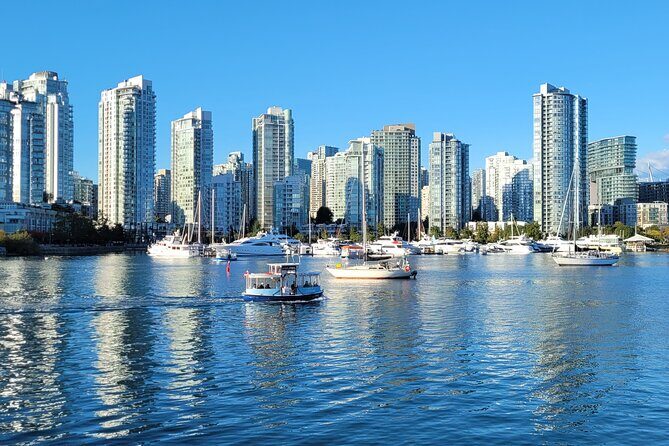
- You see the full False Creek arc in one hour: sheltered inlet views, then a west-end payoff toward English Bay.
- Expo 86 and Olympic leftovers are built into the route: the east end has one major former pavilion, and later you pass the former Winter Olympics athletes’ village turned seaside community.
- Small-group vibes: the max of 10 people makes it easier to pay attention and feel like more of a conversation.
- Rain doesn’t automatically cancel your day: it runs rain or shine most days, with the usual caveat that very poor weather can affect operations.
Granville Island Start: make it a mini day out, not just a ride
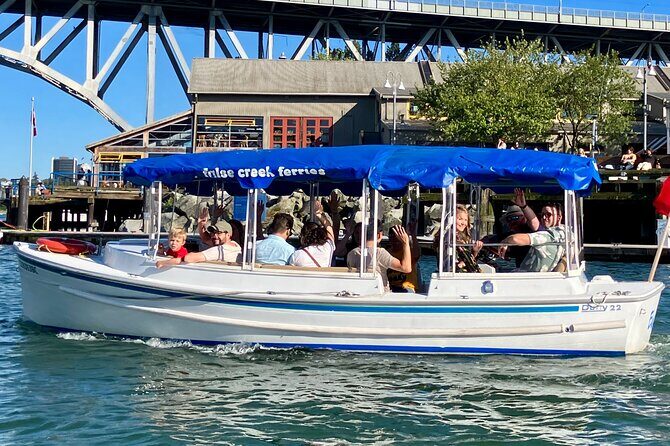
The tour starts and ends at Granville Island, so you’re not fighting transit across town after your cruise. The meeting point is 1699 Johnston St, Vancouver, BC V6H 3S2—handy because it’s near public transportation, and it keeps your day from feeling like a whole production.
Now, the smart move here is to treat this as a short waterfront detour that connects to a bigger Vancouver experience. If you come early, you can browse the Public Market and the surrounding Granville Island area. If you come hungry, plan a snack before boarding so you’re not thinking about food the whole hour.
Timing-wise, one hour sounds short because it is short. But that’s the point: you get a coherent pass through the False Creek corridor without losing half your day to a long tour. If you’re also trying to fit in the rest of Vancouver, this is a tidy way to add the water perspective fast.
You can also read our reviews of more tours and experiences in Vancouver.

The Electric Ferry Experience: quiet enough to hear, small enough to feel personal
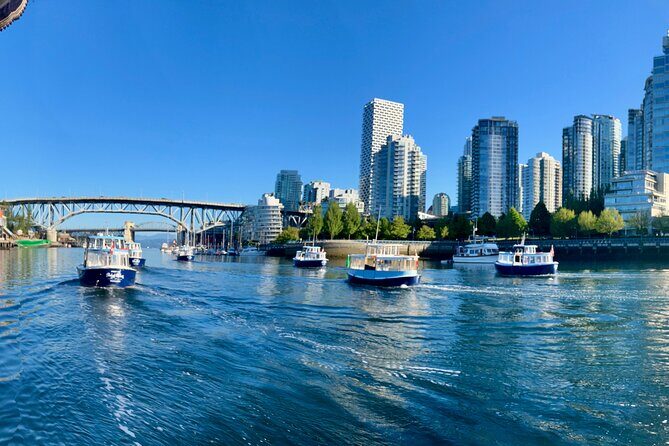
This is an electric ferry, which matters more than you might think. When a boat is loud, you end up watching water and squinting at buildings without absorbing the context. With quieter power, the captain’s narration stays easier to follow, and the route becomes more than just “pretty views.”
The boat also runs with a small group size: up to 10 travelers. That tends to change the feel. It’s not crowded. It’s not frantic. It’s more like you’ve slipped into a local sightseeing loop, not a cattle-call tour.
Duration is about one hour. That’s long enough for the waterfront to make sense—east end to west end—and short enough that you’re less likely to feel tired or impatient if weather changes.
False Creek by ferry: marinas, condos, and the calm side of Vancouver
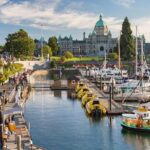
False Creek is a sheltered inlet, so you’re not dealing with open-ocean conditions. Instead, you cruise through a protected stretch where you can actually take in the details: sailboats, marinas, and the waterfront development that keeps Vancouver’s water life front and center.
On the ride, you’ll go past marinas and condos—and that pairing is what tells the story. Vancouver isn’t just about wild scenery. It’s about how people live close to water, day to day. From the boat, those high-rises and waterfront homes aren’t just “views.” They’re part of a working shoreline: docking, sailing, and city life stitched together.
This is also where the narration can help you connect dots quickly. Captains such as Rusty and others named Graham/Graeme have a way of pointing out what you’re looking at and why it’s there, including the mix of older waterfront planning and newer neighborhood identity.
A small practical tip: if you want maximum sightlines, try to position yourself so you’re not fighting other people’s heads right at the moment of a key landmark. With only 10 people, it’s usually manageable to shuffle your spot a bit after boarding, but you’ll still enjoy it more if you choose a good view early.
The Expo 86 pavilion marker: how old Vancouver landmarks still shape the shoreline
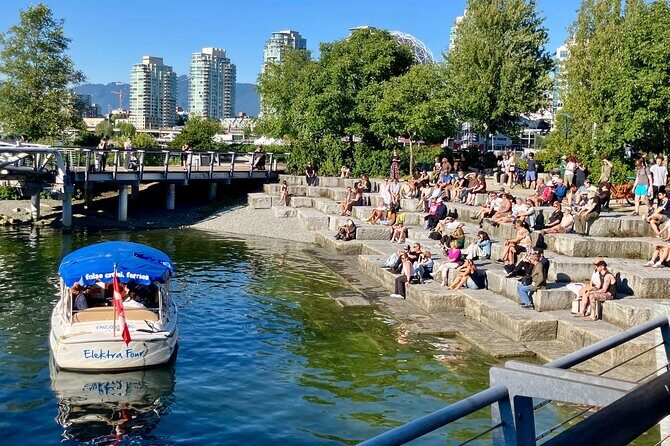
As you head along False Creek, you reach the east end, where a former Expo 86 pavilion sits as a leftover landmark. That matters because it gives the waterfront a timeline you can see with your eyes instead of just reading about.
What I like about seeing this from the water is perspective. On land, these sites can feel like they’re stuck behind fences or tucked into urban edges. From the ferry, the pavilion’s position helps you understand how Vancouver organizes its waterfront spaces—where the city turned outward for the Expo era, and how those choices left physical footprints.
This is one of those moments where a short narration can make your hour feel longer and more meaningful. If you like urban design, reused structures, and how cities evolve without starting from scratch, you’ll probably enjoy this stop area the most.
Potential drawback to keep in mind: some captains may focus more on current development stories than pure site facts. If your priority is strict historical detail, you might find the emphasis varies by guide.
Olympic-era athletes’ village: from Games housing to a seaside community
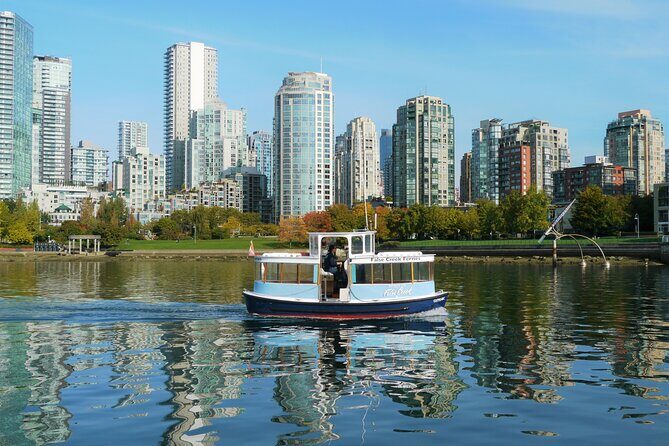
Later in the cruise, you’ll pass the athletes’ village from the 2010 Winter Olympics, which has since transformed into a seaside community. This is where the tour becomes more than scenic sightseeing; it turns into a quick lesson in how major events can reshape neighborhoods long after the cameras leave.
The value here is not just that the Olympics happened. It’s that you can see the idea of transformation made physical. You’re looking at an area meant to host people intensely for a short period and then convert into everyday living afterward.
If you’re the type who likes urban stories, this segment gives you something concrete: the transition from event infrastructure to long-term residential waterfront.
And again, the ferry setting helps. From the water, you see the scale and the layout in a way that’s harder to grasp from sidewalks. You get a sense of how the shoreline was planned to face the inlet, not just function as a barrier along it.

English Bay ships at anchor: the western payoff you can feel
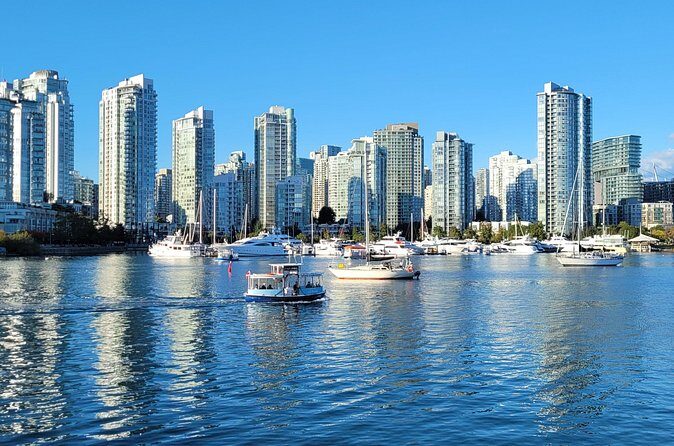
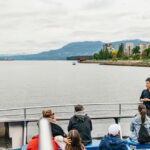
As the ferry nears the western end of False Creek, you get a view of ships at anchor in English Bay. This is a satisfying change in texture. You’ve been following the inlet’s tight marina-and-condo rhythm, and then the scene opens up toward a broader water outlook.
It’s also a great moment for photos, because it’s not just buildings reflected in water. You’re seeing real maritime activity and a coastal feel that connects False Creek to the wider bay.
For me, this is the moment that justifies the whole hour: you end with a view that feels like you’re leaving one story behind and stepping into the next chapter of Vancouver’s shoreline.
Value for money: what $22.52 buys (and what it doesn’t)
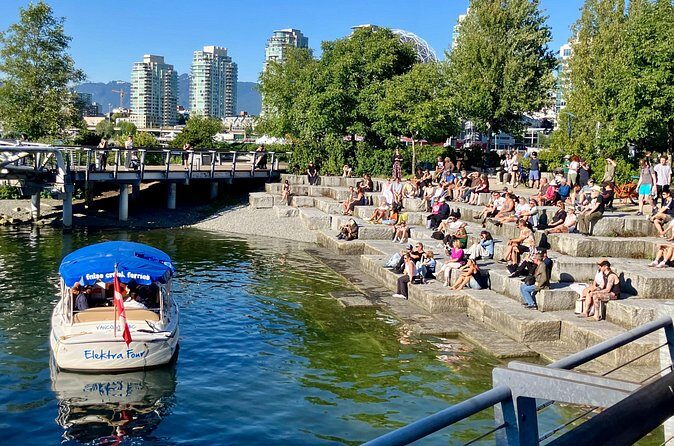
The price is listed as $22.52 per person, and the duration is about one hour. On paper, it can look like a “small” experience. In practice, it’s priced like a short, focused orientation tour, not a half-day commitment.
Here’s how I’d judge value:
- If you want water views plus a little context, this is a strong fit. You’re getting the calm False Creek circuit and key landmarks in one block of time.
- If you’re hoping for a long storytelling deep dive, you might want more than an hour. The tour is designed for the quick hit, not for exhaustive coverage.
- If you already planned to spend time at Granville Island anyway, the timing adds value. You’re not losing a whole day to get to a waterfront experience.
Also, the experience is in English and uses a mobile ticket, which keeps the logistics straightforward. The smoother the logistics, the more you actually enjoy the ride.
Who should book this ferry tour?
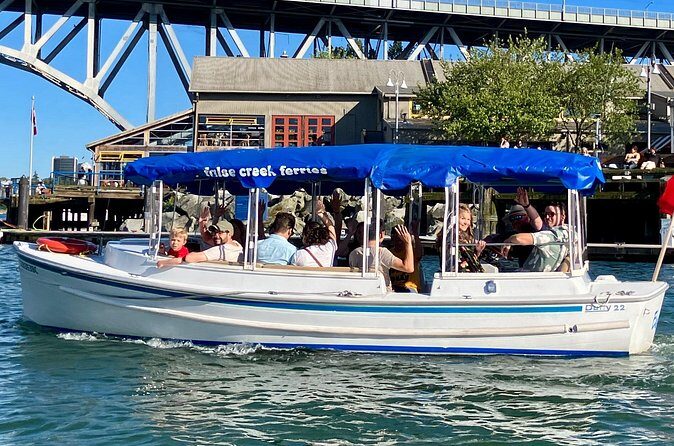
This tour is a great match if you want an easy, low-effort way to understand Vancouver’s water edge.
You’ll likely enjoy it most if you:
- want a short activity that pairs naturally with Granville Island
- like city views but don’t want to spend hours on transit
- enjoy waterfront design stories, Expo-era leftovers, and Olympic-era reuse
- appreciate quieter boats and a small group setting
It might not be your best choice if:
- you need very specific, technical historical detail and you prefer a longer, more structured format
- English narration pacing is a concern for you (since commentary clarity can vary by captain)
Rain, wind, and what to wear for a one-hour cruise
One of the best practical parts: the operation is described as running rain or shine most days (with closed dates like Christmas Day and Boxing Day). That’s huge in Vancouver, where weather can change fast.
Still, plan like you’re on the water:
- dress for cool air and wind, not just for temperature on land
- bring a light waterproof layer if rain is in the forecast
- keep your phone/camera ready, but protected
If conditions are poor, the experience may be rescheduled or refunded, so don’t build the rest of your day on the assumption it will run at exactly the first time slot. With only an hour, it’s often easy to shift around.
Tips to get more out of the narration
Since the ferry is short and the boat is quiet, you’ll get more from the tour if you go in ready to listen.
A few simple tactics:
- Pick a spot with a clear view of the shoreline when the boat turns along the inlet.
- If a guide’s accent is tough, lean in early—first landmarks are where you’ll build context that makes later sights easier to recognize.
- If you care about a specific segment (Expo 86 pavilion or the Olympic athletes’ village), focus on that theme mentally before you board. It helps you track the story even if the pacing shifts.
The tone tends to vary by captain, and names like Captain Rusty and guides such as Graham/Graeme show that the narration can be entertaining and informative rather than dry.
Should you book the Vancouver False Creek Ferry Tour?
If you want an easy, one-hour waterfront orientation that mixes key Vancouver markers with real water views, I’d book it. The price is reasonable for what you get, and the electric ferry plus small group size turns it into a relaxed way to see the city.
I’d skip it only if you’re strictly hunting for a long, deeply detailed history tour or you’re very concerned about understanding English narration on the water. For everyone else—especially if you’re already planning time around Granville Island—this is one of those smart, low-stress add-ons that makes your Vancouver trip feel more complete.
FAQ
How long is the Vancouver False Creek Ferry Tour?
It runs for about 1 hour (approximately).
Where does the tour start and end?
It starts and ends back at Granville Island.
What is the meeting point address?
The meeting point is 1699 Johnston St, Vancouver, BC V6H 3S2, Canada.
How much does it cost?
The price is listed as $22.52 per person.
Is this tour in English?
Yes, it is offered in English.
Do I need an extra ticket for the sights along the way?
The tour includes the ferry ride, and the sightseeing stops shown are marked as admission ticket free.
How many people are on the ferry?
The maximum group size is 10 travelers.
Do I need to print a ticket?
No. It uses a mobile ticket.
Will the tour run in bad weather?
It requires good weather, but the operation is described as running rain or shine most days. If it is canceled due to poor weather, you’ll be offered a different date or a full refund.
What is the cancellation policy?
You can cancel for a full refund up to 24 hours in advance. If you cancel within 24 hours, the amount paid will not be refunded.