REVIEW · VANCOUVER
Vancouver City Sightseeing Adventure with Kids: Heroes & Villains
Book on Viator →Operated by Vancouver Mysteries · Bookable on Viator
One mission, lots of giggles, and just enough mystery to keep kids moving. This Vancouver City Sightseeing Adventure with Kids turns the downtown waterfront and key landmarks into a Heroes & Villains game you can do at a family pace, outdoors and dog-friendly. It is built around teamwork, puzzle-solving, and a game kit you pick up on site so everyone can jump in fast.
I especially like the way it blends big Vancouver landmarks with kid-friendly challenges. You do real sightseeing, but you also get a reason to look closely—like when the Olympic Cauldron shows up as part of the storyline, or when downtown art becomes a clue instead of just something to pass by. Another win: it keeps you away from phone distractions because no phones or devices are required.
The main thing to consider is walking. You will cover about 2 to 2.5 km in a fully outdoor route, and if you have little legs, plan for slower breaks. Also, the meeting point is near downtown, but you start and finish back at the office area, so there can be extra walking at the beginning and end.
In This Review
- Key points I think matter most
- A 2-hour family mystery walk that actually feels like sightseeing
- Pick up the game kit: map, book, and artifacts with no screens
- Downtown Vancouver landmarks, but with a puzzle purpose
- Float planes and the seawall: city energy with a water-side payoff
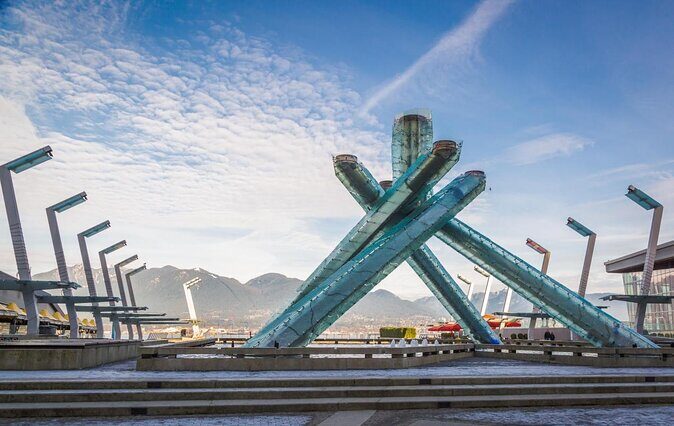
- The Olympic Cauldron clue: when a landmark becomes part of the plot
- The Drop (65-foot raindrop) and Douglas Coupland’s art stop
- How the group size and format affect your experience
- Price and value: why $31.37 can be a bargain for families
- Weather, timing, and what to wear for Vancouver’s outdoors
- Who should book Heroes & Villains (and who might not love it)
- Should you book this Vancouver Heroes & Villains game?
- FAQ
- Is the Vancouver Heroes & Villains adventure self-guided?
- How long does the activity take?
- How far will we walk?
- Do we need a phone or device?
- What should we bring?
- Is it canceled for weather?
- Can I get a refund if plans change?
Key points I think matter most
- Team-based play: at least one adult per team, with a max of 5 people per booking for a manageable group feel
- Hands-on game kit: a game book, map, and artifacts that replace phones and keep kids focused
- Outdoor, all-weather format: you go in all weather conditions, so dressing for Vancouver matters
- Landmarks that make sense: Olympic Cauldron, Vancouver Convention Centre area, seawall, and major public art show up in the story
- Small tour size: maximum 15 travelers, which usually means less waiting and more time moving
- Family-friendly pacing: a 2-hour game you can treat like an active afternoon, not a full-day commitment
A 2-hour family mystery walk that actually feels like sightseeing
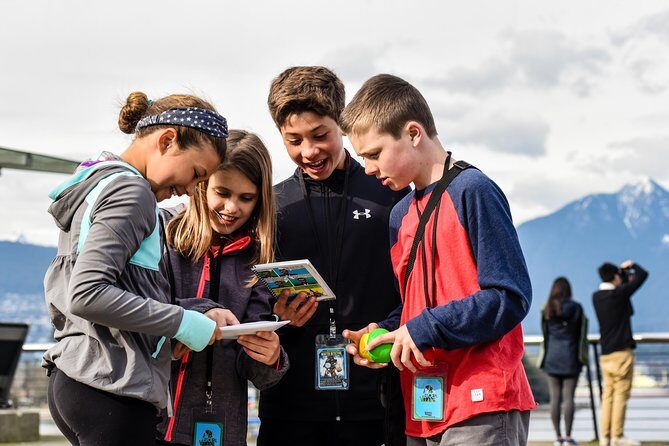
This is the kind of outing that works on a weekday, a weekend, or that in-between day when you want to do something memorable without committing to a big tour. The format is simple: you solve puzzles, collect clues, and walk between stops in downtown Vancouver. It lasts about 2 hours, and you are on your feet long enough to feel like you did something, but not so long that it turns into a drag for kids.
What makes it especially good for families is the teamwork setup. You are not just watching a show or tagging along with adults. You are a team that needs clues, directions, and problem-solving to move forward. That shifts the vibe from sightseeing to participation. Kids get to feel like they are driving the adventure, while adults get a structured way to guide without needing to constantly explain what you are looking at.
The walking distance—about 2 to 2.5 km—is realistic. It is a stretch for a stroller, and it is a solid effort for young kids unless you plan frequent short breaks. If you know your group needs more pauses, you will be happier going slower and treating it as a play session that happens to include city views.
You can also read our reviews of more city tours in Vancouver
- Vancouver City Sightseeing Tour: Capilano Suspension Bridge & Vancouver Lookout
★ 5.0 · 1,556 reviews


Pick up the game kit: map, book, and artifacts with no screens
Before you get into the fun, you have a key rule: do not go to random spots on your own. You will receive a message with your starting location leading up to your game day. If you do not get anything within 24 hours before, you are told to contact the provider using the details shown online. That is important because the route is part of the experience, and they want everyone in the right starting zone.
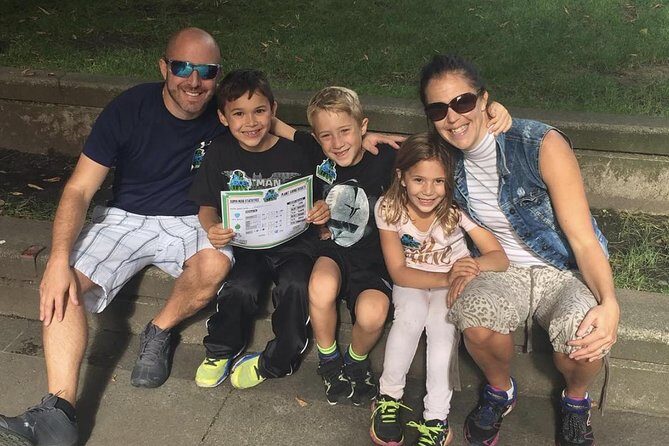
Once you are there, you put down the device and pick up the game kit. You are given a game book and a map, plus artifacts that are used like props in the hunt. In other words, the experience is designed to be tactile and story-driven, not like a paper scavenger list that you rush through.
One detail I really like is the comic-book style approach mentioned in the feedback. When kids see that visual style, the clues feel less like homework and more like part of a story. Adults also benefit, because it is an easy way to notice details you might otherwise skim past while walking around downtown.
And yes, it really is no phones or devices required. That is a relief if your kids always want screens, or if your group just wants a break from photo-taking mode. Bring reading glasses if you need them, since the clues and text are handled in the kit materials.
Downtown Vancouver landmarks, but with a puzzle purpose
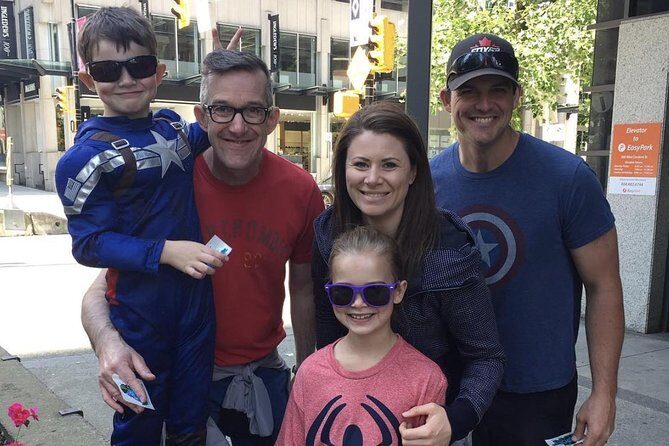
The game takes place in downtown Vancouver, and the route is built around “look here, notice this, solve that” moments. Instead of simply arriving at a viewpoint, you are working through mysteries that guide you from stop to stop.
At the first game stage, the focus is pure puzzle momentum: you solve puzzles and collect clues. This is a smart start because it gets everyone engaged immediately. Kids learn quickly what the game expects, and adults get oriented to how clue collection works before you start moving through the more visually impressive areas.
Then the story nudges you toward the waterfront and around key public spaces. You will see why Vancouver is so photogenic, but the game keeps you from drifting like tourists who are waiting for the next obvious landmark. You are constantly checking your map, scanning for clues, and talking as a team. Even if you have visited downtown before, the clue format makes it feel new.
The route includes stops that tie back to the mystery theme, including a clue with a role for the Olympic Cauldron. That kind of tie-in matters because it turns a familiar landmark into a plot point. You do not just walk past something you recognize—you treat it like a location in a story.
Float planes and the seawall: city energy with a water-side payoff
One of the best parts of this route is the chance to watch float planes take off and land while you move along the waterfront. Vancouver has a way of mixing urban life with water activity, and this stop leans into that. You get movement in the sky, reflections on the water, and a whole different kind of city scene than you get far inland.
After the float plane moment, you also walk part of Vancouver’s iconic seawall. That is great for families because it is a flat-ish, wide, scenic walkway where kids can stretch their legs without the pressure of stairs or intense climbing. You will still want good walking shoes, but this is not a route that feels like a rugged hike.
The only real drawback here is attention span. Watching planes can be amazing, but kids might also lose focus if the clue steps come right after. My advice is simple: use the plane moment as a reset. Take a breath, then regroup as a team for the clue step right after, so you do not end up stuck rereading the instructions while kids wander ahead.
The Olympic Cauldron clue: when a landmark becomes part of the plot
At one point, the game calls out the Olympic Cauldron as part of the mystery. This is more than a random stop. It is a story mechanic that gives you a reason to slow down and look at something with meaning in Vancouver.
Why this works: landmarks can be big and important but still feel abstract when you are just passing through. When the game makes the Olympic Cauldron relevant to solving, it creates a natural pause in the action. Your group has to engage with it—scan, check details, and connect it to what you already learned from earlier clues.
It also helps that this is tied to a structured downtown route rather than being a detour. You get the payoff without adding a separate long walk somewhere else. If you want a family activity where you do not feel like you are “just doing puzzles,” this is where the sightseeing earns its keep.




The Drop (65-foot raindrop) and Douglas Coupland’s art stop
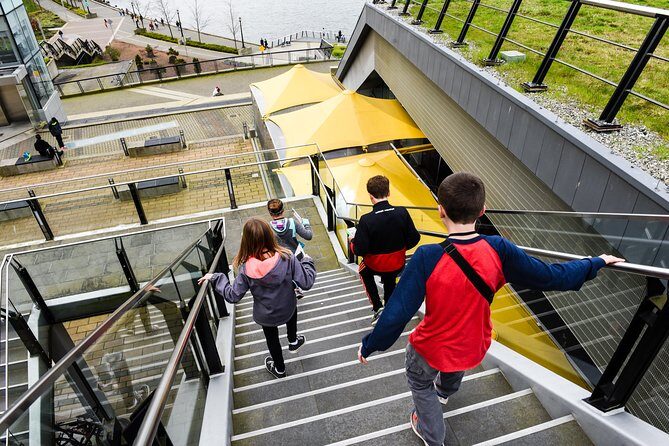
This route includes a major public art moment: The Drop, a 65-foot tall steel sculpture shaped like a raindrop. It is designed by the German artists known as Inges Idee. This is the kind of art you can see from a distance, which helps families because you can orient quickly and start looking without confusion.
Then there is another layer that makes it extra interesting: the route also references work by Douglas Coupland, a Vancouver writer and artist who grew up here and still lives here. His first novel, Generation X, was published in March of 1991. You do not need to be a literature expert to enjoy this. In fact, the best part is that the game format can make an art-related name feel like a clue rather than a trivia lecture.
For kids, this kind of “look at the big thing” moment breaks up puzzle fatigue. For adults, it adds a real Vancouver cultural anchor to the game. And since this is all outdoors, it is easy to take a quick pause, stretch your legs, and then jump back into solving.
The only consideration: it is a tall sculpture, but the clue might require you to look around more than just at the center of the raindrop. So keep your team together and do the full clue-check instead of rushing to the photo.
How the group size and format affect your experience
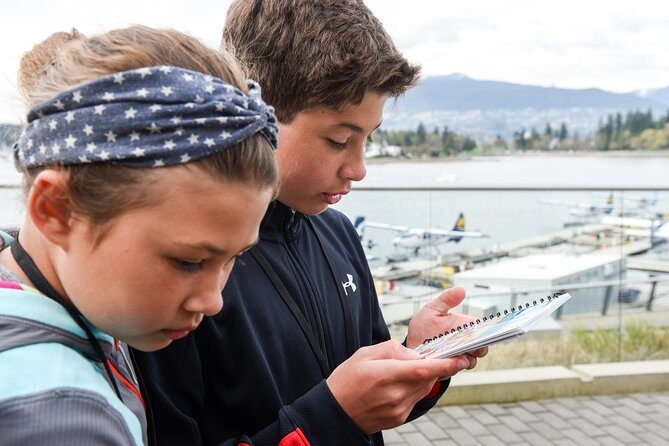
This activity has a maximum of 15 travelers, and each booking is limited to up to 5 people. That is a big deal for a game like this. Smaller groups tend to mean less waiting, fewer bottlenecks, and more room for adults to help without feeling like you are shepherding a crowd.
There is also a minimum of 2 people per booking, and at least one adult is required on each team. That keeps the game grounded and prevents it from turning into a kid-only free-for-all. For families, it also means you are not stuck searching for other adults to join your team at the last second.
If you are planning a larger family reunion or group event, there is a helpful option: you can sign up for the same time in teams. That is smart because you can keep the fun split into manageable units instead of trying to play as one huge team.
If you travel with a dog, you will appreciate that this is 100% outdoors and dog-friendly. Service animals are also allowed. Just keep in mind that you are walking a steady route for about 2 hours, so bring water and plan for leash-friendly pacing.
Price and value: why $31.37 can be a bargain for families
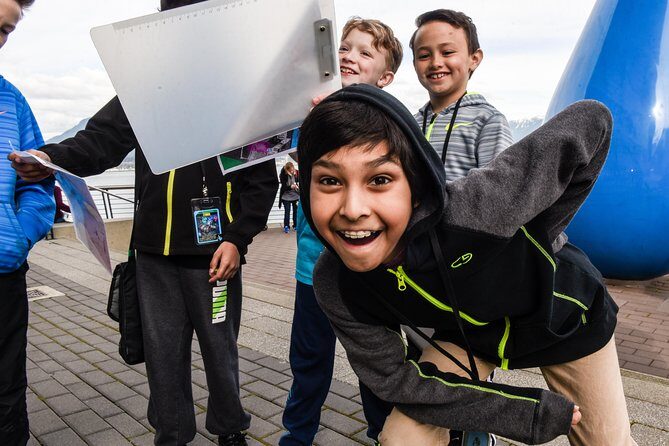
At $31.37 per person for about 2 hours, this can be a good value—mainly because so much of the experience is included in that price. You are not paying for admissions to major sights. You get a self-guided game format with the game kit (book, map, artifacts) and a route that uses outdoor landmarks to keep things interesting.
Also, the time matters. Two hours is long enough to feel like an activity, but short enough that it does not blow your day apart. For families juggling nap times, hunger, or just normal kid energy swings, that timing can be the difference between a win and a long, stressful day.
One more value point: because no phones are required, you do not need to worry about charging devices, data issues, or screen distraction stealing your attention. The cost is paying for an organized, guided-by-story format that keeps everyone participating.
If you are the type of traveler who likes to see a city but hates the feeling of being herded, the game format fits your style. You still get movement, landmarks, and local texture, without the heavy lecture vibe.
Weather, timing, and what to wear for Vancouver’s outdoors
This is an all-outdoor game that operates in all weather conditions, so dress appropriately. Vancouver weather can change quickly, and since the activity is outdoors, you will feel it if you underdress.
Wear comfortable walking shoes for a 2 to 2.5 km walk. That might sound basic, but it is the difference between kids who can keep solving and kids who suddenly stop caring because their feet hurt. If you need reading glasses, bring them along—clue reading is part of the game.
Also, the provider notes that confirmation is received at time of booking, and the experience ends back at the meeting point. That matters because you can plan your next meal or activity nearby without guessing where you will end up.
Who should book Heroes & Villains (and who might not love it)
This works best for families with kids who like puzzles, stories, and hands-on challenges. If your child enjoys comic-style visuals and likes feeling like a detective, you will probably find this a perfect fit. It also suits adults who want a structured way to see downtown without zoning out while kids run ahead.
It is also a good option if you want a mix of city highlights and a calmer pacing than a typical big-group tour. The maximum group size and team structure help keep it organized.
If your group hates walking, if your kids are too young to follow clue steps, or if you want a mostly passive sightseeing day, you might prefer something with more sitting and less problem-solving. In that case, this can feel like work. Still, for many families, the puzzle part is the whole point.
Should you book this Vancouver Heroes & Villains game?
If you want a low-stress, family-focused way to experience downtown Vancouver landmarks, I would say yes—with one condition: plan for the walking. This is a clever use of Vancouver’s public spaces, and the game kit approach makes it more than just a random stroll.
Book it if you like:
- a team mystery format that keeps kids engaged
- outdoor sightseeing with stops like the Olympic Cauldron and The Drop
- no phones needed, so you get a real break from screens
Skip it if you need:
- very short walking distances
- minimal coordination and reading
FAQ
Is the Vancouver Heroes & Villains adventure self-guided?
It is a game-style experience that uses a game book, map, and artifacts. You work on clues and puzzles as you move between stops.
How long does the activity take?
It runs for about 2 hours (approximately).
How far will we walk?
The route includes a 2 to 2.5 km walk.
Do we need a phone or device?
No. No phones or devices are required.
What should we bring?
Bring comfortable walking shoes. Also bring reading glasses if you need them.
Is it canceled for weather?
It operates in all weather conditions, but it may be canceled due to poor weather. If canceled for weather, you will be offered a different date or a full refund.
Can I get a refund if plans change?
Yes—free cancellation is available. You can cancel up to 24 hours in advance for a full refund.


More City Tours in Vancouver
- Vancouver City Sightseeing Tour: Capilano Suspension Bridge & Vancouver Lookout
★ 5.0 · 1,556 reviews