REVIEW · TORONTO
Spirits of the Distillery District Ghost Tour
Book on Viator →Operated by Haunted Walk of Toronto · Bookable on Viator
Ghost stories meet real Toronto craft.
This small-group Distillery District night walk mixes lantern-lit lanes with distillery history and guide-led spooky storytelling. It’s a fun way to see the area beyond daytime shop hours, with stops that connect old industrial buildings to the spirit world.
I like the size right away: with a maximum of 10 travelers, you get a more personal experience and an easier time asking questions. I also love how the pace stays focused on wandering—most of the tour is simply moving through the cobblestone streets, so the mood stays intact without long waits.
One consideration: this tour can feel more like fun historical storytelling than full-on horror. If you’re craving truly terrifying, jump-out-of-the-dark scares—or tours that go inside lots of buildings—you might feel a bit underwhelmed.
In This Review
- Key things to know before you go
- Lantern-lit Distillery District: what makes it work
- The 55 Mill St start: timing and how the walk feels
- Cobblestone streets and lantern pacing: the main event
- Young Centre stop: Victorian buildings turned into theatre
- Training-and-youth theatre: why the setting adds texture
- From Gooderham and Worts to modern spirits: the story chain
- The Segway of Ontario stop: practical, nearby, and quick
- Spooky vs. fun: how the ghost stories are likely to feel
- Value check: is $25.45 worth it for this format?
- Who should book, and who should skip
- Should you book Spirits of the Distillery District Ghost Tour?
- FAQ
- How long is the Spirits of the Distillery District Ghost Tour?
- Where does the tour start?
- How many people are in the group?
- What language is the tour offered in?
- Is a mobile ticket used?
- Does the tour run in bad weather?
Key things to know before you go

- 10-person maximum means a quieter, more intimate walk through the Distillery District at night
- Lantern-lit streets create the spooky vibe even if you’re not expecting true theatrics
- You’ll hit major landmarks, including the Young Centre for the Performing Arts
- The story thread connects early spirit-making sites like Gooderham and Worts to later brewing history
- Guides rotate, and names you may see on the tour include Carolyn, Cole, Katie, Kit, Paul, Margo, Meredith, and Irene
- Expect a roughly 1 hour 15 minutes outdoor-heavy format centered on strolling
Lantern-lit Distillery District: what makes it work
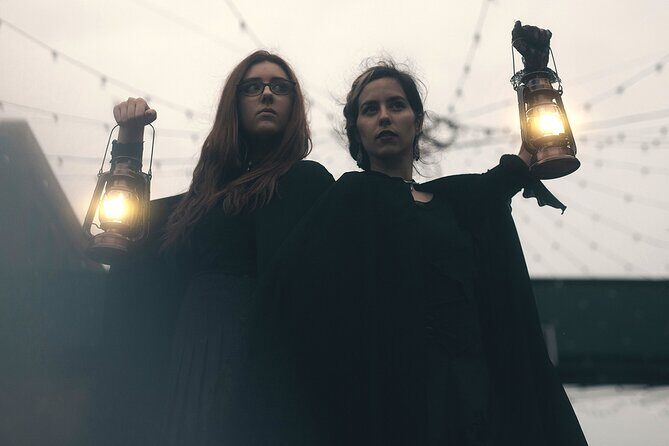
The Distillery District is the kind of place that looks good in any weather, but at night it turns into something else. The lantern-lit walk helps you slow down and look closely at the old Victorian industrial structures, the cobblestones, and the tight street geometry that makes the area feel enclosed.
What I especially like is that the tour uses the setting instead of fighting it. You’re not spending the night on a bus, and you’re not racing between far-flung neighborhoods. You’re staying inside a compact zone where history is visible just by walking, even before a guide starts telling stories.
Also, this is a smart concept for first-timers. You don’t have to be a paranormal expert to enjoy it. The stories come with historical context, so even if you’re not chasing chills, you still get something worth your time.
That said, if you want a strictly scary show—more monster energy, fewer lessons—you’ll want to think about what kind of experience you’re buying. This one leans toward “spooky night out” more than “thrill ride.”
You can also read our reviews of more tours and experiences in Toronto.



The 55 Mill St start: timing and how the walk feels
You meet at 55 Mill St, Toronto and end back at the same spot. That matters more than it sounds. A round-trip meeting point keeps the route simple and reduces the stress of figuring out where you’ll end up after an evening stroll.
The total duration is about 1 hour 15 minutes, which is a sweet spot for a night activity. Long enough to feel like you did something special, short enough that you can still plan a dinner or a drink afterward in the Distillery District.
If you can, I’d arrive a little early and take a quick look around before the tour starts. One review suggested getting there ahead to grab a bite or browse shops, and that’s solid advice: it turns the tour into a full evening rather than a quick hit and run.
One more practical point: since it’s mostly walking on cobblestones, wear shoes that handle uneven ground. You’ll thank yourself halfway through when the group is still moving calmly and nobody’s doing the careful shuffle dance.
Cobblestone streets and lantern pacing: the main event
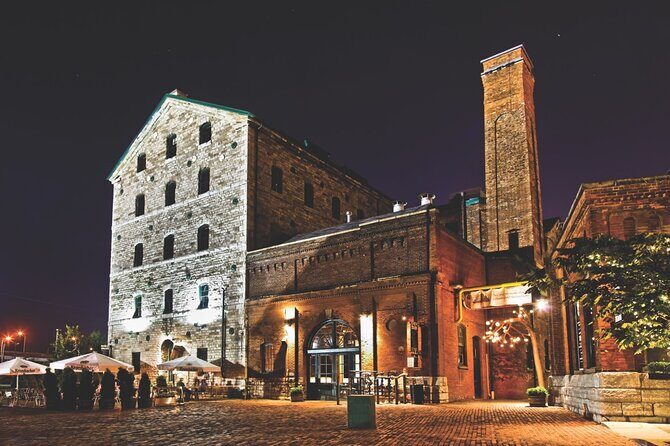
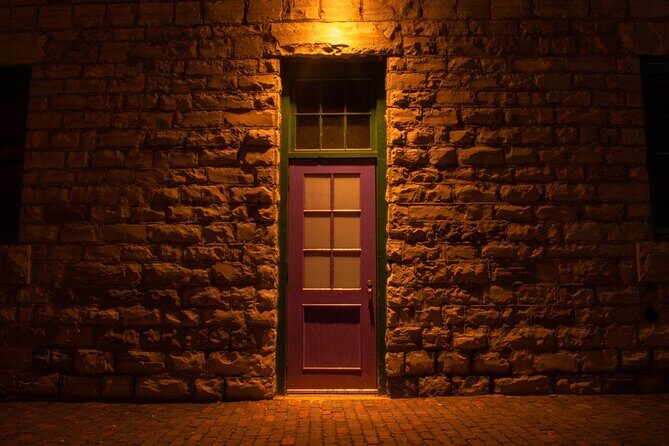
Most of the experience is spent wandering the cobblestone streets of the Distillery District. This is where the tour earns its name. The cobbles slow you down in a good way, and they help the stories feel anchored in a real place rather than a generic “ghost tour” script.
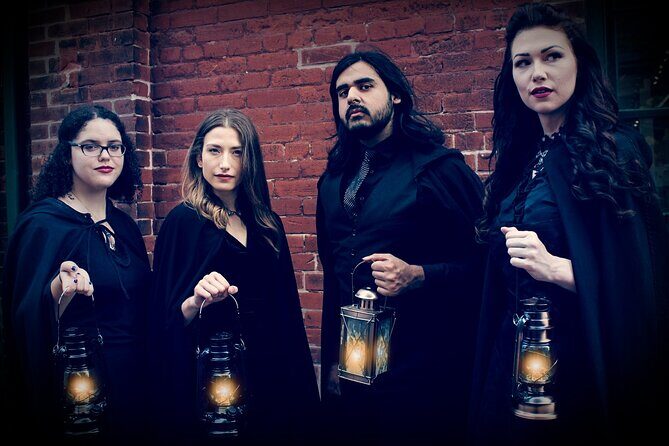
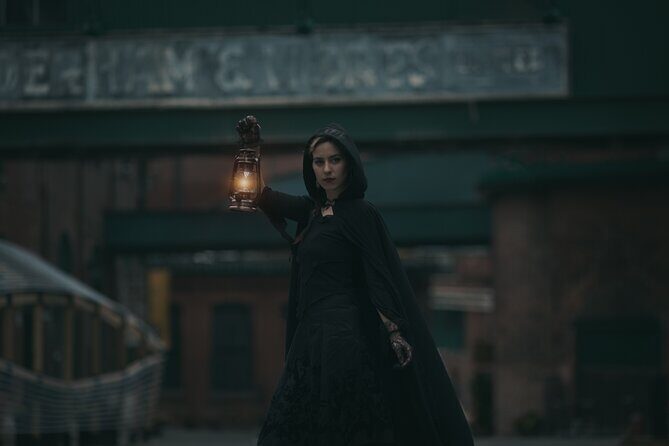
The “lantern” element is doing real work here. It changes the visual texture of the street—shadows stretch, corners look tighter, and the mood clicks into place fast. Even if some parts feel more story-driven than scary, the atmosphere does not need a lot of help.
The pacing also helps group dynamics. With only up to 10 people, you’re less likely to get stuck at the back of a crowd. Instead, you get a better chance to hear the guide and catch the details the tour is pointing out.
A small drawback to note: the route is mostly outside and built around walking. If you’re the kind of traveler who wants lots of indoor stops, you may find the format slightly limiting. A couple of experiences described disappointment at the lack of going into buildings, so set your expectations accordingly.
Young Centre stop: Victorian buildings turned into theatre
One of the standout landmarks on the route is the Young Centre for the Performing Arts. It’s described as a brand-new theatre built into 19th-century-era Victorian industrial buildings, and that “old bones, new use” idea is exactly what makes a history-based ghost tour feel credible.
When a tour hits a place like this, it gives the stories somewhere to land. You’re not just hearing that the area once worked for industry and spirits—you’re seeing how the structures were repurposed, and how the past can still be in the walls.
The Young Centre is also tied to modern arts here, including Soulpepper Theatre Company and the theatre school associated with George Brown College. For me, that’s a good mix: the tour keeps the spooky thread, but it doesn’t ignore what the buildings are doing today.
If you’re hoping for a truly haunted vibe, the theatre setting might feel more theatrical than terrifying. Still, it’s a great stop for people who like architecture and who enjoy learning how historic spaces continue to matter.
Training-and-youth theatre: why the setting adds texture
The tour also includes a stop at an independent theatre focusing on training and youth projects in a former distillery building. That detail is more than a footnote. Former industrial spaces have a certain weight to them, and you feel it when the guide talks about how a building’s purpose has changed over time.
This is the kind of stop that makes the experience feel grounded. The tour isn’t just naming landmarks; it’s connecting them to the idea of labor, production, and how communities use the same space for different stories across generations.
For anyone who enjoys a “story + place” format, this stop tends to pay off. It’s also a nice contrast to the Young Centre: you get two different kinds of cultural life in historic structures.
Possible drawback: if you’re mainly in it for scares, you may find the focus on places of arts and training to be less spooky. But if you’re the type who likes atmosphere plus history, this fits very naturally.



From Gooderham and Worts to modern spirits: the story chain
Another key stop brings the story into spirits and brewing history. The tour explains that a brewery was founded in December 2002 in Toronto by Steve Abrams, Jeff Cooper, and Michael Duggan. It was named after its original location at 55 Mill Street in the historic Distillery District—once the industrial complex occupied by Gooderham and Worts.
This is the heart of why the tour can feel more satisfying than a pure ghost-and-gore loop. The guide is tying the “ghost” idea to the actual spirit-making legacy of the area. When you understand the context—who worked here, what was produced, why the site mattered—the stories can feel more believable even if you don’t take every detail literally.
I also like how this history thread creates variety. You’re not stuck in one century. The tour can move between early spirit-making roots and much more modern brewing connections, which keeps things from going flat.
That said, the ghost portion may land differently depending on your taste. Some people loved the mix of history and ghost tales, while others wanted stories that felt scarier or more current. If you’re very into paranormal “new sightings” energy, this format is probably better thought of as traditional ghost storytelling wrapped in local history.
The Segway of Ontario stop: practical, nearby, and quick
The itinerary includes a stop at Segway of Ontario, mentioned as giving segway tours. This is likely a quick landmark moment rather than an activity you’re joining during this ghost tour.
Why include it? In a tour like this, it often helps the guide orient the group and mark where the route goes next inside the Distillery District. It also reinforces that the area is an active destination, not just a museum-like zone.
If you’re trying to plan your evening, this is useful context. You’ll know there are other tour options happening nearby, so you can decide later if you want something more action-based after your ghost walk.
If you’re the kind of traveler who hates “we’re just passing by” stops, it might feel like dead time. But in a 1 hour 15 minute format, those moments are usually kept short, and the walking story momentum tends to continue right after.
Spooky vs. fun: how the ghost stories are likely to feel
Here’s the honest expectation-setting part. The tour is built around costumed guide storytelling and “spooky ghost stories and gruesome tales,” but the overall vibe can vary.
A few comments highlight that it’s great fun and that the stories are clear, suspenseful, and even include historically grounded periods like Prohibition-era Canada. Other comments say the tour felt more like memorized recited theatre than true unpredictability, and some felt it wasn’t spooky enough.
So how do you choose if it’s right for you? Think of it like this:
- If you like storytelling that connects to place, you’ll likely have a good time.
- If you need constant jump-scares or a very dark, intense horror tone, this may not fully scratch that itch.
One thing that clearly affects the experience is the guide’s delivery. Names like Carolyn, Cole, Katie, Kit, Margo, Irene, Paul, Meredith, and Finn came up repeatedly for being engaging and energetic. That suggests the company puts real effort into performance, even if the content stays rooted in history.
If your group is smaller on the night (one person described it becoming a private tour), the whole thing can feel even more personal. With only 10 travelers, it’s already easier to feel involved, but smaller can mean more attention on your questions.
Value check: is $25.45 worth it for this format?
At $25.45 per person, this is priced like a typical short walking tour—but you should judge it based on what you get: time, group size, and the kind of content.
You’re getting:
- A 1 hour 15 minute night activity in a compact historic zone
- A small group cap of 10, which tends to improve listening and interaction
- A guide who blends history and ghost storytelling tied to real locations you can see as you walk
For many people, the Distillery District itself is a paid experience if you’re visiting anyway for shops, photos, and dinner. This tour adds a guided layer that helps you make sense of what you’re looking at.
Where value can drop is if your personal goal is pure fear. A couple of experiences described wanting more “wow” moments or more creepiness, and another mentioned disappointment when expecting to go inside buildings. If that’s your priority, the money might not feel well spent.
But if your goal is a clever, story-led introduction to Toronto’s Distillery District at night—plus a little spooky fun on the side—this price tends to make sense. It’s not a long production, and it doesn’t require a huge commitment to your schedule.
Who should book, and who should skip
I’d say book this tour if you:
- Want an evening plan that’s easy to fit in near dinner
- Prefer walking + stories over big theatrical scares
- Like historic places and repurposed buildings
- Enjoy “local legend” style ghost tales with context
You might skip or look for a different style if you:
- Want maximum jump-scare intensity
- Expect frequent stops inside buildings
- Need the scariest stories to be more modern than historical
One nice bonus for families and mixed groups: the pace is short and the setting is safe-feeling and central. If you’re going with teens or adults who like history (and maybe a little theatre), this can hit the sweet spot.
Should you book Spirits of the Distillery District Ghost Tour?
I think you should book if you’re excited by the idea of a lantern-lit stroll through historic Toronto, with a guide who mixes spooky storytelling and distillery-era context. The small group size is a real selling point, and the landmark choices—especially the Young Centre tied to Victorian industrial buildings—help the tour feel anchored, not generic.
If what you really want is fear first and facts second, this may not feel scary enough. But if you’d rather leave with a better sense of how this place evolved—from spirits-making roots like Gooderham and Worts to modern culture in the same structures—you’re likely to enjoy it.
FAQ
How long is the Spirits of the Distillery District Ghost Tour?
It’s listed as approximately 1 hour 15 minutes.
Where does the tour start?
The meeting point is 55 Mill St, Toronto, ON M5A 3C4, Canada.
How many people are in the group?
The tour has a maximum of 10 travelers.
What language is the tour offered in?
It’s offered in English.
Is a mobile ticket used?
Yes, the tour offers a mobile ticket.
Does the tour run in bad weather?
The experience requires good weather. If it’s canceled due to poor weather, you’ll be offered a different date or a full refund.