REVIEW · HUNTSVILLE
Smartphone Audio Driving Tour between Huntsville & Toronto
Book on Viator →Operated by Tripvia Tours · Bookable on Viator
This road trip teaches as you cruise.
This smartphone audio driving tour between Huntsville and Toronto turns Highway 400 into a rolling history and nature lesson, with stops and roadside stories like logging, early explorer Samuel de Chaplain, and landmarks such as Mnjikaning Fish Weiers and Oro African Church.
I especially like the way you control the pace—stop for photos, snacks, or a quick walk, then jump right back in. I also like the no-signal, no-data setup, so the tour can keep talking even when your phone signal gets moody.
One drawback to consider: you’re doing the driving yourself, so this is best when you can safely pull over for the more interesting spots and let the audio lead while you stay focused.
In This Review
- Key highlights at a glance
- How this Huntsville-to-Toronto audio tour actually plays
- Starting anywhere: the flexible route between Huntsville and Highway 400
- Bracebridge and the downtown falls: a quick win right on the route
- Algonquin Park from the roadside: learning without the detour
- Place names and pioneer-era stories: Samuel de Chaplain and more
- Lakes, lakes, lakes: Gravenhurst Wharf and the Muskoka feel
- Why $6.72 per group is such strong value
- Making it work smoothly: practical tips before you hit the road
- Should you book this Huntsville to Toronto audio driving tour?
- FAQ
- Do I need mobile data during the tour?
- How long does the driving tour take?
- Where does the tour start and end?
- Is the tour ticket available on a mobile device?
- What’s included in the price?
- Can I get a full refund if my plans change?
Key highlights at a glance

- Offline-friendly audio: download once, then enjoy the tour with no data used during playback
- Muskoka route energy: Bracebridge falls downtown, lakes, and riverside breaks built into the drive
- Stories beyond postcards: logging era context plus early explorer Samuel de Chaplain
- Algonquin Park context without the crowds: you learn about it even though the tour stops short of entering
- Big-name entertainment trivia: you pass by event grounds tied to major acts
- Low-cost for groups: $6.72 per group (up to 15) with only 1 booking needed per vehicle
How this Huntsville-to-Toronto audio tour actually plays
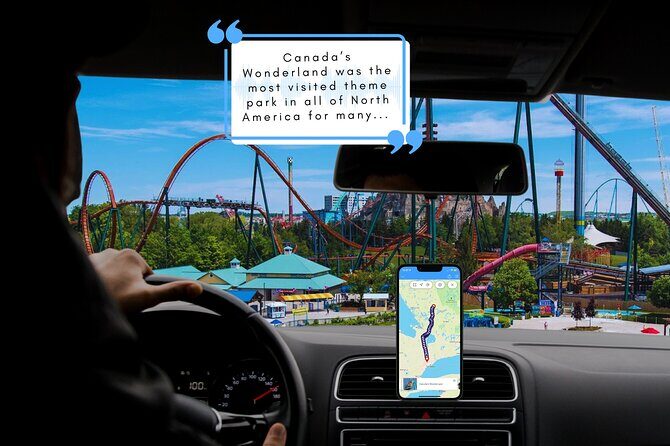
Think of this as a self-guided road companion. You load the mobile ticket in the Tripvia Tours app, then the audio guides you along the route with points of interest and short stories tied to what you’re passing.
The nice part is how practical it feels for real life. There are no time constraints, and the tour keeps going right where you left off. So if you detour for a bathroom stop, stretch your legs, or linger at a scenic pull-off, you won’t mess up the experience.
The tour is also designed for spotty connectivity. You’ll want a good mobile or WiFi connection for the initial download, but after that you need no signal and the tour uses no data during playback. That matters on Muskoka and outlying areas where service can be hit-or-miss.
And it’s private. Your group is the only group using that booking, which makes it feel calmer than a busy bus tour—especially if you like hearing stories at your own volume and your own timing.
Starting anywhere: the flexible route between Huntsville and Highway 400
You can start in Huntsville, ON (P0B) and end along Highway 400 in Ontario. The tour also works in either direction, and start/stop points can be anywhere along the route—so you’re not stuck with a “meet here at 9:00 sharp” vibe.
That flexibility is useful if you’re combining this with other plans in the region. You might begin with a late-morning drive, or you might save the story stops for the return leg. Either way, the experience stays the same because it’s built around your position on the road.
Timing-wise, plan on about 1 hour 30 minutes to 2 hours if you keep moving and only make a few quick stops. If you treat it like a proper road trip—parking for viewpoints, walking near falls, grabbing a snack by the wharf—your day will naturally stretch.
The app is in English, and you’ll receive confirmation at booking. The window is also wide open: service hours run essentially all day (12:00 AM to 11:30 PM), so you can fit it into daylight driving.
Bracebridge and the downtown falls: a quick win right on the route

One of the easiest “start here” moments is Bracebridge. As you pass by, the tour highlights the town itself and the beautiful falls right downtown. You don’t need to plan ahead for this one; the tour is timed so you get a meaningful stop without leaving your route.
Why this works so well: it gives you an immediate payoff early in the drive. Instead of saving the best visuals for later, the tour nudges you into a classic Muskoka moment fast—water, scenery, and a town core where you can stretch your legs.
You can stop for as long or as little as you want, and the audio will pick up right where you left off. That “no penalty” design is great when you’re traveling with different energy levels—some people want photos, others want to get back on the road.
If you’re trying to keep the whole thing under two hours, treat Bracebridge as your main break and then decide later if you want a longer stop at Gravenhurst Wharf or another pull-off.
Algonquin Park from the roadside: learning without the detour

The tour stops just short of Algonquin Park, but it still gives you the context you’d want before (or after) visiting the park in person. You’ll hear what makes Algonquin Park important—enough to help you understand what you’re seeing if you’ve never been in the area before.
This approach is smart if your day is limited. You get the story without the time cost of entering the park, finding parking, and managing trail time. It also works well if you’re more into understanding the region than checking boxes.
There’s also a nice pacing trick here: by keeping the stop near the park, the tour can connect the geography and nature themes to the rest of your drive through Muskoka. That’s how the route becomes more than scenery—it becomes a map of ideas.
A practical note: since the tour doesn’t go into Algonquin Park, make sure you’re comfortable with that format. If your main goal is a park visit with walking and facilities, you’ll likely want a separate plan for that part.
Place names and pioneer-era stories: Samuel de Chaplain and more

One of the most memorable things in this tour is how it mixes famous names with “how this land got shaped” stories. You’ll hear about logging, and the tour also references early explorer Samuel de Chaplain, tying people and industry to the road you’re driving.
You’ll also encounter highlights like Mnjikaning Fish Weiers and Oro African Church. Those aren’t the kinds of stops you’d automatically get from a generic driving playlist. They add depth, especially if you want to understand Muskoka beyond hotels, cottages, and lake views.
The tour even includes a moment where it points out a town and explains what the name really means. I love these small etymology-style segments because they make the route feel specific. The region stops being just “somewhere north” and turns into a set of stories you can repeat later.
One thing to keep in mind: audio history works best when you’re willing to pull over once in a while. If you try to treat it like background noise the whole time, you’ll miss the moments where the tour is trying to steer your attention to a meaningful detail.
Lakes, lakes, lakes: Gravenhurst Wharf and the Muskoka feel

Muskoka is all about water, and the tour leans into that quickly. You’ll pass by a river-front village that’s ideal for a quick ice cream or lunch stop—perfect when you want the trip to feel like a true drive, not just a listening session.
Then you get to a big favorite: Gravenhurst Wharf. The tour points you to an attraction there that’s only a few minutes off the route. If you like the classic wharf-and-lake vibe—strolling, photos, and a casual change of pace—this is the moment to slow down.
As you continue, the tour also references a big highway sign and the huge concert and event grounds that have hosted major musical acts like the Rolling Stones. It’s the kind of detail that makes passing signs feel more alive. Instead of reading it and moving on, you learn why it’s famous.
And yes, there’s an old-school slice of nostalgia too: you’ll pass by an old drive-in theatre. Even if you don’t stop, it adds personality to the route and keeps the audio from feeling like a straight line of facts.
Finally, you’ll get the tour’s lake-focused portion—there’s even a playful mention that Muskoka has lots of lakes. The practical takeaway is that the tour explains how the name of one of the biggest lakes in the region got its name, which again makes the geography feel personal.
Why $6.72 per group is such strong value

At $6.72 per group (up to 15 people), this is one of those rare road-trip deals that can be truly budget-friendly. The price is per group, and you only need one booking per vehicle, which means the cost doesn’t multiply just because you have more people in the car.
Here’s the value math that matters: if you’re traveling solo, you’re still getting a full audio tour rather than a set of individual tickets. If you’re traveling with a couple of friends or family, the cost per person drops fast. Even with a smaller group, it’s a low-risk way to make a long drive more meaningful.
Add to that the “tour is yours to keep” approach in the app, plus flexible dates. You’re not paying just for one quick moment. You’re buying a reusable way to experience the route whenever you’re back in the area.
One more value point: it’s designed to avoid wasted time. Since there are no time constraints, you can stop for what matters and skip what doesn’t. That turns the price into time you actually control.
Making it work smoothly: practical tips before you hit the road

Before you leave Huntsville or wherever you start on the route, treat the initial download like part of your prep. You’ll want a good mobile or WiFi connection to grab what you need in the app, since the rest runs without data.
Then, plan your listening. When the tour points you to a stop like Bracebridge falls or something near Gravenhurst Wharf, treat it as a cue to pull over. Audio driving tours are fun, but the safest way to enjoy them is to pause and listen when you’re stationary or when the road is truly calm.
Bring the right basics:
- Your own smartphone or tablet (not included)
- Your own transportation (you use your vehicle)
- A little flexibility for parking and short walks at places the tour suggests
Also, remember that attraction entry is not included. The tour will point out places and help you decide where to stop, but any ticketed attractions are on you.
If you’re thinking about best-fit travelers, I’d put this in the category of people who like:
- road trips with structure
- hearing real local stories while you drive
- flexible plans instead of tight guided itineraries
Should you book this Huntsville to Toronto audio driving tour?
If you’re heading through Muskoka on Highway 400 and you want your drive to feel more like a story than a chore, I’d say it’s worth booking. The biggest strengths are the offline-friendly audio, the self-paced stopping, and the mix of recognizable landmarks with unexpected context—logging, Samuel de Chaplain, Mnjikaning Fish Weiers, and Oro African Church.
I would skip it if you want a live guide in the car or you’re only interested in deep park activities inside Algonquin itself. This is a smart roadside learning format, not a full-on guided excursion with ticketed access.
Bottom line: for the price, it’s hard to beat. You’re paying a small amount for a full route companion you can replay and use again later.
FAQ
Do I need mobile data during the tour?
No. After you download the content (you need a good mobile or WiFi connection for the initial download), the tour uses no data and no signal is required during the experience.
How long does the driving tour take?
It’s listed at about 1 hour 30 minutes to 2 hours. There are no time constraints, so you can take longer if you stop for attractions.
Where does the tour start and end?
The start is Huntsville, ON (P0B), and the end is Highway 400, Ontario. You can start and stop anywhere, and the tour works in either direction.
Is the tour ticket available on a mobile device?
Yes. It uses a mobile ticket, and the tour is delivered through the Tripvia Tours mobile app. A smartphone or tablet is not included, so you’ll need to bring your own device.
What’s included in the price?
The tour includes the smartphone audio driving experience with flexible dates and a tour that you can take at your pace. Attraction tickets are not included.
Can I get a full refund if my plans change?
Yes. You can cancel up to 24 hours in advance for a full refund. Cancel at least 24 hours before the experience start time to receive 100% back.