REVIEW · OSHAWA
Oshawa: Canadian Tank Museum Admission
Book on GetYourGuide →Operated by Canadian Tank Museum · Bookable on GetYourGuide
Tanks have a human pulse. The Canadian Tank Museum in Oshawa turns Canada’s armoured past into something you can see working, not just read about.
I really like two things here: the sheer scale of 170+ operational military vehicles, and the fact that you can talk with Veterans who guide you through the stories behind the machines. One catch to plan for: food and drinks aren’t included, so you’ll want to sort meals before or after.
In This Review
- Key highlights worth your time
- Why Oshawa Has Canada’s Most Operational Tank Collection
- Price and what $10 buys you (really)
- What to focus on inside the permanent exhibitions
- Watching active restorations bring history into the present
- Veteran-led conversations are the real upgrade
- Maybe seeing a historical vehicle on the move
- How to plan your one-day visit in a practical way
- Who should book this admission (and who may want to think twice)
- Should you book? My straight advice
- FAQ
- How long is the Canadian Tank Museum admission experience?
- What’s the price per person?
- Where is this museum located?
- What does the admission ticket include?
- Is food or drinks included?
- What can I expect to see during the visit?
- Will there be Veterans available to talk with?
- Are there starting times I need to choose?
- Is there free cancellation?
- Can I reserve now and pay later?
Key highlights worth your time
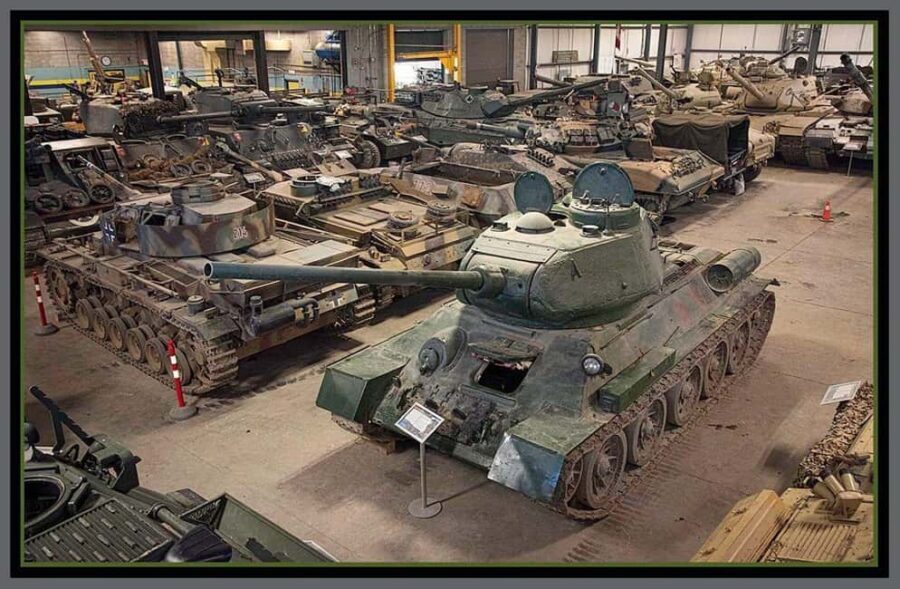
- 170+ operational military vehicles on display, including both big and small artifacts
- Active vehicle restorations you can watch while you visit
- Veteran-led storytelling tied to Canada’s Royal Canadian Armoured Corps
- An official unit museum feel, connected to the Ontario Regiment RCAC (Durham Region)
- You may even see a historical vehicle on the move, depending on what’s happening during your visit
Why Oshawa Has Canada’s Most Operational Tank Collection
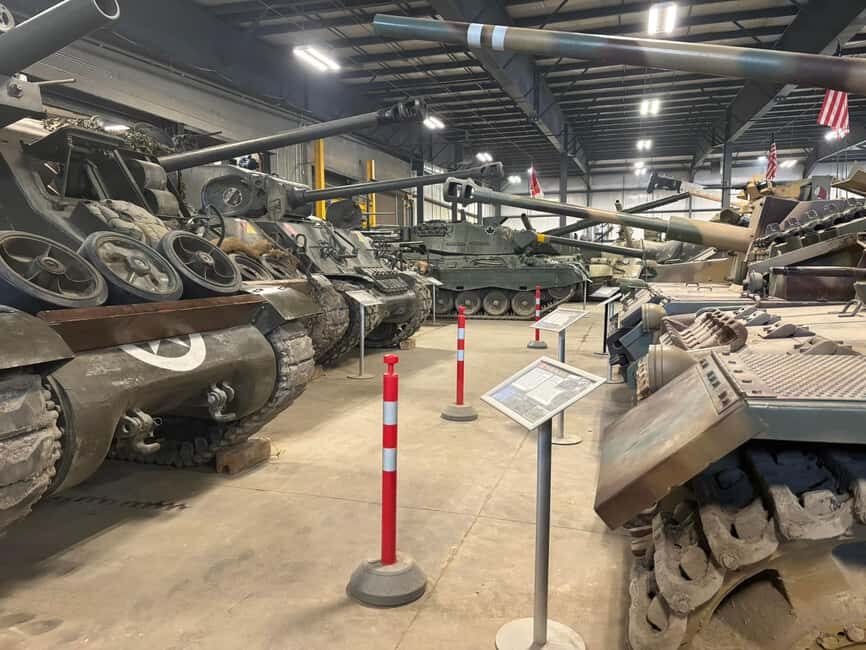
If you think military museums are mostly about still images and slow-moving plaques, this one nudges you in a different direction. The Canadian Tank Museum is described as home to the largest collection of operational military vehicles in North America, with over 170 vehicles. That matters, because you’re not only looking at history—you’re looking at working examples, plus ongoing repair and restoration work.
The museum also frames the collection around a specific and meaningful storyline: Canada’s tank forces, the Royal Canadian Armoured Corps. And it does that with a local anchor. It’s the official unit museum of Durham Region’s own Canadian Army regiment, the Ontario Regiment RCAC. That gives the place a community voice, not just a national-history voice.
For me, the most practical value is this: you’ll spend your time seeing a wide range of vehicles and related artifacts tied to one consistent theme, rather than bouncing through unrelated exhibits. If you’re a detail person, you’ll love that the collection stretches far back, including militia unit history dating to 1866.
Price and what $10 buys you (really)
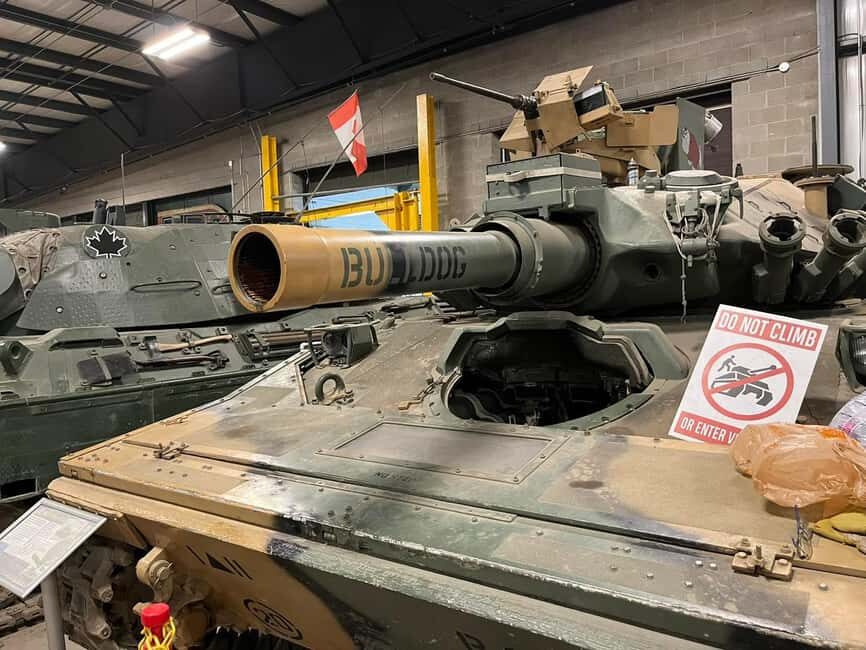
At about $10 per person, this is one of those museum visits that feels underpriced for what you’re getting. Admission includes access to permanent exhibitions, and the experience is built around a working museum approach—restoration, demonstrations, and veteran connection.
Here’s how I think about value for you:
- You’re paying for time in a real collection, not just a short stop with a few display cases.
- The museum leans into education through interpretation, guided conversation, and demonstrations where possible.
- Because it’s a charitable organization, you’re also supporting a restoration-and-education mission rather than only viewing finished artifacts.
Now, the tradeoff: the experience is tank-and-armour focused. If you’re only passing through Oshawa and you want a broad mix of topics, this may feel narrow. But if you’re even mildly interested in military vehicles, Canadian history, or how restorations bring equipment back to life, the cost-to-content ratio is strong.
What to focus on inside the permanent exhibitions
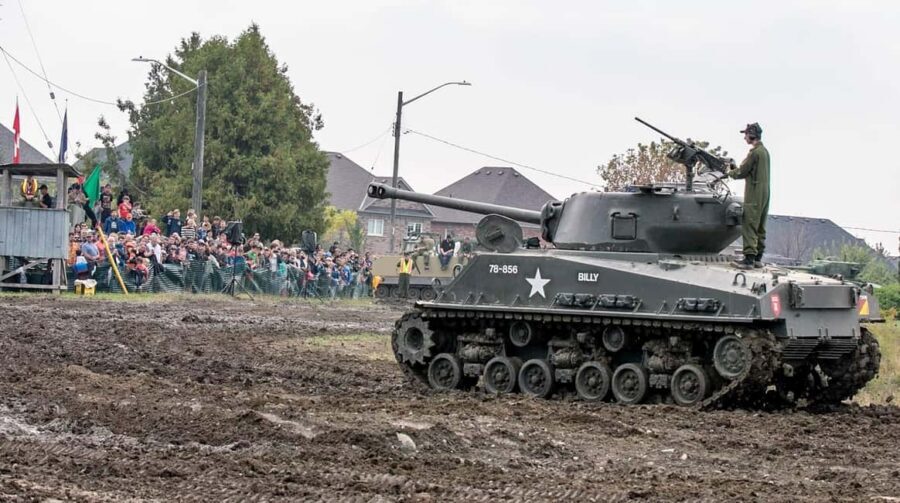
You’ll have access to the museum’s permanent exhibitions, and the collection is designed to tell a coherent story of Canada’s armoured forces. The key is that the exhibits aren’t only about the vehicles themselves. They also include large and small artifacts, which helps you zoom out and understand the equipment in context.
This is also where the timeline becomes more than a list of dates. The museum notes a connection to militia units dating back to 1866, which matters if you want to understand how Canada’s armoured tradition grew over time. It’s not just one era frozen in place—it’s an evolving military story tied to the formation of militia units and later tank forces.
Practical tip: when you walk through permanent displays, don’t treat every tank like a separate universe. Instead, look for the themes the museum is likely emphasizing: how vehicles fit into the Royal Canadian Armoured Corps mission, and how local regiment history connects national events to people on the ground.
If you’re the type who likes to read every label, you’ll have plenty to work with. If you’re more of a “show me” person, the scale of the 170+ vehicles will do a lot of the persuading for you.
Watching active restorations bring history into the present
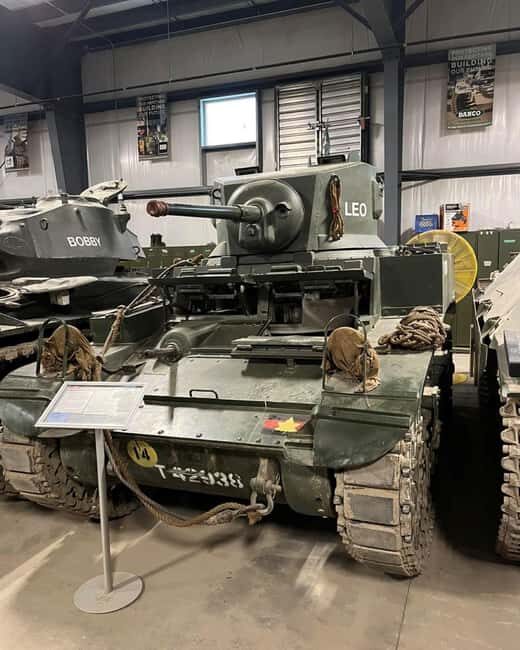
One of the most appealing parts of this museum is that it’s not only preserving equipment; it’s actively maintaining it. The experience highlights active vehicle restorations, and that’s a big difference compared with museums where everything is finished, sealed, and static.
From a visitor point of view, restoration work is fascinating for two reasons:
- You see the effort behind the end result. A restored vehicle isn’t magic. It’s time, parts, skills, and decisions.
- You learn what matters for authenticity and function. Even if you don’t know the technical details, you can usually tell whether restorers are aiming for accuracy, reliability, or both.
Also, restoration adds a sense of motion to your day. Your visit doesn’t have to end at the last exhibit case. You can spend time watching a process that’s still underway. That makes it easier to connect with the museum’s education mission, because you can see how knowledge becomes action.
Just remember: restoration work can change. Your visit may include different stages depending on what’s happening that day, and the museum also notes that you might see a vehicle on the move.
Veteran-led conversations are the real upgrade
In a lot of attractions, volunteers are mostly there to answer questions. Here, the experience is built around something stronger: the chance to chat with Veterans who serve as tour guides and share their stories.
That’s not small talk. It’s context. Veterans can add meaning to what you’re looking at by putting it in human terms—how equipment was used, what the work felt like, and how unit identity shaped everyday life. The provided info highlights that these guides are happy to discuss what matters to visitors, and it also reflects real enthusiasm from people who visited.
So what should you do with that opportunity? Come prepared with one or two questions, not a full interview. For example, you can ask about:
- What part of the equipment mattered most in training or service
- How the regiment’s history connects to the armoured corps story
- What visitors often misunderstand about tank-era life
Even if you’re not a hardcore military person, this part tends to work. The museum is explicitly about turning history into a memorable and meaningful experience, and veteran storytelling is the mechanism that does that.
Maybe seeing a historical vehicle on the move
The highlights include a possible bonus: you might see a historical vehicle on the move. I’d treat this as a “nice if it happens” moment rather than a promise, since it depends on conditions and museum operations during your visit.
Still, it’s worth understanding why this is such a big deal. Sight and sound do something photos and captions can’t. When a historical vehicle moves, you get a real sense of size, power, and how the machine likely handled in its original environment.
If you’re visiting because you love vehicles, this is the section of the day to stay flexible. If you’re the kind of person who plans minute-by-minute schedules, consider leaving a little slack in your day. Museum priorities and demonstration timing can shift, especially in a place managing restorations.
How to plan your one-day visit in a practical way
This experience is valid for 1 day, and you’ll want to check availability for the starting times. Since admission includes permanent exhibitions, think of your day as a loop:
- Permanent exhibitions to get your bearings in the Royal Canadian Armoured Corps story
- Restoration areas to see the museum working in real time
- Veteran-guided conversation to translate what you see into meaning
- If you’re lucky, a moment where a vehicle moves
The simplest strategy is to arrive ready to switch modes. Plan to read some labels, then spend time looking closely at vehicles and artifacts. When restoration work is happening, shift into observer mode. When Veterans are available, shift into question mode.
One more practical thing: food and drinks aren’t included. That affects your pacing. If you don’t plan meals, you’ll feel the urge to cut your visit short. Bring your energy for a full day and sort snacks or dining nearby before you go in.
Who has the best match with this museum?
- People who like Canadian history and the Royal Canadian Armoured Corps
- Anyone curious about how restorations keep machinery alive
- Visitors who appreciate learning directly from Veterans and volunteers
Who should book this admission (and who may want to think twice)
You’ll probably enjoy this most if you fall into at least one of these buckets:
- You like military equipment, especially tanks and related armoured forces
- You want more than static displays—watching restorations and possibly seeing movement makes a difference
- You’re interested in local history, since the museum connects to the Ontario Regiment RCAC
If you’re not into tanks at all, this may still work if you like history through human stories. The museum explicitly leans on Veteran-led guidance, and that kind of storytelling can convert skeptics. But you should know the museum’s core subject is armour and vehicles, so your interest level will be tested.
Also, if you’re sensitive to food logistics, plan ahead. Not having food on-site is a real factor, even if it’s common for small museums. The experience is about exhibits and conversation, not dining.
Should you book? My straight advice
I’d book this if you want a low-cost, high-substance museum day focused on Canadian tank forces and tied to local regimental history. The 170+ operational vehicles, the chance to watch active restorations, and the opportunity to learn from Veterans are exactly the mix that makes history feel real instead of distant.
Skip it—or at least reconsider—if you need a broader variety of topics, or if you don’t want to plan meals since food isn’t included. Otherwise, at roughly $10 per person, it’s a smart way to spend a day in Oshawa when you want practical, authentic learning you can see with your own eyes.
FAQ
How long is the Canadian Tank Museum admission experience?
The experience is valid for 1 day.
What’s the price per person?
The admission price is $10 per person.
Where is this museum located?
It’s in Oshawa, Ontario, Canada.
What does the admission ticket include?
Your ticket includes admission to the Canadian Tank Museum and access to the permanent exhibitions.
Is food or drinks included?
No. Food or drinks are not included.
What can I expect to see during the visit?
You can expect to learn about the Royal Canadian Armoured Corps, explore a large display of historical military vehicles (over 170 operational vehicles), view active restorations, and you may be able to see a historical vehicle on the move.
Will there be Veterans available to talk with?
The experience highlights the chance to chat with Veterans who serve as tour guides and share their stories.
Are there starting times I need to choose?
Yes. The experience is listed as valid 1 day, and you should check availability to see starting times.
Is there free cancellation?
Yes. Free cancellation is available if you cancel up to 24 hours in advance for a full refund.
Can I reserve now and pay later?
Yes. The option is listed as reserve now & pay later, meaning you can book your spot and pay nothing today.