REVIEW · CALGARY
Icefield: Icefield Parkway, Bow Lakes & Peyto Lakes Day Tour
Book on GetYourGuide →Operated by Calgary Tours · Bookable on GetYourGuide
Ice-blue lakes steal the whole show. I love the Peyto Lake turquoise punch and the reflective calm at Bow Lake, and this whole day is built around that Canadian Rockies wow-factor. The tradeoff is simple: it’s a long 9–11 hours, and weather can shuffle viewpoints.
This is also one of those rare tours where the scenery comes with context. If you opt in, you can walk on the 25,000-year-old Athabasca Glacier at the Columbia Icefield area, and you’ll get the story behind the ice you’re standing on. Guides (Raymond is one name that shows up in feedback) are praised for sharing knowledge and being attentive to guests during the long drive.
One more reality check: it’s an outdoor-heavy day and it’s not suitable for wheelchair users. Bring a sun hat and sunscreen, and plan to enjoy the ride in between stops, because the Icefield Parkway is the main event.
In This Review
- Key highlights that make this tour worth it
- Icefields Parkway: where the drive is the attraction
- Peyto Lake (and the Waterfowl Lake backup)
- Bow Lake and the Crowfoot Mountains reflection moment
- Crowfoot Glacier and the glacier story you actually remember
- Columbia Icefield: optional Athabasca Glacier walk and the Ice Explorer choice
- Why the national park stops feel smoother as a guided day
- Timing, guides, and the 9–11 hour reality
- Price and value: what $114 really buys you
- What to bring (and what to leave behind)
- Who this Icefield Parkway day tour fits best
- Should you book it?
- FAQ
- How long is the Icefield Parkway day tour?
- What is included in the $114 per person price?
- Is lunch included?
- Is the glacier walk on the Athabasca Glacier included?
- What happens if Peyto Lake is closed?
- What languages are available for the live tour guide?
- Is this tour wheelchair accessible?
Key highlights that make this tour worth it
- Icefields Parkway (232 km) between Banff and Jasper: big-mountain scenery all day, not just one photo stop
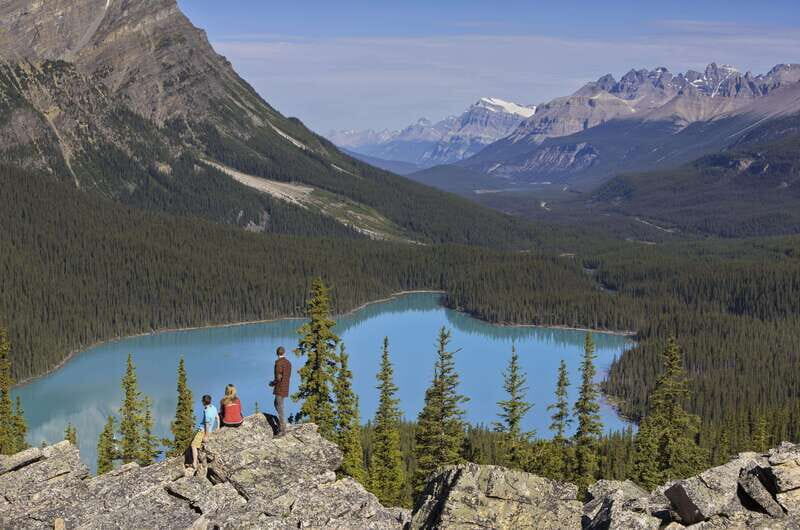
- Peyto Lake viewpoint: the classic glacier-fed turquoise look, plus a backup plan if it’s closed
- Bow Lake + Crowfoot reflections: a calm water moment that makes the Rockies feel extra dramatic
- Columbia Icefield scale: one of the largest ice accumulations south of the Arctic Circle
- Optional glacier walk on the Athabasca Glacier: step onto ancient ice instead of just looking at it
Icefields Parkway: where the drive is the attraction
The best part of this tour starts before you even get out of the vehicle. The Icefields Parkway is a 232 km stretch that connects Banff and Jasper National Parks, and it’s famous for good reason: the scenery changes constantly. You get wide mountain views, glacier-fed waters, and that sense of being far from everything.
What I like about doing this by tour is that you don’t have to piece it together yourself. You just show up in the morning, sit back, and follow the route with an English-speaking guide (with live guide support in Chinese and Japanese as well). That matters because weather on the prairies-to-alps route can move fast. When clouds roll in, the tour can shift stops—so you’re not stuck waiting for one perfect clearing that may never come.
Also, the day has a rhythm. You’ll have sightseeing time, then transportation time, then another round of stops. It’s designed as a full-day experience, not a “quick drive-by,” so you can actually enjoy the views rather than chasing them.
You can also read our reviews of more tours and experiences in Calgary.

Peyto Lake (and the Waterfowl Lake backup)
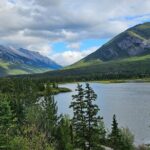
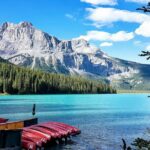
Peyto Lake is one of the most recognizable glacier lakes in the Rockies. Here you’ll see the vivid turquoise water that gives this area its signature look. The tour also calls out an iconic shape: Peyto Lake is described as looking like a fox, which makes it easier to recognize once you’re at the viewpoint.
The practical tip: don’t assume Peyto will always be available. If it’s closed, your stop can be replaced by Waterfowl Lake. That’s not a downgrade so much as a smart reality of the region—conditions and access change. The tour’s stop times and points are subject to weather, and replacements happen if closures occur.
If you’re the kind of traveler who loves “I’ll take whatever the Rockies hand me” moments, Peyto (or the substitute) is exactly the right kind of stop. You’re getting one of those classic views that looks different depending on light and weather. Even if the color is slightly muted, the setting still does the heavy lifting.
Bow Lake and the Crowfoot Mountains reflection moment
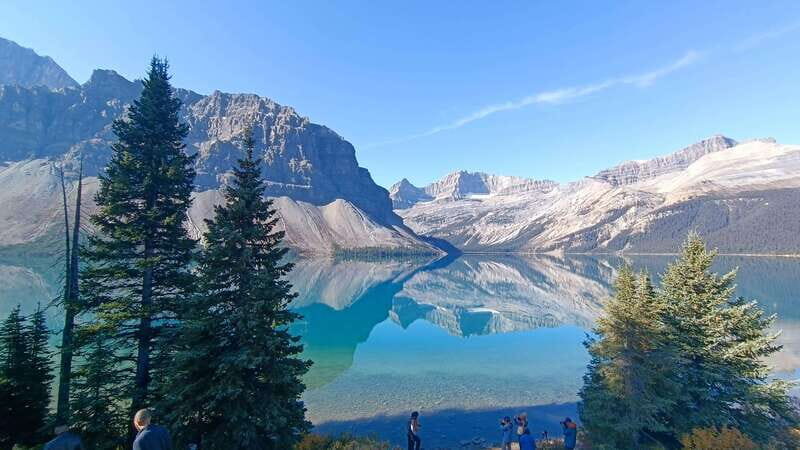
Bow Lake is glacier-fed, with striking blue water. It’s also special for a second reason: it’s connected to the Bow River system. The tour notes that Bow Lake forms the headwaters of the Bow River, which later flows through Calgary. That small bit of context helps you see the day as more than scenery—it’s part of a living system, fed by ice and melting water.
The headline moment here is how the Bow Lake surface can mirror the surrounding mountains, including the Crowfoot range. When conditions cooperate, reflections make the mountains feel doubled, like a painting that’s holding still.
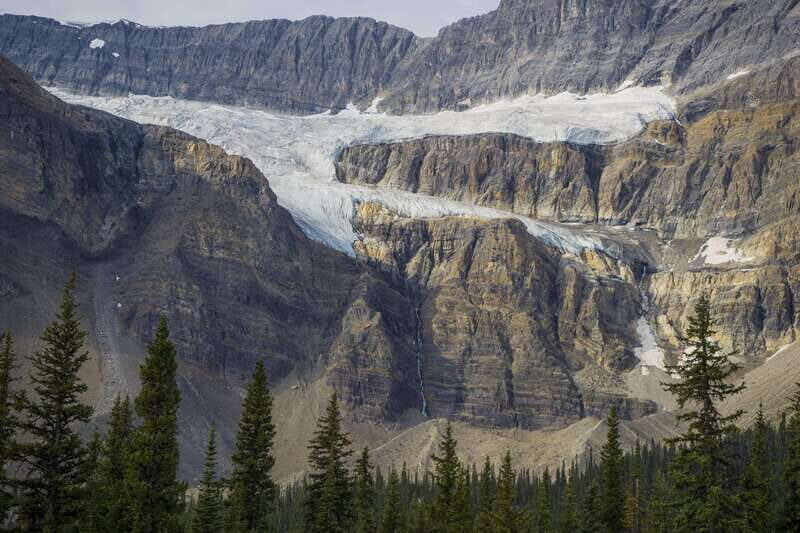
And then there’s Crowfoot Glacier, where the tour leans into a poignant detail. It’s named for its distinctive shape, and you’ll be reminded of climate change because the glacier’s “third toe” has largely receded. That doesn’t turn the day sad—it adds meaning. You’re seeing the Rockies as they are today, not as a permanent frozen postcard.
This stop is a good example of why a guided day tour works well. You’ll know where to look and what you’re looking at—turquoise ice-lake water, mountain reflections, and glacier shapes—without turning the day into a self-guided scavenger hunt.
Crowfoot Glacier and the glacier story you actually remember
Columbia Icefield is where the tour’s glacier focus becomes more than a photo theme. It’s described as one of the largest accumulations of ice south of the Arctic Circle. That scale helps everything else make sense.
Crowfoot Glacier ties into that story. The tour specifically notes its distinctive shape and the receding “third toe.” Whether you’re a science fan or just a person who cares about what you’re seeing, that’s the kind of detail that sticks. You’ll likely notice that the glacier doesn’t look like a smooth block from a distance. It has structure, and that structure is changing.
Here’s the value: instead of treating glaciers like a one-time landmark, you get the bigger picture of ice, water, and time. You can stand there and look longer because you understand what to notice.
Columbia Icefield: optional Athabasca Glacier walk and the Ice Explorer choice
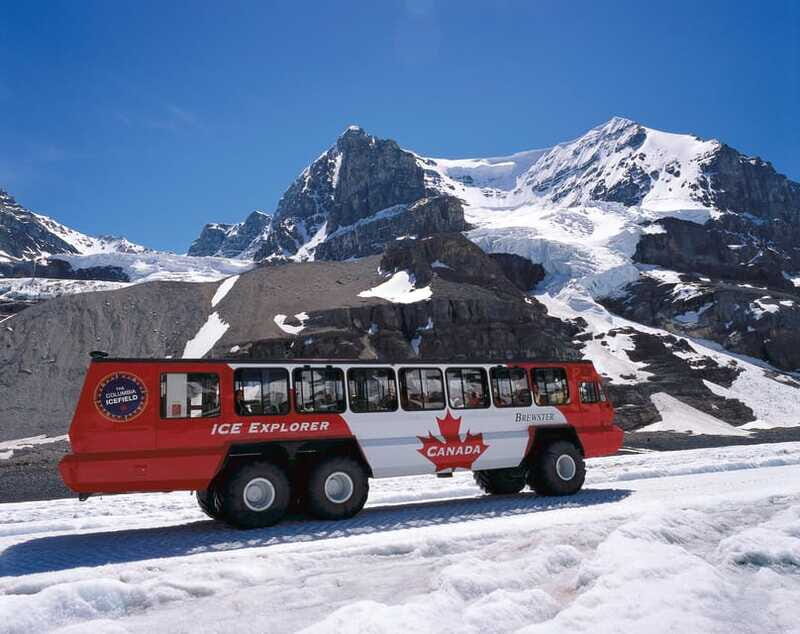
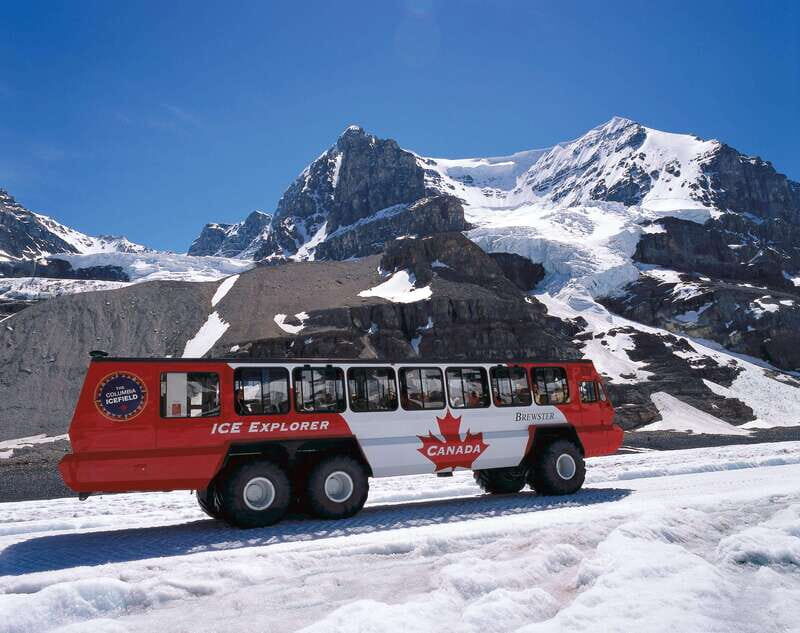
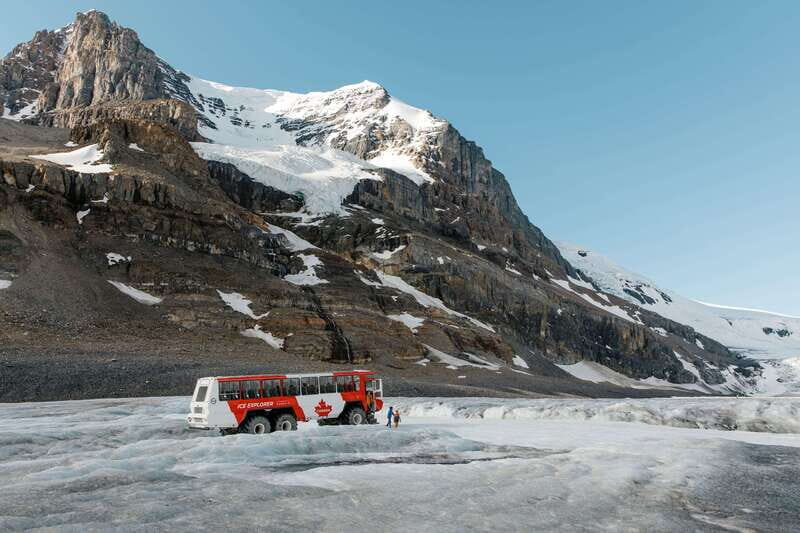
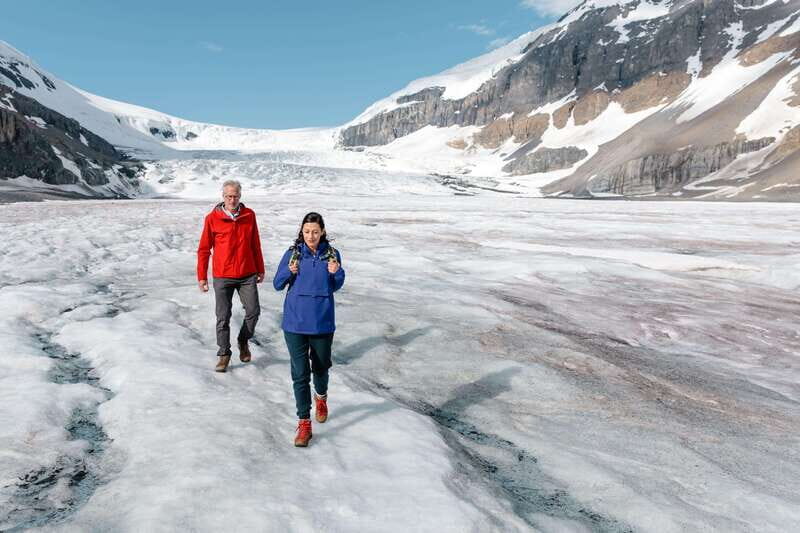
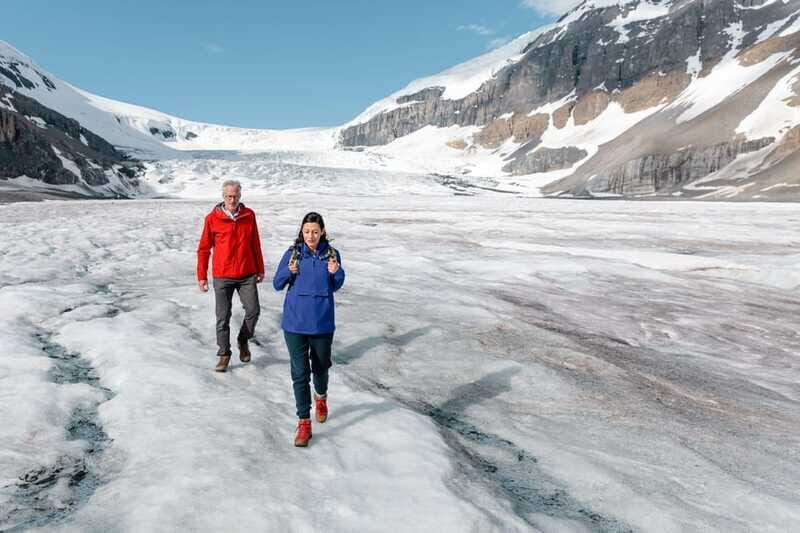
This is the part of the day you plan for if you want more than viewpoints. The Columbia Icefield is where you can choose an optional glacier experience, including a walk on the Athabasca Glacier. The walk is described as stepping onto ice estimated at 25,000 years old.
That’s a huge difference from most “glacier” stops, which are mostly about taking photos from paved areas. A walk gives you a different kind of connection: texture underfoot, the chill in the air, and the feeling of being close to the ice rather than just looking at it from far away.
There’s also mention of the Ice Explorer option at the Columbia Icefield area, labeled optional with additional cost (noted as optional $$). That’s the kind of add-on that can be worth it if you want to get right onto the glacier zone rather than relying only on the walking portion.
The one caution I’d give you is time and energy. A full-day tour is already long (9–11 hours). If you’re going to pick the glacier walk and any extra ride, plan to keep your footwear comfortable and your expectations realistic. Bring patience, because conditions matter and safety comes first.

Why the national park stops feel smoother as a guided day
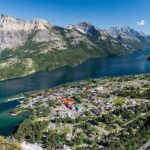
You’re traveling through iconic Canadian Rockies territory: the tour mentions the landscapes of Jasper and Banff National Parks. You’ll also see lots of glacier lakes, cascading waterfalls, and chances for wildlife viewing along the way.
Now, about wildlife: in this part of Alberta, wildlife is never guaranteed. But the tour framing is right—if you’re traveling in a group with stops timed to viewpoints, you’re more likely to catch the “brief appearance” moments that make the day feel wild in a good way.
The other benefit is logistics baked into the experience. Transportation is included, and national park fees are included. That reduces the mental load compared to driving yourself and dealing with entrance timing, parking, and route planning.
So you can focus on what you’re actually paying for:
- getting to the major glacier-and-lake viewpoints efficiently
- understanding what the guide is pointing out
- having weather-related stop replacements handled for you
Timing, guides, and the 9–11 hour reality
This is usually a morning tour and runs about 9–11 hours. That length is not trivial. It means the day works best if you don’t treat it like a casual stroll. You’ll be outdoors for a good chunk of it, and you’ll also be riding between stops.
This is also why I recommend packing for sun and cool air. Glacier country often looks sunny in the forecast and still feels brisk up close. The tour only lists a couple of essentials (sun hat and sunscreen), but in practice, you’ll want to dress in layers because you can move from warm vehicle to chilly stops quickly.
Language-wise, you’re covered. The tour indicates live guide support in Chinese, English, and Japanese. That’s useful if you want clear explanations during the drive rather than just reading signs.
And about the guide itself: one name that comes up in the experience feedback is Raymond, noted for being friendly, knowledgeable, and helpful. That kind of guiding matters on a day like this, because the best views become even better when you know what you’re looking at—Peyto Lake’s fox-like shape, Bow Lake’s link to the Bow River, and glacier details like Crowfoot’s receding third toe.
Price and value: what $114 really buys you
The listed price is $114 per person. Whether that’s a great deal comes down to what’s included.
Included:
- English-speaking tour guide
- transportation
- national park fee
Not included:
- lunch
- checked luggage
- service charge for the driver and guide (suggested CAD $15 per guest)
Optional add-on costs:
- glacier activity experience details like the Ice Explorer ride are described as optional with additional cost
So here’s the value math: if you’d otherwise drive yourself, you’d still pay for park entry, plus you’d spend time figuring out route timing and parking. With this tour, you’re paying for the convenience and the guide’s interpretation. You also get access to the stops that define the Icefield Parkway day.
Where costs can creep up is lunch and gratuity. Lunch isn’t included, and the suggested service charge is CAD $15 per guest. Optional glacier experiences can also add cost. If you budget for those, $114 starts to feel fair for a structured full-day in prime Rockies territory.
What to bring (and what to leave behind)
The tour gives a short list of must-brings: a sun hat and sunscreen. That’s exactly right for glacier-country glare.
Beyond that, think like a person spending most of the day outside:
- bring comfortable shoes for short walks and viewpoints
- have a plan for cold air at glacier areas (weather can change)
- bring only what you need, because you’re allowed one piece of carry-on luggage per person with size restrictions
Also note what’s not allowed: pets aren’t permitted. And this tour isn’t suitable for wheelchair users.
One more practical point: the meeting point can vary depending on the option booked. It’s worth checking your confirmation details closely so you arrive at the right place without stress.
Who this Icefield Parkway day tour fits best
This tour is a strong match if you:
- want a one-day hit of the most famous Icefields Parkway sights (Peyto, Bow, Crowfoot, Columbia Icefield)
- prefer guided stops over self-driving and searching for pull-offs
- care about learning what glaciers and glacier-fed lakes mean, not just where to take photos
- want the option to walk on ancient ice at the Athabasca Glacier
It may not fit you if you:
- need wheelchair accessibility
- want a short outing (this is a 9–11 hour day)
- can’t handle weather-related stop changes (points and stop times can be swapped)
- want lunch included in the price
Should you book it?
Yes, if your goal is a structured, guided day that strings together the Icefields Parkway’s biggest hits—especially Peyto and Bow Lakes—and you’re interested in the optional glacier walk at Columbia Icefield. The price makes sense because it includes transportation, an English-speaking guide, and national park fees, and the route is built for maximum scenery time.
Skip it or think twice if you’re sensitive to long days, you hate outdoor waits in changeable weather, or you’re expecting every possible add-on to be included. If that glacier walk or the extra Ice Explorer ride matters to you, check what’s included in your exact option so you’re not surprised by add-on choices once you arrive.
FAQ
How long is the Icefield Parkway day tour?
The duration is listed as 9 to 11 hours, usually available in the morning.
What is included in the $114 per person price?
The tour includes an English-speaking tour guide, transportation, and the national park fee.
Is lunch included?
No. Lunch is not included.
Is the glacier walk on the Athabasca Glacier included?
Walking on the Athabasca Glacier is part of an optional glacier activity, so it’s not necessarily included in the base plan. The Ice Explorer is also listed as optional with additional cost.
What happens if Peyto Lake is closed?
If Peyto Lake is closed, it will be replaced by Waterfowl Lake.
What languages are available for the live tour guide?
Live tour guide support is listed in Chinese, English, and Japanese.
Is this tour wheelchair accessible?
No. It is not suitable for wheelchair users.