REVIEW · HOPEWELL CAPE
Hopewell Cape: Hopewell Rocks Admission
Book on GetYourGuide →Operated by Hopewell Rocks · Bookable on GetYourGuide
Low tide turns the ocean into a walkway. Hopewell Rocks admission is a front-row seat for the Bay of Fundy tide change and the goofy sea stacks named Elephant, Bear, Dinosaur, and more. I like that you’re not rushed through some rigid script; you explore at your own pace and get multiple ways to look at the same dramatic coastline.
My second favorite part: the park is built for planning around the tide window, so you can really understand what you’re seeing as the ocean floor appears. One practical catch: the ocean-floor portion is time sensitive, and it’s not wheelchair-accessible.
In This Review
- Key things you will notice at Hopewell Rocks
- Why the Bay of Fundy tide change feels like a time switch
- Interpretive Centre first: a smooth start to self-guided exploring
- Sea stacks with nicknames: Elephant, Bear, Dinosaur, ET, and more
- Ocean floor access at low tide: stairs, ramp, and the Demoiselle trail
- Main Deck: the big staircase experience
- North Beach: ramp access with benches
- Demoiselle access: trail from behind the Interpretive Centre
- Pick based on how you want to spend your time
- Timing and tides: check the schedule before you plan your walk
- Trails, lookouts, and forest walks between tide windows
- Footwear and small choices that save your day
- Price and value: is $14 per person worth it?
- Who should book Hopewell Rocks admission
- Who should reconsider
- Should you book Hopewell Rocks admission?
- FAQ
- Where is Hopewell Rocks?
- How much does Hopewell Rocks admission cost?
- How long are the entry passes valid?
- What is included with the admission?
- Is there an Interpretive Centre exhibit?
- How do I access the ocean floor?
- Do I need to check the tide schedule?
- Is there a shuttle in the park?
- Is the park wheelchair accessible?
- Can I cancel my booking?
Key things you will notice at Hopewell Rocks
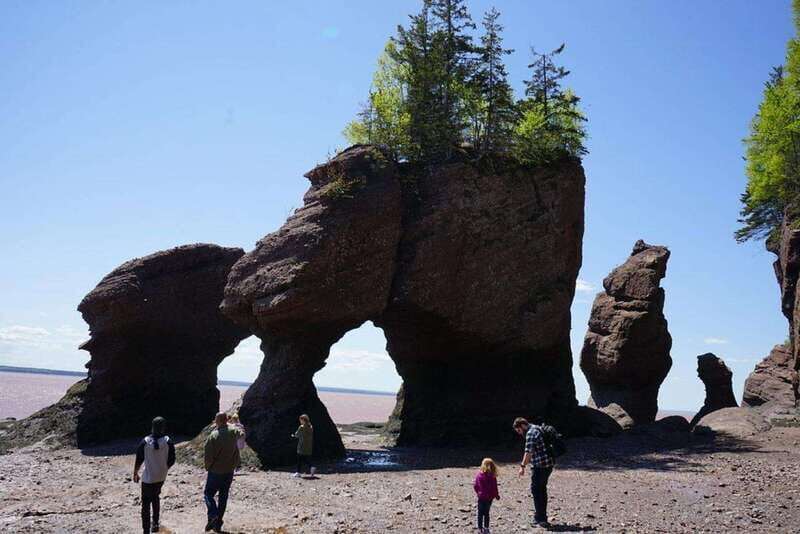
- High tide vs low tide: the coastline looks completely different depending on the hour
- Sea stacks with names you can remember: Elephant, Bear, Dinosaur, ET, Mother-in-Law, and more
- Three ways down to the ocean floor: stairs, a ramp with benches, and a trail from behind the Interpretive Centre
- Tide schedule is non-negotiable: check before you go so you can walk safely
- Trails and forests in between: well-kept paths for lookouts while you wait for the next tide window
Why the Bay of Fundy tide change feels like a time switch
The Hopewell Rocks sit on the Bay of Fundy, famous for having some of the highest tides in the world. That’s not just trivia. Here, it means you can watch the same shoreline turn from “ocean everywhere” into “ocean floor exposed,” and back again.
The park’s story is simple: for thousands of years, the massive tides have carved the rock into a set of freestanding sea stacks along a roughly two-kilometer stretch of shoreline. And there’s a built-in sense of drama to the timing. Even when you’ve figured out what you’re looking at, you’re encouraged to come back later—because with the tide shift, the view changes a lot over the next hours. It’s the kind of place where you start paying attention to time itself.
You can also read our reviews of more tours and experiences in Hopewell Cape.

Interpretive Centre first: a smooth start to self-guided exploring
Your entry gets you access to the Hopewell Rocks Provincial Park with a self-guided setup. Before you head out to the shoreline, I recommend starting at the Interpretive Centre. There’s a multi-media exhibit that helps you connect what you see on the beach to what’s happening with the tides and the coastline.
This is also where you can set up your plan. The park has friendly Interpretive staff out and about, and they’re there to answer questions while you’re moving through the grounds. You don’t have to solve everything alone.
One more practical idea: if you like the comfort of a scheduled break, plan to enjoy a warm meal during your visit. It helps if you’re waiting on tide timing, since you’ll likely spend some time walking, looking, and then repositioning for the ocean-floor experience.
Sea stacks with nicknames: Elephant, Bear, Dinosaur, ET, and more
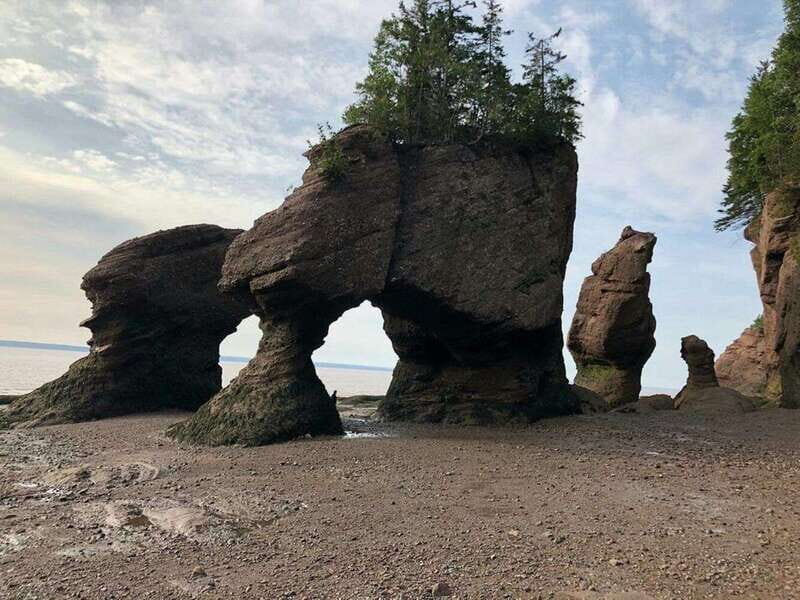
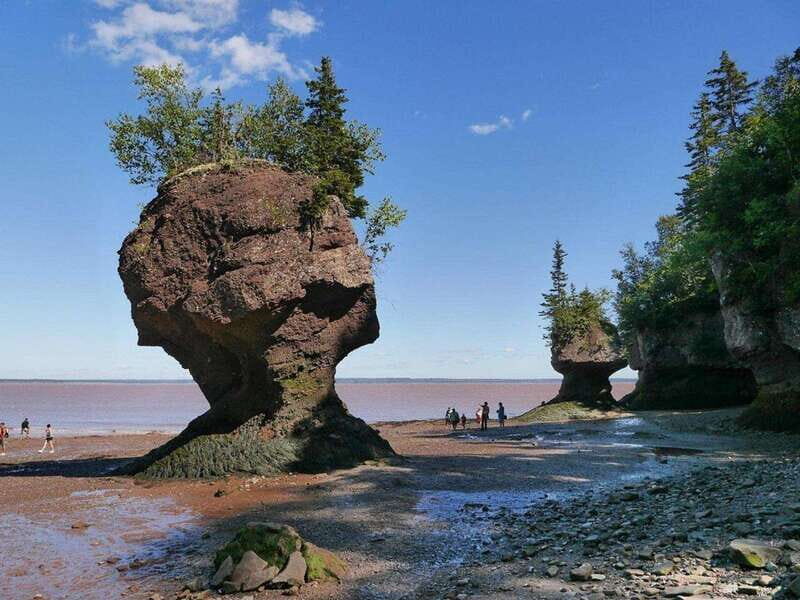
The sea stacks here have a playful reputation. They’re sometimes called flowerpots, but what makes Hopewell Rocks fun is that the stacks are playfully nicknamed—think Elephant, Bear, Dinosaur, and even ET and Mother-in-Law. The names aren’t there to be silly for the sake of it; they’re there to help you spot and remember the shapes.
You’ll find over twenty freestanding sea stacks along the shoreline. From the main viewpoints, they look like sculptures waiting for you to use your imagination. That’s the whole point: your brain starts connecting dots, and you end up noticing details you would miss if everything was labeled in a very formal way.
If you’re the type who enjoys photography, this section is great because you’re not just shooting “rocks.” You’re shooting characters, and the tide level changes how the stacks sit in the scene. Higher tide often makes the shoreline feel tighter and darker; low tide can open up the background and reveal more of the exposed coastline.
Ocean floor access at low tide: stairs, ramp, and the Demoiselle trail
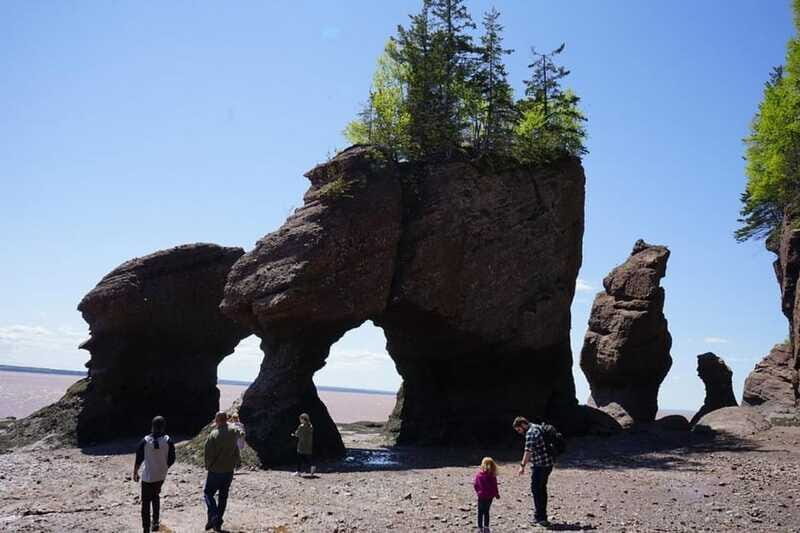
The star attraction is the chance to explore the ocean floor when the tide is out. The park gives you three main ways to reach it, and each has its own vibe.
Main Deck: the big staircase experience
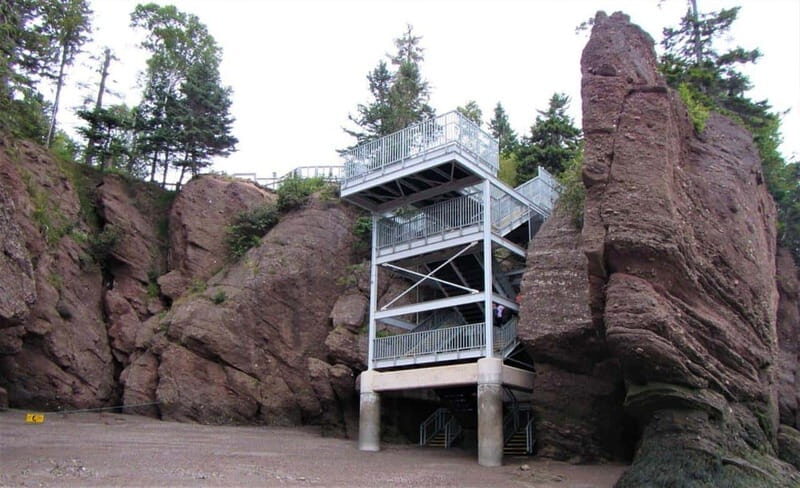
The Main Deck is the classic route. You’ll find a large metal staircase leading to a viewing platform, and then you descend to the ocean floor. The park notes the scale clearly: you’ll go down 99 stairs and then work your way back up 101 steps. If you like bragging rights, this route earns them.
North Beach: ramp access with benches
Not everyone wants stairs. A little further toward North Beach, there’s a ramp with benches placed along the incline. The ramp is described as suitable for wheelchairs, but the ocean-floor walking is still considered difficult for wheels. So this option is best if you want a gentler grade while keeping the focus on viewing and stretching your legs—then you decide whether the ocean-floor terrain itself is doable for your needs.
Demoiselle access: trail from behind the Interpretive Centre
The third access point comes from a trail that starts behind the Interpretive Centre and gently descends to sea level. This route is labeled as Demoiselle, and it delivers a different kind of payoff: you get an incredible view toward Shepody Mountain, Mary’s Point, and Grindstone Island as you make your way down.
Pick based on how you want to spend your time
All three access points let you explore the shoreline at low tide. My practical advice is to choose the route that matches your energy level for that day. If you’re planning to walk a lot, keep your return route in mind too, because the ocean-floor time can add up fast. Sturdy footwear matters here, and it’s not a place for flimsy shoes.
Timing and tides: check the schedule before you plan your walk
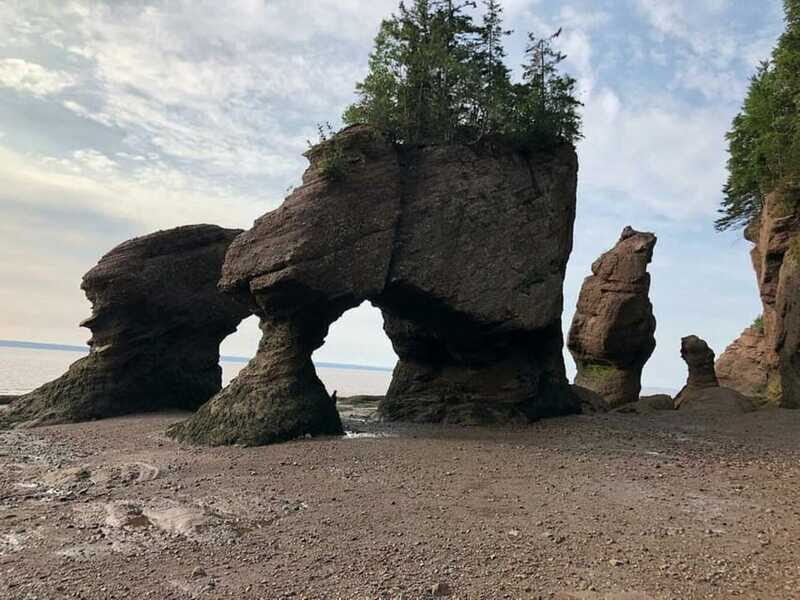
Here’s the rule that makes or breaks Hopewell Rocks: check the tide schedule before you go. The ocean floor access depends on low tide, and the park explicitly recommends verifying tides so your exploration is safe.
It helps to think of your visit as tide-based planning, not time-based sightseeing. You’ll likely:
- arrive and orient yourself at the Interpretive Centre and main lookouts
- walk the trails and viewpoints while you watch timing
- head down to the ocean floor when low tide opens up
- come back up before the water returns
Also, remember that the coastline changes as the tide transforms the scene. The park’s design encourages you to wait and observe the shift. Even if you only manage one low-tide window, you’ll still see how the tide level changes what’s visible around the sea stacks.
Trails, lookouts, and forest walks between tide windows
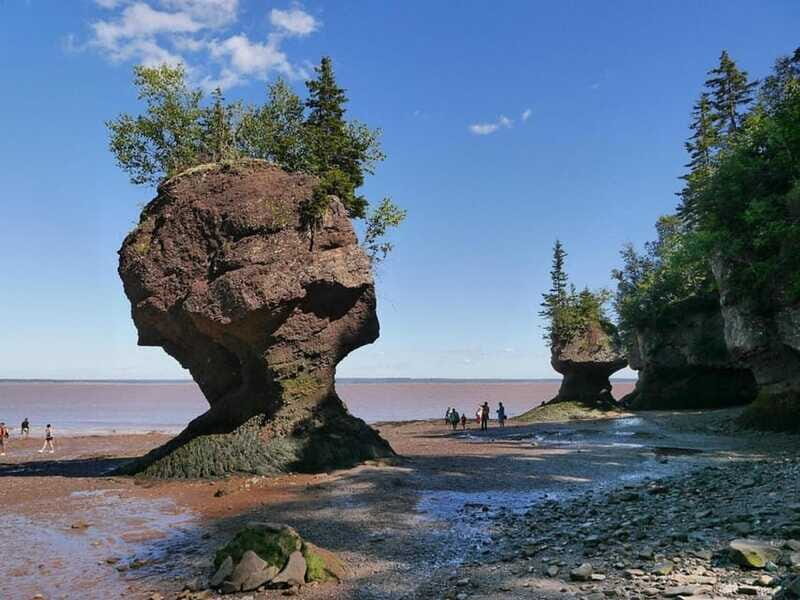
The park isn’t just beach and stairs. A big part of the fun is moving between lookouts and shaded areas while you wait for the tide window.
The trail network is described as well-maintained and wheelchair-friendly in general areas. That means you can get great views without forcing the ocean-floor hike every time. Short walks from the main building connect you to scenic lookouts, secluded vistas, ocean-floor access points, and natural forest areas.
If you want to cut walking distance, there’s also a shuttle service available for a nominal fee. It can take you from the Interpretive Centre to the top of the stairway leading to the ocean floor. That’s useful if you’re tight on time or you just don’t want to do the long approach by foot.
Between tide shifts, these trails are where the day turns from “one big photo moment” into a slow, satisfying walk. You’re not standing still waiting; you’re moving, looking, and recalibrating where you want to be when the shoreline conditions change.
Footwear and small choices that save your day
This is a rocky, tide-exposed park. Even if you’re only doing the trail sections, you’ll be walking on uneven ground, so sturdy footwear is a must.
Beyond shoes, think about how long you plan to spend on the ocean floor. Once you’re there, it’s easy to lose track of time because the scene keeps shifting as you look for different stacks, angles, and details. If you’re going for the ocean-floor experience, wear something you can hike in comfortably for the return climb too—especially if you choose the Main Deck stairs.
If you’re planning a full day, don’t underestimate the “up and down” factor. The park gives the stairs numbers for a reason. Even on a day when you feel great, the return climb is real.
Price and value: is $14 per person worth it?
At about $14 per person, the value here is strong if you go in with the right expectations.
You’re paying for more than admission to a viewpoint. You’re getting access to:
- the Interpretive Centre multi-media exhibit
- trails and lookouts
- ocean-floor exploration during low tide
- the chance to experience major tide-driven changes in the same place
The park also notes that entrance passes are valid for two consecutive days. That’s a big deal for value. If your timing is slightly off on day one, you have a second chance to line up with the right tide conditions. And if you simply want more time to watch the coastline transform, two days lets you spread it out without feeling rushed.
So the “is it worth it?” answer depends on how tide-aware you are. If you check the schedule and plan around low tide, this entry price is a bargain. If you treat it like a casual stop with no timing, you might end up doing mostly trails and lookouts and missing the main payoff.
Who should book Hopewell Rocks admission
This is a smart choice for you if you like:
- dramatic natural phenomena that you can actually observe in one visit
- walking and viewpoints without needing a guide for every step
- a self-guided park with staff available if you want help
- families and groups who can split tasks (some on trails, some focused on the ocean floor)
It’s also a good pick if you’re the type who enjoys landmarks with memorable names. You’ll leave with stories, not just photos, because Elephant, Bear, Dinosaur, and the rest turn the coastline into a character set.
Who should reconsider
If you rely on wheelchairs for mobility, note the park is described as wheelchair accessible except for the ocean floor. That matters because the main highlight is literally the ocean floor walk. You can still enjoy trails and lookouts, but the core experience may not be accessible in the same way.
Should you book Hopewell Rocks admission?
I’d book it if you can do one key thing: plan around the tides. Go with sturdy shoes, start at the Interpretive Centre, then time your ocean-floor visit so you’re walking the beach when it’s actually available. At about $14 per person, plus the option to use entry over two consecutive days, you’re buying flexibility and a real chance at that “how can this be the same coast?” moment.
If you want a simple, no-planning sightseeing stop, this probably won’t satisfy you as much. The park rewards preparation, and the tide schedule is part of the experience, not an annoyance.
FAQ
Where is Hopewell Rocks?
Hopewell Rocks is located in Hopewell Cape on the Bay of Fundy in Canada. The listing location is shown as Nova Scotia, and the park is at Hopewell Cape on the Bay of Fundy.
How much does Hopewell Rocks admission cost?
Admission is listed at $14 per person.
How long are the entry passes valid?
Entrance passes are valid for two consecutive days.
What is included with the admission?
Your admission includes entry to Hopewell Rocks. It also gives you access to the Interpretive Centre exhibit, trails, lookouts, and the ocean-floor access during low tide.
Is there an Interpretive Centre exhibit?
Yes. There’s a multi-media exhibit at the Interpretive Centre.
How do I access the ocean floor?
The park has three primary access points to the ocean floor: Main Deck (stairs), North Beach (ramp with benches), and a trail called Demoiselle starting behind the Interpretive Centre.
Do I need to check the tide schedule?
Yes. You should check the tide schedule before your visit to ensure it’s safe to explore the ocean floor.
Is there a shuttle in the park?
Yes. A shuttle service is available for a nominal fee to transport you from the Interpretive Centre to the top of the stairs leading to the ocean floor.
Is the park wheelchair accessible?
The park is described as wheelchair accessible except for the ocean floor.
Can I cancel my booking?
Cancellation is listed as free up to 24 hours in advance for a full refund.